


The complete guide
The Practical Buyer's Guide to 5 Inch Aluminum Gutter Guards
The problem nobody deals with until it is too late
Gutters fail quietly. A handful of leaves settles in the trough in autumn, then rain packs them down into a dense plug. The water that should be running to the downspout starts pooling. Next storm, it spills over the front edge in a sheet, lands on the garden bed, and splashes back against the wall.
Six months later you notice the paint lifting on the fascia, or a damp patch inside near the ceiling line, or a trench in the mulch where the water has been landing. None of that was caused by one bad storm. It was caused by a gutter that stopped being a gutter and became a planter box.
The fix is not complicated. Keep debris out of the trough, and the trough keeps doing its job. The hard part is finding a cover that keeps leaves out without also keeping water out, which is where a lot of cheap products fall over.
How a bubbled aluminum guard works
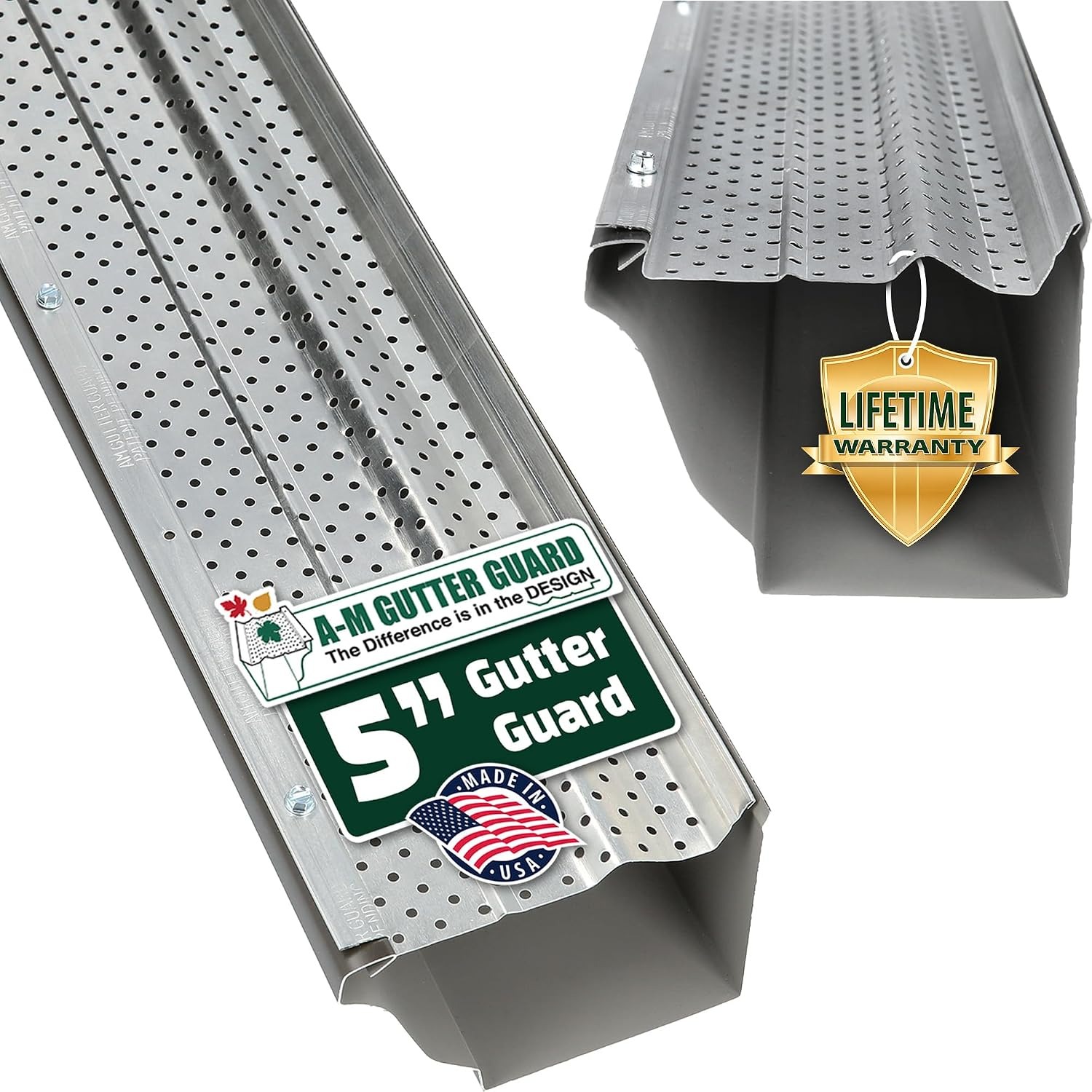
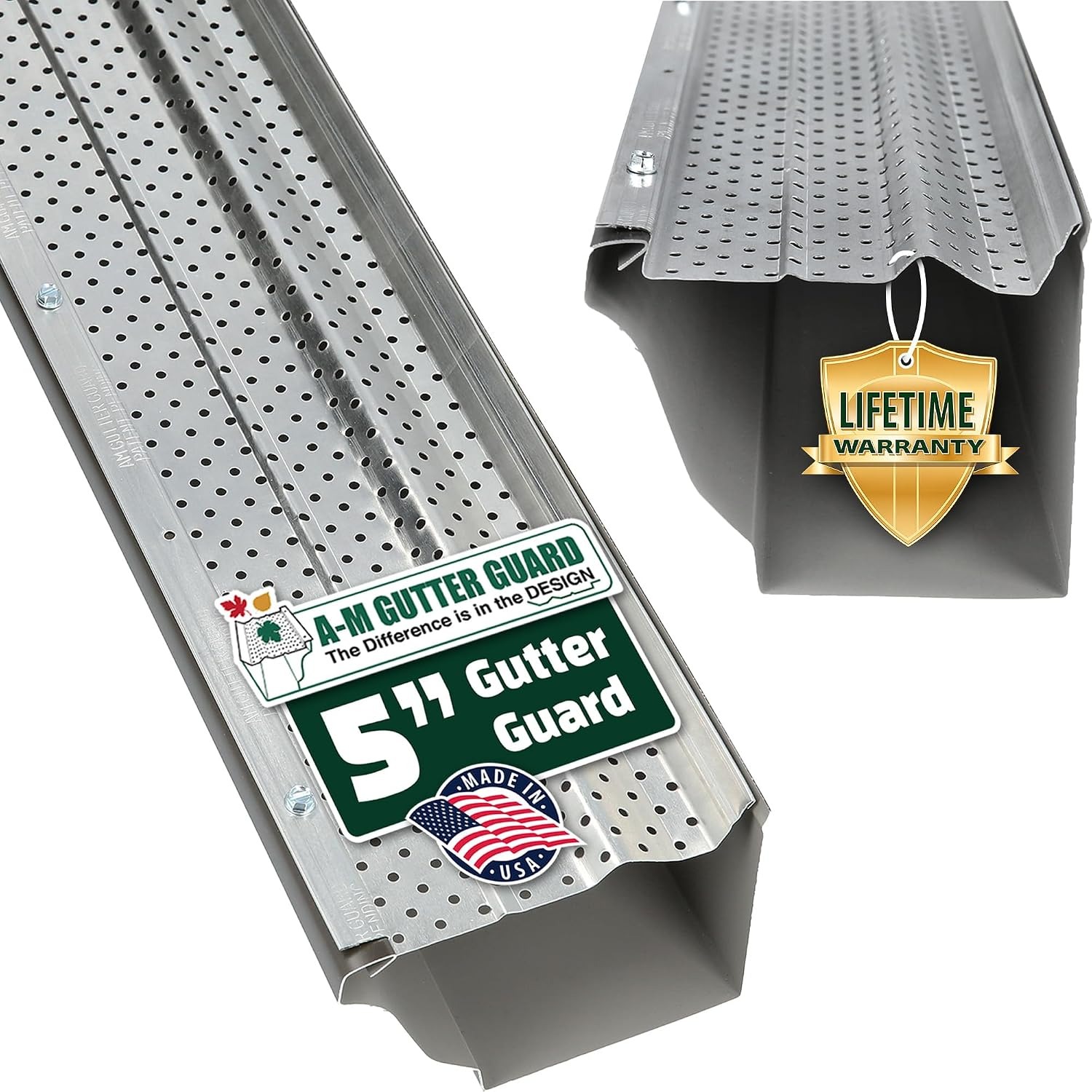
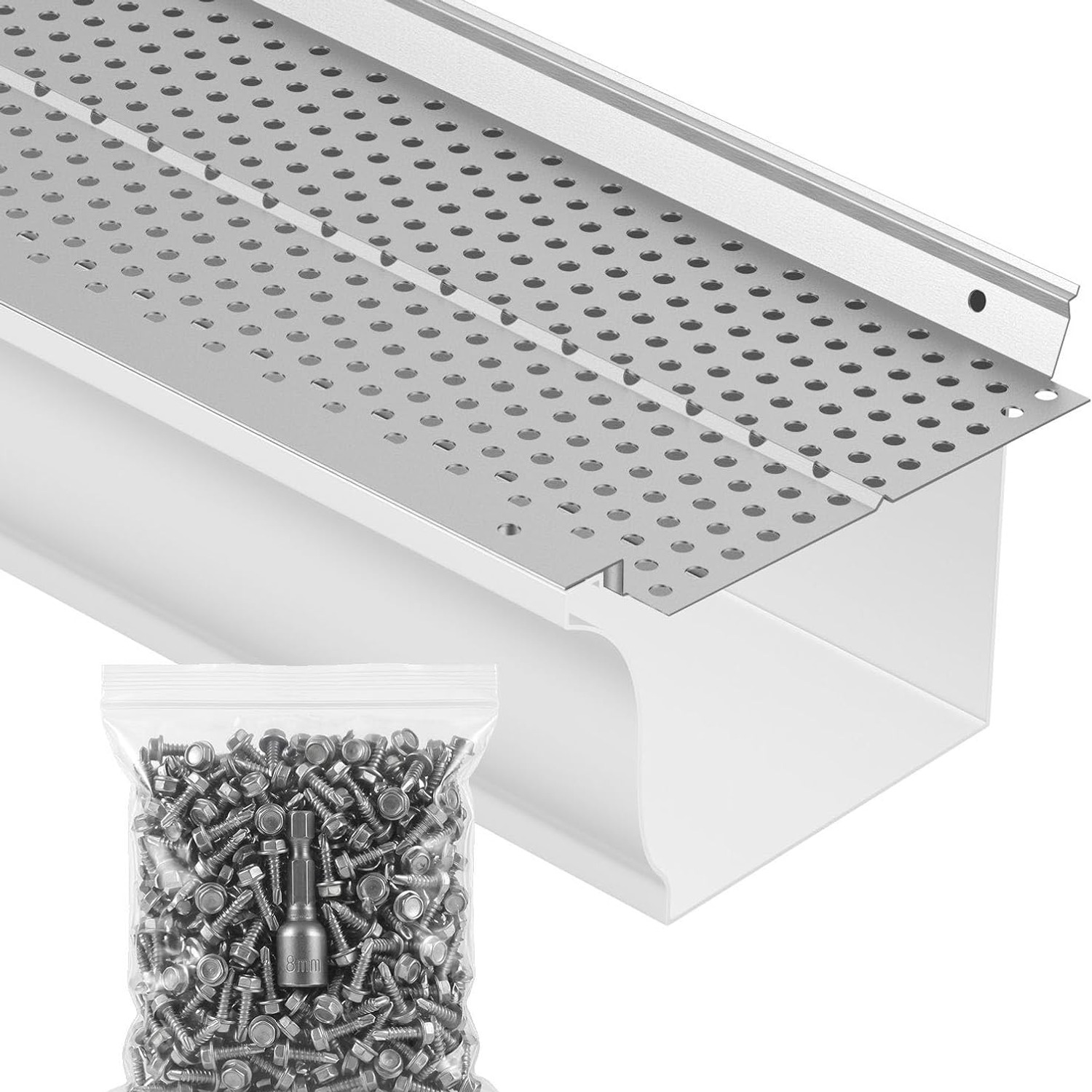
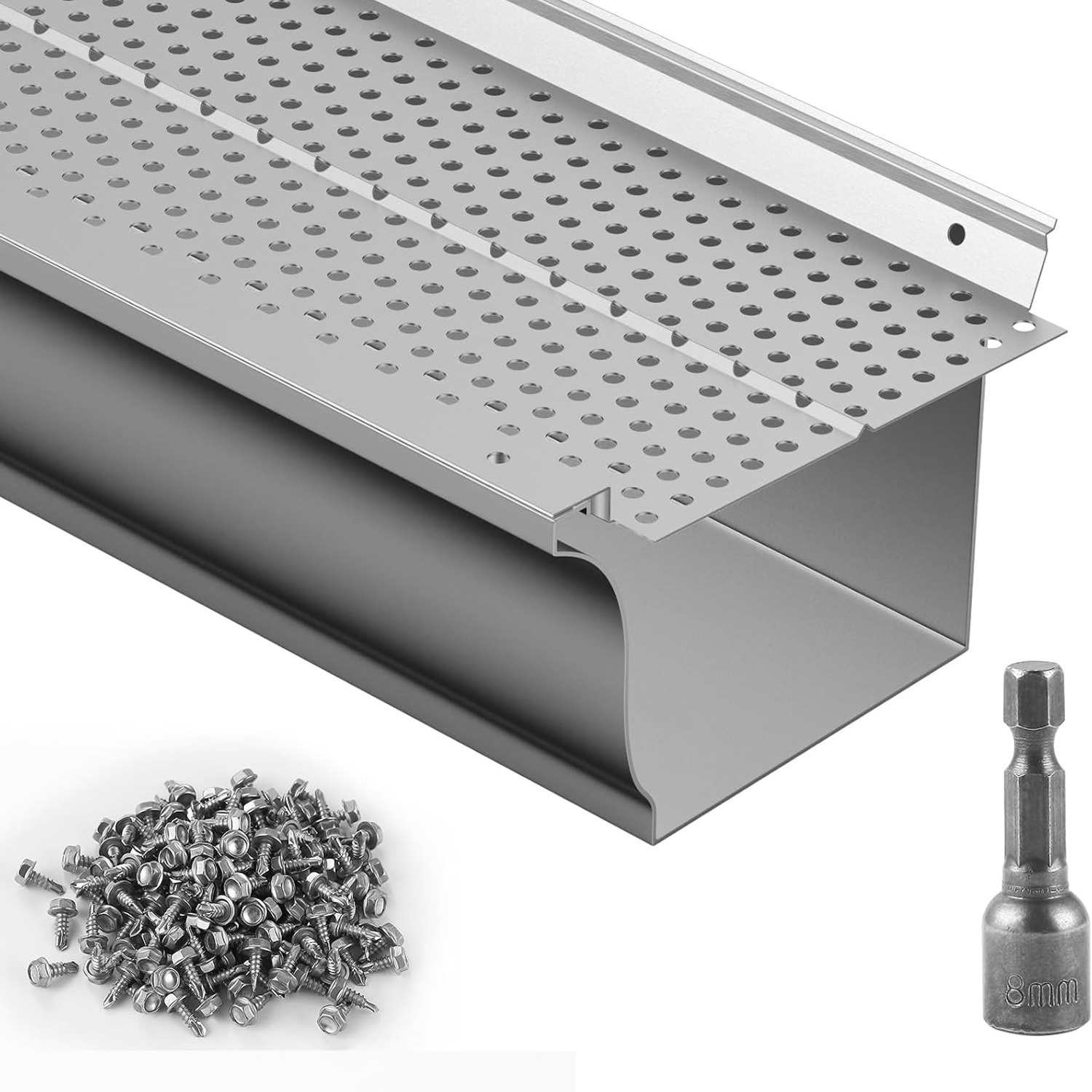
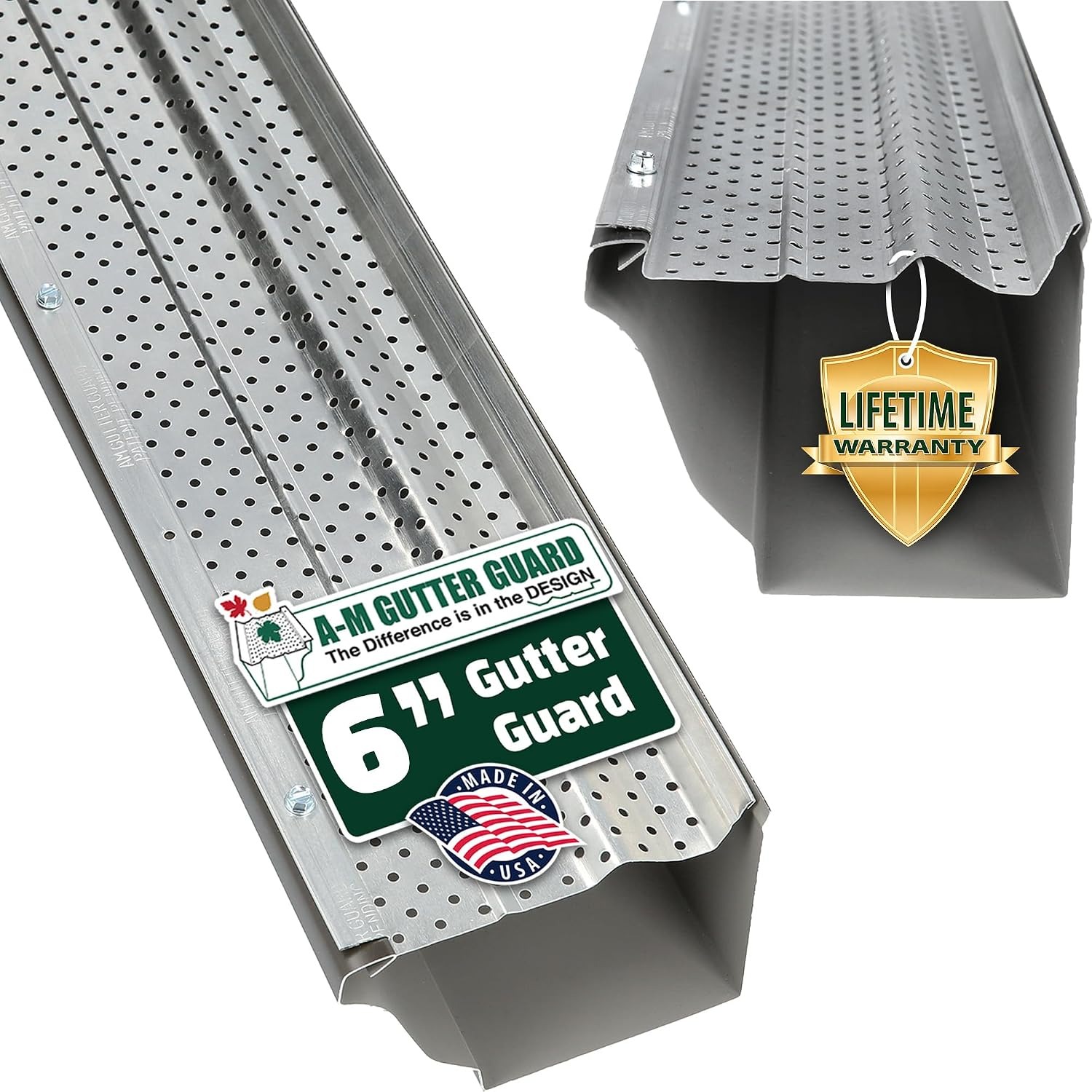
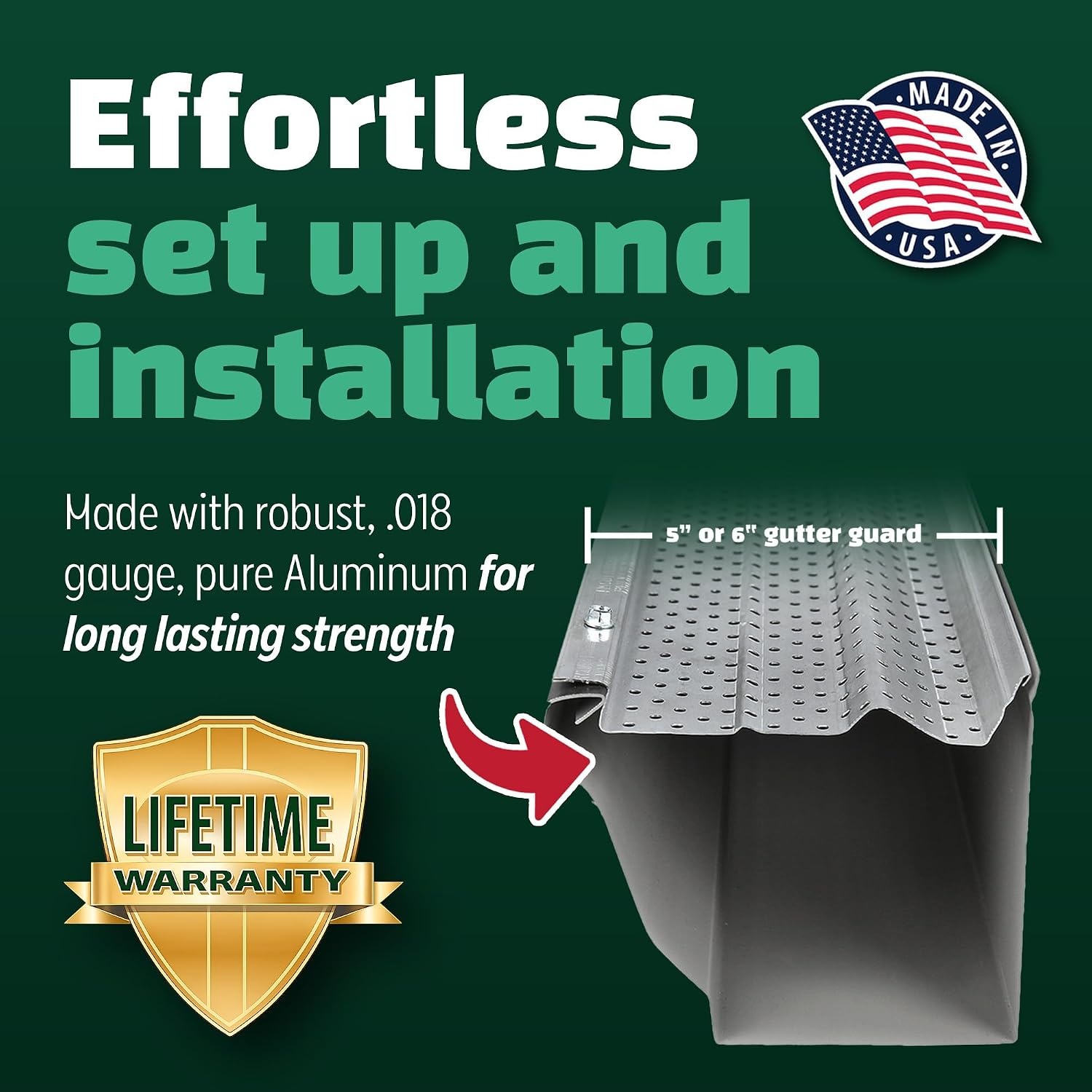
This guard is a sheet of .018 gauge aluminum with a bubbled, perforated surface. It lays across the top of the gutter, so the opening is covered but the trough underneath stays clear.
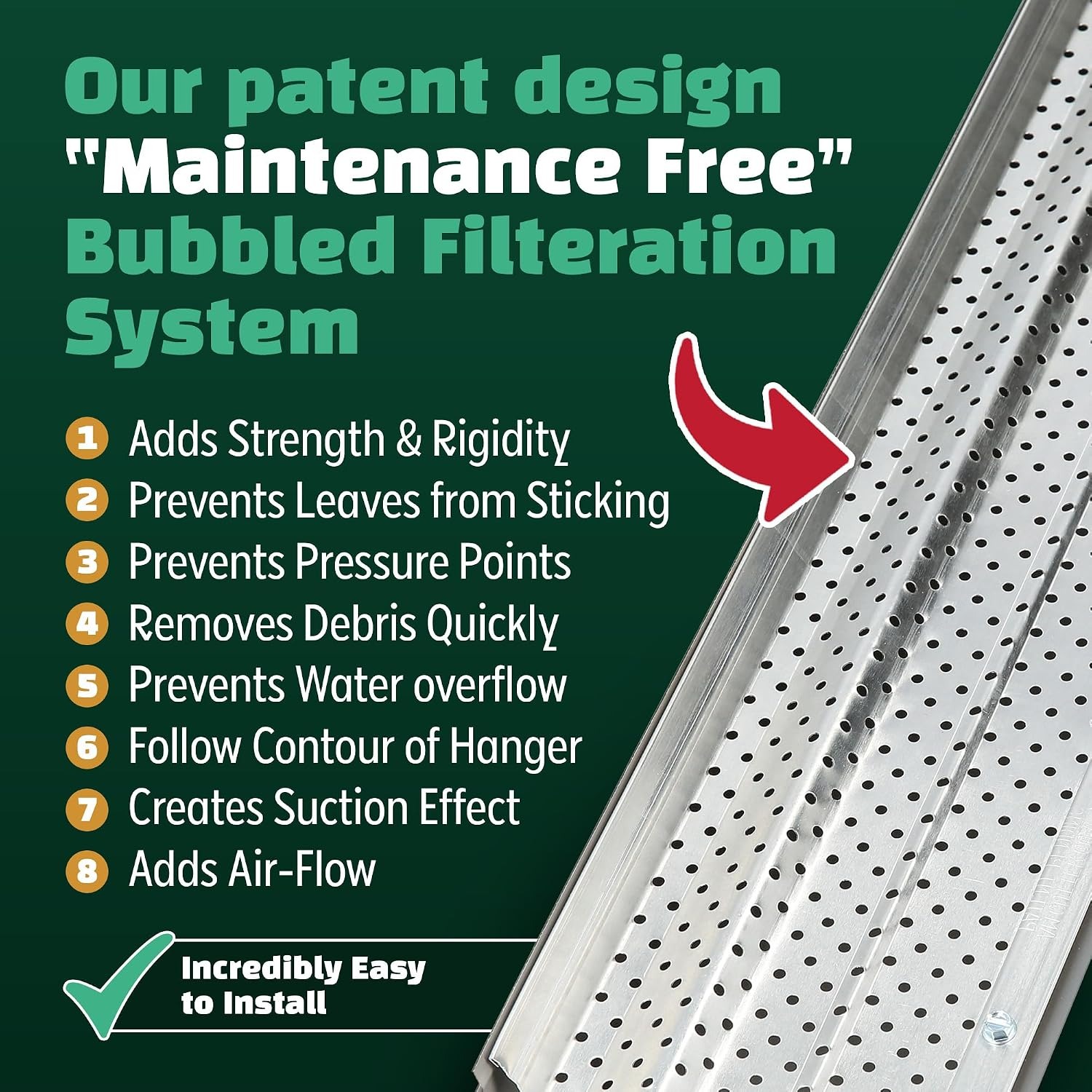
Two things matter about the surface. The first is hole count. This design has 380 holes per linear foot, which is a lot of open area. In a heavy downpour, water hits the panel and drops straight through rather than building up and sheeting past the front lip. Guards with very fine openings can struggle here, because surface tension and a thin film of dust will send water skating across the top and over the edge.
The second thing is the bubbled shape itself. Those raised sections create airflow above and below the panel. Moving air dries leaves out and lifts them, so most debris does not sit long enough to mat down. That is what the maker means by a self-cleaning design. It is not magic, it is just that a dry leaf on a textured surface in a breeze does not stay put.
The panels are 47 inches long and fit 5 inch gutters. There are 26 of them in the box, which gives you a full 100 feet once you account for the overlap at every join.
Who this suits
If you have standard 5 inch K-style gutters on a home with trees nearby, this is squarely aimed at you. Oak leaves, maple seeds, pine needles and the general grit that washes off a roof are exactly what it is built to shed.
It also suits people who want a DIY option. There is no system to be quoted, no crew in the driveway, and no shingle work. You get a box, a ladder, a pair of tin snips and an afternoon.
It suits older houses too, because it works with spike and ferrule hangers as well as modern hidden hangers. A lot of guards assume everyone has hidden hangers, which is not true of homes built before the 1990s.
Where it may not be the right call: if your gutters are 6 inch, order the 6 inch version instead, because a 5 inch panel will not seat properly in a wider trough. And if you cannot safely get to your gutter line, the smartest move is paying someone who can.
How to choose and how much to buy
Start with a tape measure, not a shopping cart. Walk the house and write down the length of every gutter run, including the short ones over a porch or a garage. People consistently forget those and end up a few feet short.
Add it all up and round to the next full 100 feet. If your total is 118 feet, you need two boxes. Buying short and ordering a second box later means waiting with half the roof done.
Next, confirm the gutter width. Measure across the top opening from the back edge to the front lip. If it is close to 5 inches, this is your product. If it is closer to 6, go up a size.
Then think about roof type, which in this case is easy. The guard never touches the roof. That matters if you have a tile or metal roof where lifting anything is a bad idea, and it matters if you have a warranty on the roof covering that could be affected by fasteners. This guard is stated not to void roof warranties, including Fortified Roofs, because nothing goes under the shingles.
Finally, look at the material spec rather than the marketing. Aluminum at .018 gauge is real metal, not plastic mesh in a frame. It does not rust and it does not rot, and the lifetime warranty covers rust, rot and self deterioration.
Installing it without drama
Pick a dry day with no wind. Clean the gutters properly first, because anything left in the trough will stay there once the guard goes on.
Work from one end of a run to the other, going in the direction water flows. Seat each panel in the gutter, then lay the next one so it overlaps the first on the downhill side. That way any water that does run along the top surface travels onto the next panel instead of slipping into the gap.
Cut panels to length with tin snips where you hit a corner, a downspout outlet or the end of a run. Wear gloves. Cut aluminum edges are sharp, and the one guaranteed injury on a job like this is a sliced finger on a fresh edge.
Keep your ladder on the roof line or a stable surface, never leaned against the installed guard. Move the ladder more often than you want to. Overreaching is the single most common cause of ladder accidents, and no gutter job is worth it.
For a straightforward single story home with 100 feet of gutter, most people finish inside a day. Add time for corners, multiple levels, and any section you can only reach awkwardly.
Keeping it working
Maintenance is genuinely light, but it is not zero. Twice a year, ideally late autumn and after the worst of spring, walk the outside of the house and look up at the guards from the ground.
What you are looking for is build-up sitting on the surface: a clump of twigs caught at a corner, a mat of needles in a low spot, a seed pod cluster near a valley where the roof funnels debris. If you find any, a soft broom from a safe position or a rinse with the garden hose usually clears it.
After a severe storm, add one extra check. Make sure the panels are still seated and the overlaps have not shifted. It is rare, but a branch coming down can lift a section, and it is a two minute fix if you catch it.
Do not scrub the aluminum with a wire brush and do not use harsh solvents. Neither is necessary, and both can mark the finish.
The short version
This is a 100 foot box of 5 inch aluminum gutter guard, 26 panels, covering a full 100 feet installed once overlaps are counted. The bubbled surface has 380 holes per linear foot, so it passes heavy rain while shedding leaves, needles and seeds.
It is .018 gauge aluminum with a lifetime warranty against rust, rot and self deterioration. It works with hidden hangers and spike and ferrule hangers, it never touches your shingles, and it suits any roof material or pitch.
Measure your gutters, confirm you have 5 inch rather than 6 inch, round your total up to the next 100 feet, and pick a dry weekend. Then go back to never thinking about your gutters again.