
The complete guide
Ladder Stabilizers and Gutter Protectors: How to Choose and Use One
The problem with leaning a ladder on a gutter
A gutter is not a structural beam. It is a thin metal or vinyl channel held on with brackets, designed to carry water and nothing much heavier. When you lean an extension ladder against it, the entire weight of the ladder plus your body plus whatever you are carrying goes through two narrow contact points at the top of the rails.
The result is predictable. A dent appears. The rail rolls slightly inward. A joint that was sealed starts to seep the next time it rains heavily. Sometimes the damage is cosmetic, a flat spot on the front of the gutter that you notice from the driveway. Sometimes it is worse and the gutter stops carrying water where it should, which puts moisture against the fascia, and fascia repairs cost far more than any ladder accessory.
The second problem is movement. A ladder resting on a rounded, slippery gutter lip has very little to hold it from sliding sideways. Most people only notice it when they are near the top and shift their weight to reach into the channel. That small lateral slide is the moment that makes you grab the rail and freeze. It is also the moment that causes most ladder falls at the roof edge.
A ladder stabilizer like this one is built to address both problems at the same time.
How it works
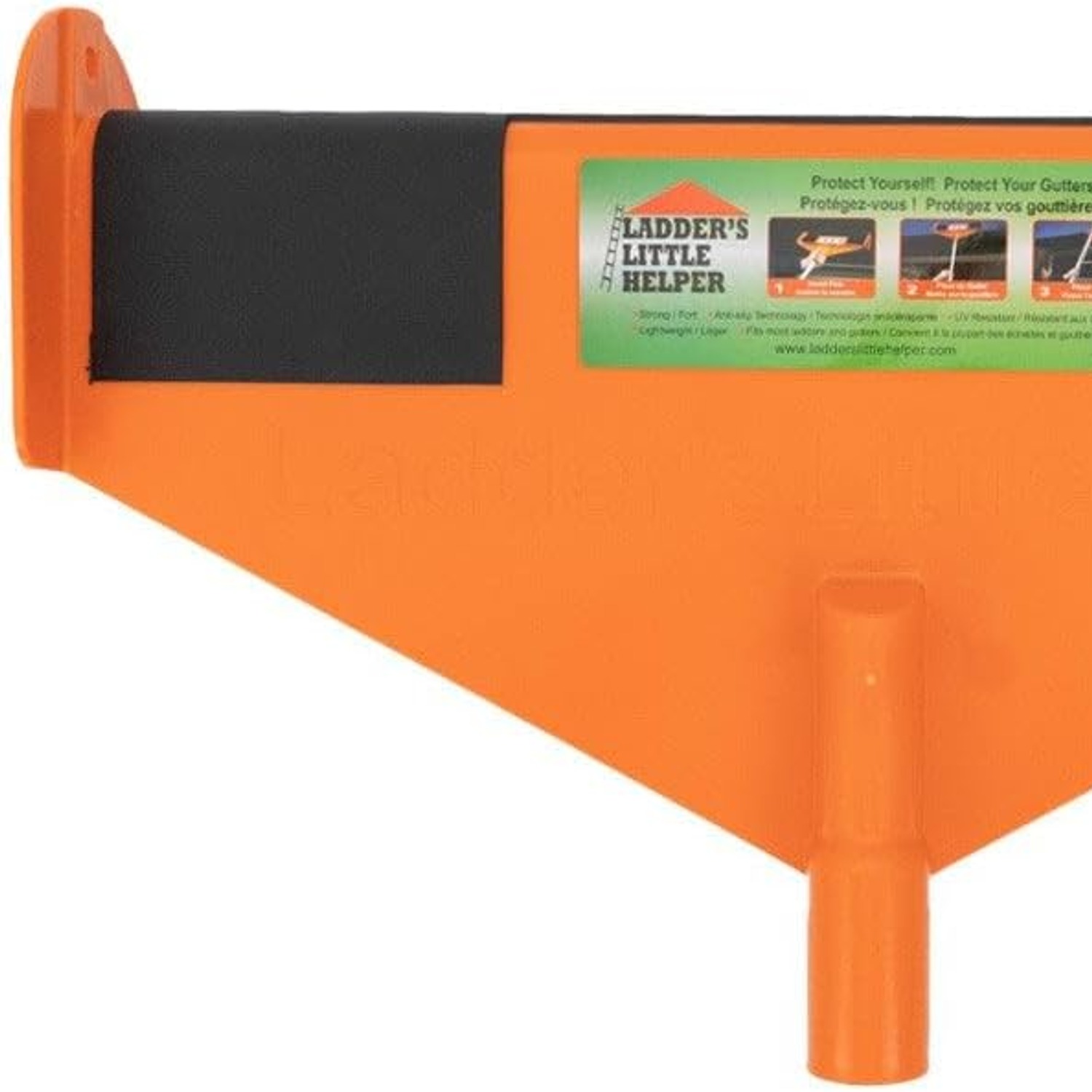
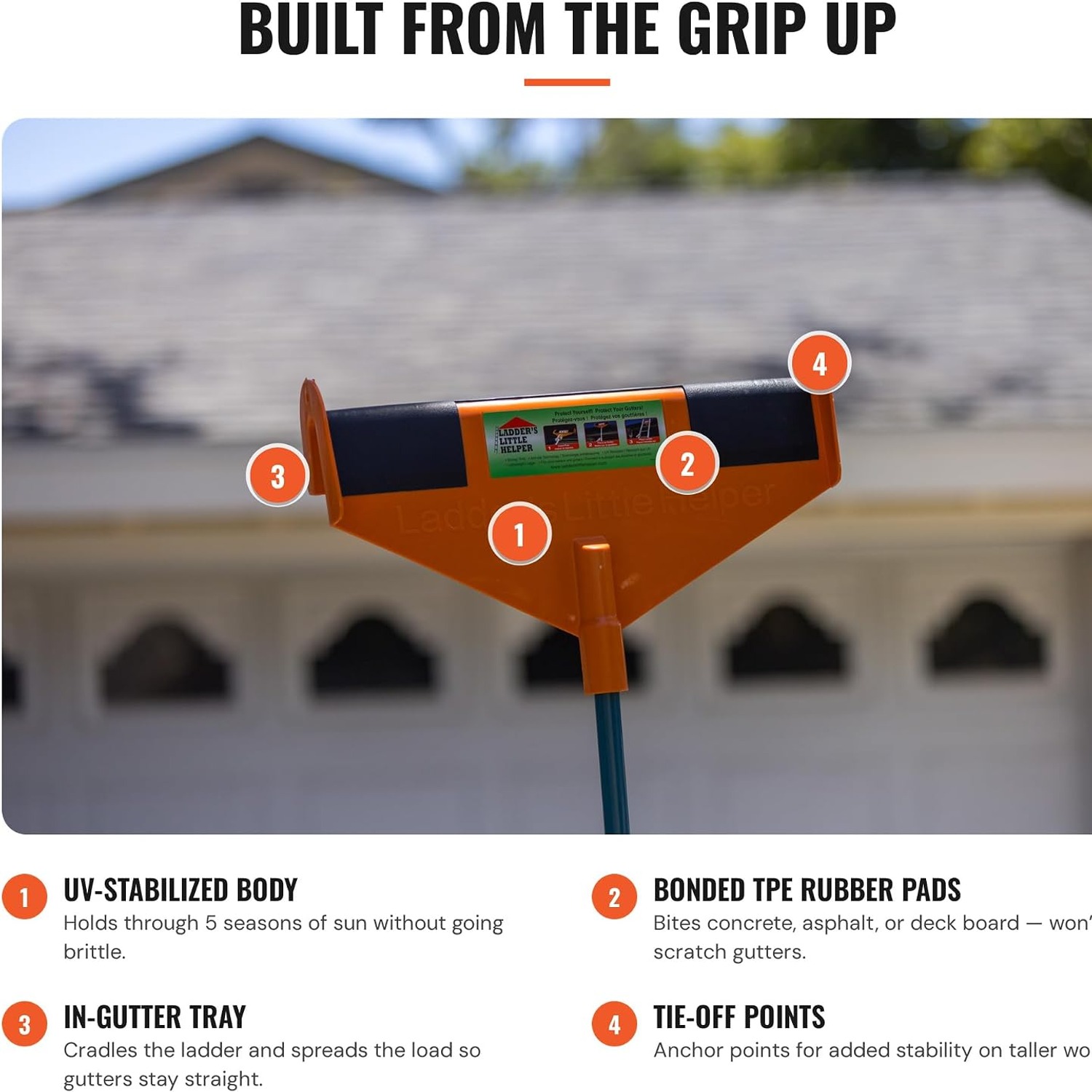
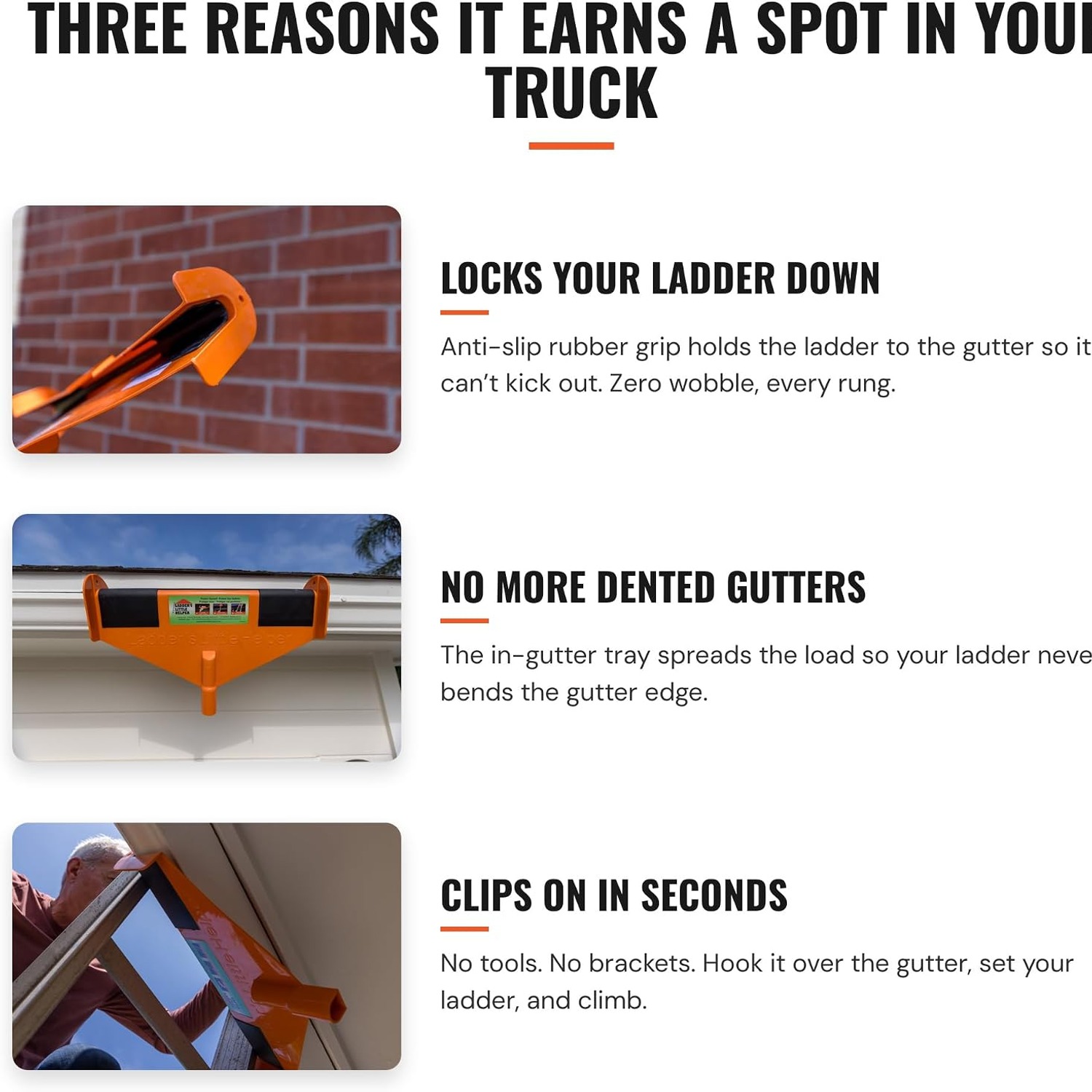
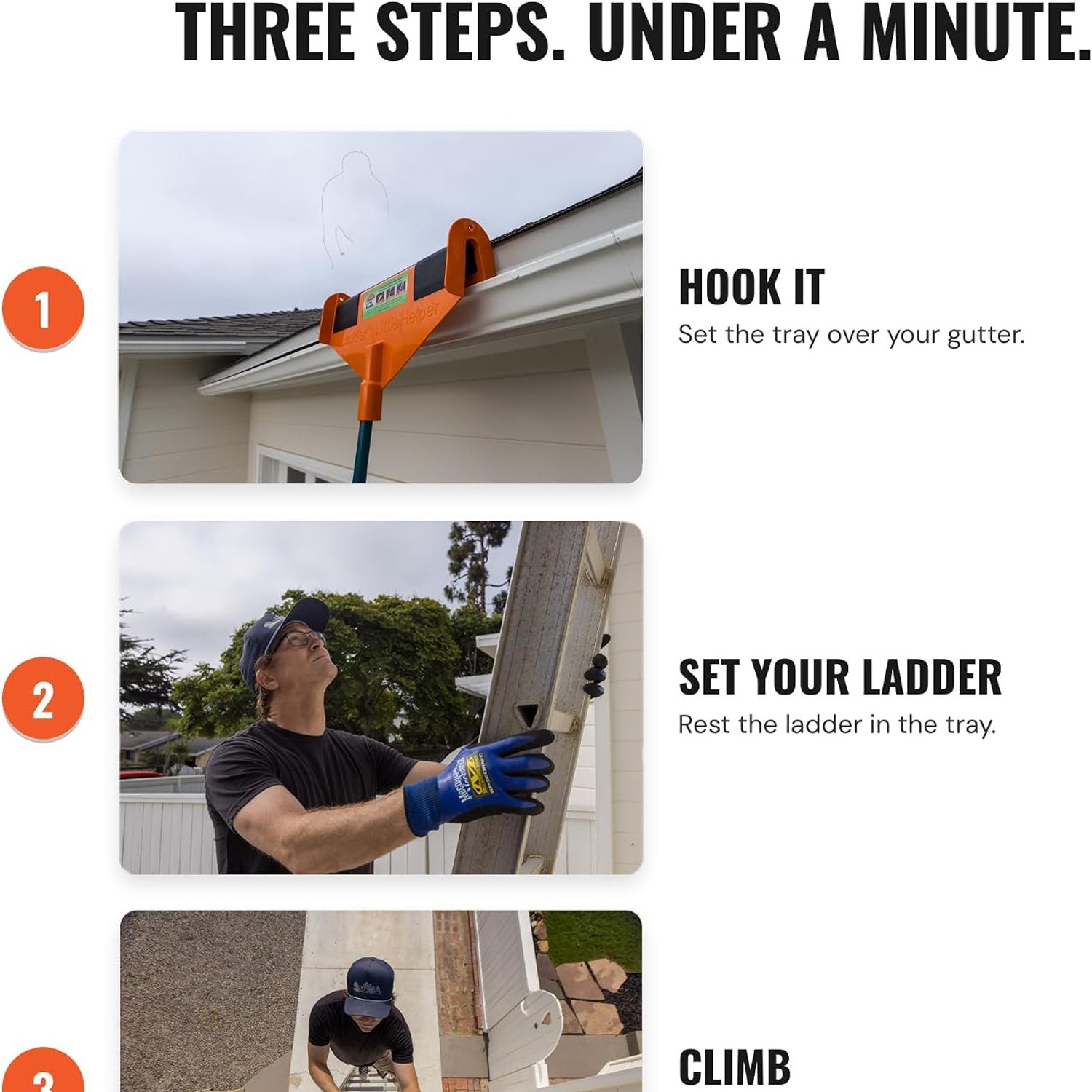
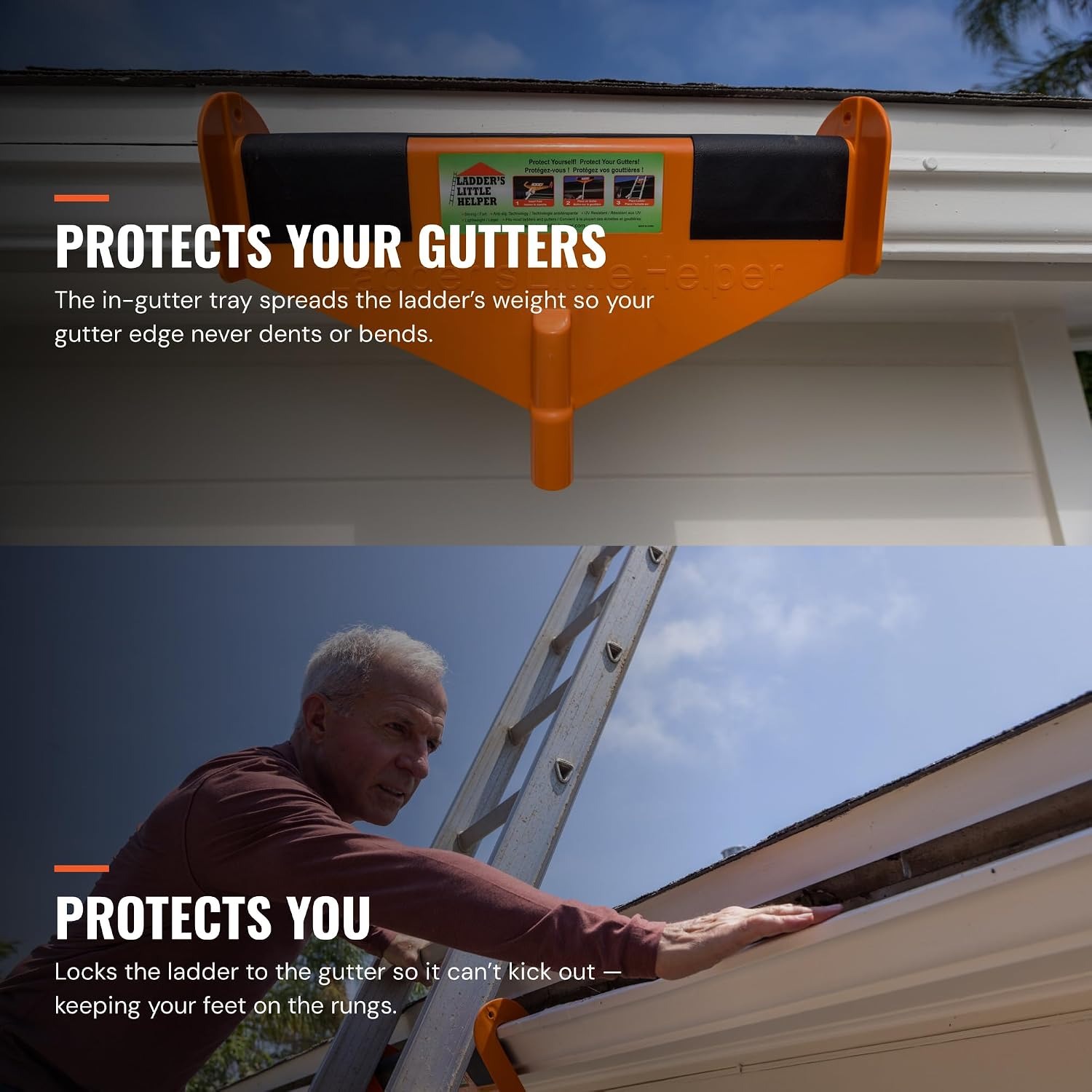
The unit sits in the gutter channel. The tray section cradles the gutter rail, so when the ladder presses down, the load is carried across a wide span of the gutter rather than at two pinch points. That is the "gutter protector" half of the job.
On the underside, bonded rubber grips the gutter lip. Rubber on metal has far more friction than aluminum on metal, so the ladder top is held in place rather than free to creep. The unit also spans both ladder rails, which means the rails are tied together at the top and cannot independently wander. That is the "stabilizer" half.
Then there is the standoff effect. Because the unit stands the ladder off the face of the house, you get working clearance between your chest and the wall. That sounds minor until you have tried to scoop wet leaves out of a gutter while pressed flat against brickwork. With a few inches of clearance you can keep your shoulders square, keep three points of contact, and actually reach down into the channel.
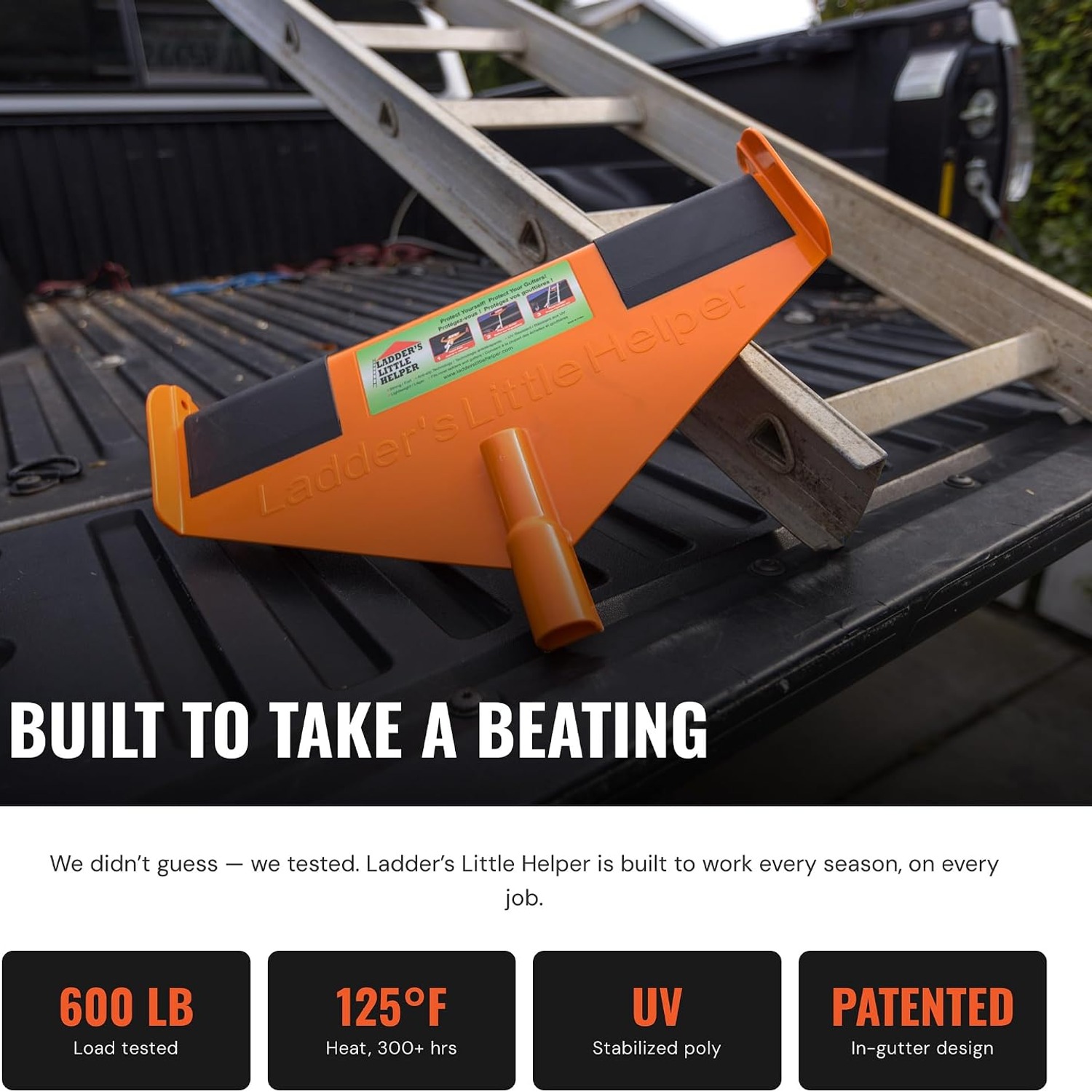
The body is moulded from UV-stabilized polypropylene. Two practical consequences follow from that. First, nothing rusts, which matters a lot for a tool that lives outdoors and gets wet. Second, there is no bare metal pressing against aluminum guttering, so you avoid the scratching and galvanic nuisance that metal brackets can cause on coated gutters.
It clips on without tools. No straps to thread, no bolts, no drilling into anything. The whole unit is about 18.63 x 4.25 x 11.75 inches and weighs around a pound, so you can carry it up with one hand.
Who it suits
Homeowners are the obvious group. If you clean your own gutters twice a year, in autumn after leaf fall and again in spring, this is the accessory that makes those two jobs less nerve-racking and keeps your guttering looking the way it did when it was installed.
It also suits people looking after a second property. Holiday houses and rentals often get a quick maintenance visit once or twice a year, and those are exactly the visits where someone throws a ladder up against the gutter and does not think about the mark it leaves.
Painters and handy types who do fascia, soffit, and siding work near the roof line get value out of the standoff clearance more than the gutter protection. Holding the ladder off the wall means you can work on the surface in front of you instead of beside you.
It is less relevant if you have concealed or capped gutters with an unusual profile, or if you never lean a ladder against the gutter at all and always use a roof anchor or scaffolding. Check your gutter profile against the dimensions before you buy.
Choosing the right one
A few things separate a good ladder standoff for roof work from a frustrating one.
Fit comes first. Measure the width and depth of your gutter channel and the height of the front lip. If your rail is unusually deep or very narrow, compare it against the 18.63 x 4.25 x 11.75 inch footprint listed here before ordering. Most standard residential open-channel gutters are straightforward, but it costs nothing to measure.
Material matters more than people expect. Metal stabilizers are strong but they rust, they can mark painted gutters, and they are heavier to carry up a ladder. A moulded polypropylene ladder standoff avoids all three issues, as long as the plastic is UV stabilized so it does not go brittle after a couple of summers on a sunlit roofline.
Fitting time is the thing that decides whether you actually use the tool. Anything that needs straps threaded, bolts tightened, or a second person tends to stay in the shed. A clip-on fitting that takes seconds is one you will bother with every time, which is the whole point.
Weight is worth a thought as well. Anything you have to carry up the ladder should be light enough to manage in one hand while keeping your other hand on a rung. A pound is fine. Several pounds is not.
Finally, look for tie-off points. Being able to secure the ladder with a rope or strap to a solid anchor adds a genuine layer of safety on exposed or windy sites. Tie to something structural, never to the gutter itself.
Using it safely
A stabilizer improves the top of your ladder setup. It does nothing for the bottom, and the bottom is where most problems start.
Set the feet on firm, level ground. Soft lawn after rain is a classic trap, because the feet sink unevenly while you are up there. Use a board under the feet if you have to work on grass or gravel.
Keep the lean angle sensible, roughly one unit out from the wall for every four units of height. Too steep and the ladder wants to tip backward. Too shallow and the feet want to skid out.
Maintain three points of contact. Two feet and a hand, or two hands and a foot. If a task requires both hands and a lean, reposition the ladder instead. Moving the ladder four times is slower than one fall.
Do not stand on the top two rungs, and do not reach past the point where your belt buckle passes the side rail. If you cannot reach it comfortably, climb down and move along the run. The standoff clearance helps here, but it does not extend your arms.
Check the stabilizer before each climb. Look for cracks in the plastic, splits or lifting in the rubber base, and any deformation. Plastic that has gone chalky or brittle should be retired.
Looking after it
Maintenance is almost nothing. Rinse the unit with plain water after use to clear leaf matter, grit, and mud, then let it dry properly before you put it away. Pay attention to the rubber base, because a layer of dried dirt on rubber turns a high-grip surface into a slippery one.
Store it flat, dry, and out of direct sun. A shelf in the garage or a hook on the wall is ideal. Leaving it clipped to the gutter year round gives it weather exposure it does not need.
The manufacturer lists a warranty of one year from date of manufacture, so hang on to your order confirmation.
The short version
If you lean a ladder on your gutters, you are slowly damaging them, and you are standing on a top point with very little grip. This clip-on unit fixes both at once. It spreads the ladder's load across the gutter rail, grips the lip with bonded rubber so the rails stay put, and holds the ladder off the wall so you have room to work.
It is light at about 0.45 kg, moulded from UV-stabilized polypropylene so it will not rust, fits in seconds with no tools, and stores flat. Measure your gutter profile first, set your ladder feet properly, and it will do its job quietly for a long time.