
The complete guide
How To Choose A 6 Inch Gutter Guard That Actually Keeps Working
The problem with an open gutter
An open gutter is a long, shallow tray mounted under the one part of your house that collects everything the sky drops. Leaves, seed pods, pine needles, moss fragments, grit washed off shingles, the odd tennis ball. All of it lands in the channel, and gravity does the rest.
For a few months nothing happens. Water still gets past the debris. Then a wet week hits, the half-rotted pile swells, and the channel stops draining. Water backs up, finds the lowest point on the front edge, and pours over in a sheet. That sheet lands against the wall, splashes up the cladding, and soaks into the ground right beside the footing.
That is the real cost. The blocked gutter itself is a nuisance. The water going where it was never meant to go is the expensive part.
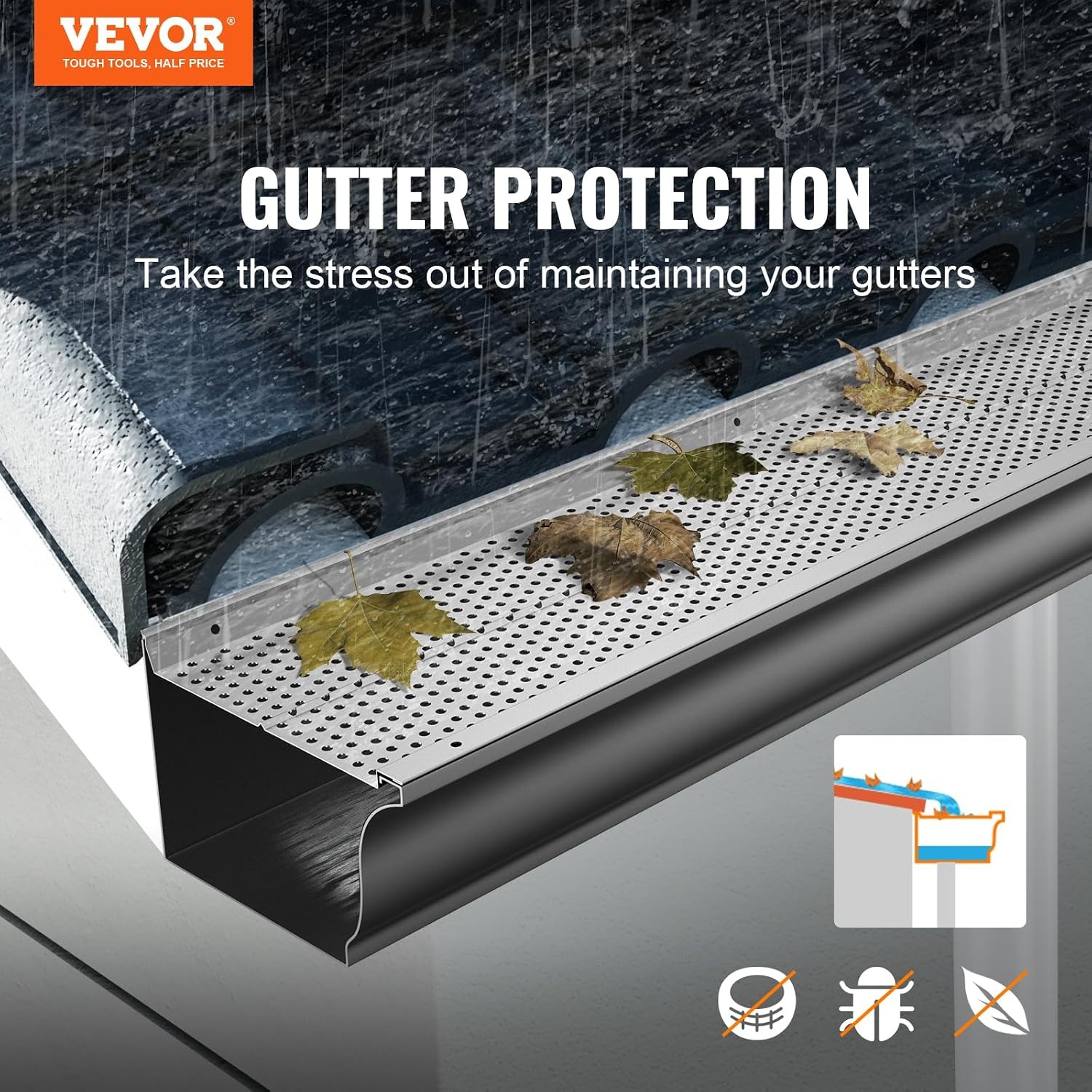
A gutter cover does one simple job. It puts a lid on the trough so rain gets in and debris does not. Everything else, the material, the hole size, the fixing method, is detail about how well it does that job over years rather than months.
How a perforated aluminum guard works
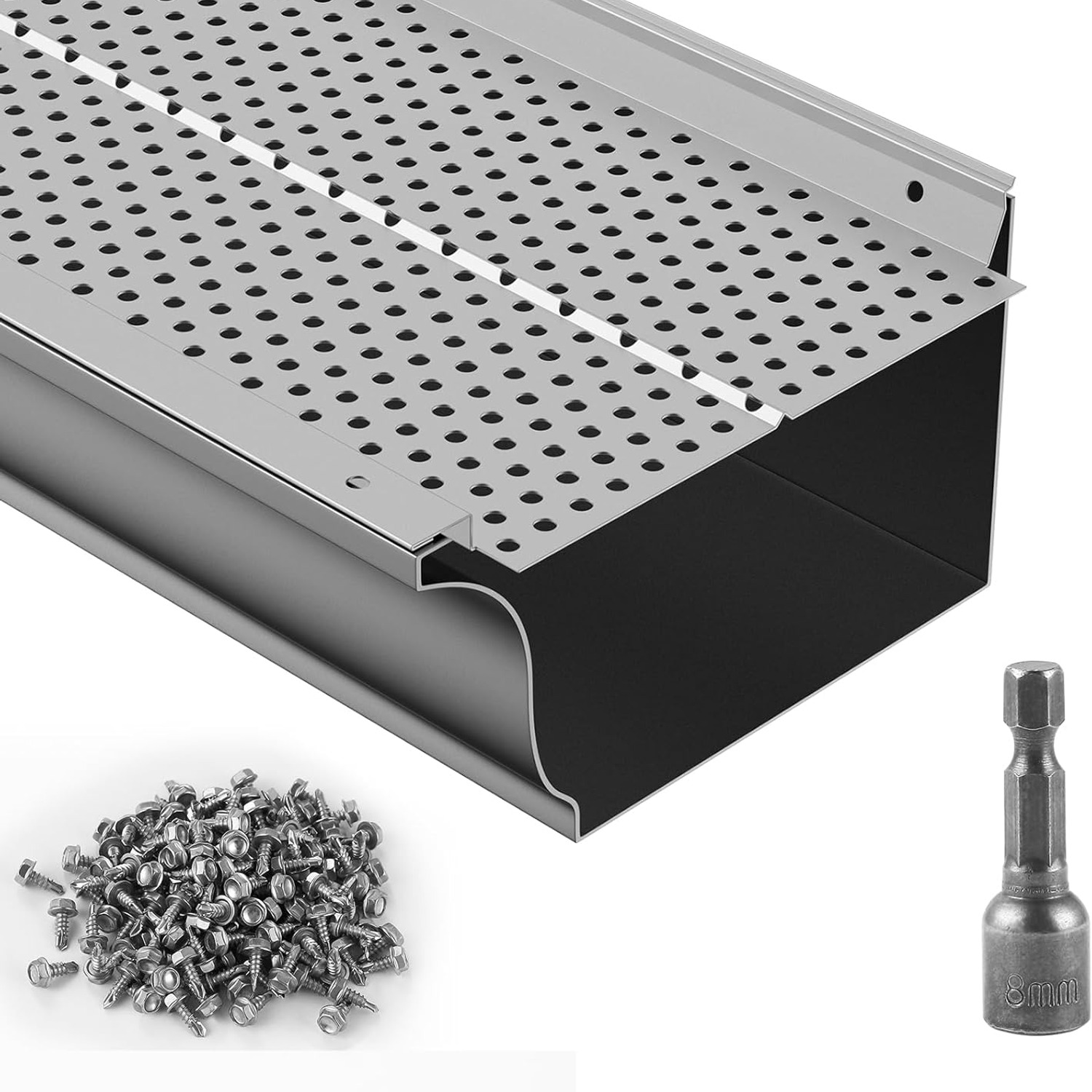
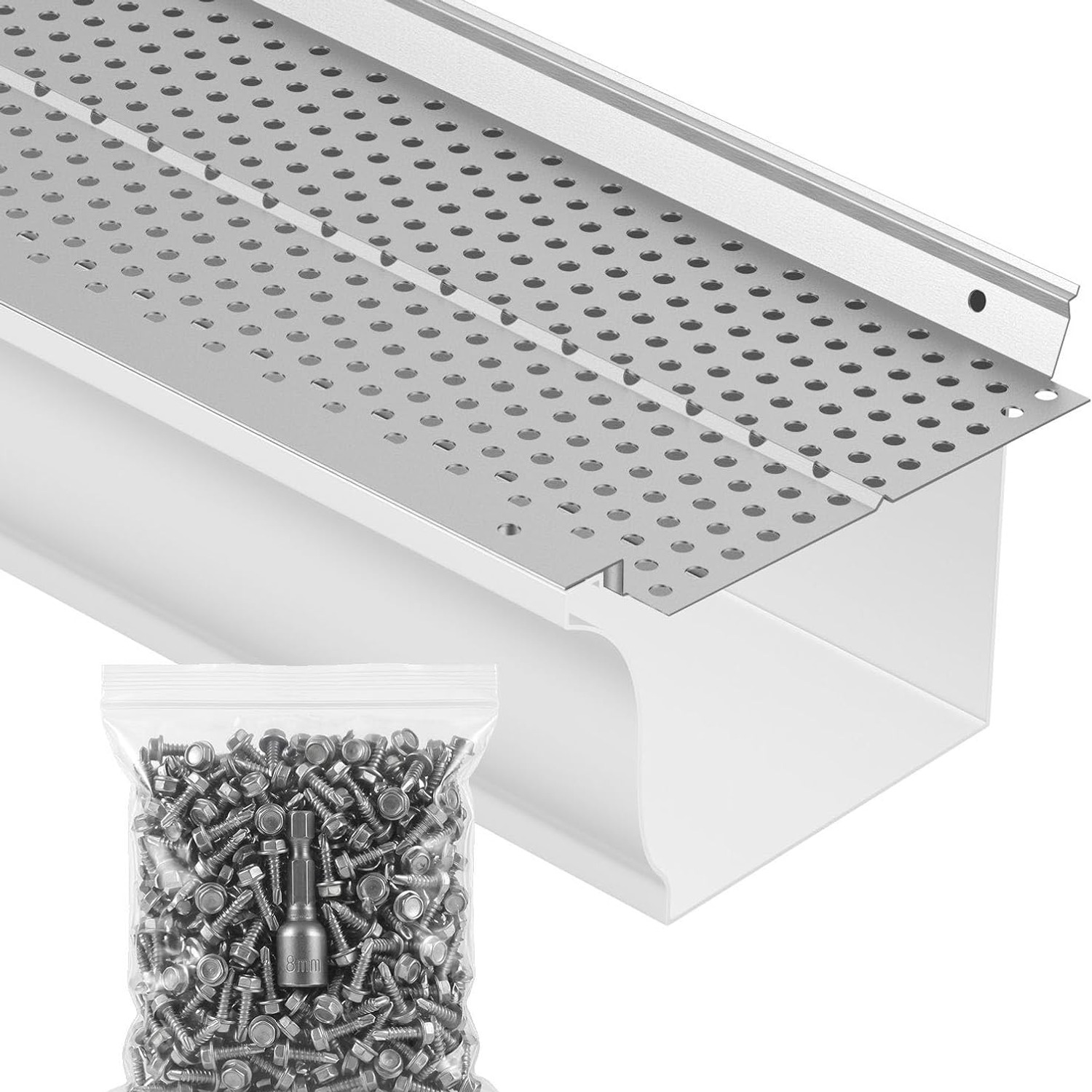
This kit uses flat perforated panels rather than a dome, a brush insert or a foam filler. Each plate sits across the gutter opening with folds at the front and back that screw down.
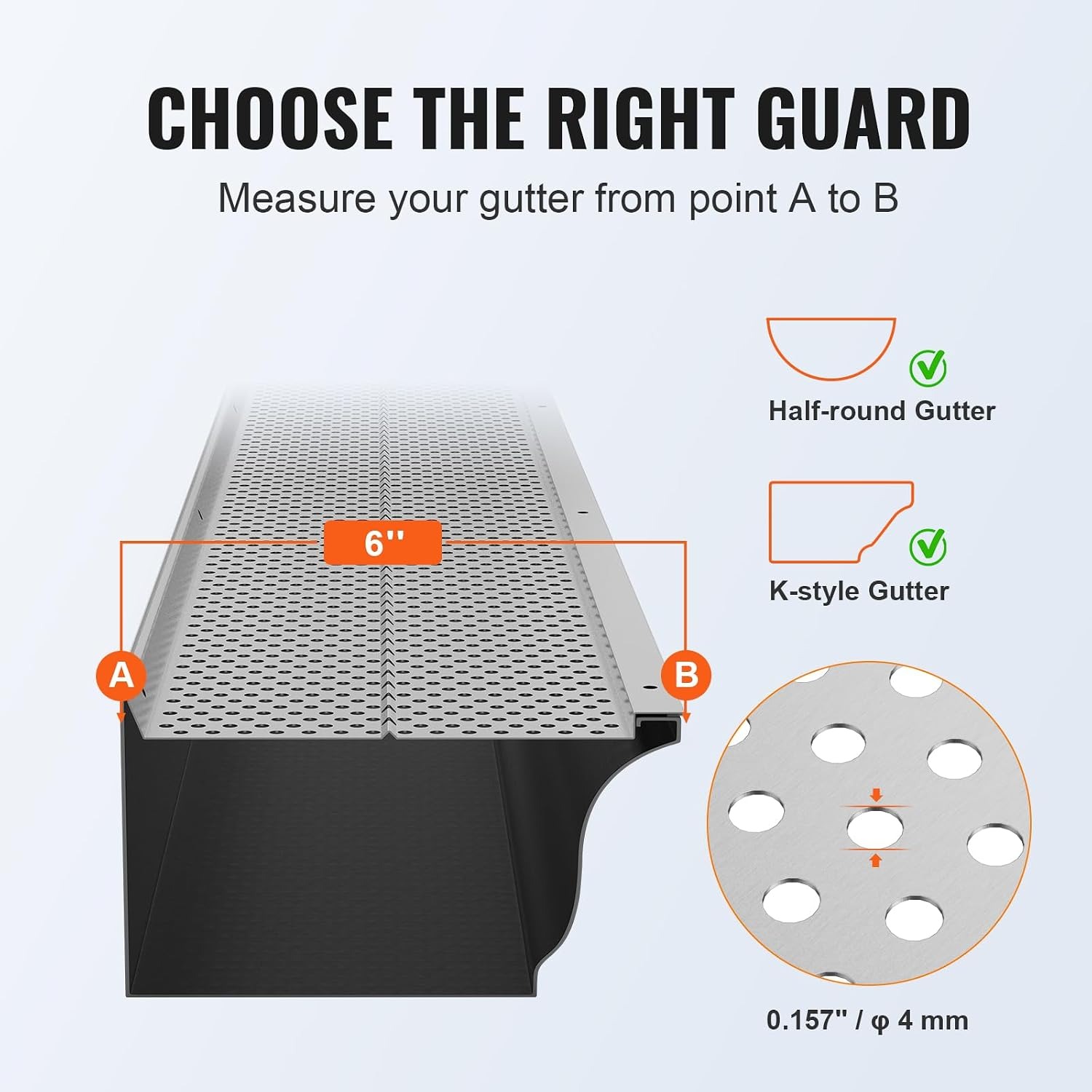
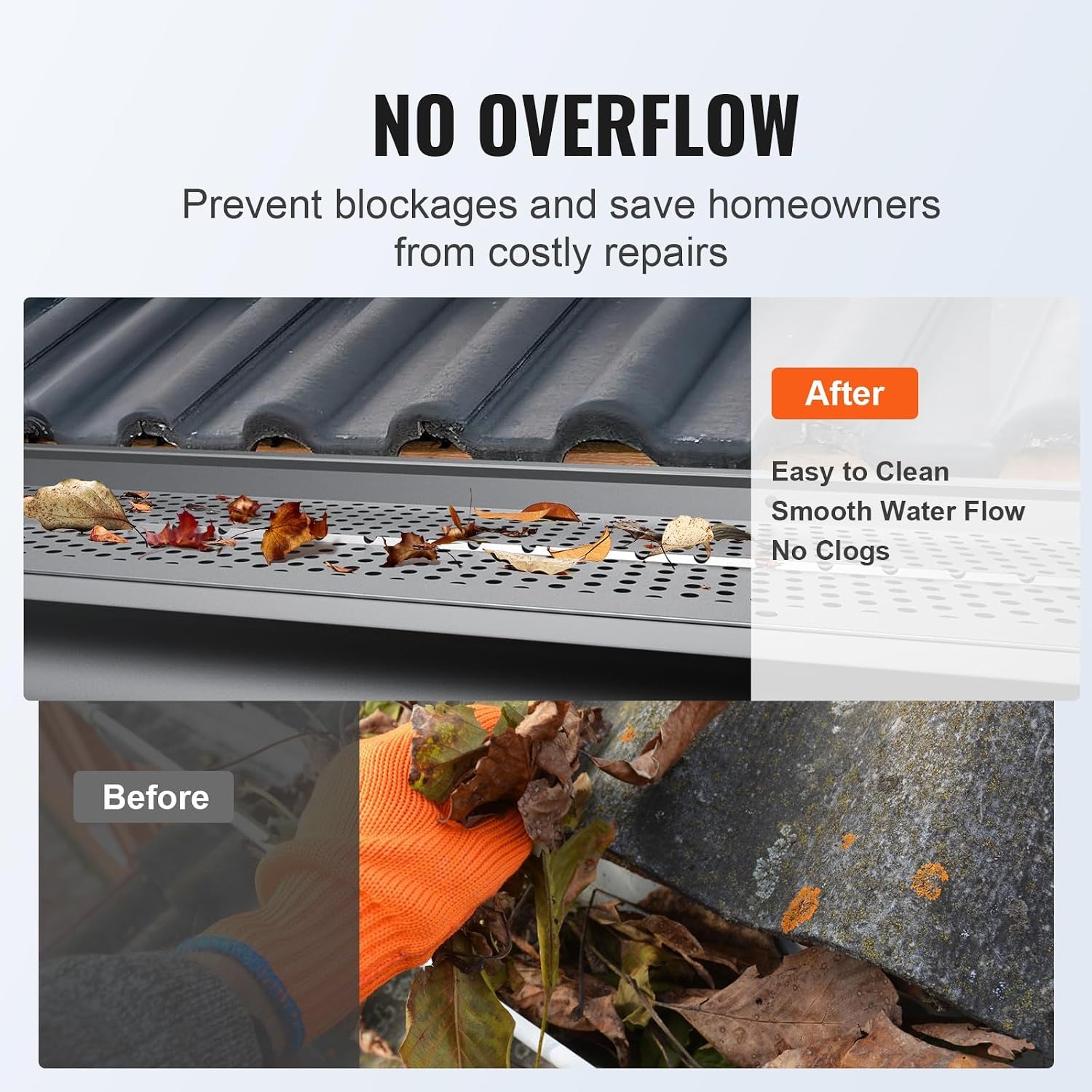
The surface is punched with 4 mm holes. Rain hits the panel, finds a hole almost immediately, and drops through. Leaves are far wider than 4 mm so they stay on top, where wind and the next rain shower push them off the edge. Pine needles are the interesting case. They are thin enough to slip through coarse screens but they tend to lie flat across a perforated sheet rather than stand on end, so they ride on the surface too.
Hole size is the single biggest design decision in any gutter guard, and it is a balancing act. Go wider and more debris falls through, which defeats the point. Go much finer and the surface can blind over with pollen, dust and shingle grit, especially in a dry spell. Water then runs across the top and overshoots the front. The 4 mm perforation used here sits in the middle, which is why this style has become the common choice for a perforated gutter screen on domestic roofs.
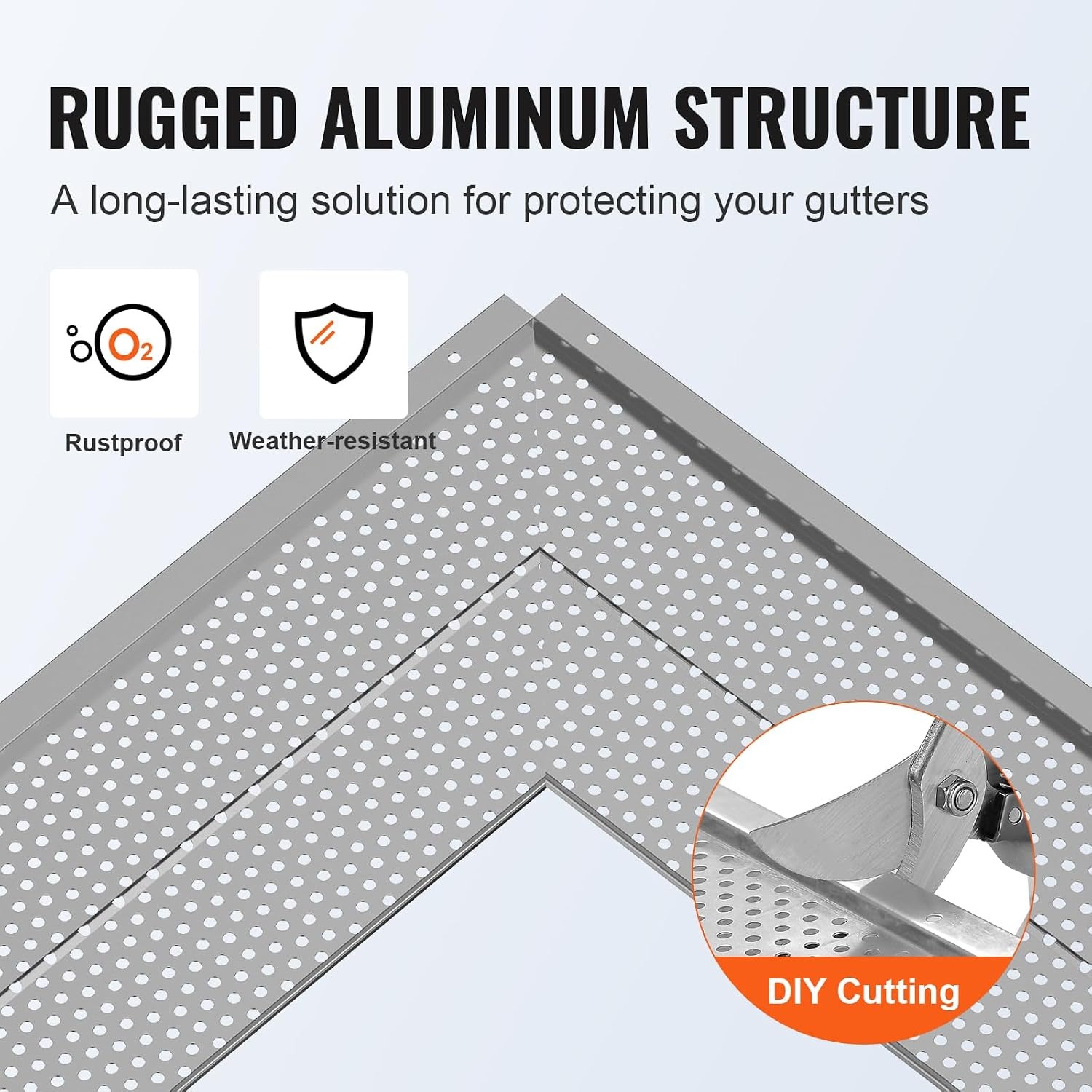
Aluminum matters for the long game. Gutters are permanently damp environments. Plain steel in that setting eventually stains and corrodes, and plastic mesh goes brittle after enough UV exposure. Aluminum does neither, which is why a rust free gutter guard tends to still look fine a decade in.
What you get in this kit
The numbers are worth knowing before you plan the job. There are 26 plates. Each one is 48 inches long and 6 inches wide, with a 0.6 inch profile once the folds are counted. Total coverage is 104 feet, or 31.7 meters.
Sheet thickness is 0.5 mm. That is thin enough to cut with hand snips and thick enough that the panel does not fold up when you handle it on a ladder. The whole kit weighs about 7 kg, so carrying panels up is not a struggle.
The screws are M4.8 x 13 hexagonal tapping screws, supplied with a bushing. Front and back folds arrive pre-drilled, which removes the most annoying part of fitting metal panels at height.
Color is silver, the plain aluminum finish. It reads as a neutral strip along the roof edge rather than a bolted-on accessory.
Who this suits
This is a kit for someone with 6 inch guttering and a willingness to spend a few hours on a ladder. If that describes you, the economics are good, because a professional gutter protection system install usually costs several times the material price.
It suits homes under trees, obviously. Deciduous trees drop in one concentrated burst each autumn, and that is when gutters fail. Pines are worse in a different way, because needles fall year round and pack tightly. A leaf guard for wide gutters earns its keep fastest in either situation.
It also suits anyone who simply should not be up a ladder twice a year. Reducing a recurring risky chore to an occasional hose-down is a reasonable thing to pay for.
It is less suited to very steep or very high rooflines where access is genuinely difficult. The product works the same at any height, but your safety does not. Second-story work deserves proper equipment or a professional.
Measuring and choosing quantity
Walk the perimeter with a tape and write down each run separately. Front, back, each side, the porch, the garage. Add them up.
Compare that total to 104 feet. If you land within a few feet of the limit, order with a margin. Corners and downspout outlets eat length, offcuts are rarely reusable, and running one panel short at the end of the day is a genuinely annoying way to finish.
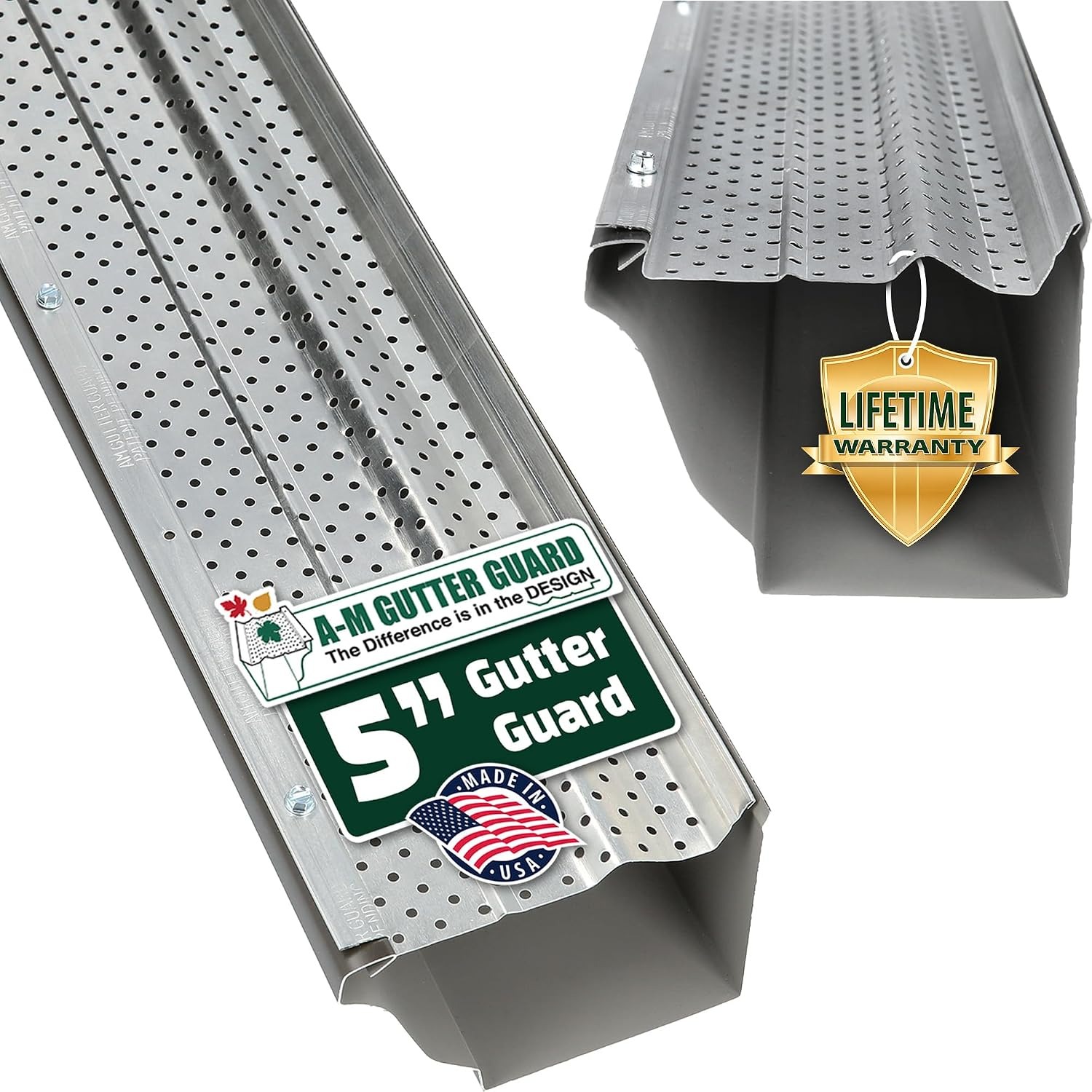
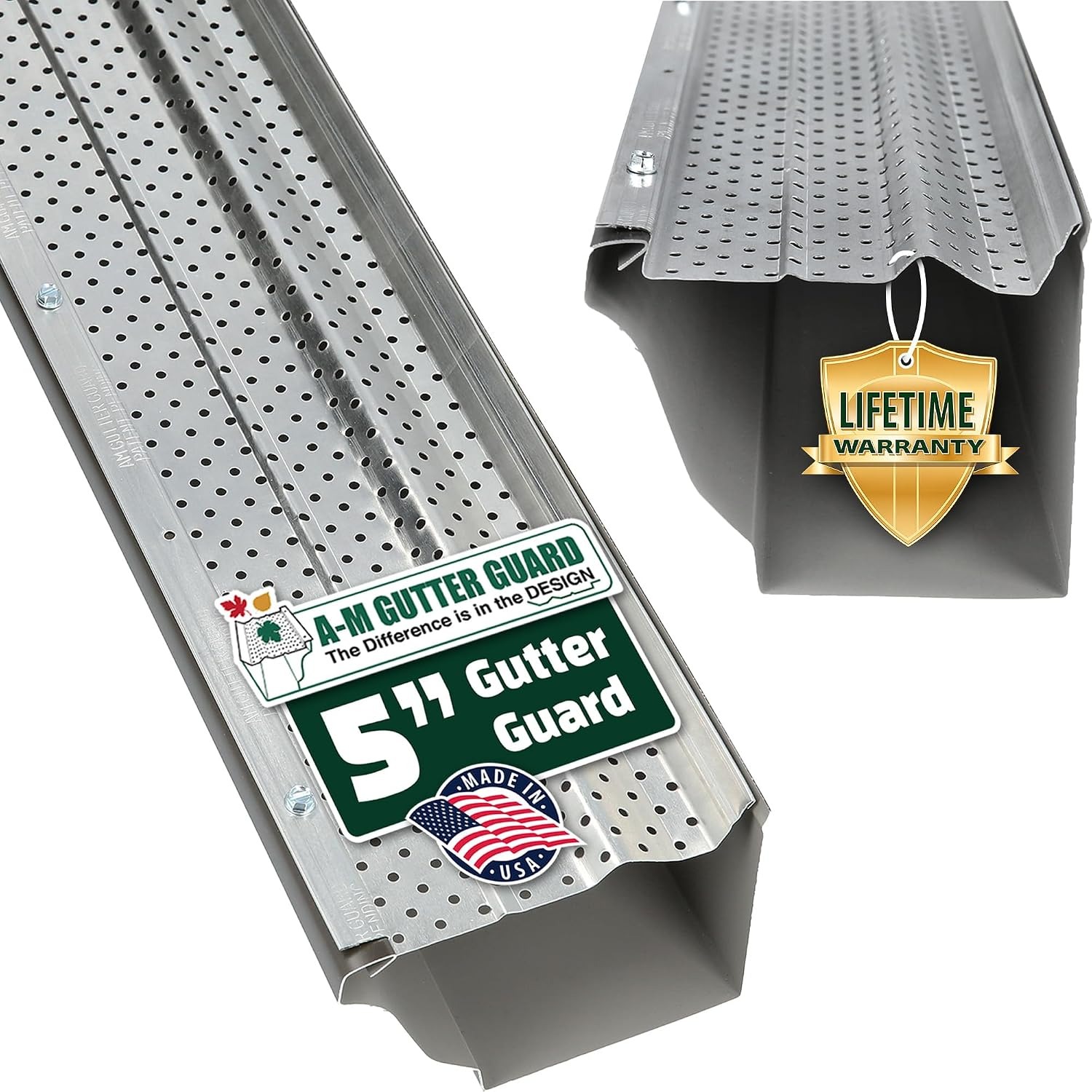
Also check the gutter width properly. Standard 6 inch guttering is what this kit is built for. Narrower channels are fine because you can trim the aluminum down. Wider channels are not, because a 6 inch panel will not bridge the opening securely. Measure the inside opening, not the outside face.
Installing it without drama
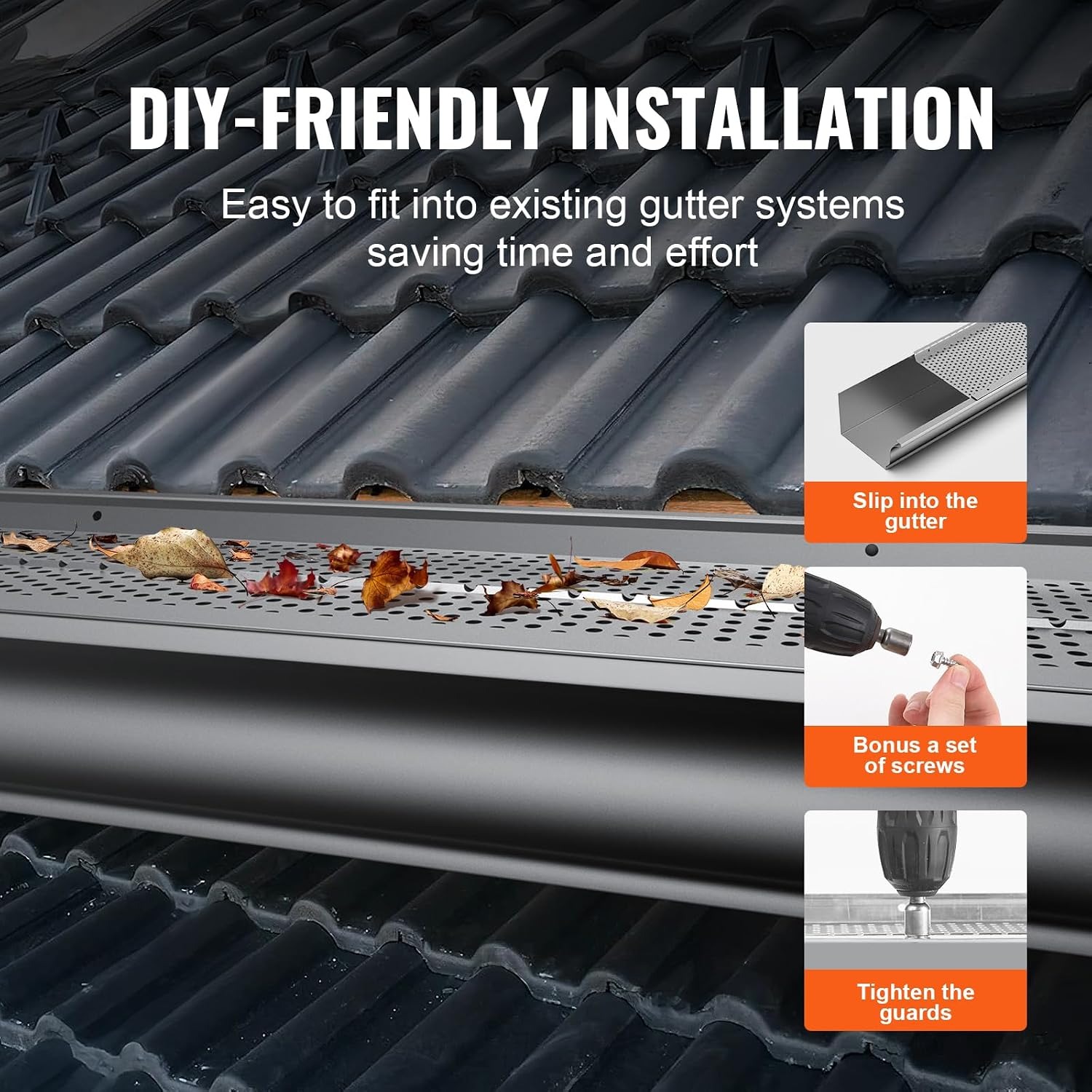
Start by clearing the gutters completely. A guard installed over a half-full channel just seals the mess in, and you will be pulling panels off within a year. Scoop, brush, flush with a hose, confirm the downspout runs clear.
Work in one direction, usually from the high end toward the downspout, so each panel overlaps the next in the direction of flow. Keep the overlap consistent. An inconsistent lap creates a small ridge where water can catch and debris can lodge.
Use the pre-drilled holes and the supplied screws. Drive them firmly but do not over-tighten, since thin aluminum will dimple if you lean on the driver. For corners and outlets, measure, mark, cut with snips, and knock down any burr with a file before fitting. Gloves are not optional here.
Set the ladder so you are never reaching sideways past your shoulder. Move the ladder more often than feels necessary. Most ladder incidents come from one over-reach, not from the climb itself.
Keeping it working
A screw in gutter guard is low maintenance, not no maintenance. Once or twice a year, run a hose over the surface and brush off anything sitting on top. Spring and late autumn are the natural times.
Check the screws after big storms. A panel that has lifted at one corner will catch debris and can rattle in wind. Tightening it takes a minute.
If you ever need to get inside the gutter, the panels unscrew and lift off. That is a real advantage over glued or riveted systems, which effectively seal the channel permanently.
Avoid pressure washers aimed directly at the panels. High pressure can drive water under the lap and deform thin sheet. A normal hose does everything you need.
The short version
This is a straightforward, sensible way to cover 104 feet of 6 inch guttering. Twenty-six aluminum panels, 4 mm perforations, pre-drilled folds, screws in the box.
The 4 mm hole size is the sweet spot for leaves, needles and roof grit. The aluminum will not rust in a damp channel. The flat low profile stays out of sight from the ground.
Measure your runs first, clear the gutters before you fit anything, and keep the top surface clean once a season. Do those three things and this becomes one of the cheaper pieces of maintenance you will ever do on a house.