


The complete guide
How To Choose A Micro Mesh Gutter Guard That Actually Stays Clear
The problem with gutters
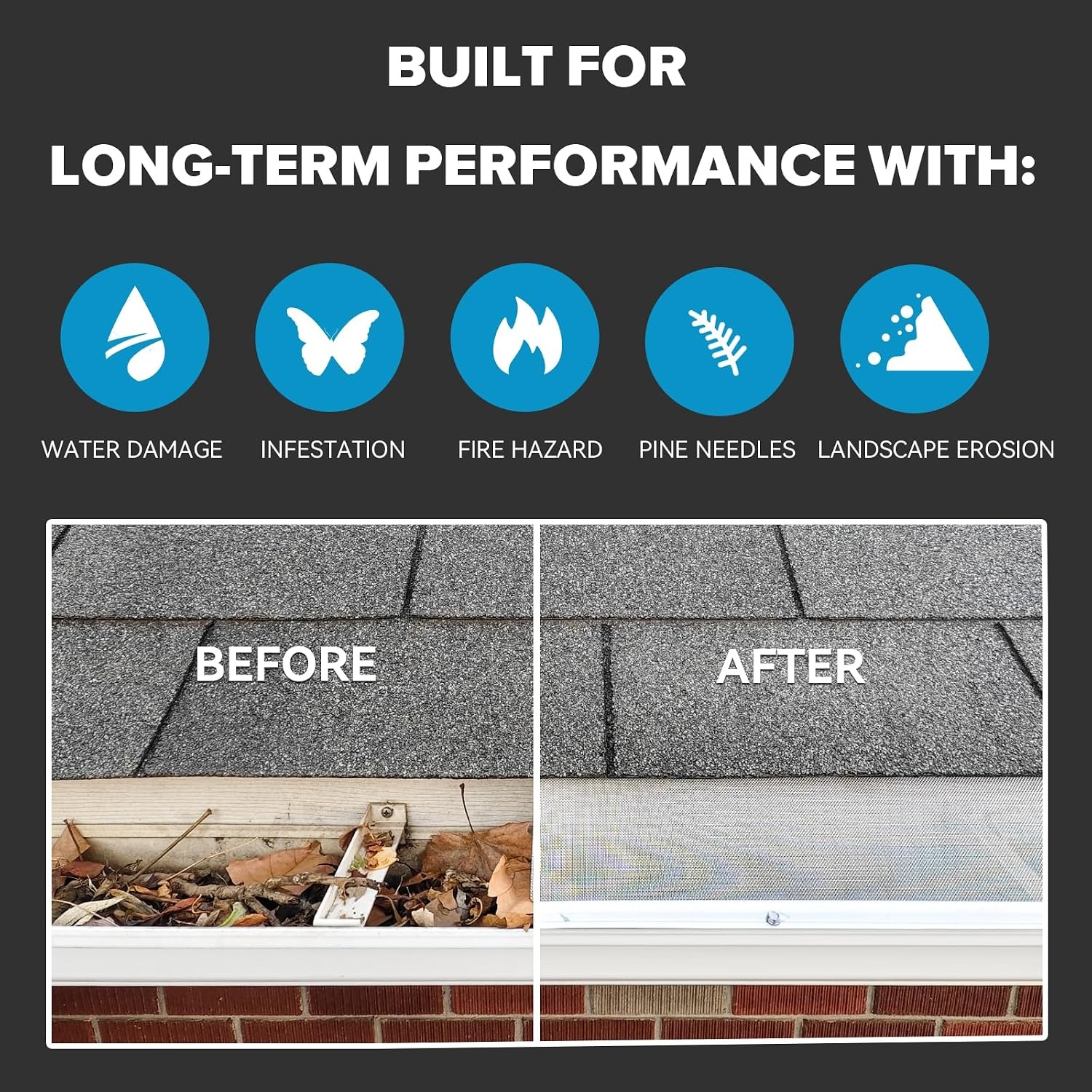
A gutter is a simple thing. It catches water off the roof and sends it to a downspout, away from your walls and footings. It works perfectly right up until it fills with leaves.
Then the water has nowhere to go. It backs up, spills over the front edge, and runs down the outside of the house. In a heavy storm it can soak the wall, drip into the eaves, or pool against the foundation. Over a few seasons that turns into peeling paint, rotted fascia boards, and damp where you really do not want damp.
The usual fix is to climb a ladder twice a year and scoop the mess out by hand. It is unpleasant work. It is also the most common cause of serious home injury among people doing their own maintenance, because gutters are at roof height by definition and ladders are only as stable as the ground under them.
A gutter guard is the alternative. Cover the opening with something that lets water through and stops everything else, and the ladder trips drop off sharply.
How micro mesh works
Not all gutter guards are equal, and the difference comes down to hole size.
Early gutter screens were basically chicken wire. They stopped a whole leaf from falling in, but anything smaller sailed straight through. Pine needles, seed pods, shingle grit and broken leaf fragments all passed, and those are exactly the materials that pack down into a solid plug at the downspout.
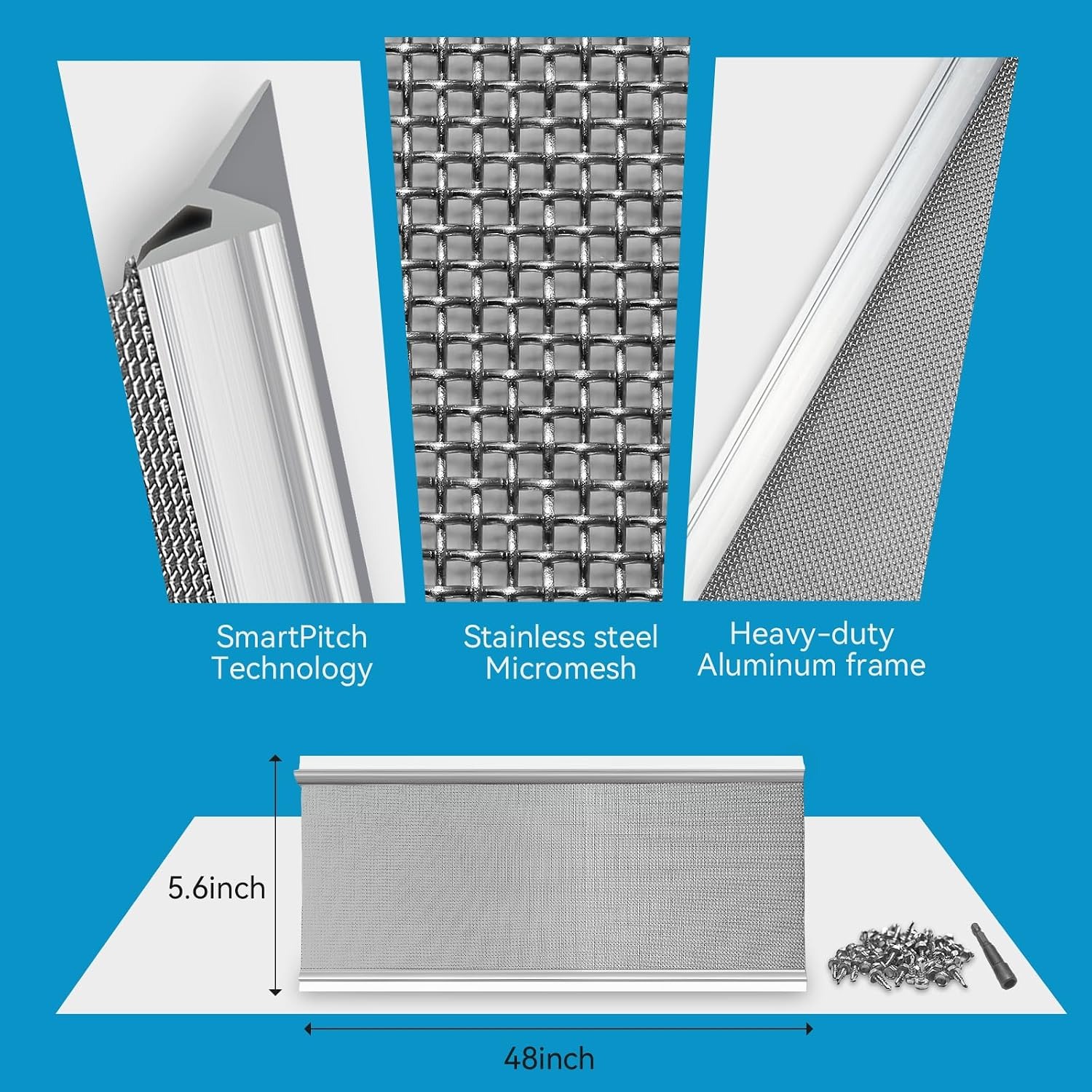
Micro mesh is the answer to that. The openings are measured in fractions of a millimeter rather than centimetres. Water molecules have no trouble, but solid debris does. The result is that the material stays on the surface, in the open, where sun and wind can deal with it.
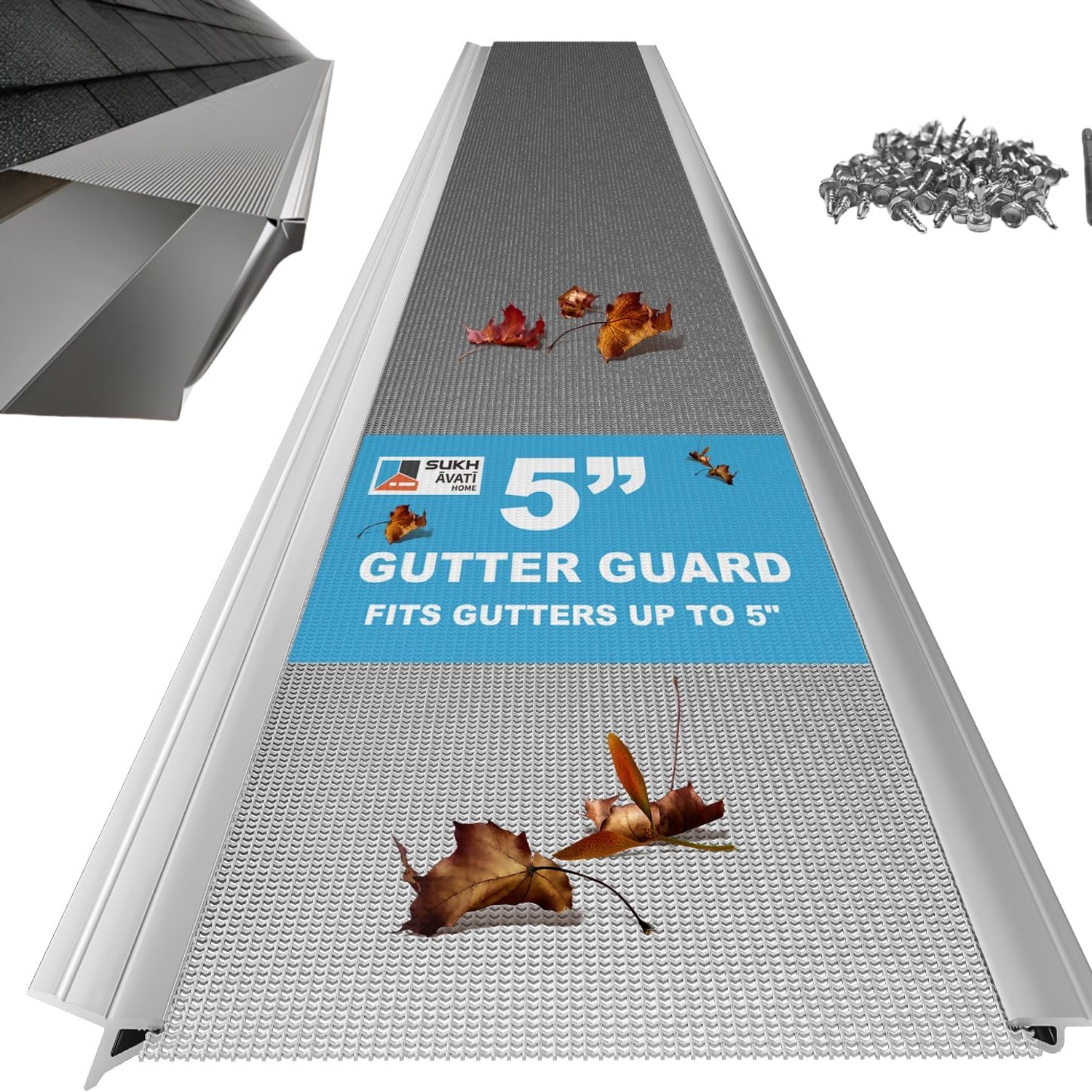
This kit uses stainless steel for the mesh and aluminum for the frame. That combination is deliberate. Stainless holds a fine weave without corroding, and aluminum is light enough that a 47 inch panel does not strain the gutter it sits on, while still holding the mesh flat and taut.
Who this suits
The clearest case is a home with trees nearby. Deciduous trees dump a load of leaves in autumn. Pines shed needles year round. Gums drop bark, nuts and seed capsules in every season. If you have any of those within reach of your roof, you already know the problem.
The second group is anyone who has stopped enjoying ladders. That might be age, a bad knee, a two story house, or simply a schedule where losing two weekends a year to gutter cleaning is no longer acceptable.
The third is anyone with a gutter that already overflows. If water spills over the front during normal rain, the gutter is either blocked, sagging, or undersized. Clear it, check the fall, and then guard it so it stays clear.
This kit is not for every gutter, though. The panels are made for 4 and 5 inch gutters or smaller. If you have a wide commercial box gutter or an unusual profile, measure carefully before you order.
How to choose and how much you need
Start with two measurements.
First, the inside width of the gutter at the opening. Hook a tape across the top from the back edge to the front lip. This number decides whether a 5 inch panel is right for you.
Second, your total linear run. Walk the house and measure every length of gutter you want covered. Add it up. This kit covers 48 feet, so compare that total against your number.
Most people do not guard the whole house at once. The gutters under trees fill fast. The gutters on the clear side of the house might go years without trouble. Starting with the problem runs is a sensible way to spend the money where it works hardest, and you can add a second kit later.
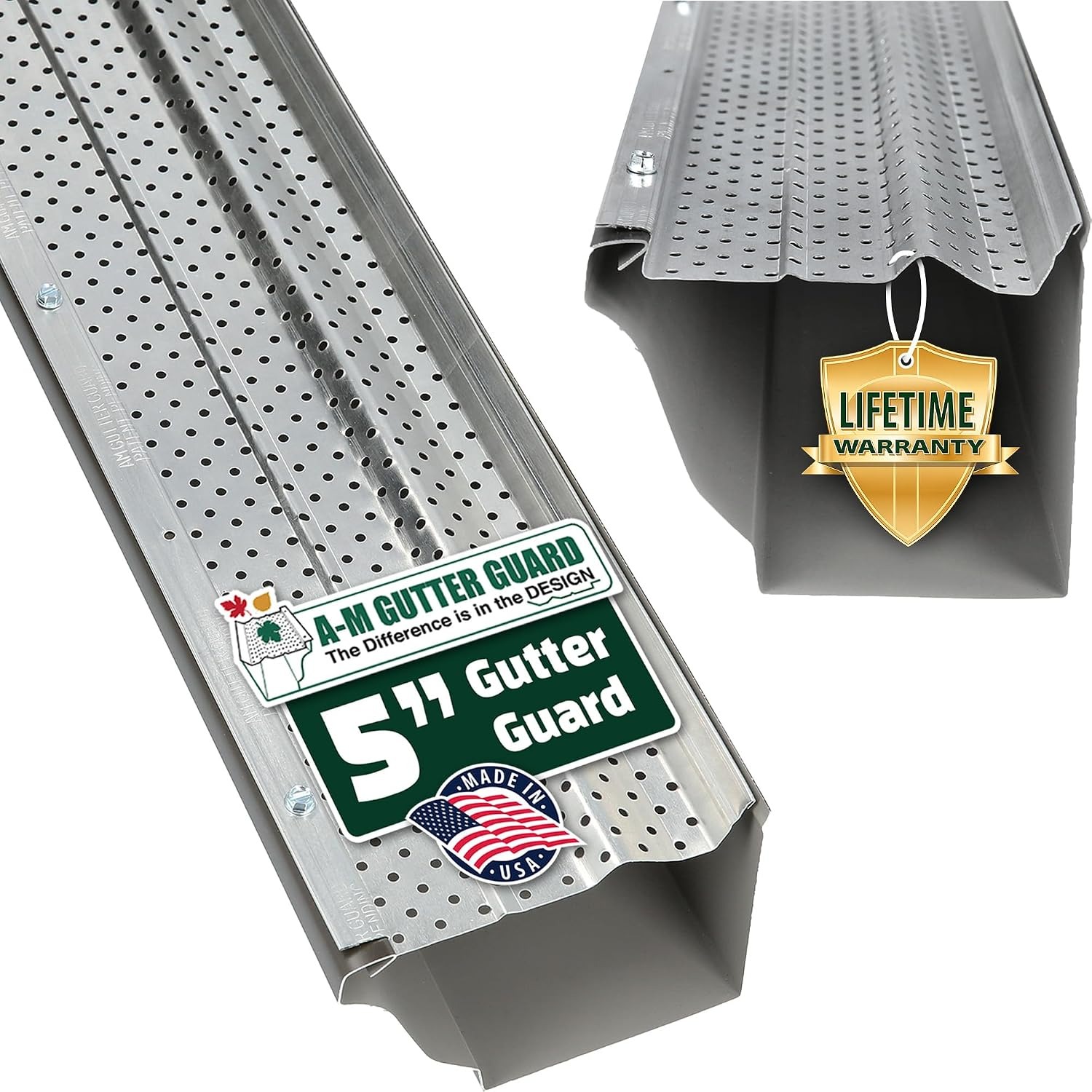
A few other things worth thinking about when comparing options. A screw down guard stays put, which matters in wind and matters more over years. Drop in guards and clip in guards can walk out of position after a few storms. A mesh guard also sits inside the gutter line, so from the street you see very little of it.
Fitting it
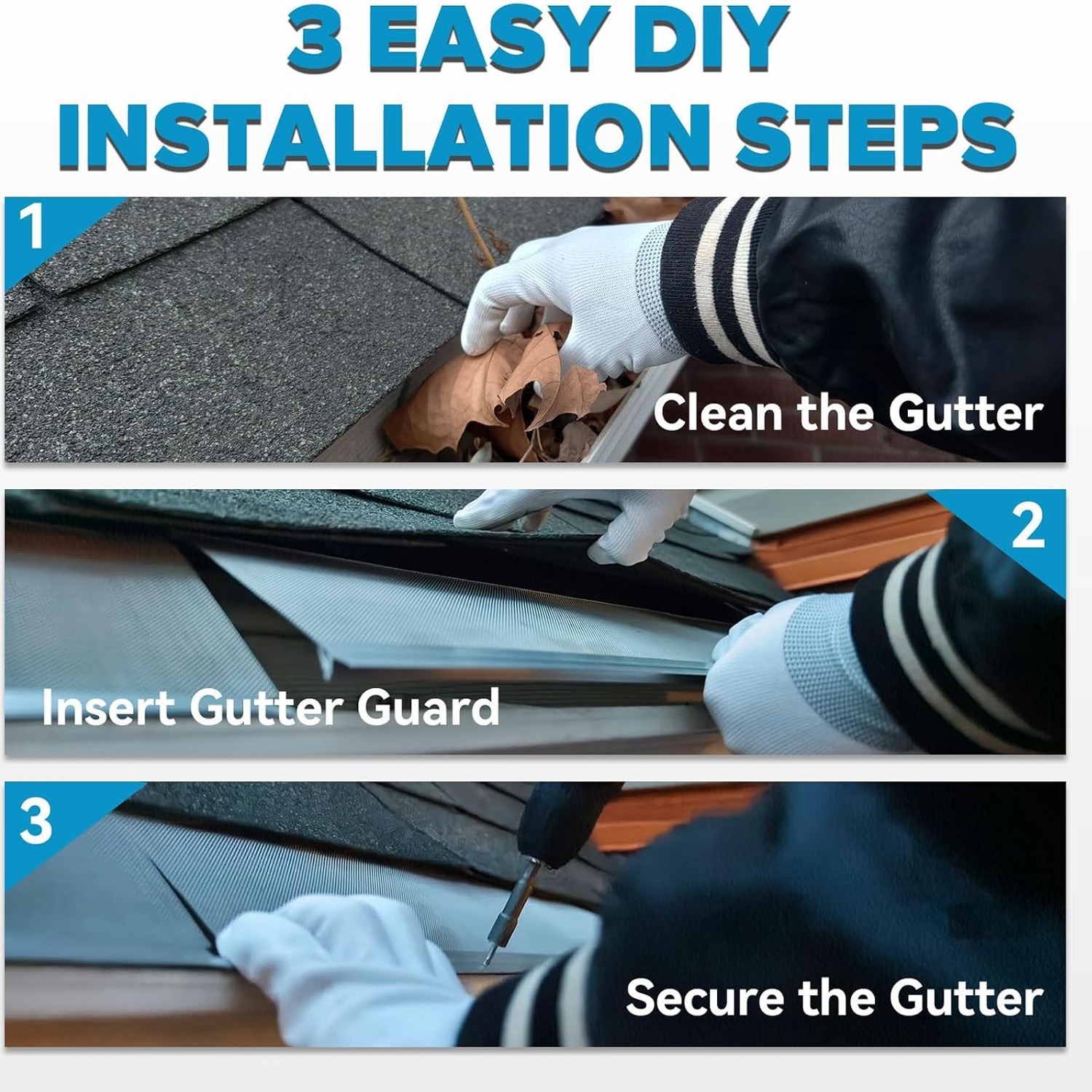
Clean the gutter first. This is non negotiable. Pull out everything, flush it with a hose, and confirm water runs to the downspout. Fitting a guard over an existing blockage just hides it.
While you are up there, check the condition of the gutter itself. Loose brackets, rusted sections or a reversed fall should all be fixed before a guard goes on. A guard will not rescue a gutter that was already failing.
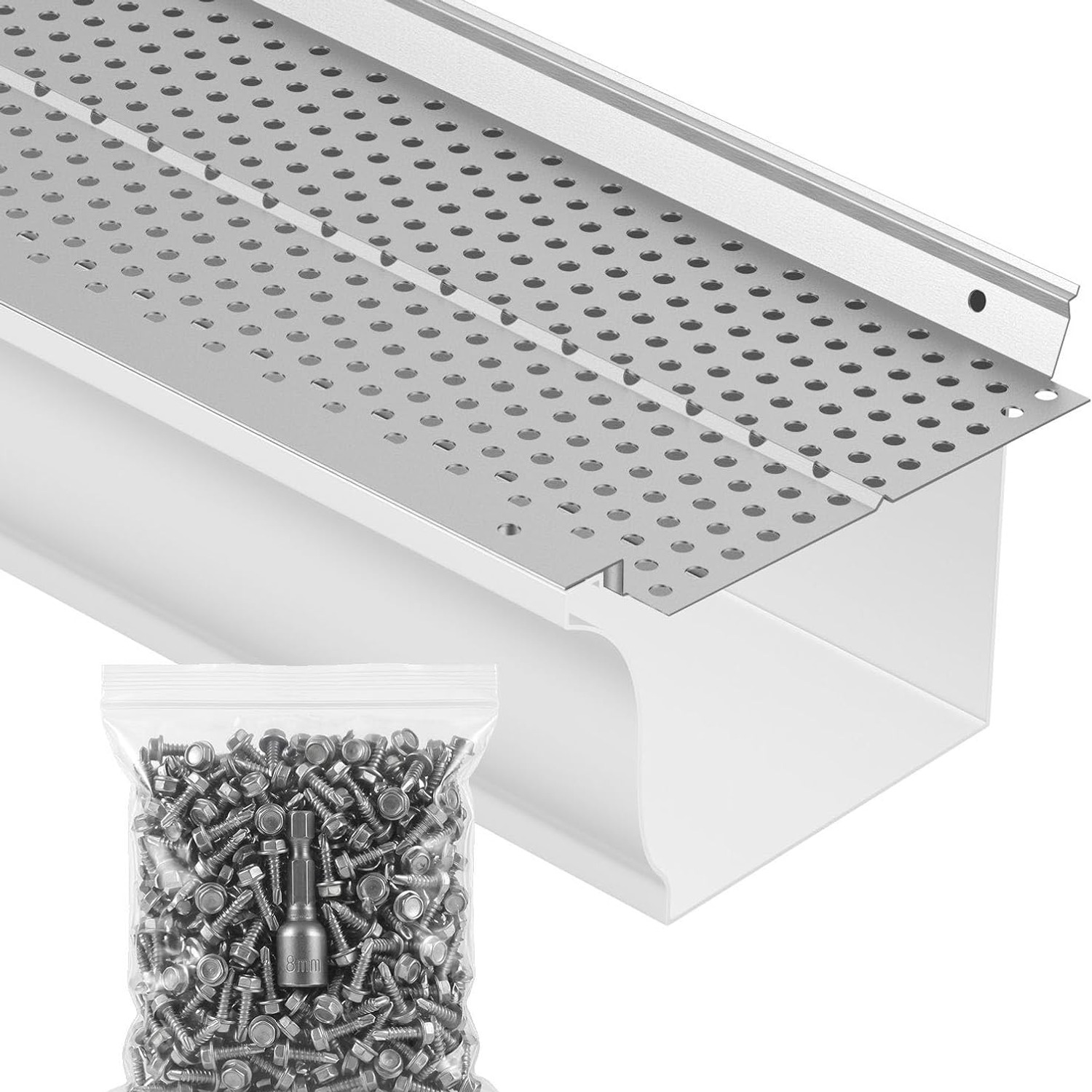
Then lay out your panels. Work from one end, position the first panel, and fasten it with the supplied self tapping screws using the hex socket. Wear the supplied gloves. Cut mesh edges are sharp and the aluminum frame edges can be too.
Panels run end to end along the gutter. The last panel in a run almost always needs trimming. Tin snips handle this, or a fine tooth blade if you prefer. Measure, mark, cut, and check the fit before you fasten.
Allow an afternoon for a 48 foot run including the cleaning. Most of that time goes on moving the ladder safely, not on the fastening itself. Have someone foot the ladder if you can.
Keeping it working
A gutter guard reduces maintenance. It does not abolish it.
Once or twice a year, look along the gutters from the ground. If you can see a mat of leaves sitting on top of the mesh in a sheltered corner, clear it. A soft brush on an extension pole often reaches from a ladder set lower than the gutter line, which is a safer position anyway.
Give the mesh a rinse with a garden hose annually. Fine grit from roof tiles and asphalt shingles can build into a film over several years, and water clears it easily before it sets. Avoid pressure washers. The force can dent fine mesh and work screws loose.
After a serious storm, check the screws. Wind lifts things it has no business lifting, and a quick pass with the hex socket takes minutes.
In cold climates, remember that a guard does not change how ice forms on a roof. Ice damming comes from heat escaping through the roof and melting snow that refreezes at the cold edge. If that is a problem on your house, the fix is insulation and ventilation, not hardware at the gutter.
The short version
Micro mesh works because the holes are small enough to stop the debris that actually clogs gutters, including pine needles and leaf fragments that defeat coarse screens.
This kit covers 48 feet with twelve panels, each 47 inches long and 5.3 inches wide, sized for 4 and 5 inch gutters or smaller. The mesh is stainless steel, the frame is aluminum, and both are chosen to stand up to constant wetting without rusting.
It screws on, with the screws, socket, gloves and guide supplied. That makes it a DIY job for a confident homeowner with a drill driver and a stable ladder.
Measure your gutter width and your total run before you order. Clean the gutters properly before you fit anything. Then rinse the mesh once a year and enjoy the time you get back.