


The complete guide
How To Choose And Fit Downspout Screens Without The Guesswork
The real reason gutters overflow
Walk around a house after a heavy shower and you will often see one gutter spilling while the rest run fine. People assume the trough is full. Usually it is not. The trough is fine and the outlet hole is plugged.
That hole is the choke point. A gutter might be five inches wide along its length, then narrow to a three inch circle where it drops into the pipe. Every leaf, seed pod and bit of roof grit the gutter collects eventually washes toward that circle. Wet leaves flatten and stack like coins. Once two or three have wedged in the throat, everything behind them stops moving.
What follows is predictable. Water backs up, finds the lowest point on the front lip, and pours over. It runs down the wall, soaks the ground beside the footings, and over the years that constant wetting causes the expensive problems: damp walls, rotted fascia, cracked paths and garden beds that wash out.
A downspout screen does one job. It keeps the debris above the hole instead of in it.
How a downspout strainer works
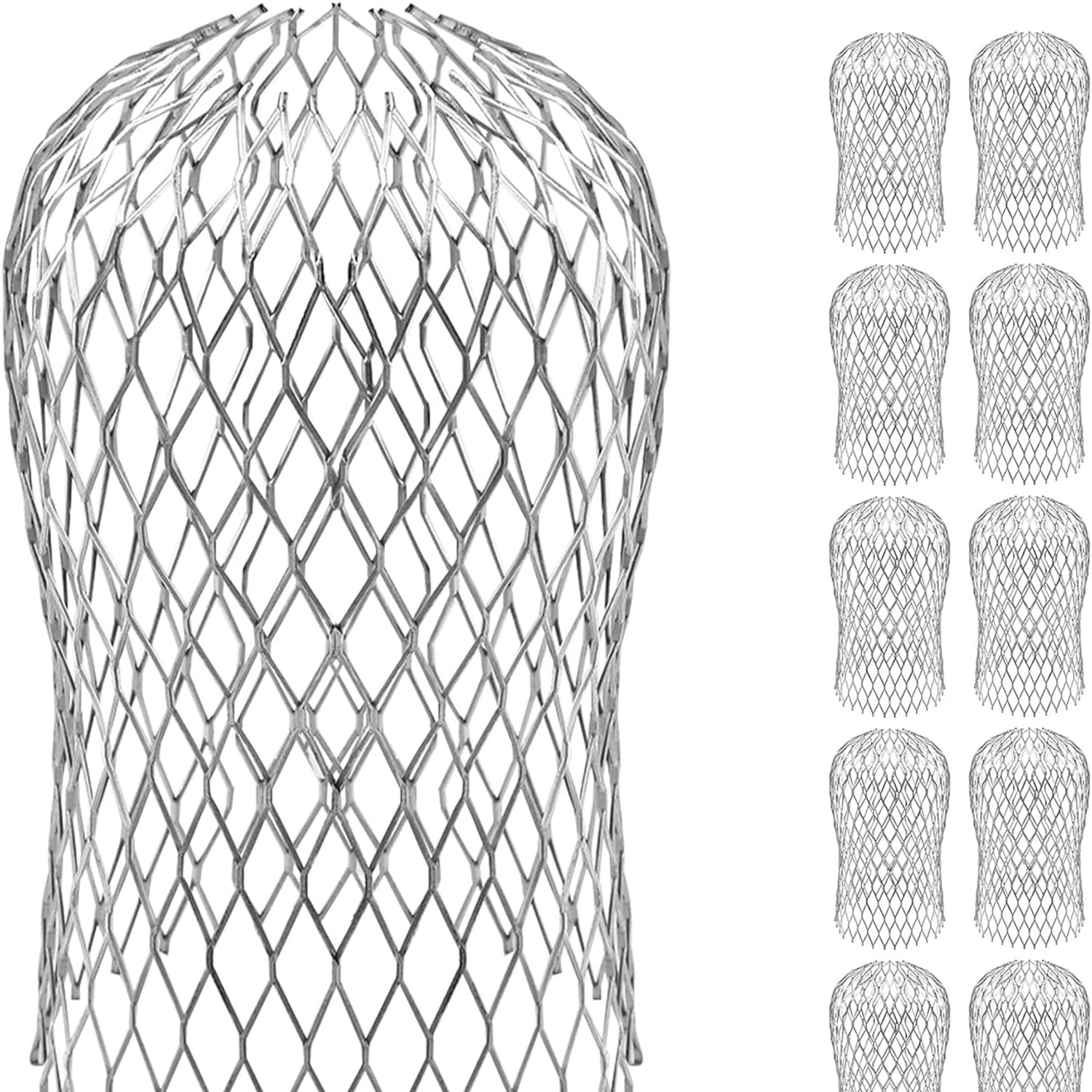
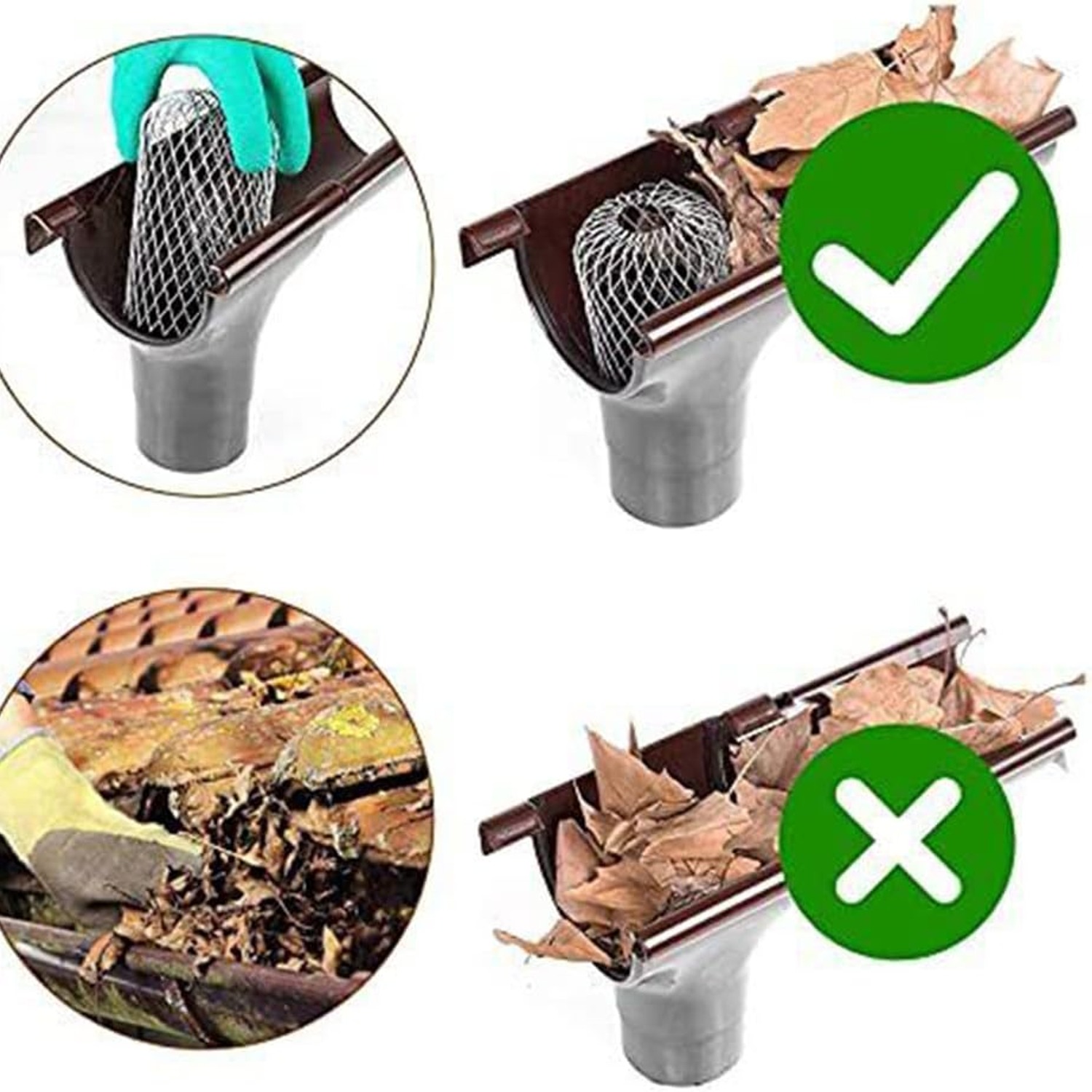
The design is deliberately simple. A piece of aluminum mesh is shaped into a rough cone or cylinder. The narrow end goes into the pipe, the wide end rests on the gutter floor around the opening. Water flows through the mesh from all sides. Solids sit on the outside.
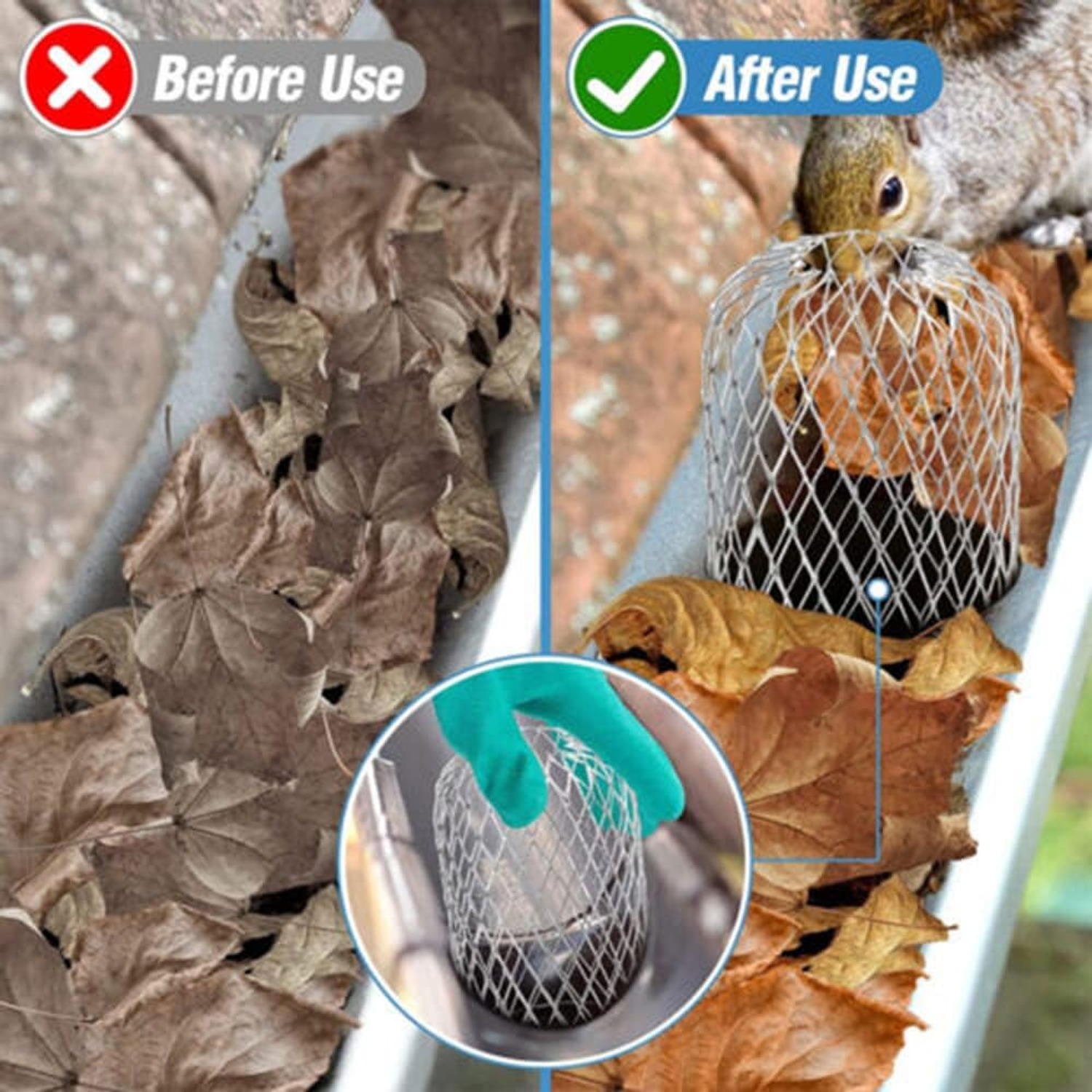
Because water enters through the whole surface of the cone rather than one flat disc, the screen keeps draining even when parts of it are covered. A flat grate sitting over the hole blocks completely once a mat of leaves lands on it. A raised cone always has some clear mesh somewhere, which buys you time between cleans.
The second part of the design is the flex. These screens are shaped by hand, not moulded. You squeeze and roll the mesh until it matches your outlet, then press it home. The metal pushes back against the pipe wall and holds itself in place. That single feature is why one part covers round, oval, square and rectangular outlets, which is handy on houses where the gutters were replaced in stages and the profiles do not match.
Who gets the most out of them
Anyone with trees near the roofline. That is the obvious one. Deciduous trees drop in bursts, and those few weeks a year cause most of the blockages.
Evergreens are sneakier. They shed small amounts constantly, so the gutter never gets a clean break. Needles are the toughest debris for any mesh because they weave together, but keeping them out of the pipe is still worth doing, since a needle plug in a downspout is almost impossible to clear from the top.
Older homes with narrow outlets benefit a lot. Some older roofs run two inch pipe, which blocks with very little material. A downspout debris filter on a narrow outlet saves more hassle than the same screen on a wide one.
Homes feeding a rainwater tank are another good case. Less leaf matter down the pipe means less sediment and fewer smells in the tank. These screens are not a substitute for a tank inlet strainer or a first-flush diverter, but they cut the load those parts have to deal with.
If you have no trees within fifty meters and a steep roof that self-clears, you may not need them. Most people are not in that position.
Choosing the right size
Measure the opening, not the pipe. People get this wrong often. The number that matters is the hole cut in the base of the gutter, because that is where the screen sits. On many systems that hole is noticeably smaller than the outside of the downspout.
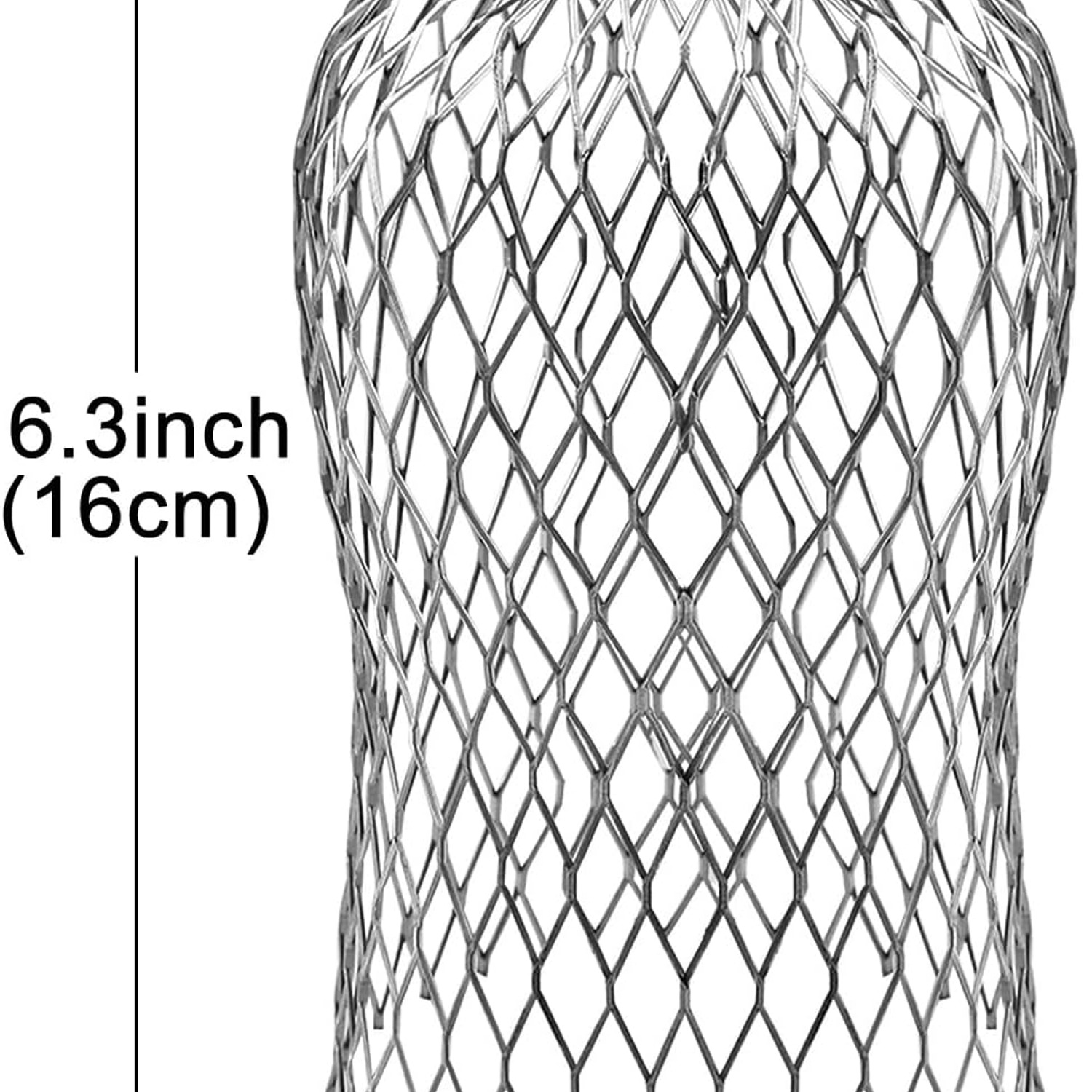
These screens are listed at 3.5 inches wide and 6.3 inches tall, sized for most outlets between 2 and 4 inches. If your hole measures somewhere in that band, you are fine. Below 2 inches, you may need to trim the mesh with snips. Above 4 inches, look at a purpose-made strainer basket instead.
Shape does not drive the decision here the way it does with rigid guards. Since the mesh bends, a square outlet and a round outlet of the same width both take the same part. You just fold it differently.
Count your outlets before ordering. A single-story rectangular house usually has four. Add verandas, extensions, a garage and a shed and you can easily hit eight. A ten pack covers most homes with a couple left in the drawer.
Fitting them safely
The fitting itself is easy. The ladder is the part that deserves respect.
Set the ladder on firm, level ground at a sensible angle, and have someone foot it if you can. Do not lean sideways to reach the next outlet. Climb down and move the ladder. Most gutter accidents happen in that last stretch where someone decides one more reach will do.
Wear gloves. Cut mesh edges can nick a bare hand, and old gutters hold grit and sharp bits of debris.
At each outlet, clear the loose material around the hole first. Then shape the screen by hand so the narrow end will slide into the pipe. Push it down until you feel it grip, and leave the wider section resting against the gutter base. Give it a light tug. If it stays, it is in.
Run a hose into the gutter when you are done and watch the water go through. That one check tells you straight away whether the screen is seated properly or sitting proud.
Keeping them working
A screen that is never cleaned is just a different kind of blockage, higher up. The advantage is that this blockage is visible and takes seconds to clear.
Twice a year is a sensible baseline, with one clean after the main leaf drop and one before the wet season. Homes under heavy canopy may want monthly checks for a few weeks of the year.
The routine is short. Lift the screen out, tip it, rinse if it is caked, put it back. If moss has knitted into the mesh, a stiff nylon brush shifts it. Let it dry before refitting so you are not pressing wet gunk back into the pipe.
Inspect the mesh while it is in your hand. If a screen has been flattened by a falling branch or crushed out of shape, swap in one of your spares. That is why the pack includes extras.
Avoid harsh chemicals. Water, a brush and a bit of patience handle everything you will find in a gutter.
What they will not do
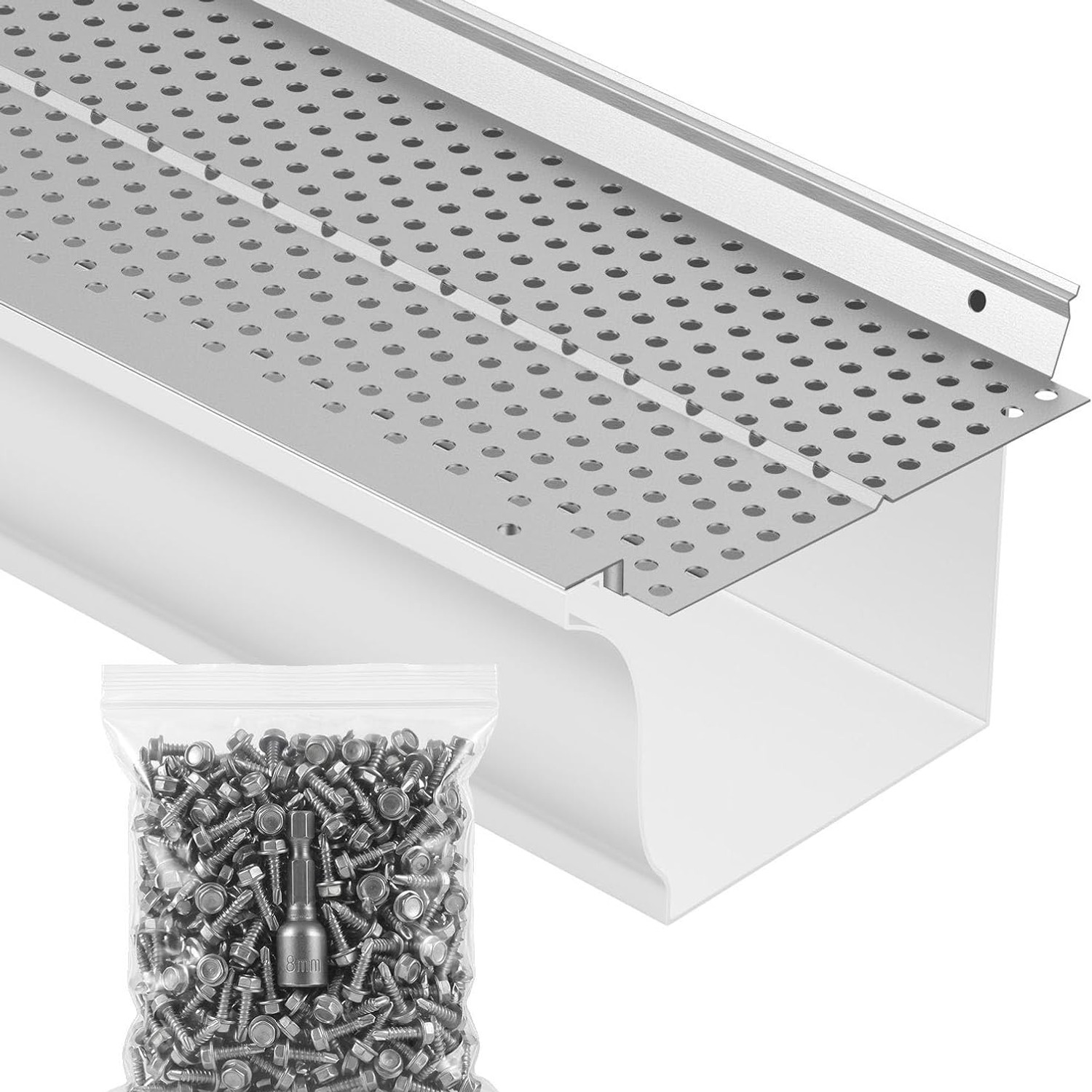
Worth being straight about the limits. These are not full-length gutter guards. Leaves will still land in the trough and sit there. The screen only protects the outlet.
For most people that trade-off is the right one. Outlet screens cost a fraction of a full guard system, fit in an afternoon, and you can inspect them from the top of a ladder in seconds. Full-length guards are a bigger job and can hide problems under the covers.
They also will not fix a sagging gutter, a wrong fall, or a joint that leaks. If water pools in one spot of your gutter even when it is clean, that is a bracket or alignment issue and a screen will not help.
The short version
Downspout blockages cause most gutter overflows, and the blockage almost always starts at the small hole where the gutter meets the pipe. A flexible aluminum screen in that hole keeps debris where you can see and reach it.
These come ten to a pack, measure 3.5 inches wide by 6.3 inches tall, and suit most outlets from 2 to 4 inches. They shape by hand to round, oval, square or rectangular openings and need no tools to fit. Aluminum means no rust and no brittle cracking after a few summers.
Measure your outlet hole, count your downspouts, give yourself an hour with a safe ladder and a pair of gloves, and then clean them a couple of times a year. That is the whole system.