


The complete guide
The Practical Guide to Cleaning Gutters Without Losing a Weekend
The stain nobody notices until they do
Gutters are strange. You live under them for years without a second thought, then one afternoon you park in the driveway, look up, and see it. Dark vertical bands running down the white gutter face, evenly spaced, like something dripped there and never left. Once you have seen them you cannot unsee them, and no amount of mowing the lawn fixes the way the house looks.
Those bands have a nickname in the trade. Tiger stripes. They are not mold and they are not usually paint failure. They are a mix of roof grit, bitumen residue from shingles, pollen, road dust and the fine oxidation that forms on metal and coated surfaces over time. Rain sheets off the roof edge, carries all of that over the front lip of the gutter, and leaves a thin bonded film behind as it dries. Repeat a few thousand times and the film becomes a stain.
The reason ordinary cleaning fails is that the film is not loose dirt. Hosing it does almost nothing. Dish soap in a bucket does a bit on the lighter patches and nothing on the dark ones. People scrub, get frustrated, and conclude the gutters are simply old. Most of the time they are not. They just need a cleaner designed for that particular kind of grime.
What a dedicated gutter cleaner does differently
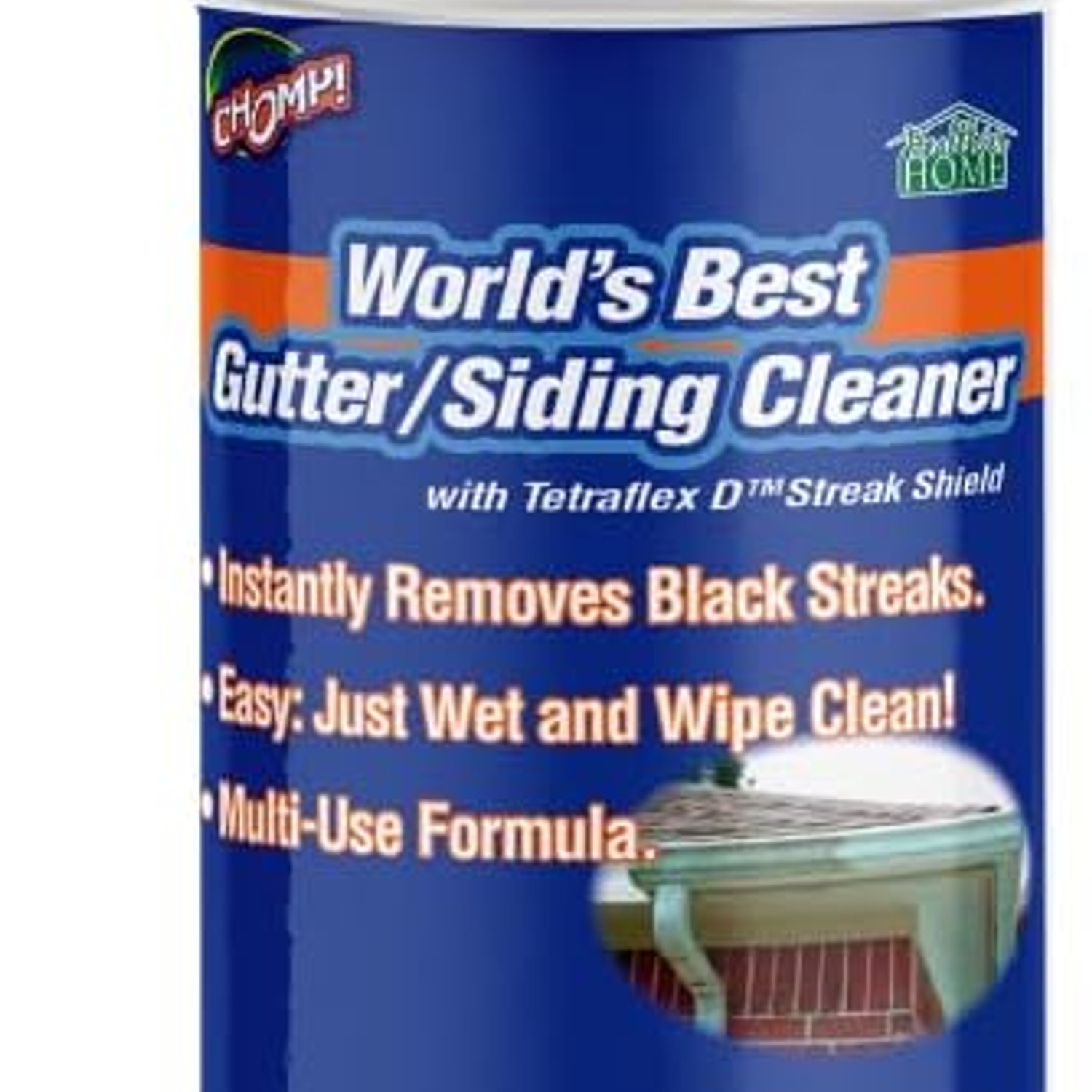
A product like this one works by softening and lifting the bonded layer rather than relying on you to abrade it off. You apply it, give it a short time to work, then wipe or rinse. The dirt leaves with the water instead of staying behind on your sponge.
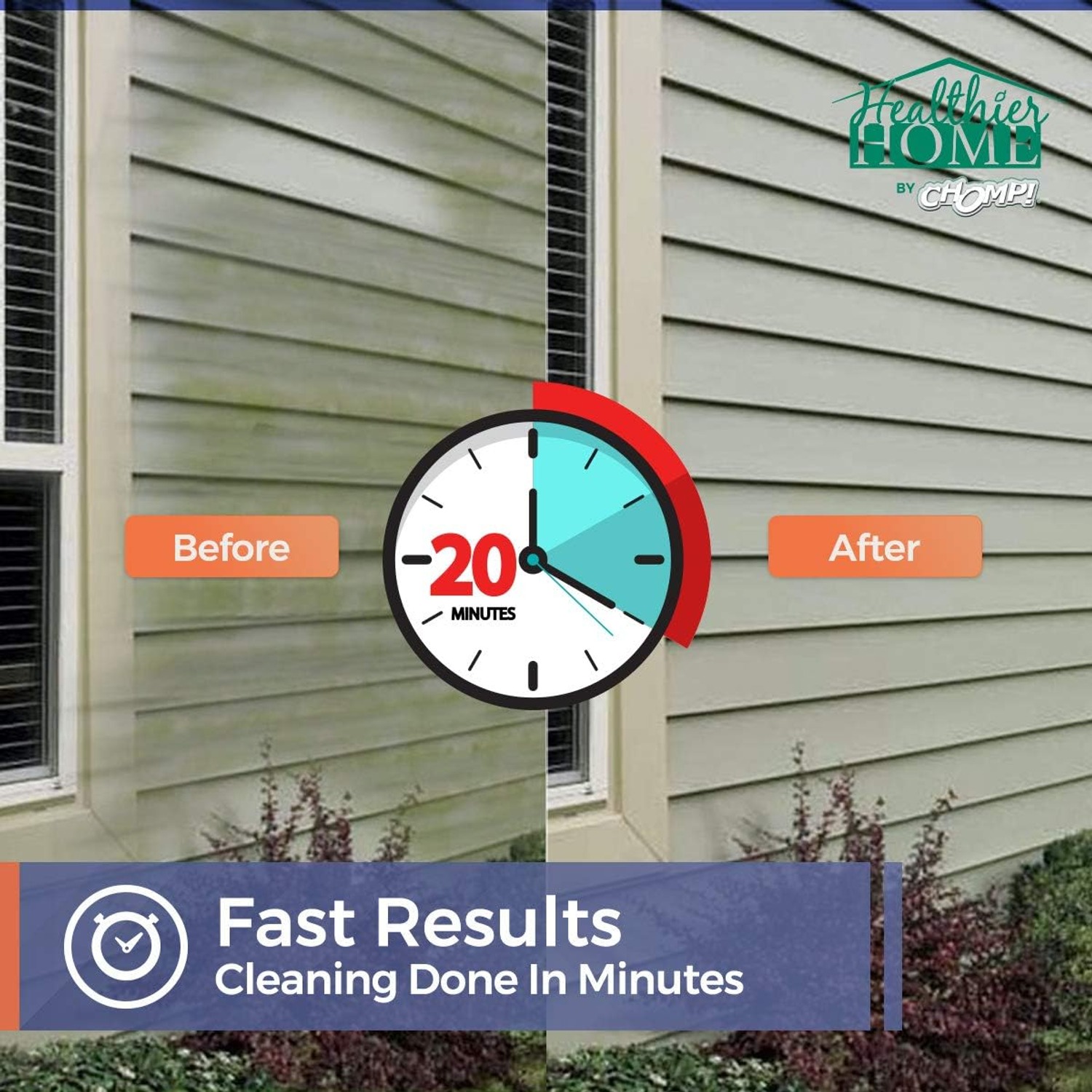
The practical difference shows up in effort. Scrubbing a stained gutter with a general-purpose cleaner is slow, arm-aching work and the result is patchy. With the right solution, a single light pass with a sponge or mop head usually takes the section back to its original color. You go from fighting the surface to simply moving along it.
This particular bottle is ready to use, which matters more than it sounds. Concentrates need a bucket, a measuring cup and a decision about ratio. Mix it weak and you waste the trip up the ladder. Mix it strong and you risk the finish. Ready to use removes the whole question. Open the cap, apply, move on.
What it works on
The listed surfaces are gutters, siding and exterior trim, covering aluminum, vinyl and steel. That range is deliberate, because the stain almost never stays in one place. Dirty runoff drips off the gutter edge onto the fascia, runs down the downspout, and often leaves a faint gray shadow on the wall cladding below.
If you only clean the gutter, the rest looks worse by contrast. A freshly cleaned white gutter above a grubby fascia draws the eye straight to the fascia. So plan the job as a strip rather than a line. Gutter face, fascia board, downspout, then the top meter or so of siding beneath. The whole strip takes maybe a third longer than the gutter alone and looks several times better.
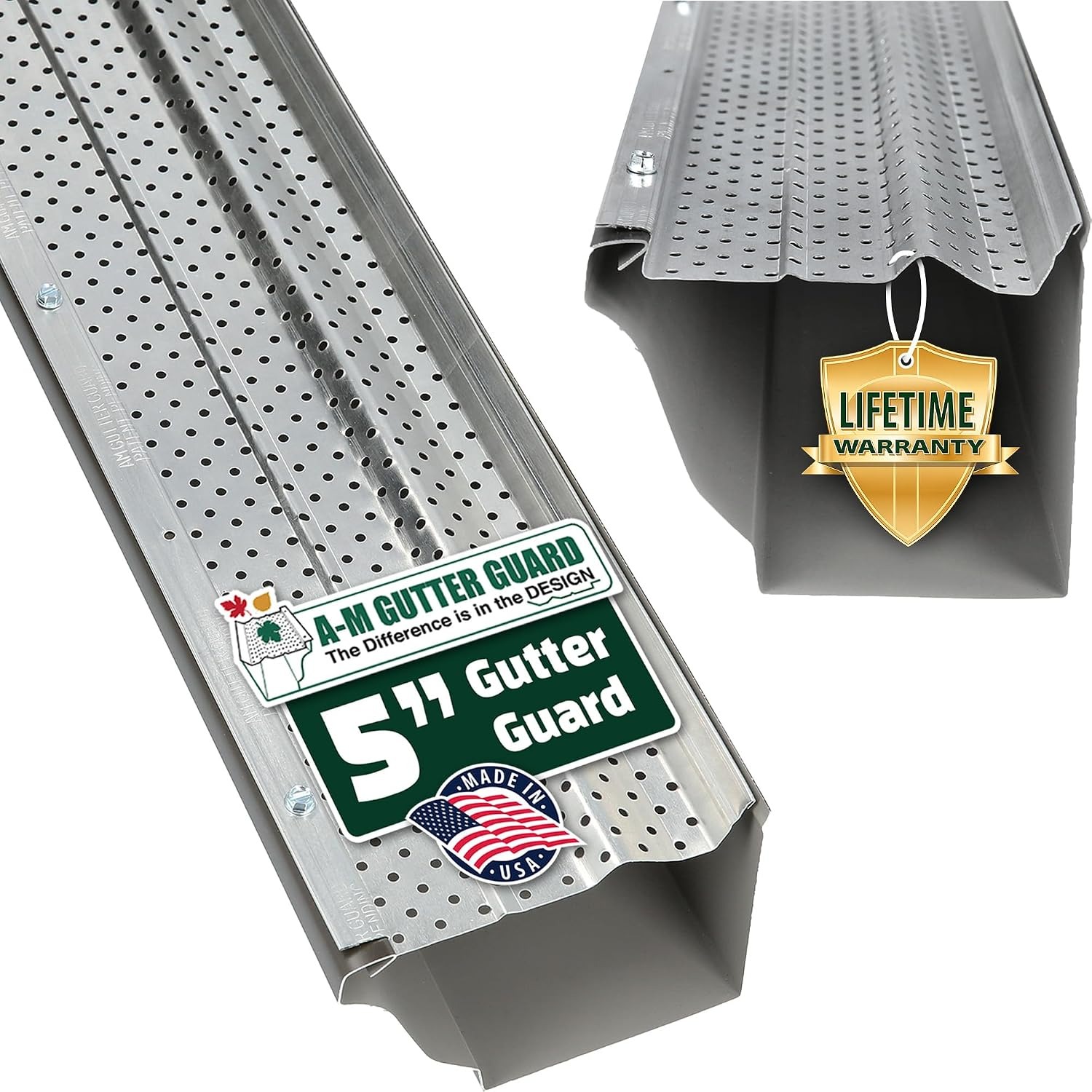
What it does not replace is clearing the inside of the channel. Leaves, twigs, seed pods and roof grit need to come out by hand or with a scoop before you touch the outside. Clean the inside first, then the outside. Do it the other way round and the debris you dislodge will run straight down the face you just finished.
Who this suits
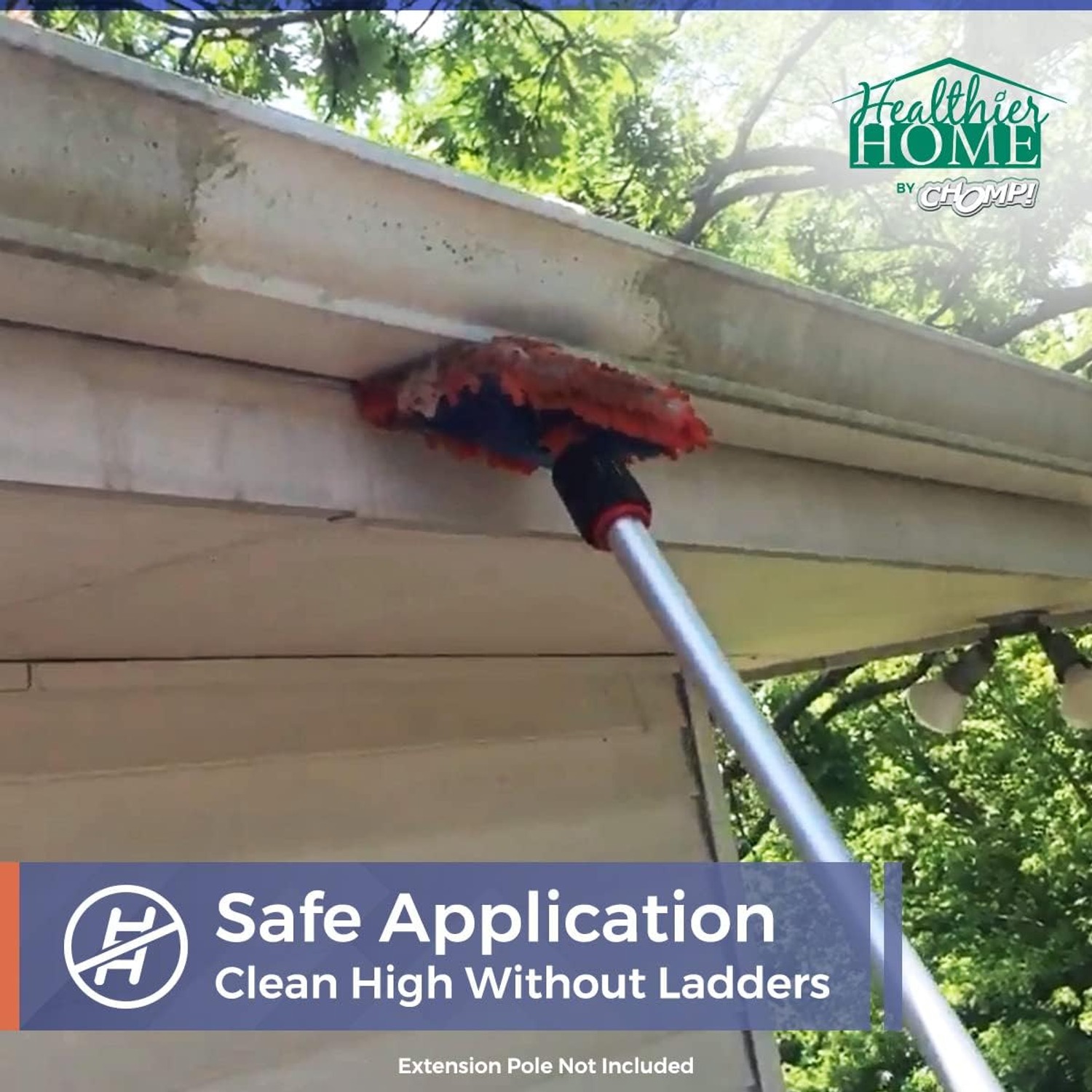
Homeowners with a single-story house and a hose are the obvious fit. With a telescopic pole you can reach most of a bungalow roofline standing on the grass, and the job becomes genuinely low risk.
It also suits people getting a property ready to sell or rent. Clean rooflines read as "well maintained" in photographs in a way that is hard to explain but easy to see. Agents notice. So do buyers scrolling listings on a phone.
It suits renters who want to tidy a tired exterior without doing anything permanent, and it suits anyone who has been quoted a surprising amount for a professional exterior wash and wants to try the simple version first.
Who it does not suit is anyone considering a two-story gutter clean from a household ladder. That is not a product issue, it is a physics issue. Falls from height are the most common serious home-maintenance injury there is. For upper stories, hire scaffold or a professional and keep this bottle for the ground floor.
How to choose your setup
There are really two decisions. First, how you apply the cleaner. Second, how you reach the work.
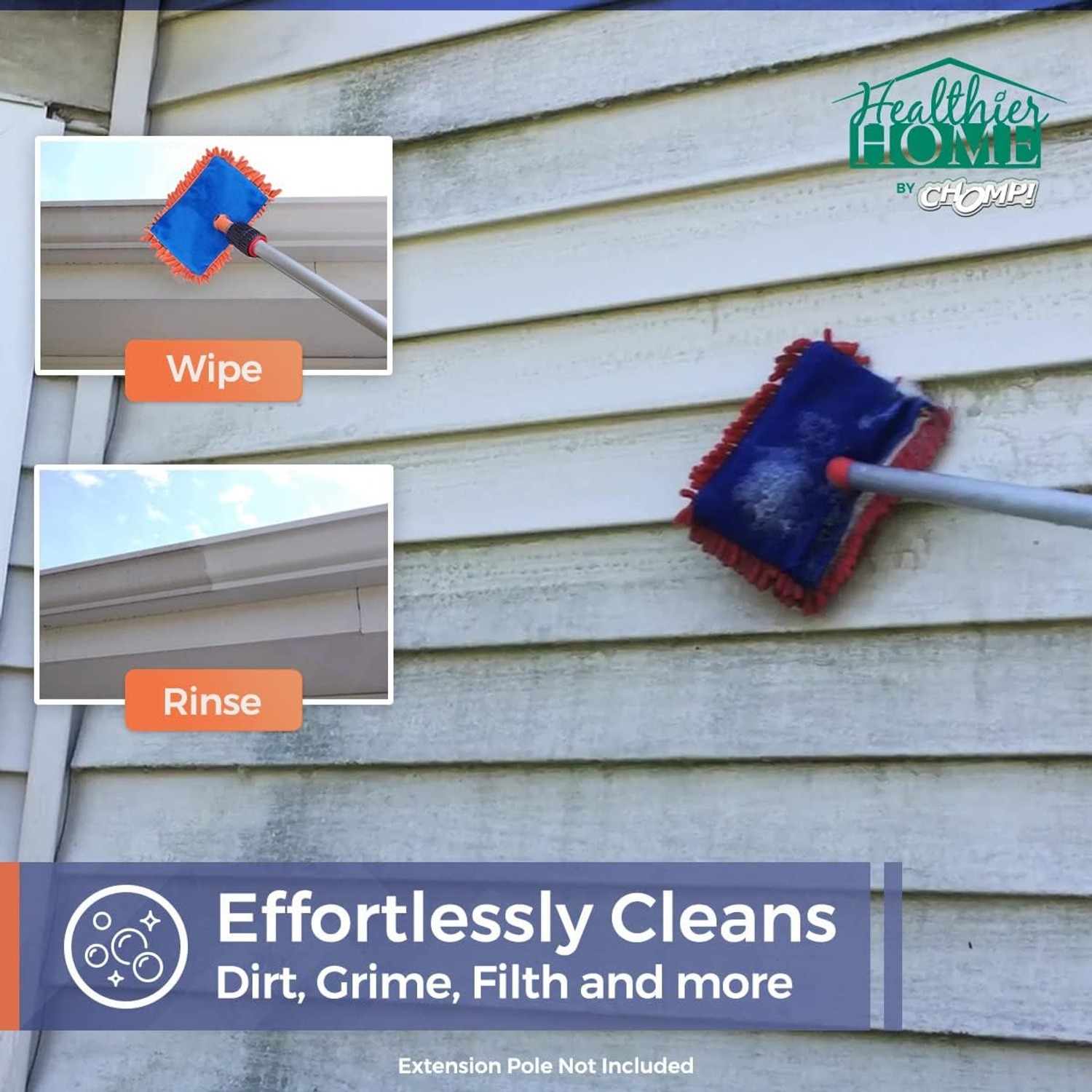
For application, a sponge gives you the most control and the best result on heavy staining because you can feel where the grime is still gripping. A soft brush head covers ground faster. A pump sprayer is quickest of all for applying, though you still need something to wipe with on the stubborn sections.
For reach, an extendable gutter cleaning mop or pole is the key accessory. Poles vary in how far they telescope and how rigid they stay at full extension. A pole that flexes badly when extended is tiring and imprecise, so a slightly heavier, stiffer pole is often the better buy. Many people treat the cleaner and the pole as one purchase, which is why a basic gutter cleaning kit is such a common first order.
Then there is the water supply. A garden hose with a trigger nozzle is enough. You want a steady rinse, not blasting pressure. High pressure aimed at a gutter can push water up behind the fascia or loosen brackets, which turns a cosmetic job into a repair job.
Doing the job well
Pick a mild, overcast day if you can. Direct sun dries the cleaner before it has done its work, and freezing weather makes rinsing miserable. Early morning or late afternoon is usually comfortable.
Wet down the garden beds, paths and any parked car below before you start. Diluting what falls is easier than cleaning it up later. Wear gloves and eye protection, because when you work overhead, things drip toward your face.
Work in short sections of two or three meters. Apply, let it sit briefly, wipe or agitate lightly, then rinse. Finishing each section before moving on stops the product drying and gives you a clear line between done and not done, which is surprisingly motivating.
On a badly weathered run, expect a second pass on the worst stripes. The first pass takes off the bulk, the second takes off what was underneath it. That is normal and not a sign the product is failing.
Looking after the bottle and the result
Store it upright, capped, somewhere cool and dry away from frost and sun. Rinse any sprayer or nozzle with clean water after use so the parts do not gum up before the next session. Keep it out of reach of children and pets, as you would with any cleaning chemical.
To keep the finish, work out your rhythm. Twice a year is right for most homes, typically after autumn leaf fall and again in spring. Houses under trees or near a busy road may want a third visit. The early warning sign is a faint gray shadow returning under the gutter lip. Catching it then is a quick wipe. Leaving it for three years is a project.
The short version
Gutter stripes are surface grime and oxidation, not damage, and they respond well to a cleaner made for the job. This 32 fl oz bottle is ready to use, so there is no mixing, and it covers gutters, siding and exterior trim in aluminum, vinyl and steel. The formula is listed as non-toxic and biodegradable, which is reassuring when rinse water lands on your garden.
Clear the inside of the gutter first. Clean the whole strip, not just the gutter face. Use a pole so you can stay on the ground. Pick a mild day, work in short sections, rinse with a normal hose rather than high pressure, and expect a second pass on the worst marks.
Do that once and the house looks years younger from the curb. Do it twice a year and it stays that way.