
The complete guide
How To Choose And Use A Pressure Washer Gutter Cleaner Attachment
The real problem is the ladder, not the leaves
Ask anyone why they have put off cleaning the gutters and the answer is rarely about mess. It is about the ladder. Setting it on soft ground, moving it every couple of meters, leaning further than you should because moving it again feels like too much effort. Most serious home maintenance injuries come from falls, and gutter work is one of the classic causes.
A pressure washer gutter cleaner attachment takes the ladder out of the equation for a large part of the job. You keep both feet on the ground, hold a wand, and let water do the lifting. The leaves still have to go somewhere, and you will still be picking them off the lawn afterwards, but you are not three meters up holding a bucket while you do it.
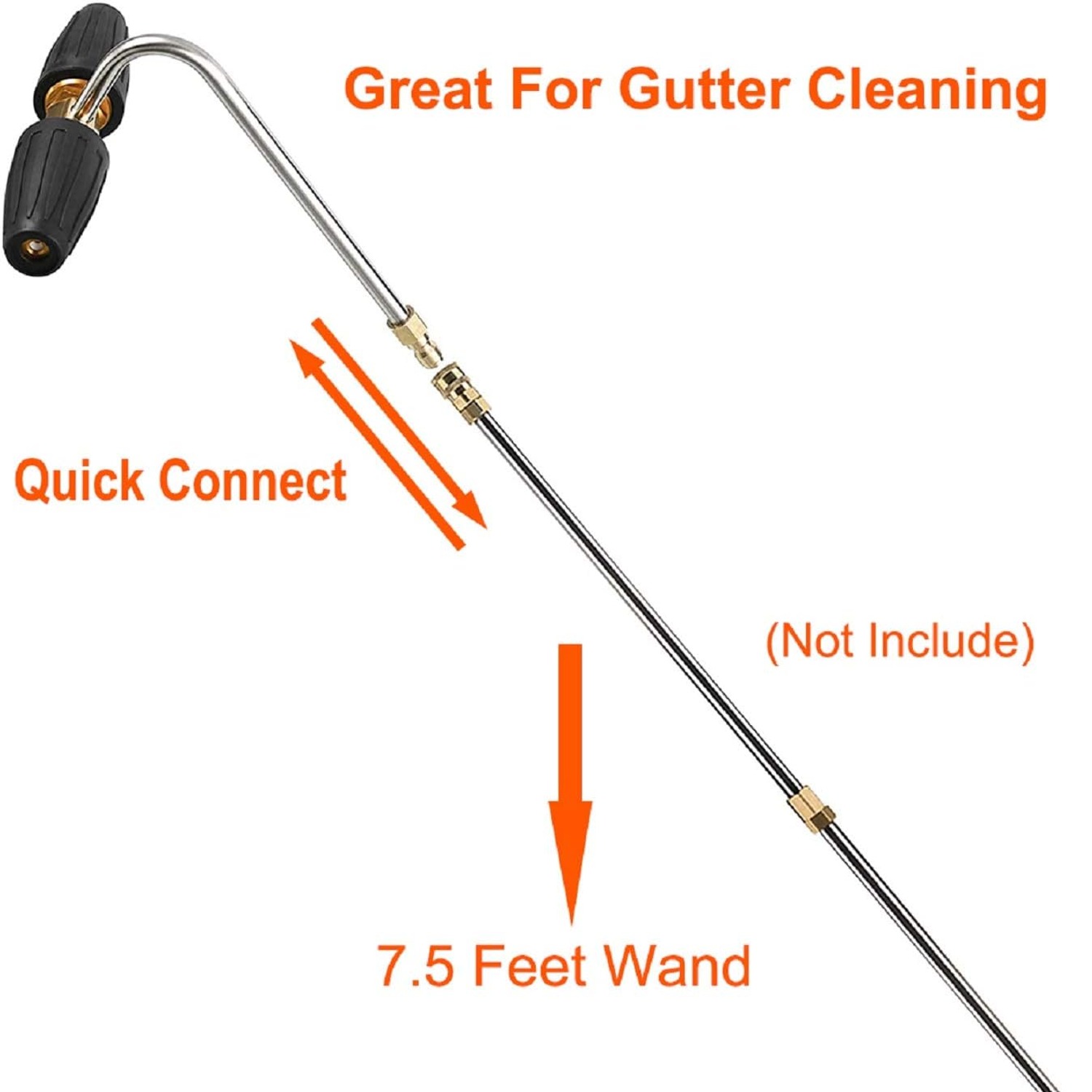
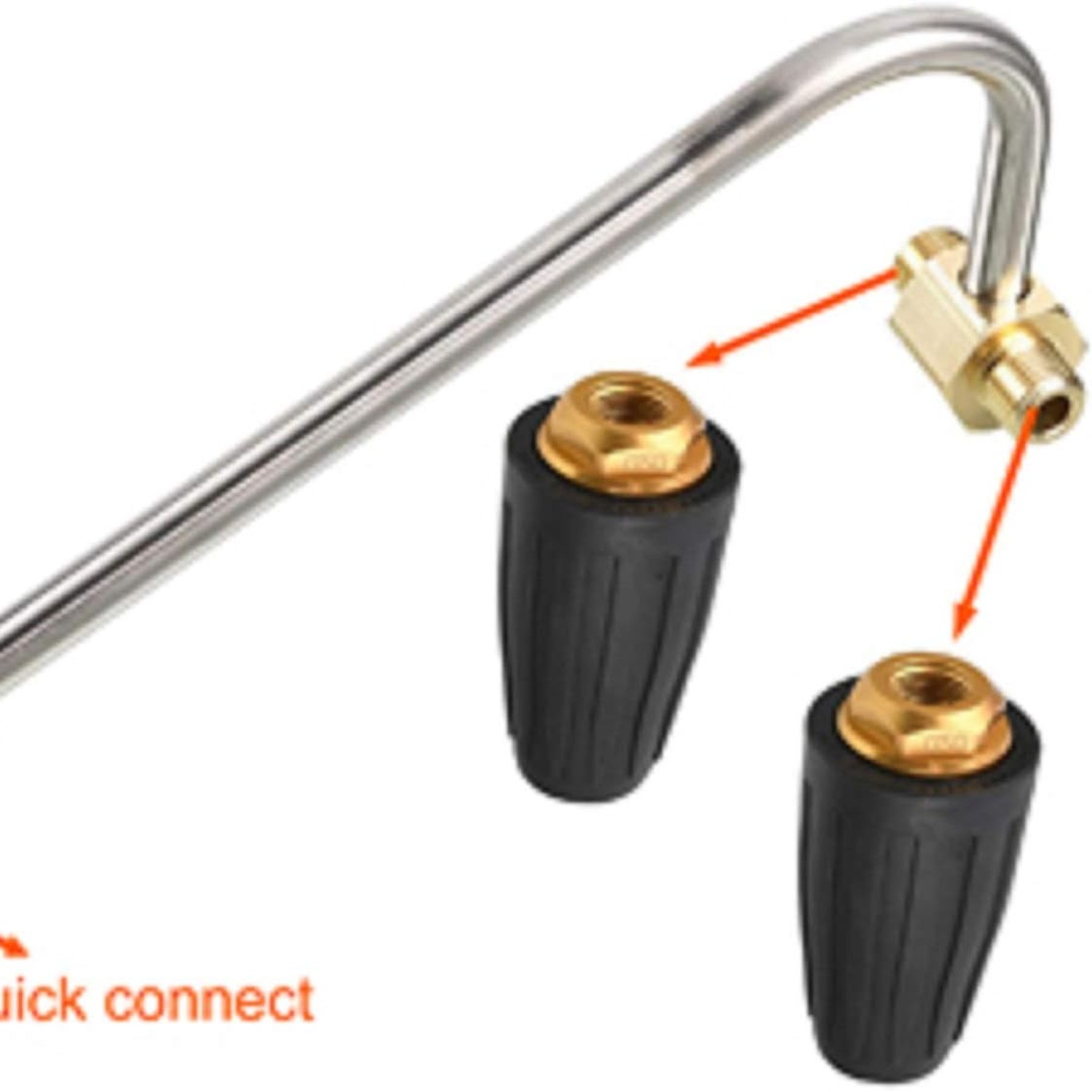
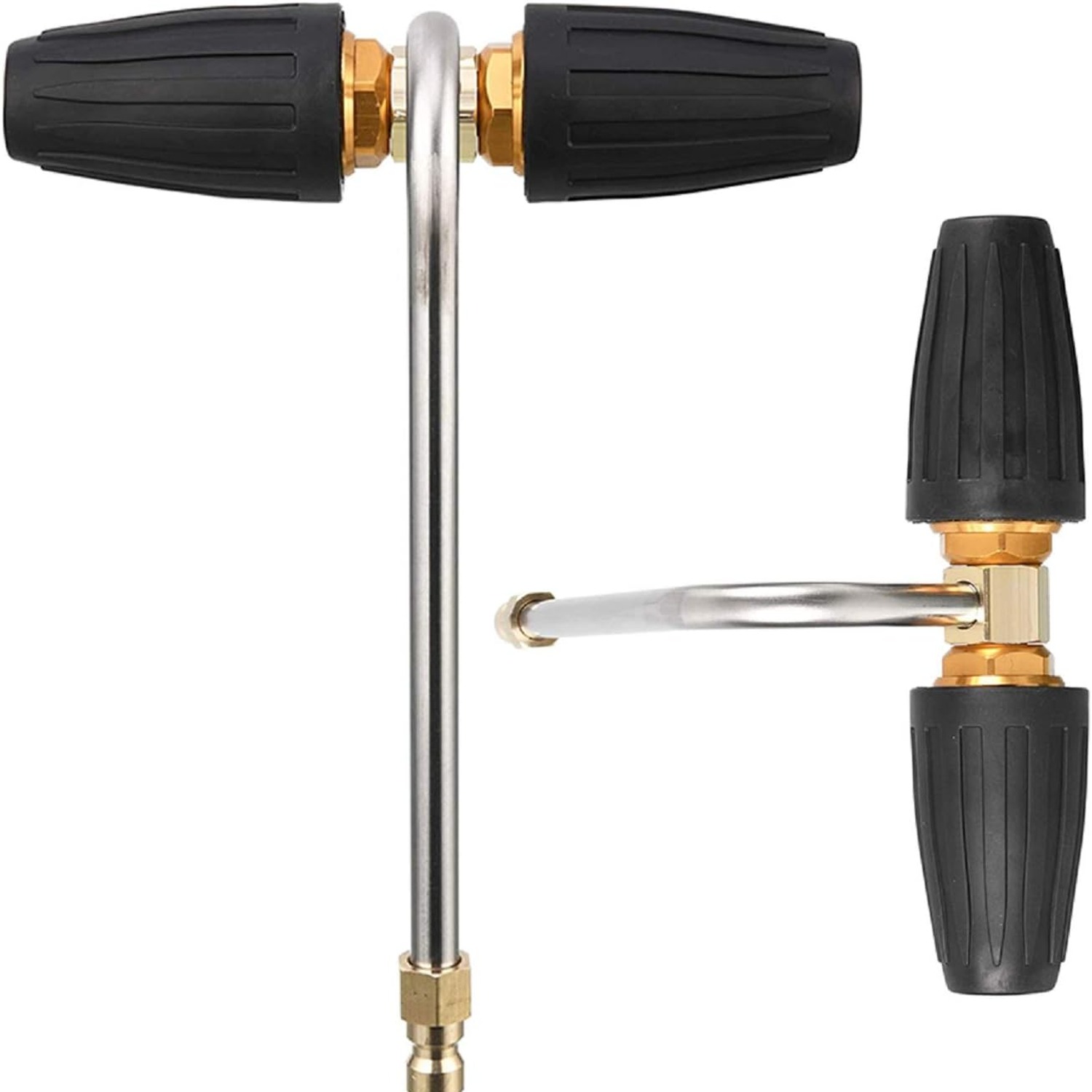
How the twin turbo nozzle design works
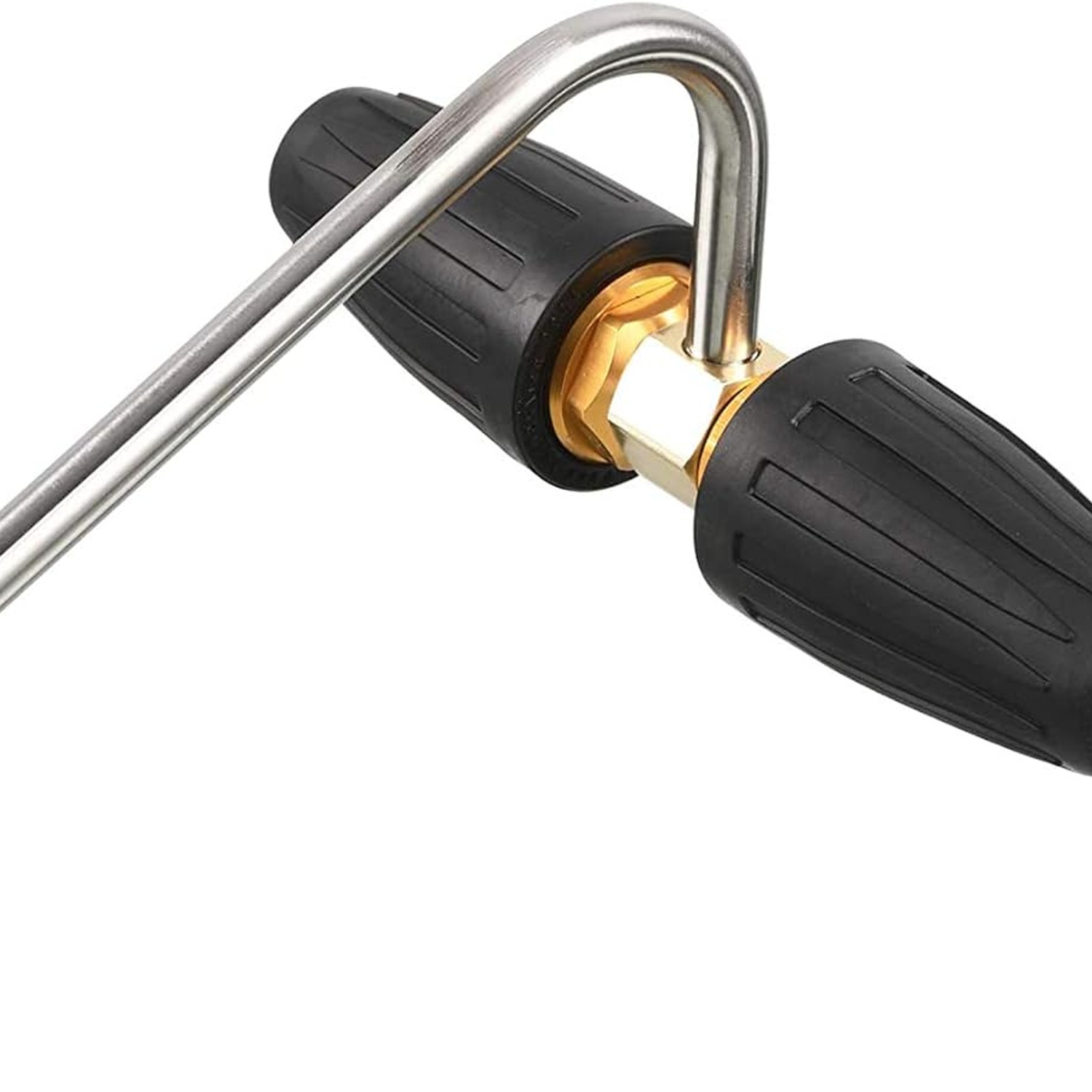
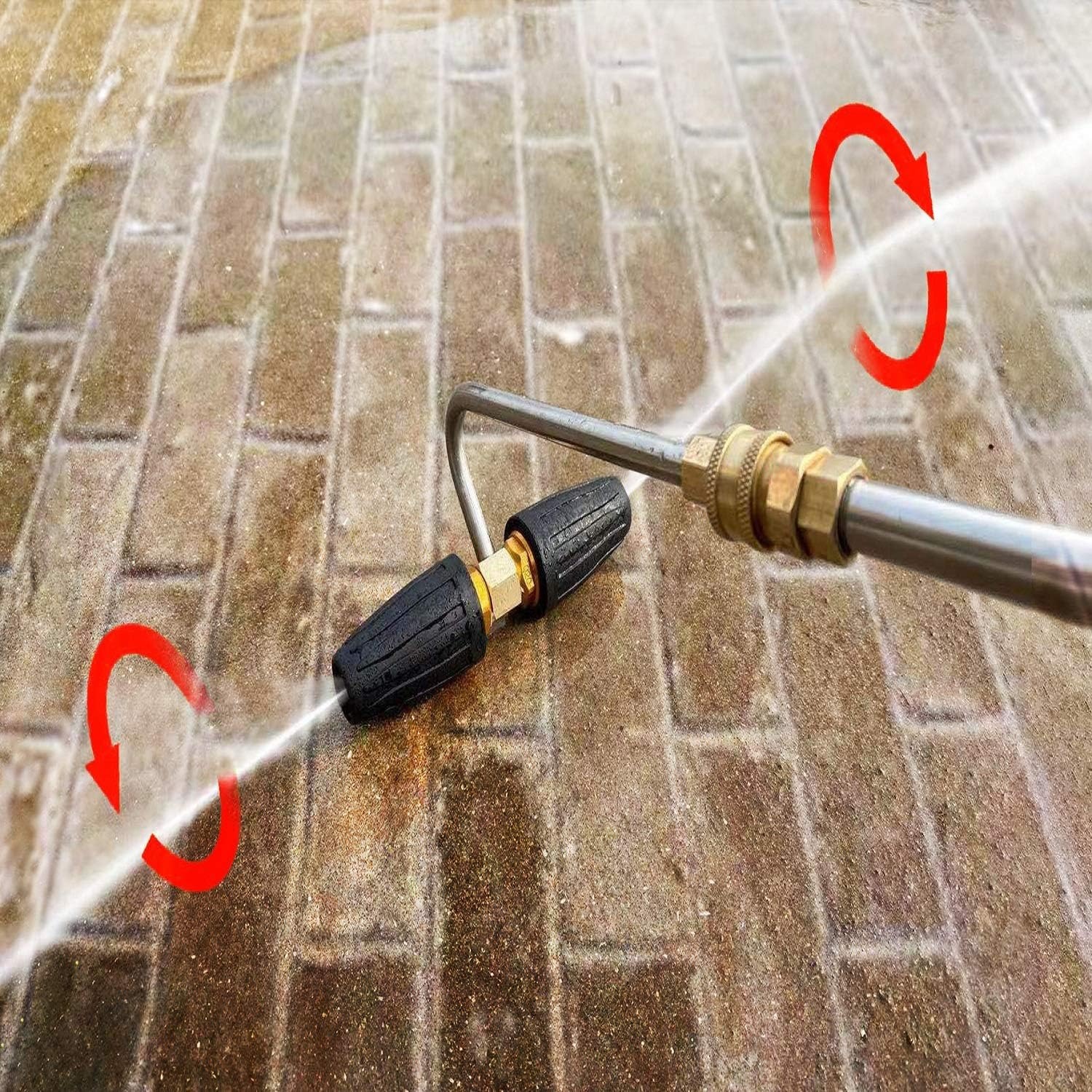
This head carries two rotary turbo nozzles. The difference between a rotary nozzle and a standard spray tip is worth understanding, because it is the reason this type of attachment works at all.
A standard tip puts out a steady stream, either a pencil jet or a flat fan. Against wet leaf mulch that has been sitting in a gutter since autumn, a steady stream often just rides over the surface. The mulch is heavy, waterlogged, and packed down. You get a lot of splash and not much movement.
A rotary turbo nozzle spins its stream in a tight cone. Instead of one constant point of contact, the water sweeps and pulses across the debris many times a second. That repeated impact breaks the clump apart. It is the same principle that makes a turbo tip so much faster than a fan tip on a stained driveway.
Having two of them, angled apart, means the attachment works along the gutter channel in both directions from where you place it. Debris gets driven along the run toward the downspout rather than piling up in front of a single jet.
Pressure, fittings and whether it suits your machine
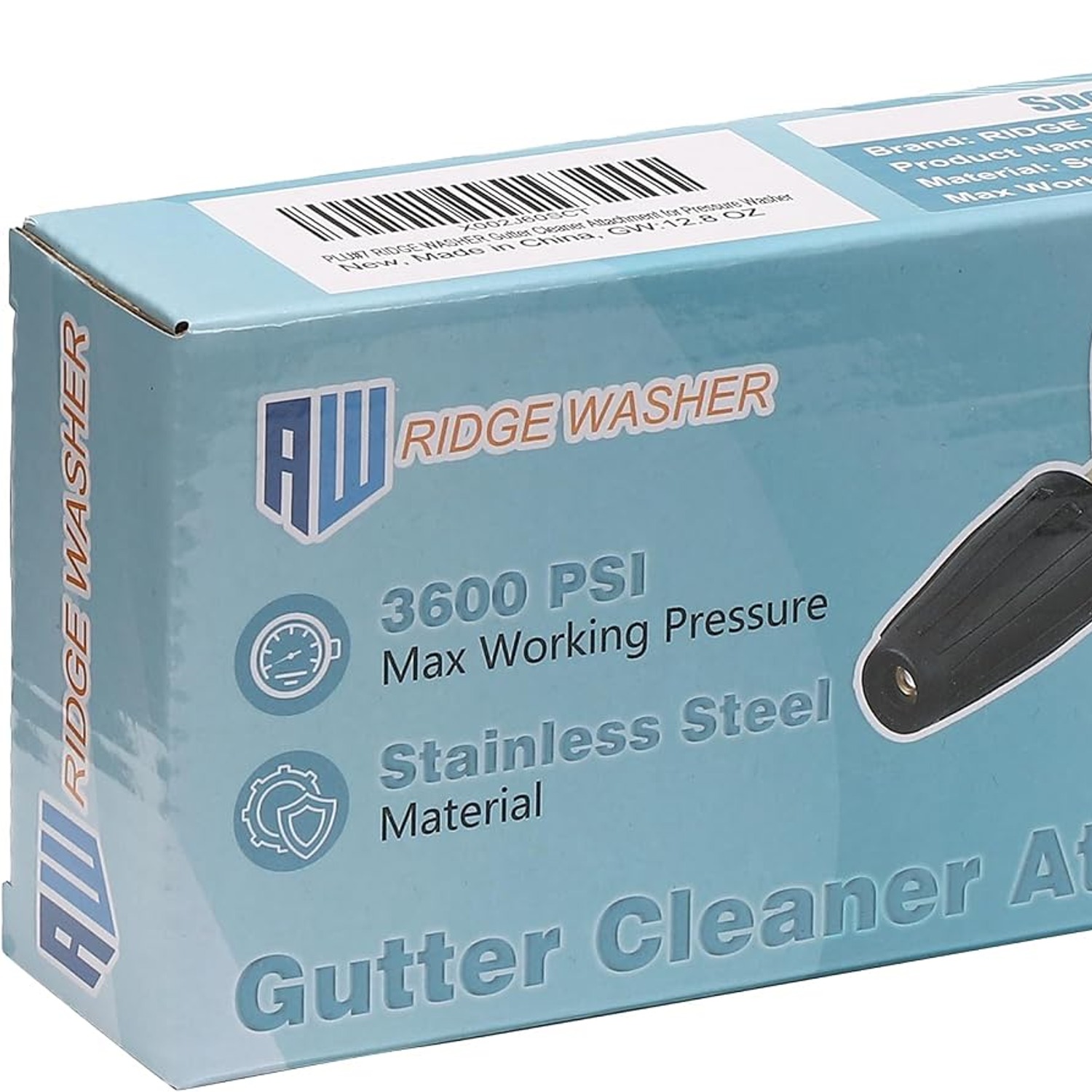
Two numbers matter here. The first is the 3600 PSI maximum working pressure. That is a ceiling, not a requirement. It means the brass body is built to tolerate the output of serious machines, and it comfortably covers typical domestic electric washers, which usually sit somewhere between 1500 and 2200 PSI. You do not need a powerful machine to use this head, and you do not need to restrict a powerful one.
The second is the 1/4 inch quick disconnect inlet. This is the near-universal fitting on pressure washer lances. If your wand takes clip-in colored spray tips, it is a 1/4 inch quick connect socket and this attachment will fit. Pull the collar back, push the plug in, let the collar snap forward, tug to confirm. That is the whole installation.
If your washer uses a proprietary bayonet system instead of quick connect tips, which a few budget brands do, you will need an adaptor to convert to 1/4 inch quick connect first. Those adaptors are cheap and widely available, but it is worth checking before you order.
You will probably need an extension wand
This is the part people miss. The attachment head is about eight inches long. By itself, it gets you to roughly the height you can already reach with your arm up. What delivers real reach is a telescoping lance or a set of screw-together extension wands between your gun and this head.
When you are shopping for one, two things count. Length, obviously, matched to your gutter height with a bit of margin so you are not fully extended and fighting for the last few centimetres. And weight, which is the one most people underestimate. A long wand held overhead with water pressure pushing back through it is genuinely tiring after ten minutes. Fibreglass and aluminum poles are usually the better choice over steel for this reason.
That is also why the modest weight of this head matters. At 10.56 ounces, about 0.3 kg, it adds very little to the far end of a long pole. A long pole multiplies everything out there, so a heavy head at full extension feels dramatically worse than the same weight in your hand.
A sensible working method
Start at the end of the gutter run furthest from the downspout and work toward it. Water flows that way anyway, so you are helping gravity rather than fighting it.
Hook the head over the gutter lip, trigger the gun, and move along in sections rather than trying to blast one spot clean. Steady, continuous movement moves debris further than a sustained hit in one place, and it is gentler on the guttering.
Expect mess below. Everything that comes out of the gutter lands on the ground, the path, the garden bed, and sometimes on you. Move the car, close the windows, and wear something you do not mind soaking. Doing a dry sweep of loose leaves off the roof first, where safe to do so, cuts down on how much ends up in the gutter in the first place.
Keep an eye on where your water is going. Flushing a huge volume of debris into a downspout that is already partly blocked can make the blockage worse. If you suspect the downspout is restricted, clear that separately before you flush the gutters into it.
Looking after the attachment
There is not much to it, which is the nice part. Flush it through with clean water after each session. Grit is the enemy of any rotary nozzle, and a few seconds of clean water at the end of the job clears most of it out.
Let the head drain and dry before it goes back in the shed. Water sitting inside brass fittings over a cold winter can freeze and put stress on the body. Store it indoors or somewhere frost free if you can.
Before each use, glance at the quick connect plug and its O-ring. A perished O-ring causes leaks at the joint and is a two minute fix with a replacement from any hardware shop. Keep the threads and the plug face free of sand so the connection seats properly.
If the spray starts looking lopsided or weak, the usual cause is a partly blocked nozzle. Soak the head in warm water, flush it, and check your washer's inlet filter too, since debris in the water supply reaches the nozzle eventually.
Who this suits, and who it does not
It suits anyone with a single story or modest two story home, an existing pressure washer, and a decent extension wand. If you are already washing the driveway and the fence a couple of times a year, this is a cheap addition to the kit that saves you the worst job on the list.
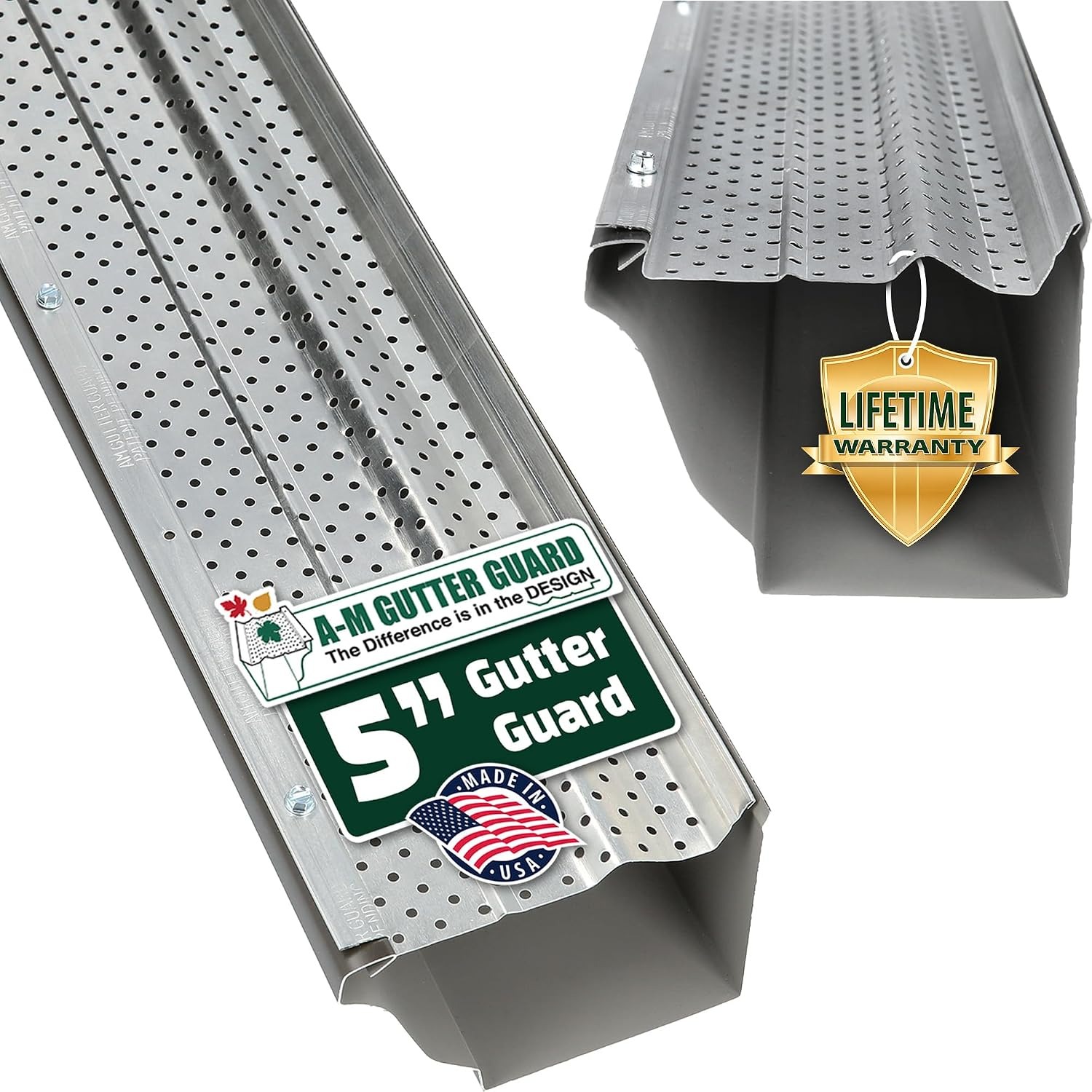
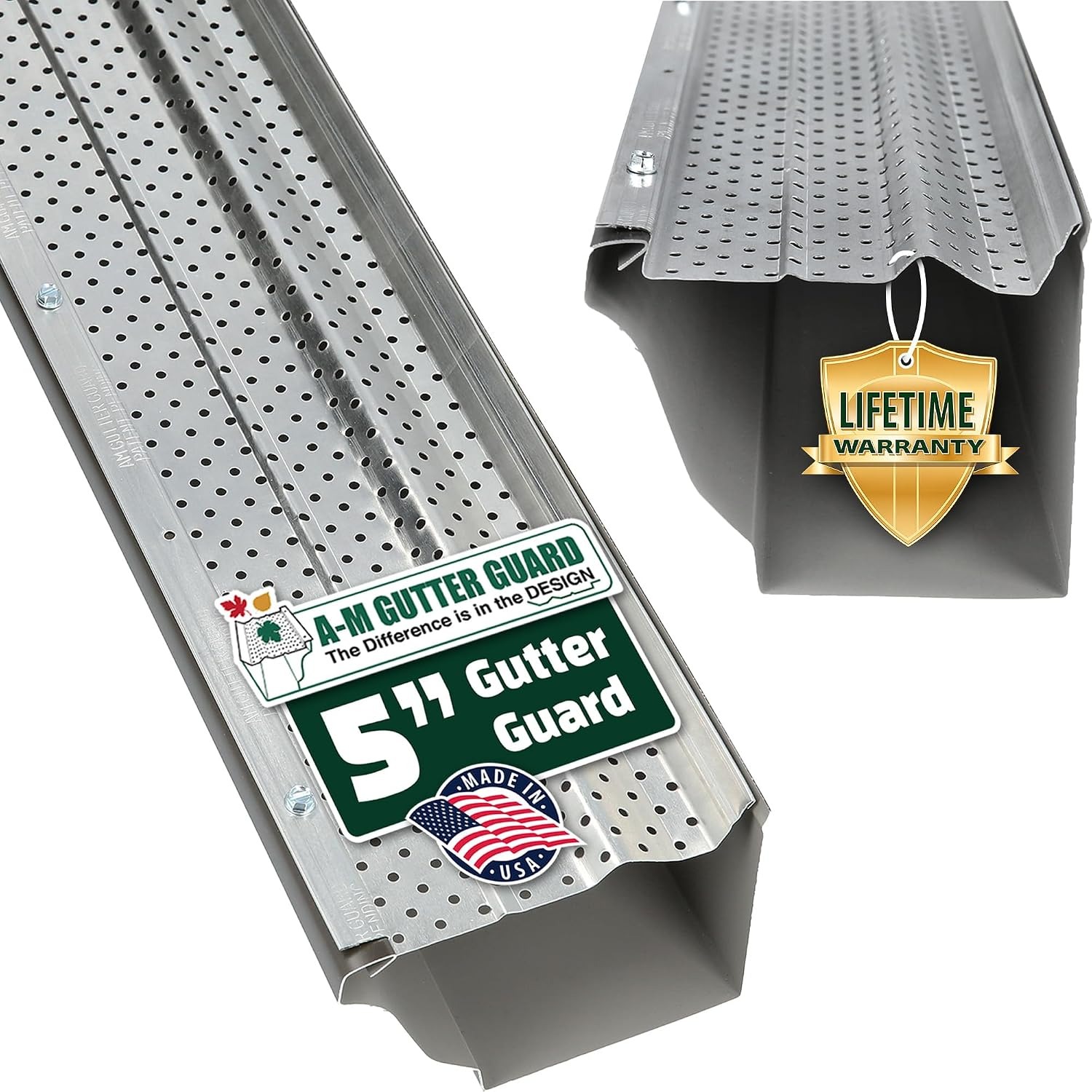
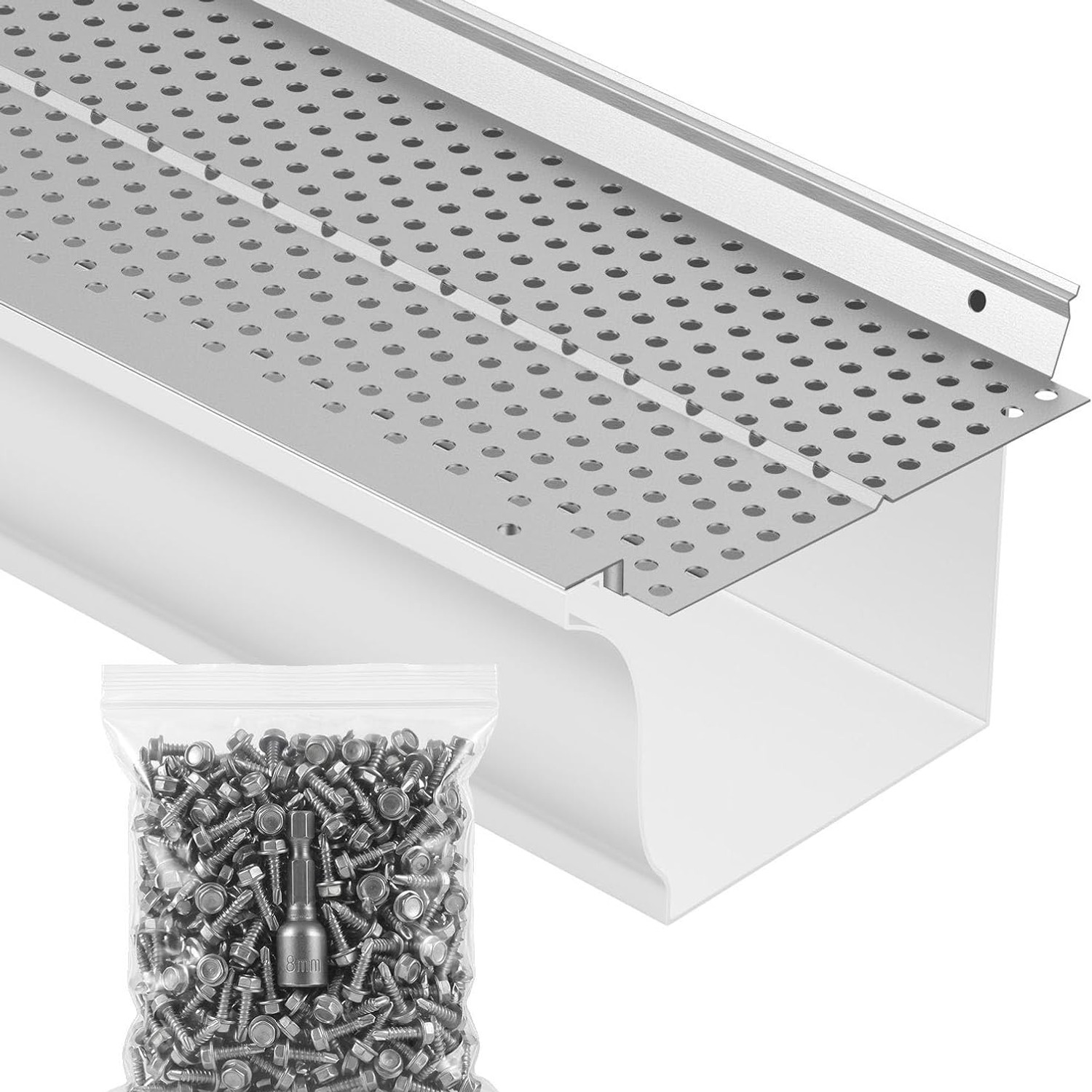
It is less useful if you do not own a pressure washer, since the attachment is only one part of the system. It is also not the answer for gutters with fixed guards you cannot lift, because no flushing tool can reach under them. And if your gutters are rusted through or sagging, water pressure will find the weak spots. Repair comes before cleaning in that case.
The short version
This is a brass head with two rotary turbo nozzles, rated to 3600 PSI, that clips onto any standard 1/4 inch quick connect wand. Pair it with a telescoping lance and you can flush a season of leaf litter out of your gutters without going up a ladder. It weighs 0.3 kg, measures 8 x 3 x 1 inches, and installs in about three seconds.
Check that your wand takes quick connect tips, allow for the mess below, and work from the far end toward the downspout. Rinse it out when you are done and it will be ready for the next leaf drop.