
The complete guide
The Practical Guide to Choosing and Fitting a Lock-In Steel Gutter Guard
The problem nobody deals with until it is too late
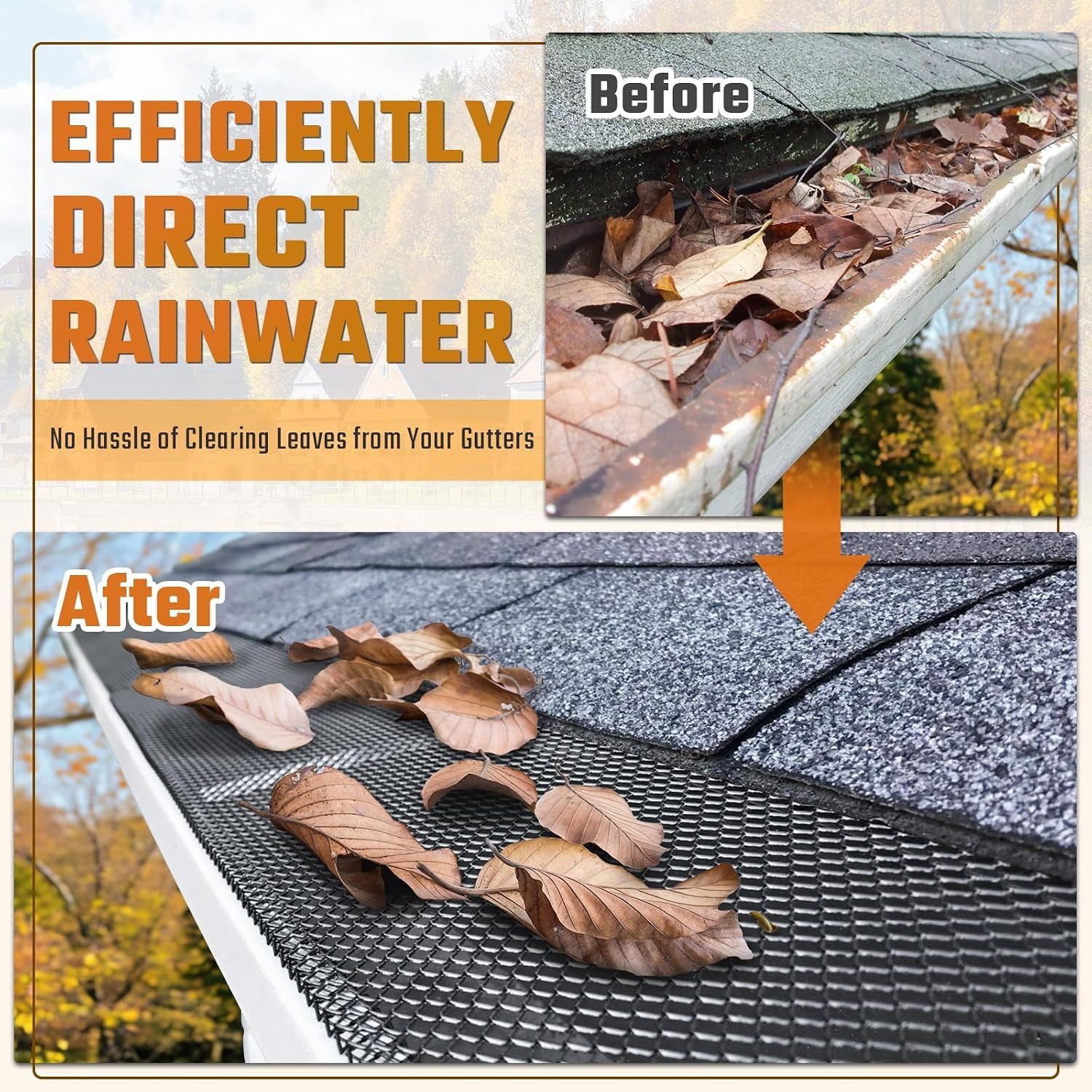
Gutters fail quietly. A handful of leaves settles in the channel after a windy week. Rain packs them down. More leaves land on top. Within a season you have a damp plug sitting near the downspout, and water that should be running away from the house is instead sitting in the gutter or spilling over the front edge.
What follows costs real money. Overflow stains render and brickwork. It soaks the fascia board until it softens and the gutter brackets start pulling loose. It drops straight down against the foundation, which is the last place you want a steady supply of water. In colder regions, standing water in a blocked gutter freezes, expands, and lifts the whole channel away from the roof edge.
The traditional fix is to climb up twice a year with a scoop and a bucket. It works. It is also the kind of chore that gets postponed, and the ladder is where a lot of household injuries happen. A gutter guard moves the debris from inside the channel to the top of a mesh surface, where wind and rain do most of the clearing for you.
How a lock-in steel guard actually works
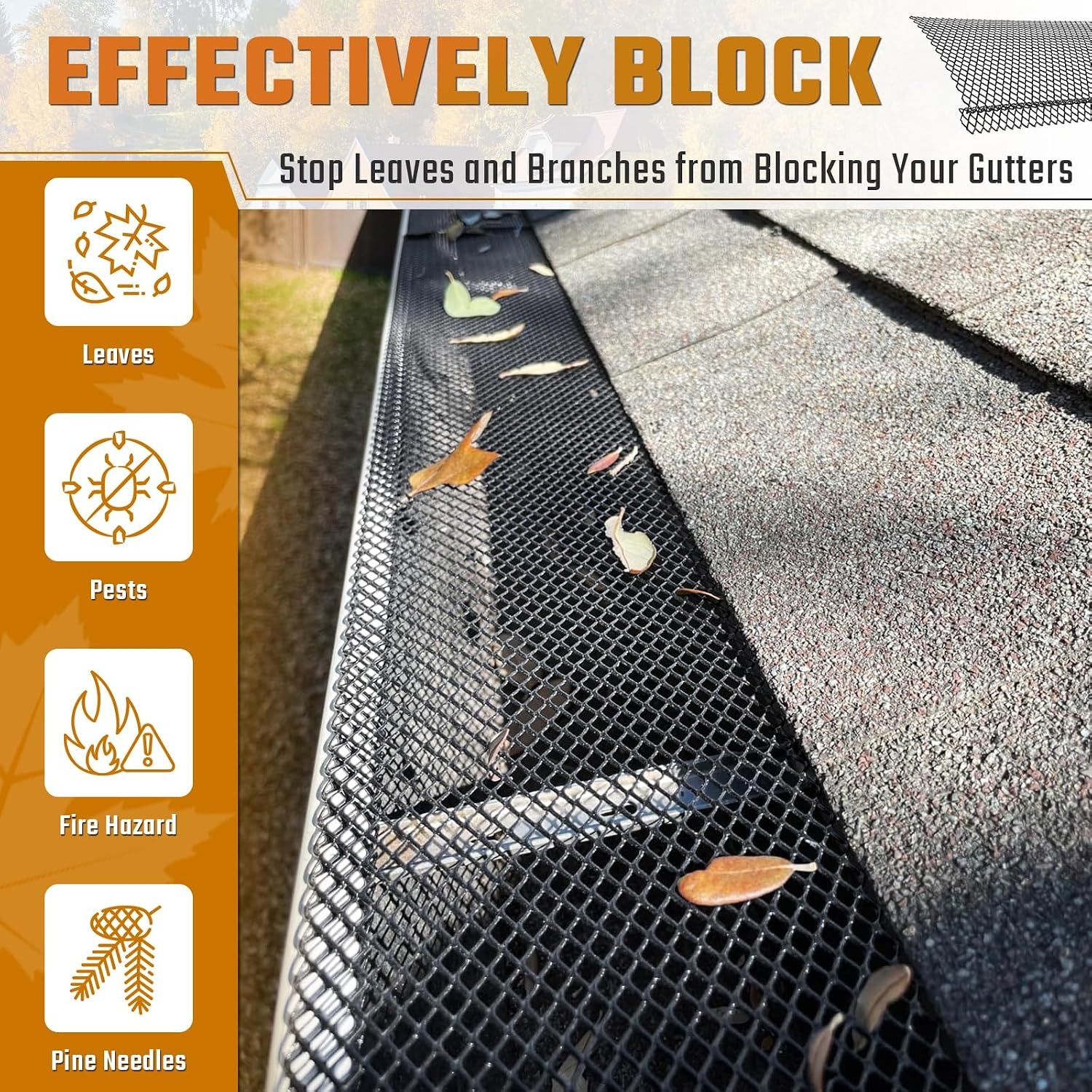
The idea is simple. You put a fine mesh lid over the open gutter so water can get in and leaves cannot.
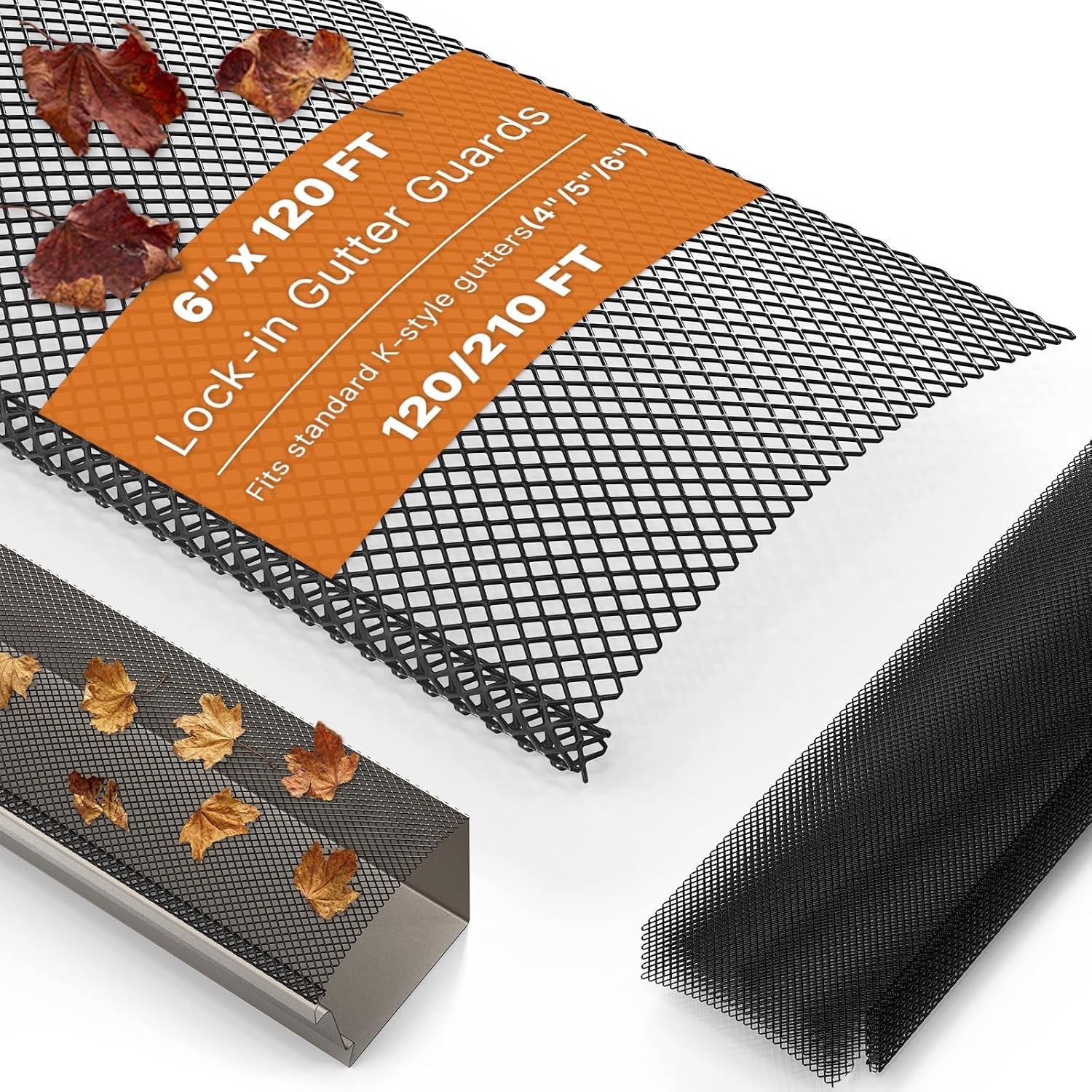
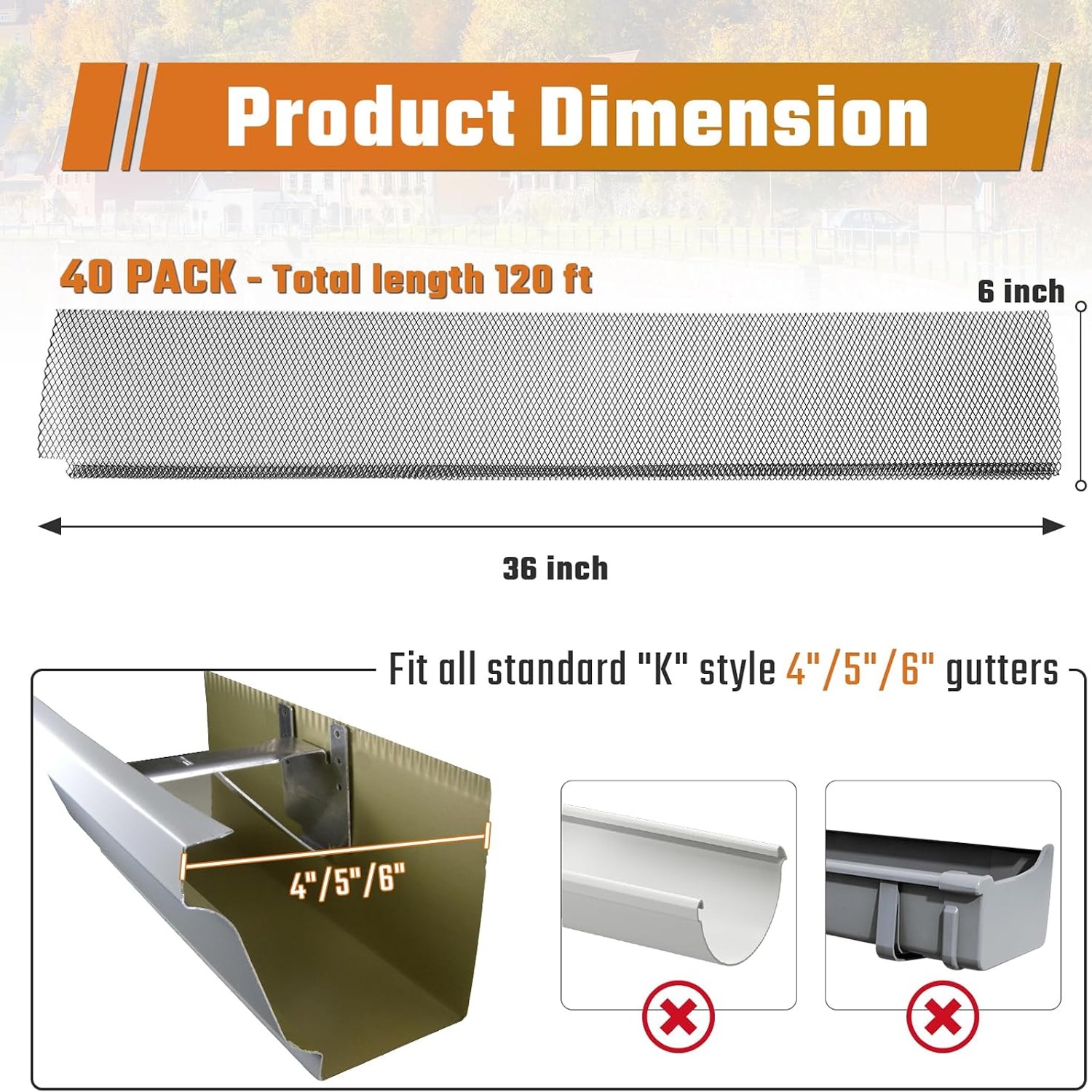
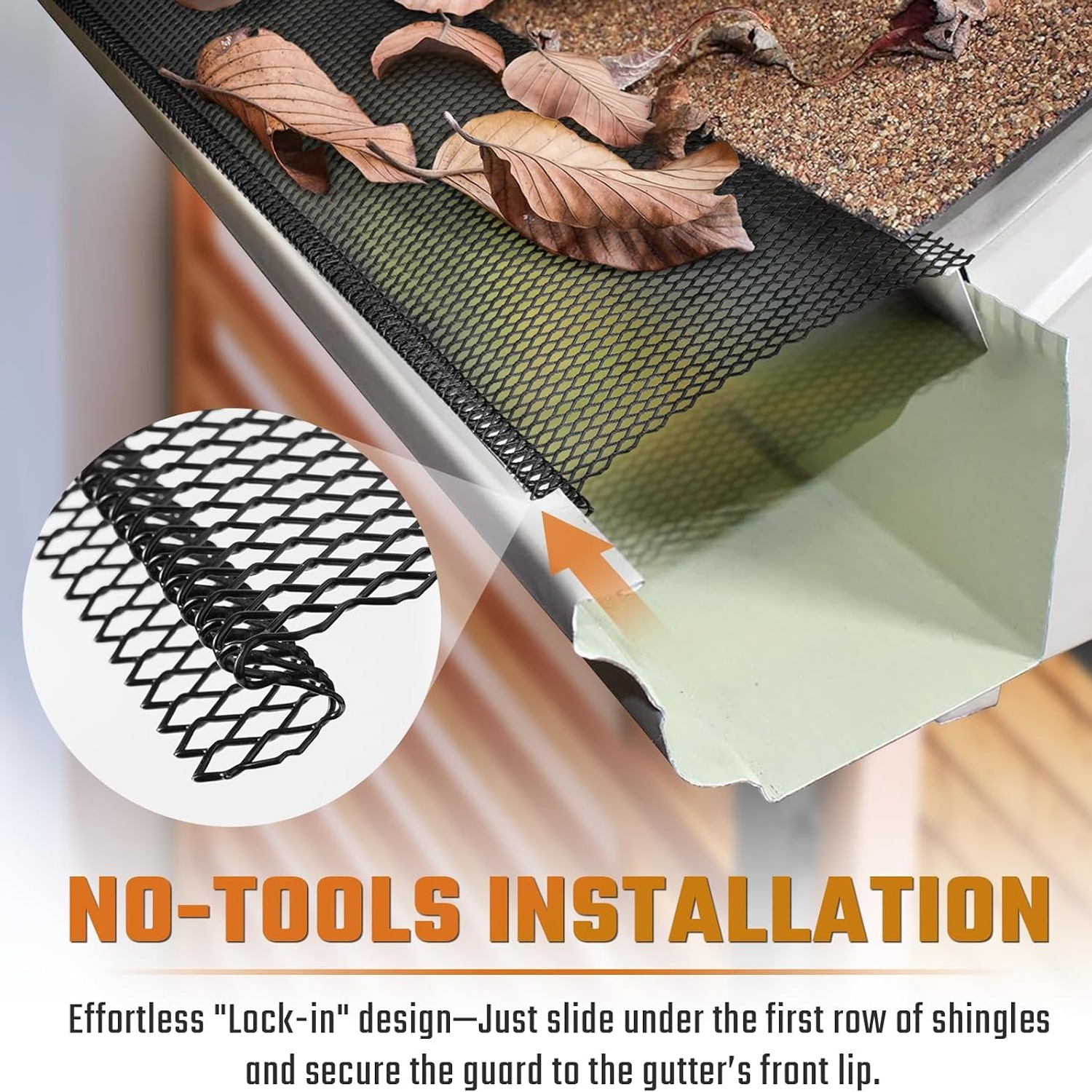
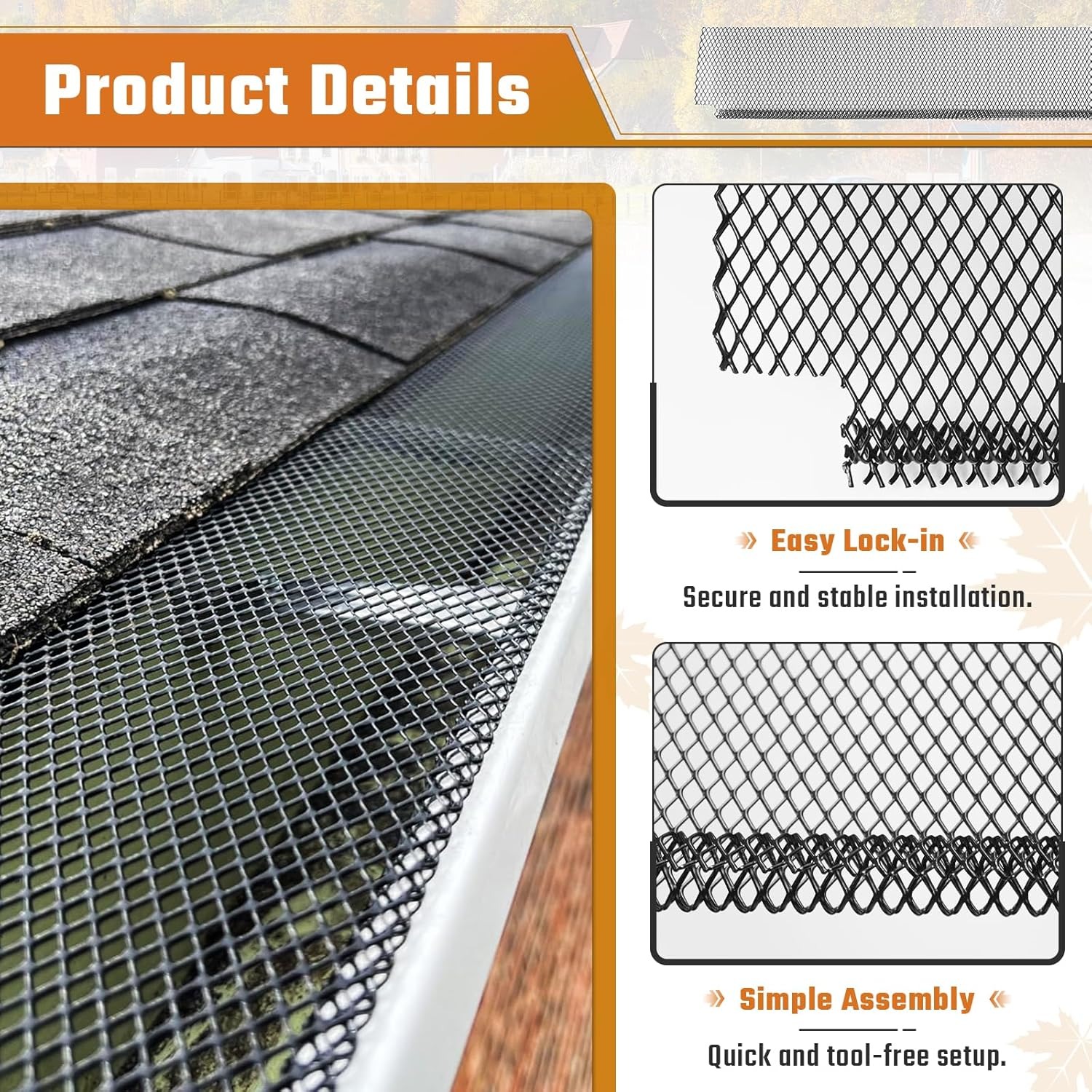
This kit does it with forty powder-coated steel panels, each about three feet long and six inches wide. The back edge of the panel slides up under the first row of roof shingles. The front edge drops down and locks onto the front lip of the gutter. Two anchor points, no screws, no drilling into the fascia.
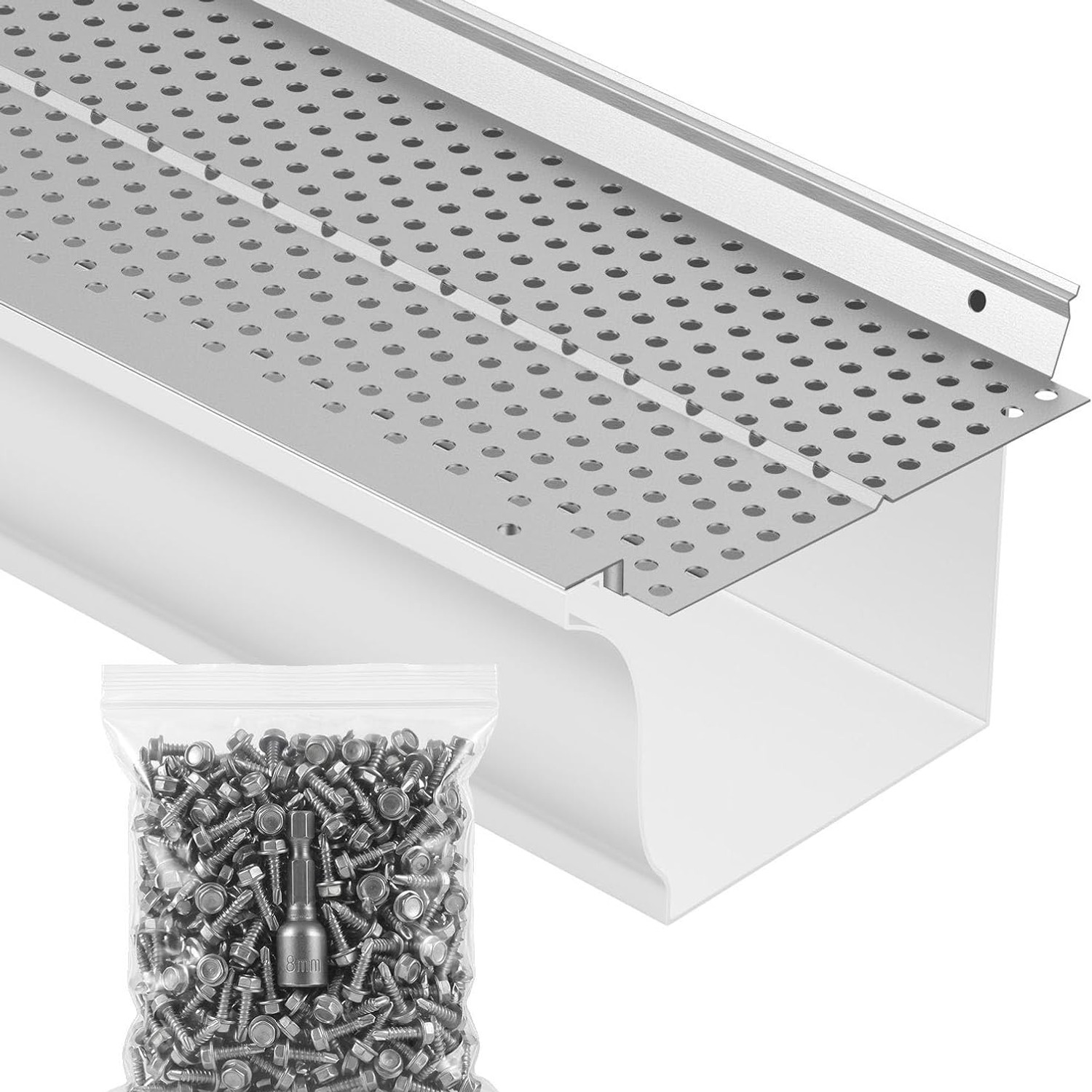
That matters more than it sounds. Screw-down guards put dozens of holes into a timber fascia board that is already exposed to weather. Every hole is a place water can get in. The lock-in method skips that entirely, which also means you can lift a panel out later if you ever need to get at the gutter underneath.
The mesh does the filtering. Rain hits the surface, surface tension pulls it through the openings, and it lands in the channel below. Leaves, twigs, seed pods and the fine grit that washes off asphalt shingles stay on top. Most of it dries out and blows off within a few days. What does not blow off sits in plain view where a quick rinse handles it.
Why steel instead of plastic
Walk into any hardware store and you will find plastic mesh guards for a fraction of the price. They have a place, but they have a predictable life cycle.
Plastic expands in summer heat and contracts in winter cold. After a few cycles it warps, lifts at the edges, and loses its grip. UV light makes it brittle over time, so panels that were flexible on day one snap when you try to adjust them in year three. Most plastic guards need screws every couple of feet precisely because the material cannot hold its own shape.
Steel keeps its form. A wet mat of leaves on top of a steel panel does not make it sag into the gutter. The powder coat is a baked-on finish that sits over the metal, giving it a tougher skin against sun and rain than bare or painted steel. For anyone looking for the best rust resistant gutter guard in a budget-friendly range, a coated steel panel is a sensible middle ground between cheap plastic and expensive professionally installed systems.
The trade-off is weight. The full kit comes in at 27.5 pounds, roughly 12.47 kg. That is fine on the ground and awkward at the top of a ladder, which is why the single best piece of advice for this job is to have someone hand you panels one at a time.
Does it fit your roof?
This is the question to settle before you order anything.
The kit is listed for K-style gutters in 4 inch, 5 inch and 6 inch widths, in either steel or aluminum. K-style is by far the most common domestic profile. It has a flat back that sits against the fascia and a shaped front face with a curved ogee outline, a bit like a piece of crown moulding turned sideways. If your gutter looks like a simple half pipe, that is a half-round profile and this is not the right guard.
Measure the width across the top opening of the gutter, not the outside of the lip. A tape measure and two minutes on a ladder will save you a return.
The second thing to check is the roof edge. The lock-in design needs a first course of shingles to tuck the back edge under. Asphalt shingle, tile and most composite roofs give you that. Standing seam metal roofing often does not, and if there is no shingle lip the panel has nothing to anchor to at the back. Have a look at your roof edge before you commit.
Fitting it without a bad afternoon
Start by cleaning the gutters properly. This is non-negotiable. Any sludge left in the channel will sit there forever once the guards are on, and you will have spent a day sealing a blockage in place. Scoop out the solids, flush the run with a hose, and watch the water leave through the downspout.
Work on a mild, dry day. Cold shingles are stiff and crack when you lift them. Wet roofs are slippery and not worth the risk.
Set the ladder properly against a solid section of the house, not against the gutter itself. Move it often. The temptation to lean out one more foot rather than climb down and reposition is how most ladder accidents start.
Begin at one corner and work along. Slide the back edge under the shingle course, then press the front edge down until it locks onto the gutter lip. Butt the next panel against the first. Keep the line straight as you go, because a drift of half an inch per panel adds up over a long run.
For end sections and corners you can trim panels with tin snips. Wear gloves and eye protection, file any sharp edge, and try to position cut ends where they tuck under rather than sitting exposed.
For single-story work, this is a realistic DIY job and the best DIY gutter protection usually is one you can fit yourself in an afternoon. For two stories, think hard about whether you want to be at that height. Paying someone is cheaper than a hospital visit.
Keeping them working
Guards reduce maintenance. They do not end it.
Twice a year, have a look from the ground with binoculars or from a ladder if you can do it safely. You are checking two things. First, is debris sitting in a drift anywhere, usually in a sheltered corner where wind cannot reach it. Second, has any panel lifted at the front edge after a storm.
A garden hose with a standard nozzle clears fine grit from the mesh surface. Skip the pressure washer at close range, because high pressure can dent fine mesh and pop panels out of position. Lift heavier clumps off by hand with gloves on.
Never chip ice off the panels with a metal tool, and never stand on them. They carry water and leaf litter, not people.
The short version
If you have K-style gutters between 4 and 6 inches wide, a shingle roof edge, and a tree or two nearby, this kit does what it says. Forty steel panels, 120 feet of coverage, no screws into your fascia.
It will not make gutter maintenance disappear. It will turn a messy, hour-long scoop-out into a quick rinse twice a year, and it will stop the kind of slow water damage that costs far more to fix than the guards cost to buy.
Measure your gutter width, check you have a shingle course to tuck under, count your total run, and order enough to finish the job in one go.