

The complete guide
Downspout Leaf Gates, A Practical Buyer's Guide
The problem nobody notices until the wall is wet
Blocked downspouts rarely announce themselves. You clean the gutters, feel good about it, and then one heavy storm later there is water pouring over the gutter edge in a sheet and running down the brickwork. The gutter trough is clear. The blockage is inside the pipe, somewhere you cannot see or reach.
That is how most downspout problems go. Leaves and seed pods wash along the gutter and funnel into the downspout opening, which is the narrowest point in the whole system. They pack into the first elbow, or they travel further and jam in the underground drain where digging them out becomes a real job. By the time water is backing up, the mess has been building for months.
A downspout leaf gate deals with the problem at the entrance. It sits at the opening, lets rainwater through, and keeps the solid debris on the outside where you can brush it away during your normal gutter clean. It does not make gutter maintenance disappear. It just stops the part of the job you cannot do from a ladder.
How a leaf gate actually works
The idea is simple. Water is small and goes anywhere. A wet oak leaf is not, and once it is lying flat against an opening, it stays. The gate presents a barrier that water can pass through and bulk debris cannot.
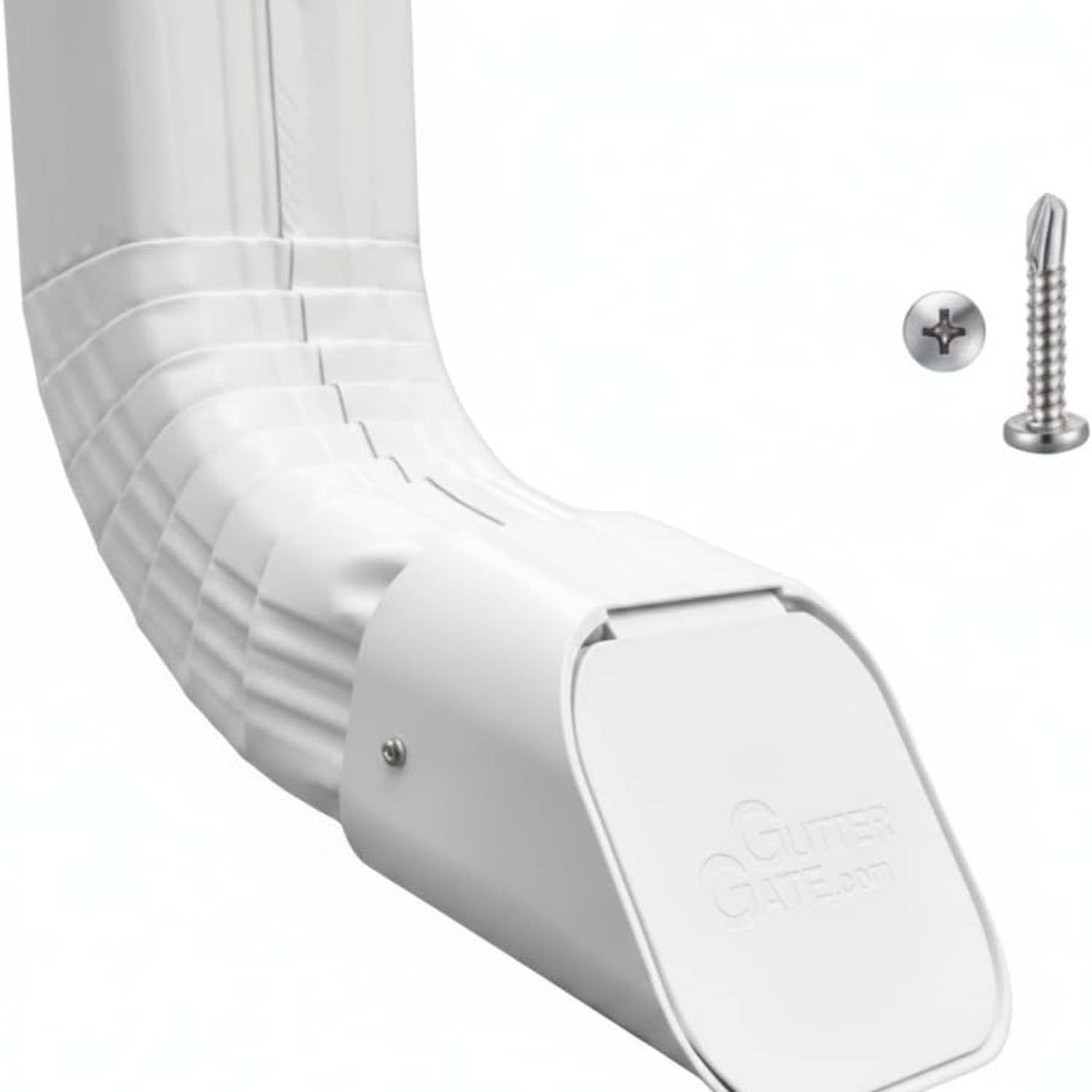
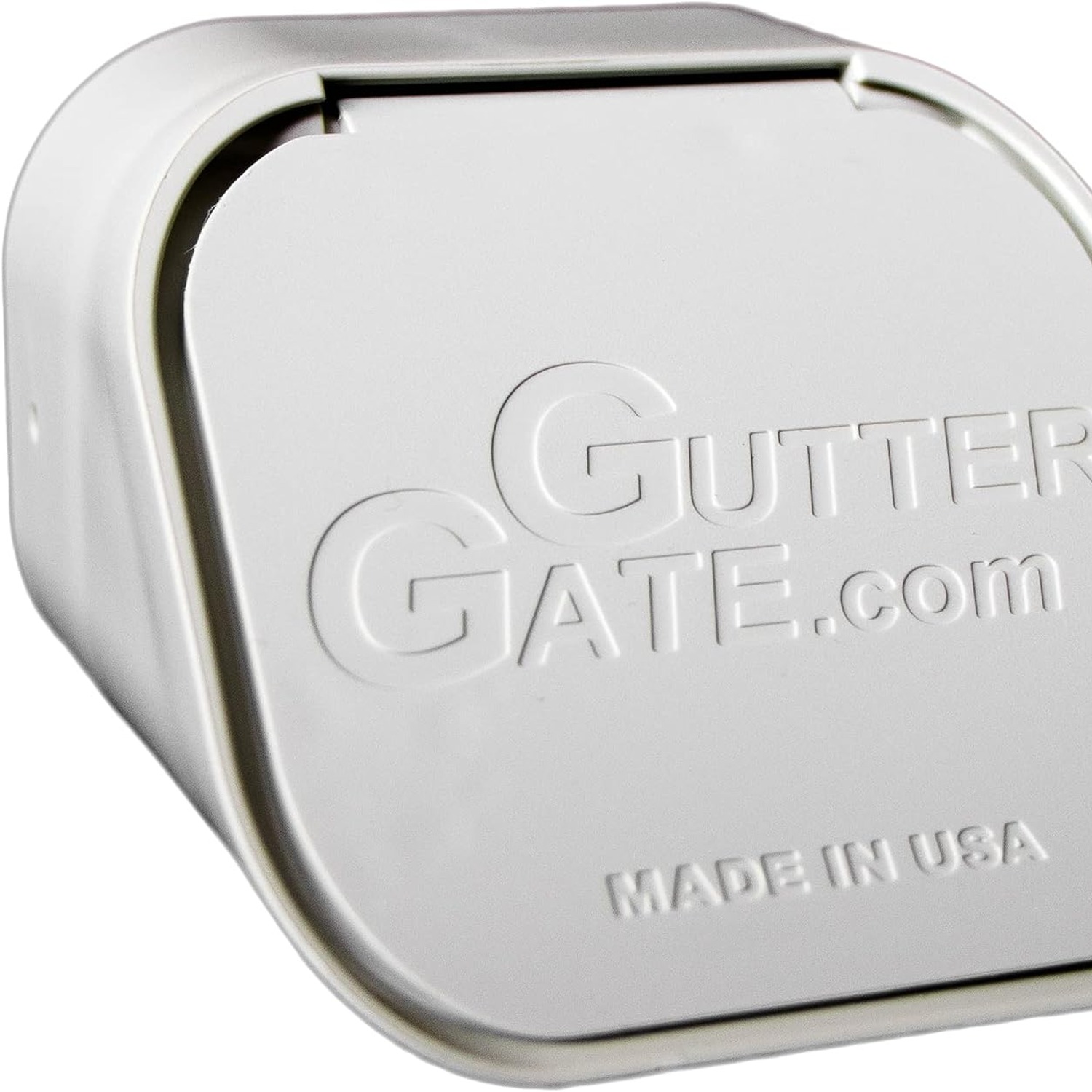
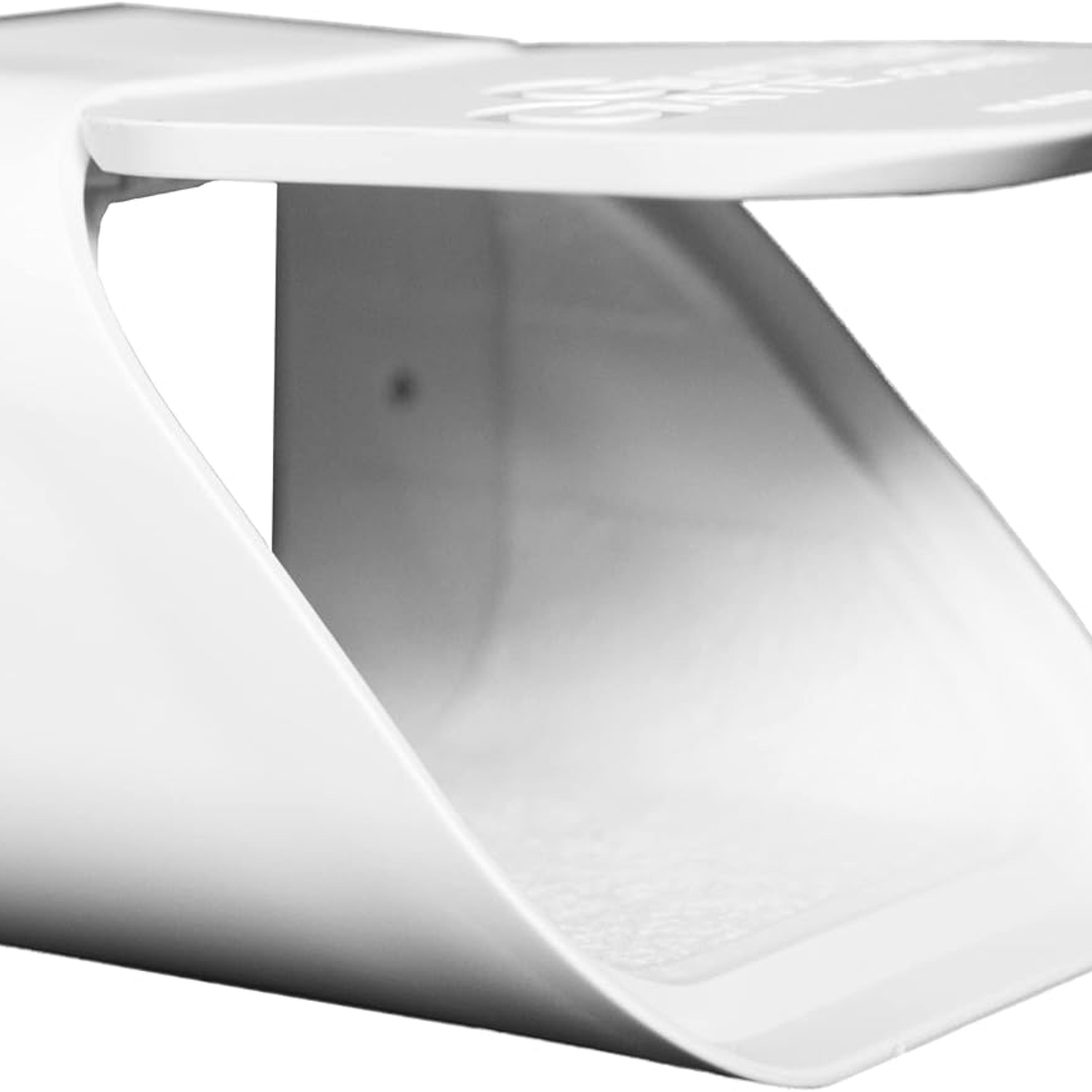
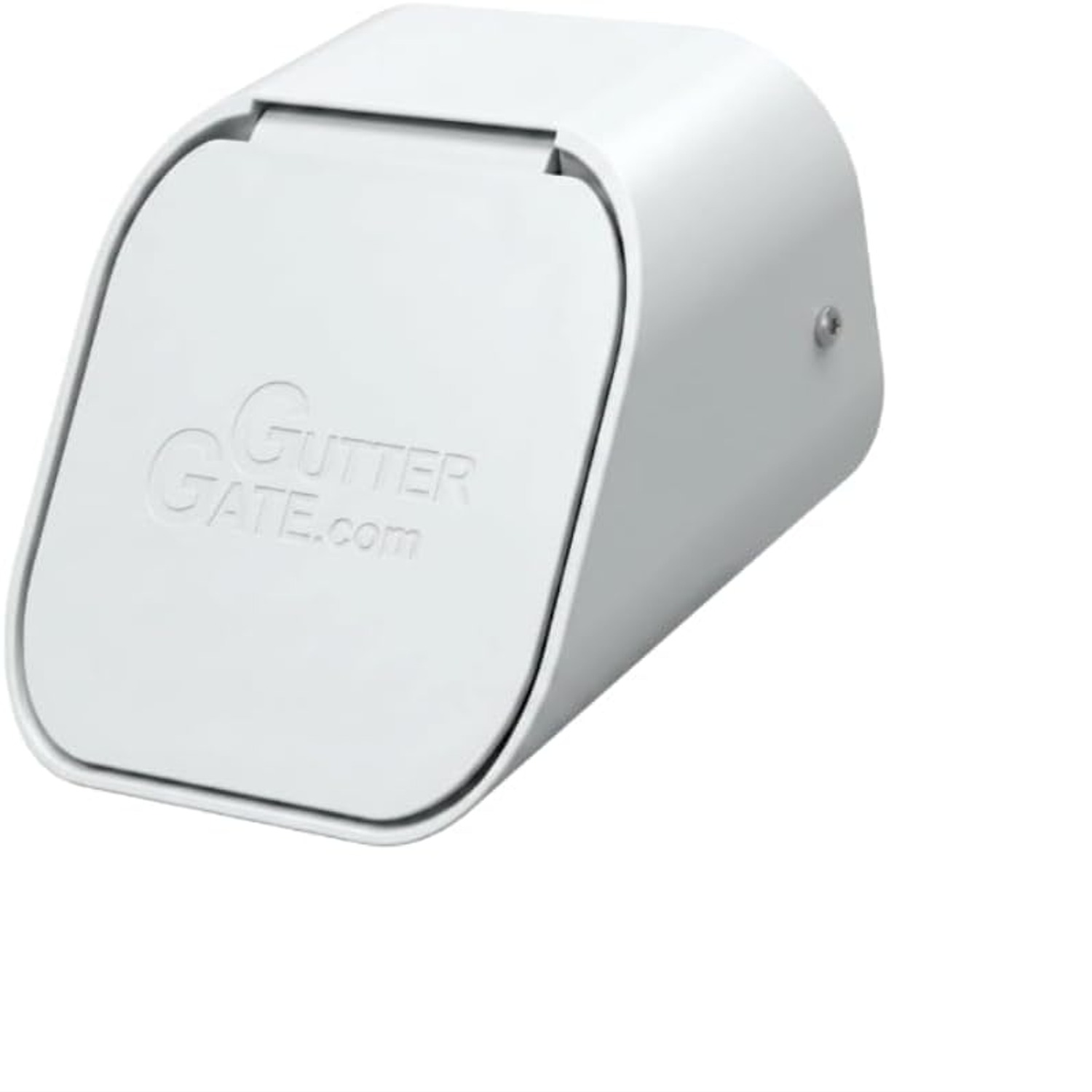
This GutterGate model uses a recessed door design. That recess matters more than it sounds. A flat screen pressed up against a downspout opening tends to collect a mat of leaves that then acts as a dam, which is why some cheap guards make flooding worse rather than better. Setting the door back gives debris somewhere to sit without immediately sealing off the flow path, so the water keeps moving away from the foundation during heavy rainfall.
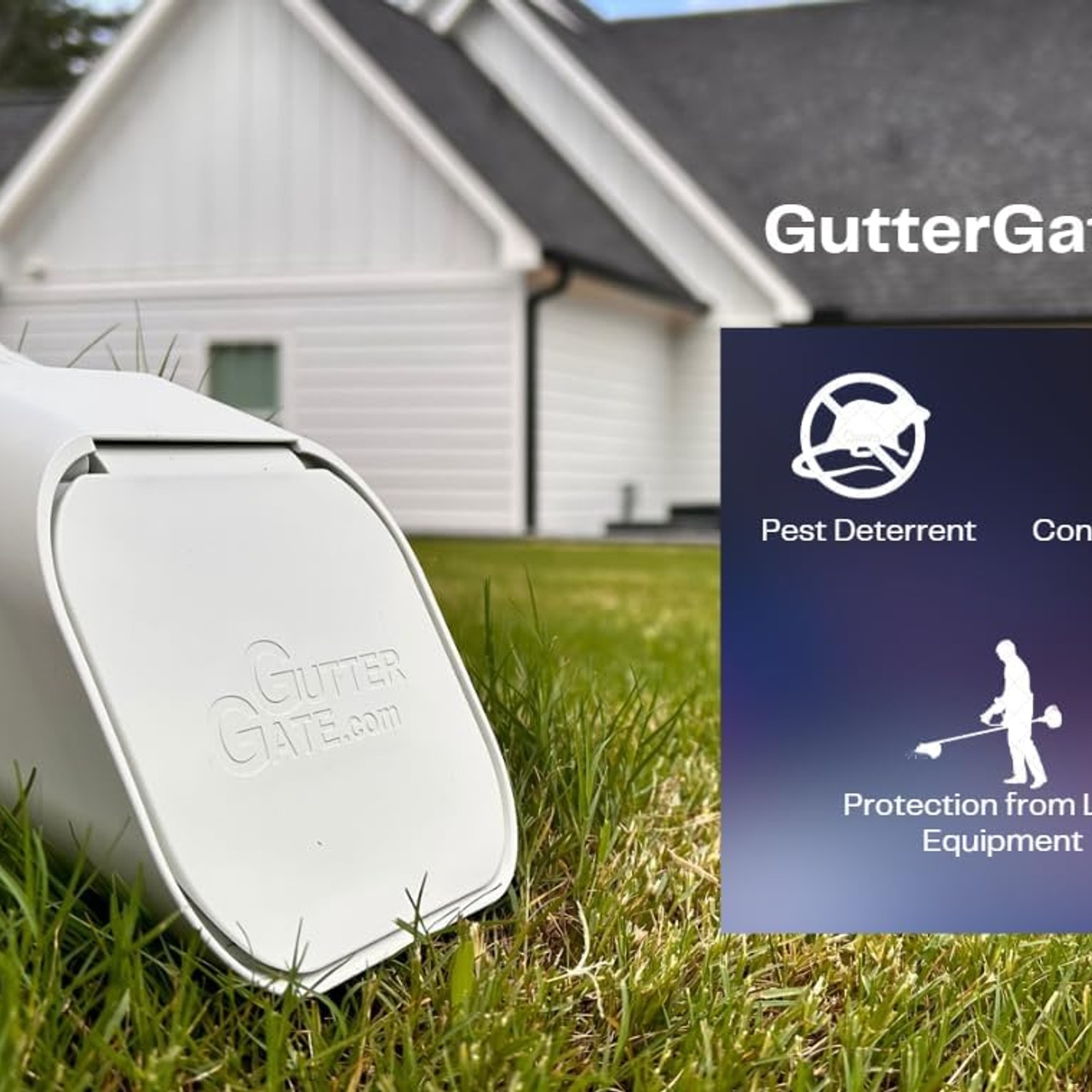
There is a second function that surprises first-time buyers. Downspouts are dark, dry, sheltered tubes attached to a warm building, which is close to perfect nesting conditions. Rodents move in. Wasps build in the elbow. In some regions snakes use them. A gate across the opening closes that door without trapping or harming anything. The animal finds the way blocked and goes somewhere else, which is the way you want that problem solved.
Check your downspout size first
This is the single most common ordering mistake, so it is worth slowing down for.
This unit is made for 3 in x 4 in Type-A downspouts. That is a very common residential rectangular profile, but it is not universal. Plenty of homes run 2x3 downspouts, round downspouts, or oversized commercial profiles. A guard made for one will not seat properly on another.
Measuring takes thirty seconds. Put a tape across the short side of the downspout opening and then across the long side. If you get roughly 3 inches and 4 inches, this is your fitment. If the numbers come out noticeably different, this is not the right part and you should look for the size that matches. Measure the actual downspout rather than relying on what the builder said or what the neighbor has, because gutter systems get replaced piecemeal over the years and mixed sizes on one house are not unusual.
If you have several downspouts, check them all. It is common to find one that was swapped out after storm damage and does not match the rest.
Materials and why plastic wins outdoors here
The body is UV-resistant plastic in white. For a part that sits in full sun and full rain for years, that is a sensible choice.
Metal guards rust at the cut edges and the screw holes, and once the rust starts it stains the wall below. Untreated plastic has its own failure mode, it chalks, fades and eventually goes brittle enough to crack when you knock it with a ladder. UV-resistant plastic is formulated to resist that breakdown, so it holds its color and its flexibility through repeated summers.
White also blends well with the standard white and off-white downspout finishes used on a lot of houses. If your downspouts are a darker color, the guard will be visible, though it sits low on the run and is rarely something visitors notice. It can be painted with a plastic primer and an exterior topcoat if you want it to match exactly, just keep paint off any moving door section.
The whole unit weighs about 0.22 kg, so it adds no meaningful load to the downspout bracket and is easy to carry up a ladder in one hand.
Fitting it without turning it into a project
Installation is deliberately basic. The guard slides over the existing downspout and is secured with two screws. There is no cutting, no sealant, and no need to take the downspout off the wall.
A sensible order of work looks like this. Clear the gutter and the downspout opening first, because fitting a gate over an existing blockage just hides it. Set your ladder on firm, level ground and have someone foot it if you can. Dry-fit the guard and check that nothing fouls a bracket or a wall fixing, and that the door can move freely. Then mark, drill if needed, and drive the two screws.
Use stainless or coated screws rather than plain steel. Two small screws are the only metal in the assembly, and plain ones will rust and streak the downspout below. Do not overtighten, since you are driving into thin sheet metal and a stripped hole is annoying to fix at the top of a ladder.
If ladder work is not for you, this is a short enough job that a handyman visit costs very little. It is the kind of task that gets bundled with an annual gutter clean.
Who gets the most out of one
Homes under trees, obviously. If you have oak, maple, pine or anything that drops seed pods, your downspouts are working hard every autumn.
Homes with underground drainage get even more value. A blockage in a buried pipe is the worst case, because clearing it means rods, a drain jet or in bad cases excavation. Keeping the leaves out of the top is far cheaper than getting them out of the bottom.
Anyone who has had an animal problem should also consider it. Once wasps or rodents have found a downspout, they tend to come back, and exclusion is the only approach that keeps working.
Where it matters less is a house in open ground with no overhanging trees and above-ground drainage you can see and reach. Even then, the pest exclusion side may still justify it.
Keeping it working
Maintenance is light. Hose it down a few times a year to clear leaves, grit and cobwebs. If something has baked on, mild soapy water and a soft brush will shift it. Avoid solvents and scouring pads, which scratch the surface and give dirt somewhere to grip next time.
Check the two screws each season and nip them up if they have backed off. Thermal movement and wind vibration will loosen fixings over a few years on any outdoor fitting.
In freezing climates, let ice thaw rather than chipping at it. Any rigid plastic is more brittle when it is cold, and a careless strike with a trowel can crack a part that would otherwise last for years.
The short version
A downspout leaf gate is a small, cheap part that removes a recurring and genuinely annoying problem. It keeps leaves out of the pipe, keeps animals out of the pipe, and lets the water carry on doing its job.
Confirm your downspout is a 3 in x 4 in Type-A before ordering, because fitment is the one thing that decides whether this works for you. Buy one per downspout you care about, fit them with two screws each, and hose them down a couple of times a year.
Do that and the next big storm is something you watch from the window rather than something you clean up afterwards.