
The complete guide
How To Clean Gutters With A Shop Vac Attachment Kit
The job nobody wants to do
Gutters fill up quietly. A few leaves in spring, a bit of roof grit after summer storms, then one heavy week in autumn and suddenly the whole run is packed. You only notice when water pours over the front edge instead of going down the pipe, usually during the worst weather of the year.
The traditional fix is a ladder, a bucket and a trowel. You climb, scoop, drop the mess in the bucket, climb down, move the ladder two meters, climb again. On a modest house that is twenty ladder moves. It is slow, it is messy, and it puts you up high with both hands busy, which is exactly the situation safety people keep telling us to avoid.
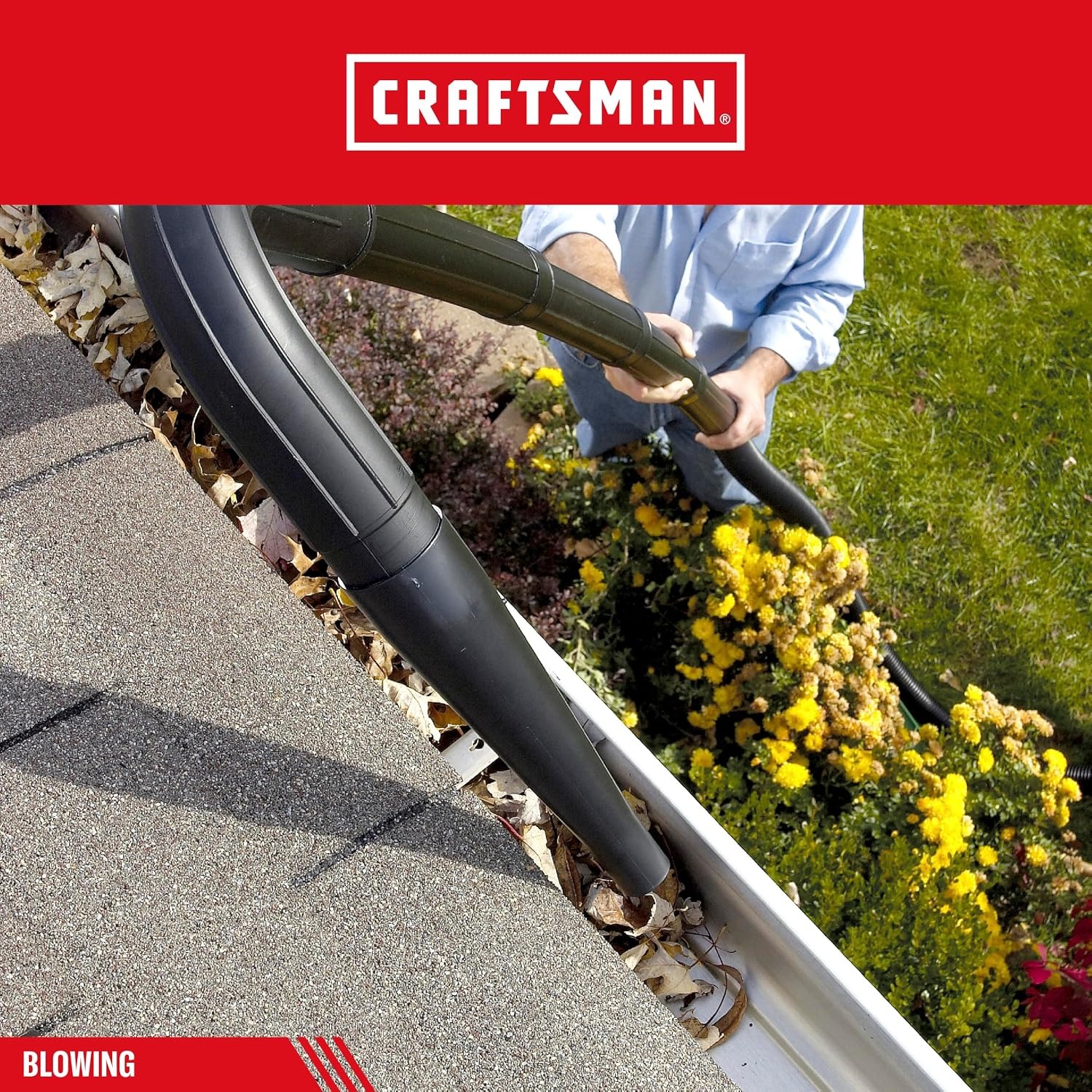
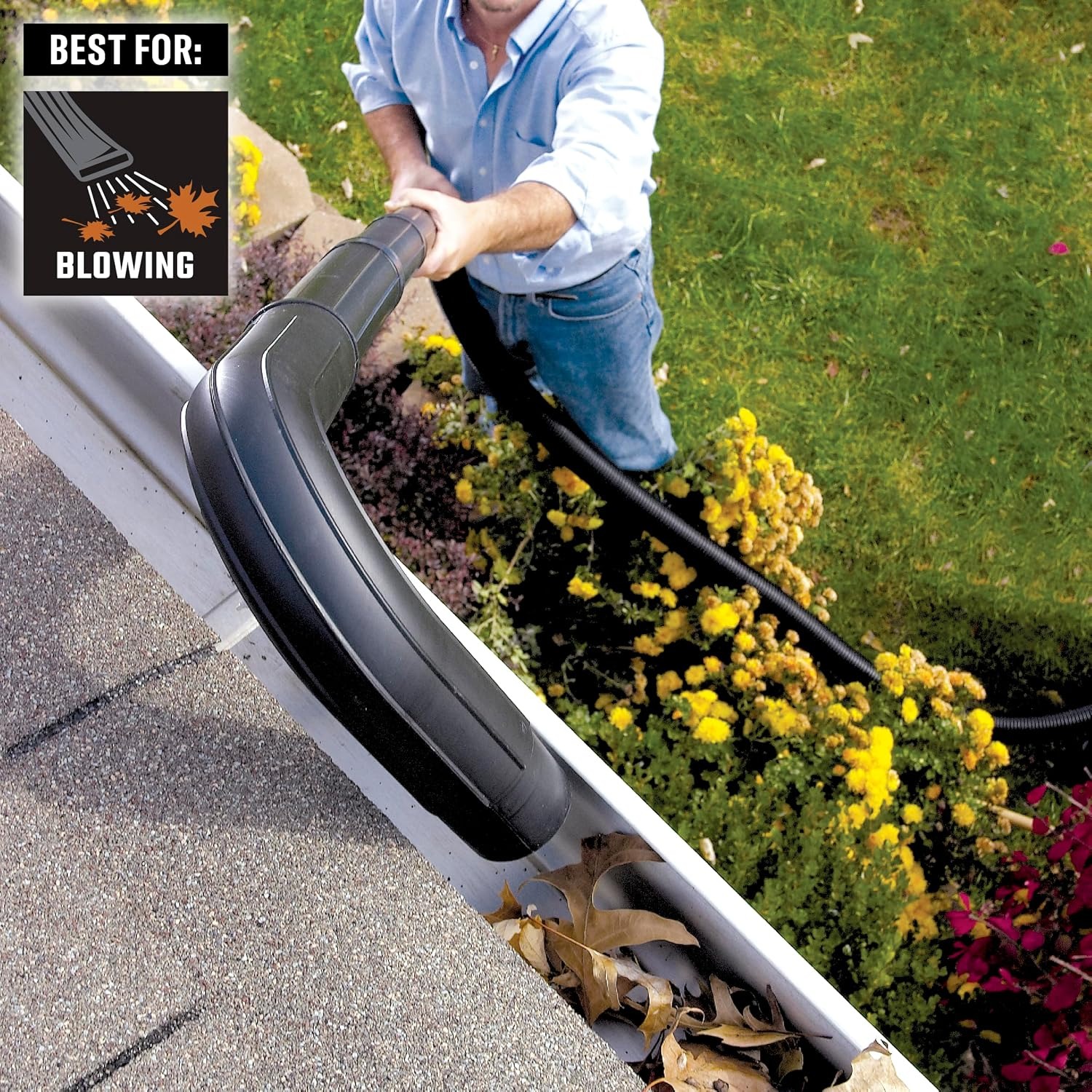
A gutter cleaning vacuum attachment changes the arrangement. Instead of your hands going into the gutter, a nozzle on the end of a wand goes in. You stand lower, often on the ground, and the vacuum carries the debris away into its drum. The job gets faster and you stay in a more stable position.
What is in the kit and what each piece does
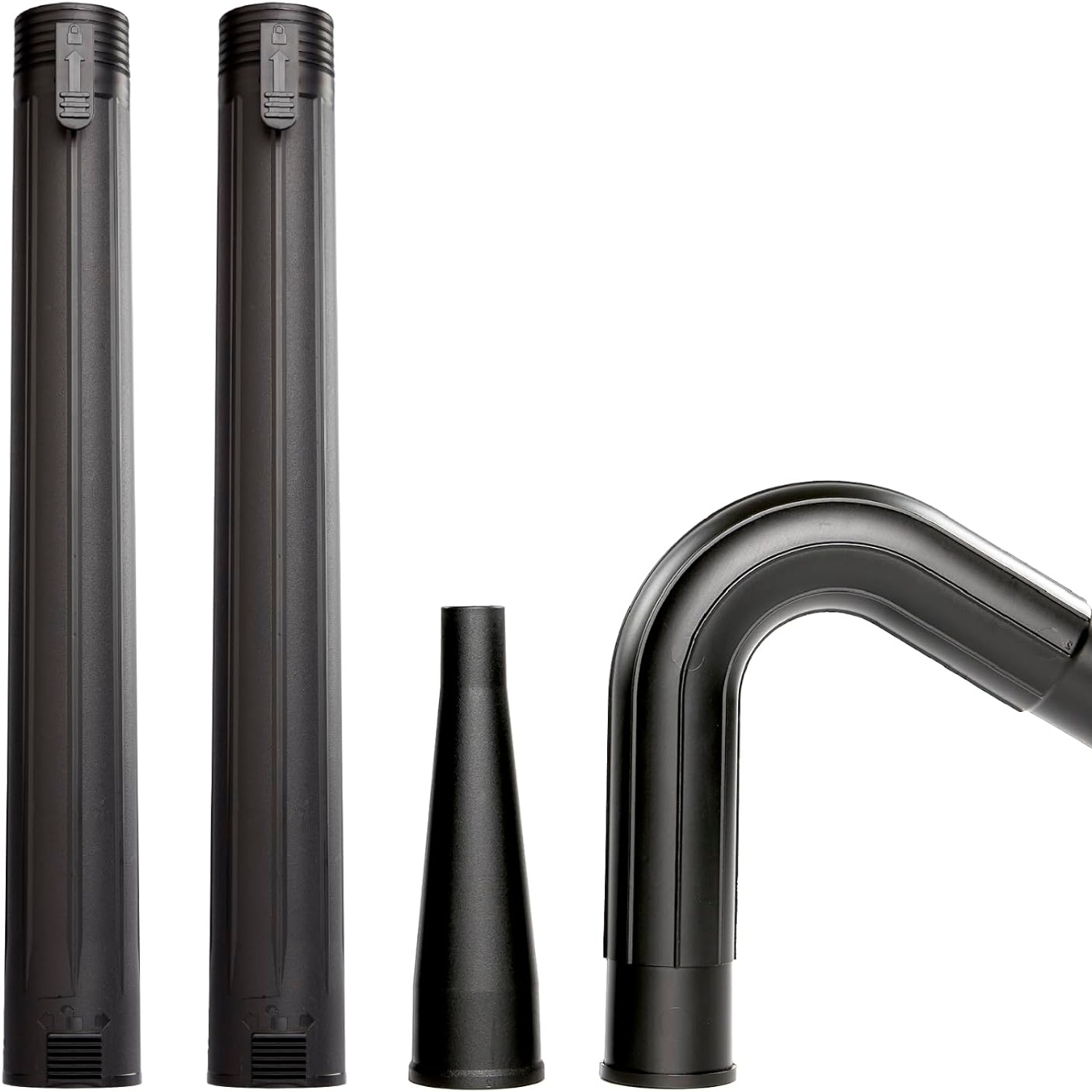
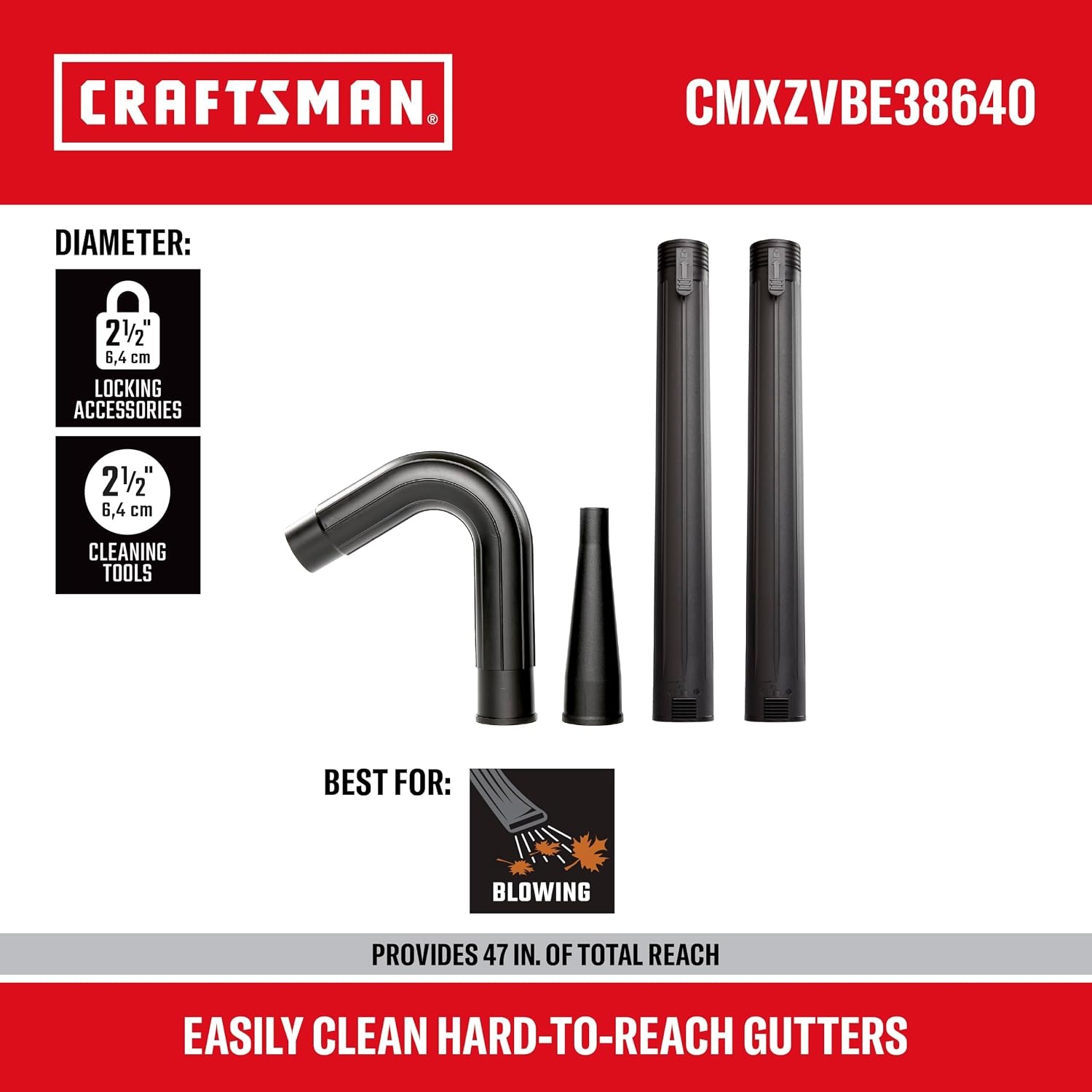
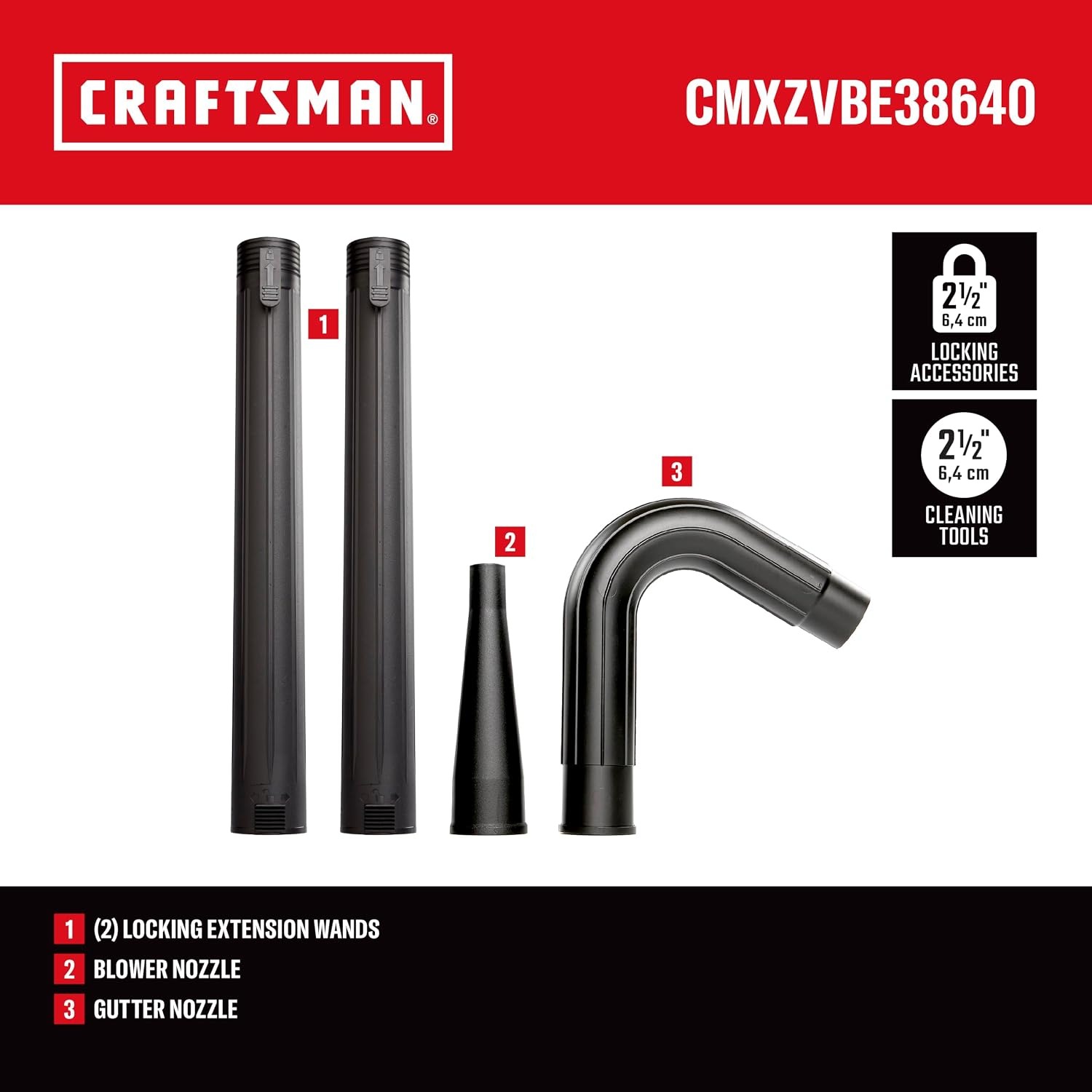
This set has four parts and each one earns its place.
The gutter nozzle is the curved piece. That curve is not decorative. It lets the nozzle hook over the front lip of the gutter so the opening sits down in the channel at roughly the right angle to the base. Straight nozzles tend to ride over the top of packed material. A curved one gets under it.
The two extension wands are the reach. They slide between your vacuum hose and the nozzle, adding height so you can work from further below. Added together with your existing hose and wand, this is usually enough to clear a single-story eave while standing on firm ground or a low step.
The blower nozzle is the one people forget they have. Most wet/dry vacs have a blowing port on the body as well as the suction inlet. Move the hose across, fit this tapered nozzle, and you get a focused jet of air. On a dry day it will walk loose leaves along the gutter and out the open end faster than vacuuming them one by one.
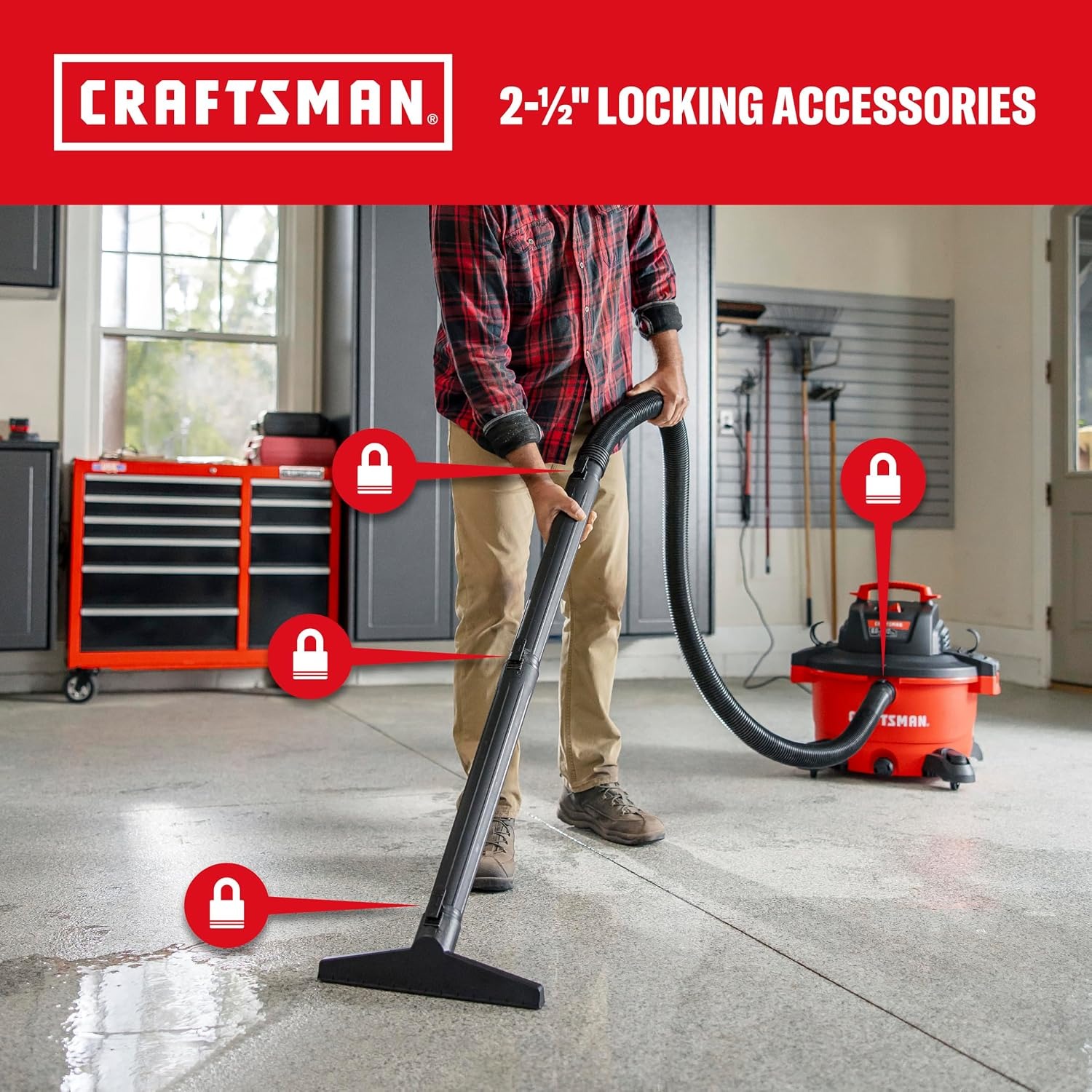
Everything is sized for a 2-1/2 inch hose, the common diameter on CRAFTSMAN wet/dry vacs and most comparable machines from other brands.
How it actually works in practice
Set up matters more than technique here. Start by checking your filter. If the debris in the gutter is dry, a standard filter is fine. If it has rained in the last few days and the leaves have turned to sludge, switch your vacuum over to wet pickup following the maker's instructions, because a dry paper filter clogs almost instantly with wet silt and you lose all your suction.
Next, decide between blowing and vacuuming. Dry and loose, blow it. Damp and packed, vacuum it. Most real jobs are a mix, so a good order is blow first to clear the easy material, then switch to the gutter nozzle for whatever stayed put.
When vacuuming, work in short overlapping passes rather than dragging the nozzle along in one long sweep. Hook the curve over the lip, pull back about half a meter, lift, reposition. Dragging just pushes a bow wave of leaves ahead of the nozzle until the whole lot jams.
Keep an eye on the drum. Wet gutter debris is heavy and the drum fills faster than you expect. Emptying halfway through is normal, not a fault.
Who this suits
The best gutter cleaning vacuum attachment is the one that fits the vac you already own, so the first group this suits is anyone with a 2-1/2 inch wet/dry vacuum in the garage. If that is you, the kit is a cheap upgrade that uses hardware you have already paid for.
It suits single-story homes best. Bungalows, ranch-style houses and anything with eaves you can reach comfortably from a low position are the sweet spot. Two-story homes can still use it, you just do it from a ladder with the extra reach meaning fewer ladder moves.
It suits people with overhanging trees, where the job needs doing three or four times a year rather than once. When the task is frequent, the time saving compounds.
It is less suited to very wide box gutters, where the nozzle covers a smaller share of the width, and to anything needing roof access. If you cannot do it safely from a ladder, that is a job for someone with harnesses and training.
Choosing the right setup
Measure before you buy. The single most common problem with any shop vac accessory is a hose diameter mismatch. Put a tape across the inside of your hose end. If it reads 2-1/2 inches, you are good. If it reads 1-7/8 or 1-1/4, you need a stepped adapter or a different kit.
Think about how many wands you will run. Two is the number in the box and it is a sensible working limit. You can add more if your vacuum came with spares, but suction drops as the tube run gets longer and the assembly gets wobbly to hold overhead. There is a point where you are fighting the tool instead of using it.
Consider your vacuum's motor. A small 20-liter unit will do a dry leaf clear-out fine. For heavy wet sludge across a long run, a bigger machine with more airflow makes the job noticeably quicker.
Finally, think about debris type. A wide nozzle opening passes leaves and twigs without bridging, which is what you want for gutters. Narrow crevice tools are the wrong shape for this job no matter how long the wand is.
Looking after it
The care routine is short. Rinse the nozzles and wands with a hose when you finish, check inside the tubes for anything packed in the bend, and let the pieces dry before they go back on the shelf. Wet leaves left inside plastic tubing go slimy and smell within a week.
Keep the connection ends clean. These parts hold together with a friction fit, and grit on the joint makes them either too tight or too loose. A wipe is enough.
Store the kit indoors or under cover. Plastic left in full sun for years gets chalky and brittle. A hook in the garage next to the vacuum means it stays protected and you remember you own it.
Also look after your vacuum. Empty the drum, clean or replace the filter, and check the hose for anything lodged inside. Most complaints about weak suction come down to a blocked filter rather than the attachment.
A word on safety
The reason to buy a tool like this is to keep your feet lower and your hands freer. Use it that way. Do not treat the extra reach as permission to lean further off a ladder. Keep your belt buckle between the rails, keep three points of contact, and have someone hold the base if the ground is soft.
Wear eye protection. Blowing dry leaves out of a gutter sends grit in unpredictable directions, and a face full of roof dust is a bad end to a quick job. Gloves help too, since gutter edges are sharp and old sealant is unpleasant.
The short version
This is a four-piece accessory kit that turns a wet/dry shop vac into a gutter tool. You get a curved gutter nozzle for vacuuming, a tapered blower nozzle for pushing dry leaves along, and two extension wands for reach. It fits CRAFTSMAN and most other vacs with a 2-1/2 inch hose.
It will not do a two-story roofline from the ground and it is not a drain rod. What it will do is take a slow, awkward, ladder-heavy job and make it quicker and steadier, using a machine you already own. For a single-story home under trees, that is a good trade.