


The complete guide
How to Choose a Micro-Mesh Gutter Guard for 6 Inch Gutters
The problem with an open gutter
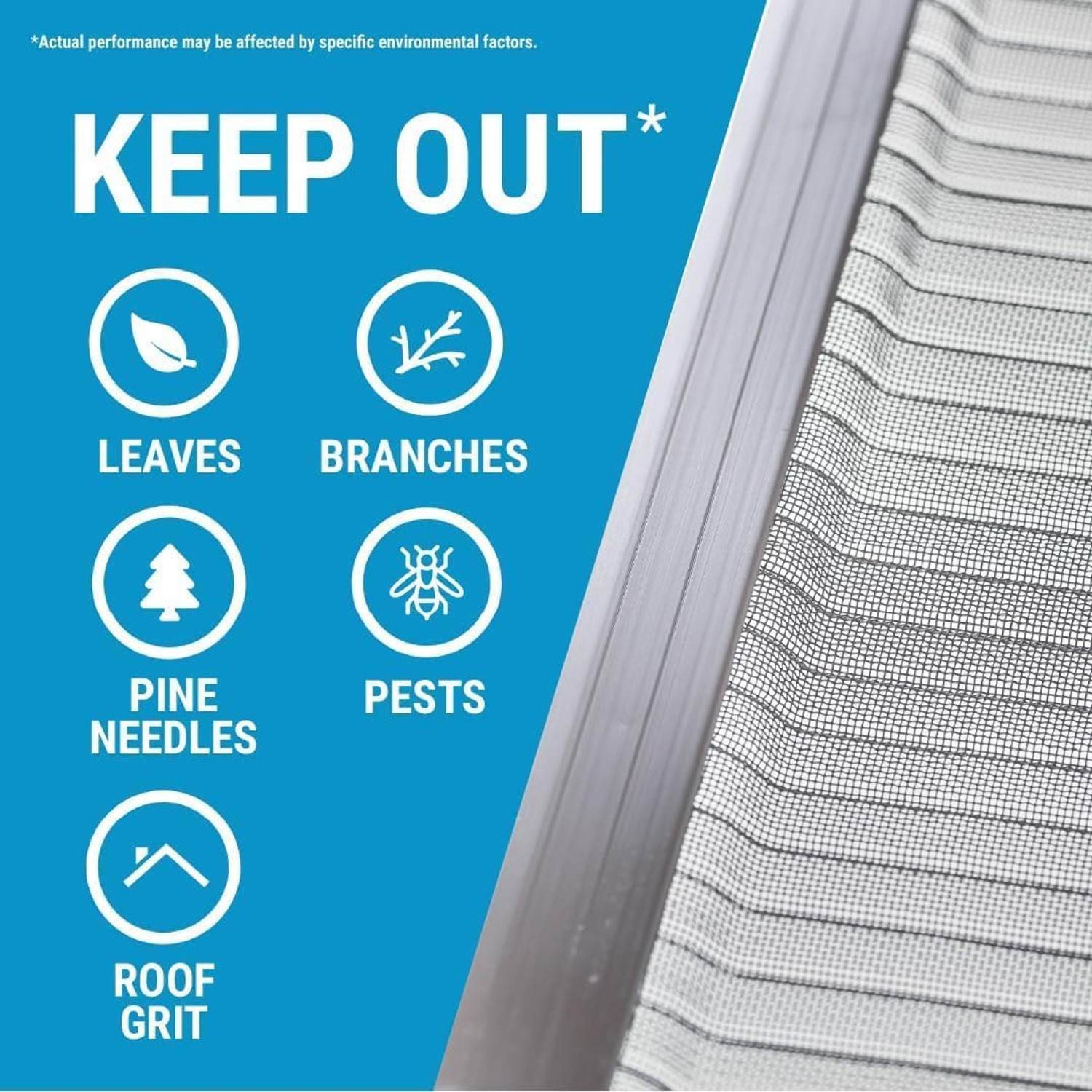
A gutter is just a long open tray bolted to the edge of your roof. It does one job, which is to catch water and send it to a downspout. The trouble is that it catches everything else too. Leaves, seed pods, pine needles, moss, grit shed from roof tiles and shingles, the odd tennis ball. All of it lands in the tray and stays there.
Water is what turns that pile into a problem. Dry leaves blow away. Wet leaves clump, sink, and pack into the corners and the mouth of the downspout. Once the downspout is plugged, the gutter fills and water goes over the front edge in a sheet. That sheet lands right against your fascia board, down your wall, or into the soil at the base of the house. Over a few seasons you get rotting timber, stained render, washed-out garden beds and sometimes water finding its way inside.
Then there is the ladder. Cleaning gutters is unpleasant work done at height, often in cold weather, usually alone. Most ladder injuries around the home happen doing exactly this kind of task. Reducing the number of times you need to go up there has real value.
How micro-mesh guards work
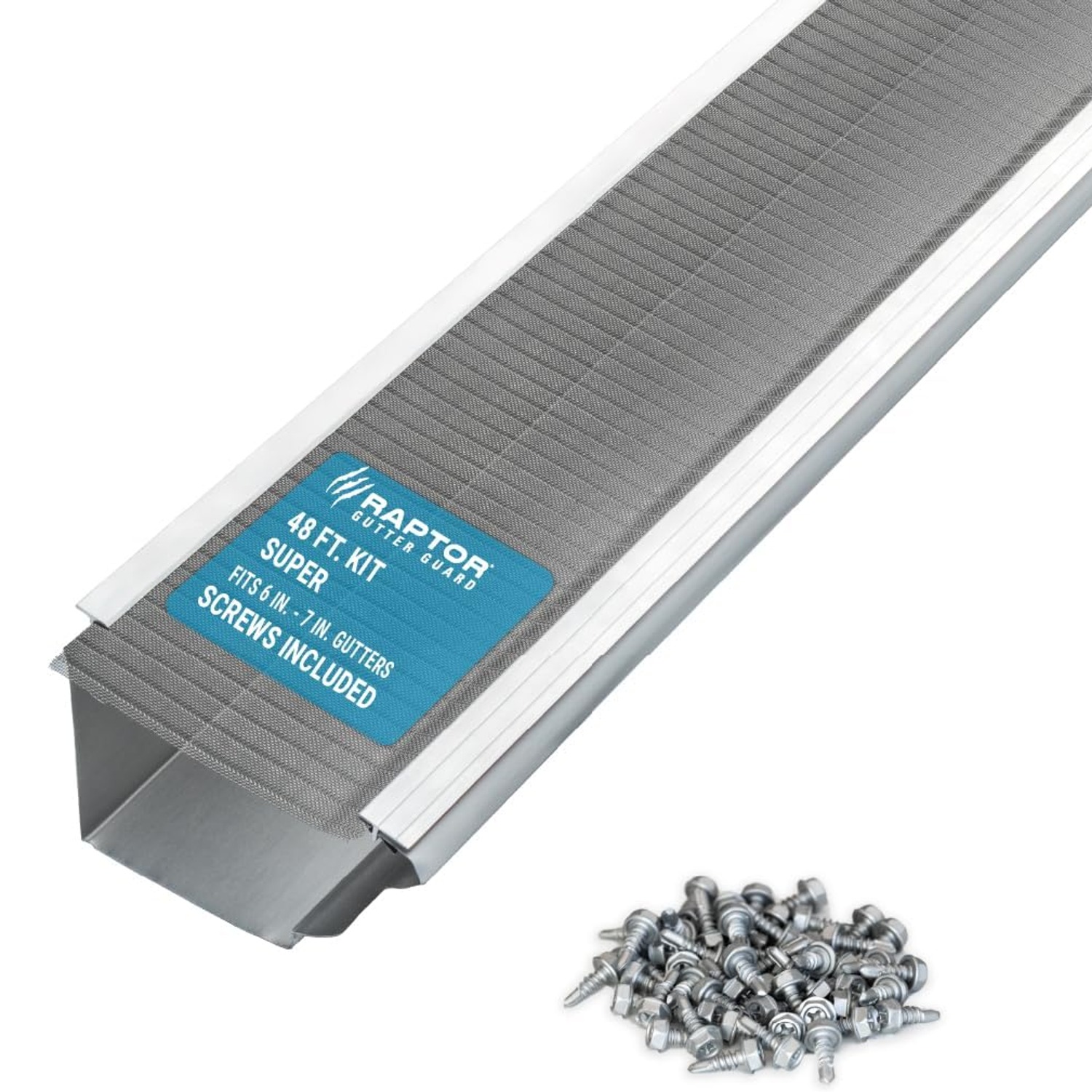
A micro-mesh guard is a panel that sits across the open top of the gutter. Rain hits the roof, runs down to the edge, and meets the mesh. Water passes through the tiny openings and drops into the gutter. Solid material cannot pass through, so it stays on the surface.
What makes the mesh style different from older guards is the size of the openings. Coarse wire screens and plastic grids stop big leaves but let needles, seed husks and grit straight through. Foam inserts fill the gutter and clog from the inside, which is worse to deal with than a plain dirty gutter. Fine mesh is the approach that handles small debris, and small debris is what actually silts up most gutters over time.
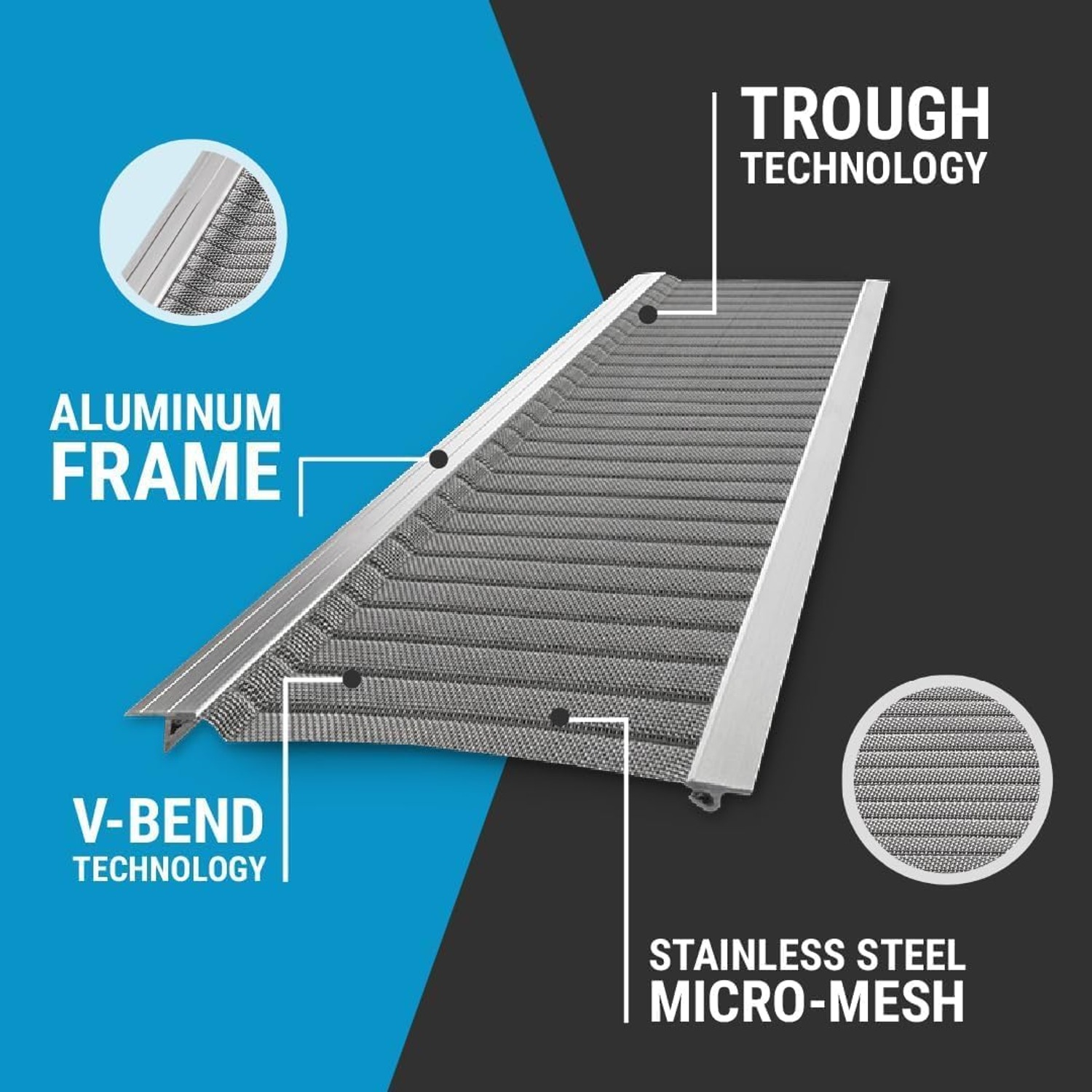
This kit uses stainless steel mesh. That choice matters because the panel lives outside permanently with no shelter. It gets full sun, hard rain, frost, and in some places salt air. Plastic screens turn chalky and brittle after a few summers of UV. A rust-resistant gutter screen in steel holds its shape and keeps its structure far longer.
The panels here are also shaped rather than flat. There is a V-bend running through the panel plus trough shaping. Two things come from that. The panel gets stiffer, so it does not bow down into the gutter between supports. And water gets a defined path across the surface, which helps it move toward the openings rather than sitting in a film. The shape also means dry debris has less flat surface to grip, so a gust of wind clears more of it than it would off a flat sheet.
Who this particular kit suits
The key number is the panel width, 7.25 inches. That is what makes this a wide gutter mesh kit rather than a standard one. It is built for gutters measuring 6 inches and 7 inches across the opening.
Wide gutters show up on larger homes, on buildings with big roof areas feeding a single run, on some modern builds, and on sheds, barns and light commercial roofs. If you are not sure what you have, take a tape measure to the gutter and measure across the top from the back edge to the front lip. A standard residential gutter is usually 5 inches. If you get 6 or more, you are in the right place.
The second number is coverage. Twelve panels at 47.5 inches each gives a 48 ft nominal run. Panels overlap slightly where they join, so plan for a finished length a little short of 48 ft and buy accordingly. Measure the actual runs you want to protect, add them up, and round up to whole kits.
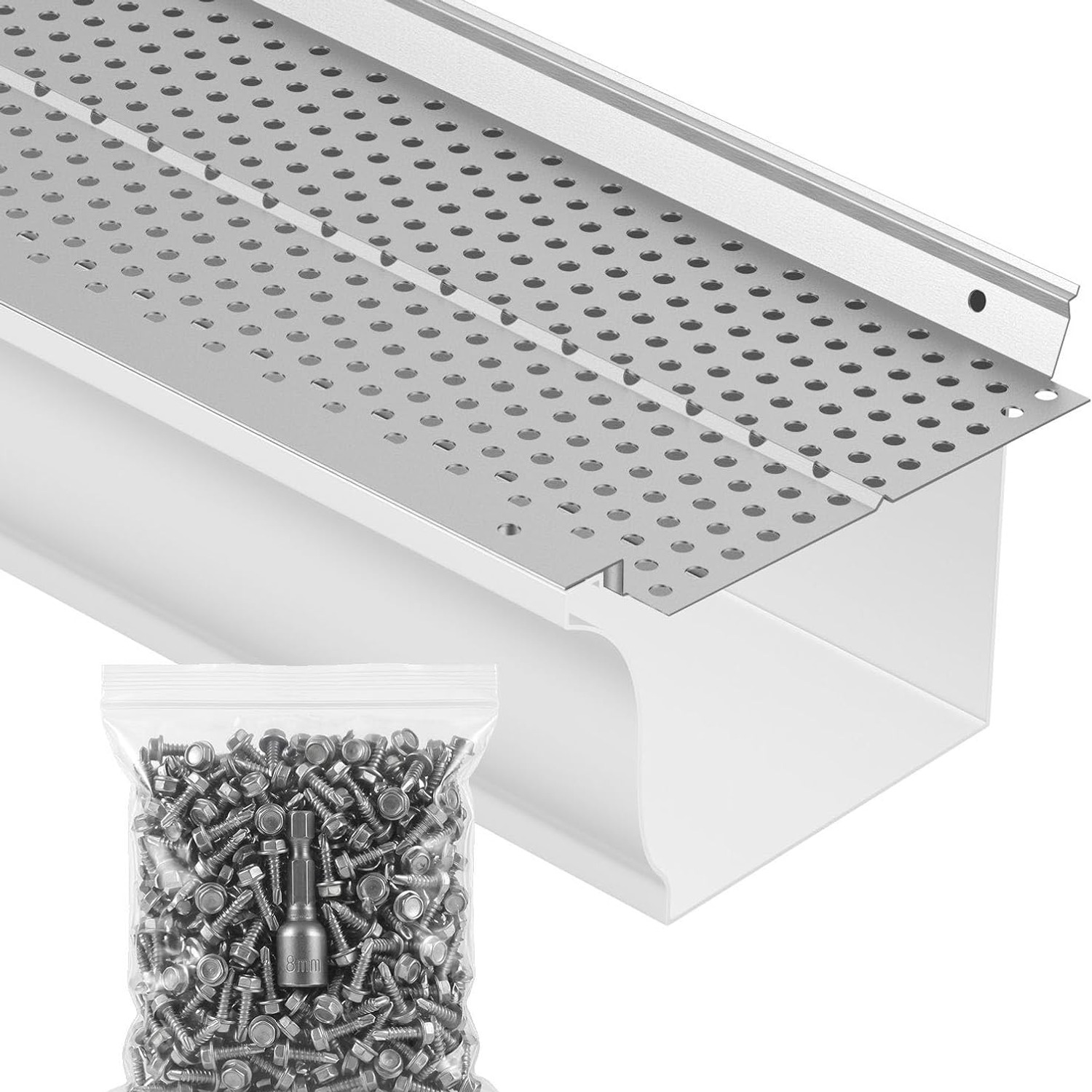
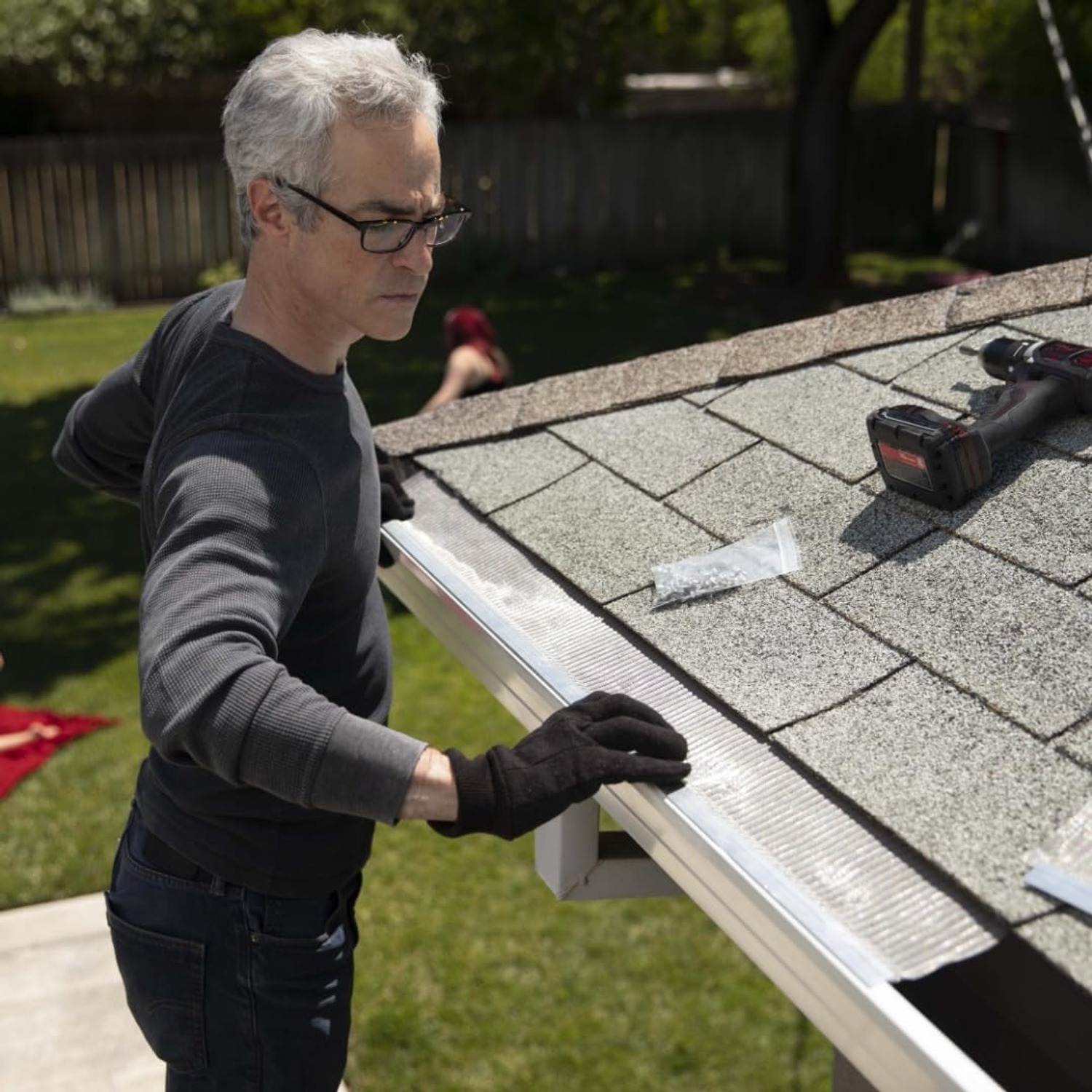
The third consideration is you. This is a DIY kit with self-tapping screws supplied. If you are steady on a ladder and own a cordless driver, this is a straightforward Saturday project. If your home is two or three stories, or the roof is steep, or you simply do not like heights, pay an installer. The product does not change, but your safety does.
Choosing between guard types
It helps to know what else is out there so you can see where mesh fits.
Plastic screens are cheap and easy to clip in. They stop handfuls of leaves and almost nothing else. In a pine-heavy yard they are close to useless, and they degrade in sun.
Foam inserts push into the gutter channel. They are quick to fit, but debris embeds itself in the foam, and they hold moisture, which encourages growth. Removing a clogged foam insert from a long run is a thoroughly bad afternoon.
Reverse-curve or surface-tension covers rely on water clinging around a curved lip. They can work well, but they are sensitive to install angle and they can overshoot in heavy downpours. They also tend to be a professional-install product.
Fine micro-mesh in steel is the option most people land on when they want something that handles small debris and lasts. It is the best micro mesh gutter cover approach for yards with pines, eucalypts, or any tree that drops fine material rather than big flat leaves.
Getting the install right
Clean first. Every single time. Scoop everything out, flush with a hose, confirm water runs freely to the downspout outlet. Fitting a guard over a dirty gutter traps the mess exactly where you cannot reach it.
Check the gutter itself while you are up there. Loose brackets, a sagging section, or a split seam should be sorted before any panel goes on. Gutters need a slight fall toward the downspout, so look for anywhere water is standing.
Work one panel at a time. Set the first one carefully, because the rest follow its line. Overlap each join by the amount the instructions call for and drive the supplied screws without over-tightening. Over-tight screws dimple the panel and can distort the mesh.
Trim with tin snips where you need to, at corners and at the end of a run. Wear gloves, because cut stainless is genuinely sharp. Keep mesh continuous over the downspout opening so nothing drops straight into the pipe.
Finally, stand back on the ground and sight along the line. A panel sitting proud or dipped is easier to fix now than after the first storm.
Keeping it working
A guard reduces maintenance, it does not delete it. Once or twice a year, get up and look at the surface. Hose it from above to push fine dust through, and brush any matted leaf litter off with a soft brush. A leaf blower handles dry material quickly.
What to avoid is anything aggressive. Wire brushes and close-range pressure washing can distort fine mesh, and once the mesh is deformed it filters unevenly. Gentle and regular beats harsh and occasional.
After big storms, check the fixings and the overlaps. Wind can lift an edge, and a lifted edge lets debris underneath. A few minutes with a driver puts it right.
The short version
If your gutters measure 6 or 7 inches across and you are tired of the annual ladder ritual, a stainless micro-mesh guard is the sensible fix. This kit gives you 12 panels, 48 ft nominal coverage, self-tapping screws, and a shaped stainless steel panel that keeps needles, leaves and roof grit out of the trough.
Measure your gutter width first and your run length second. Clean the gutters properly before you start. Fit it carefully and check it twice a year. Do those four things and the gutter stays clear, the water goes where it should, and you stay off the ladder.