
The complete guide
How to Choose a Telescopic Extension Pole for Gutters, Windows and High Walls
The jobs that put people on ladders
Walk through the year's worth of maintenance on a typical house and a pattern shows up. The gutters fill with leaves in autumn. Cobwebs gather in the corner of a stairwell where nobody can reach. The first-floor windows go gray. A bulb goes out in a high ceiling. The top meter of a feature wall needs repainting. None of those are heavy work. They are all light work that happens to be four to seven meters off the ground.
So out comes the ladder. And the ladder is the part that hurts people. Falls from ladders at home are a steady feature of emergency department statistics, and most of them do not involve anything dramatic. Someone reaches sideways. Someone sets a foot on soft lawn. Someone carries a bucket up with one hand. The job itself was never the problem.
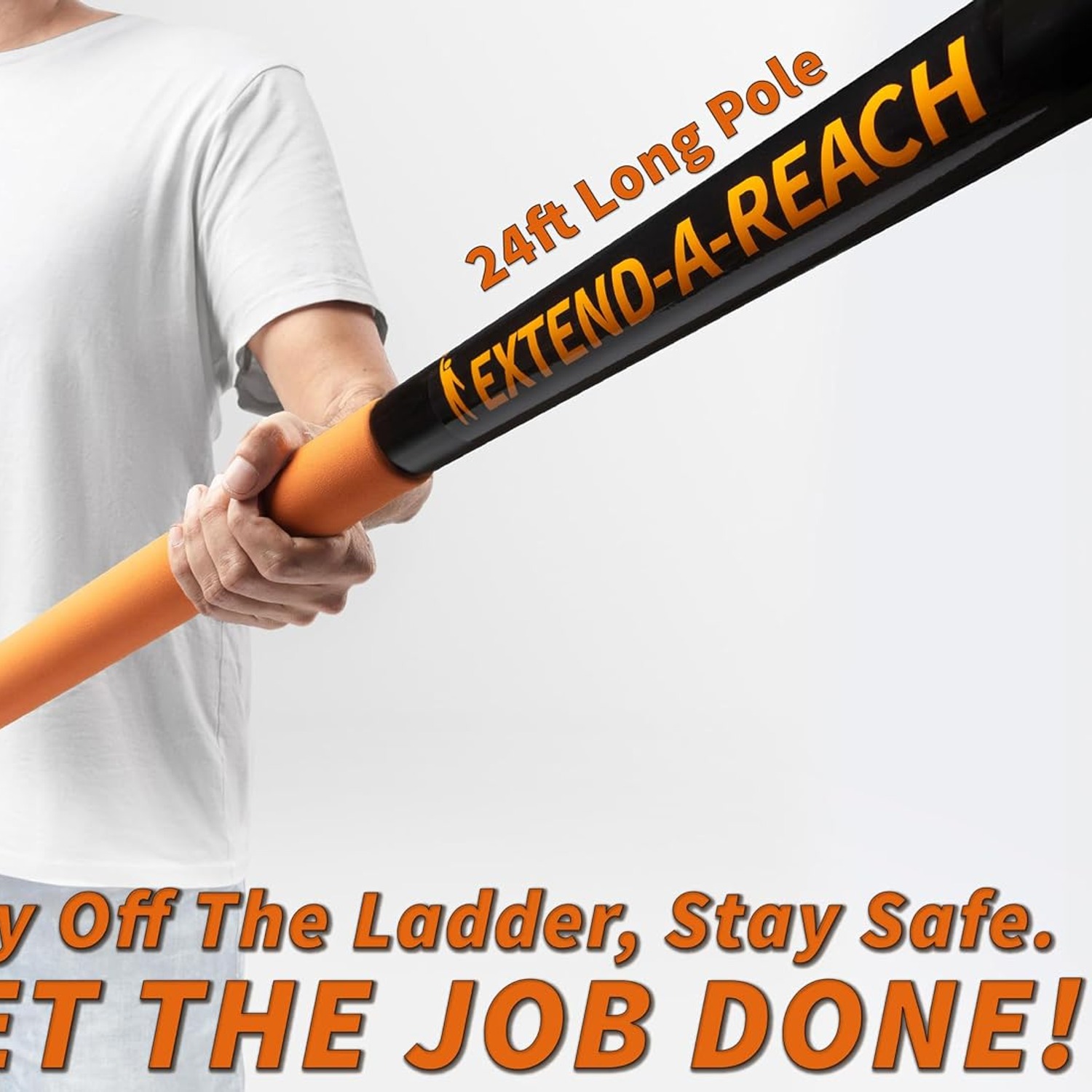
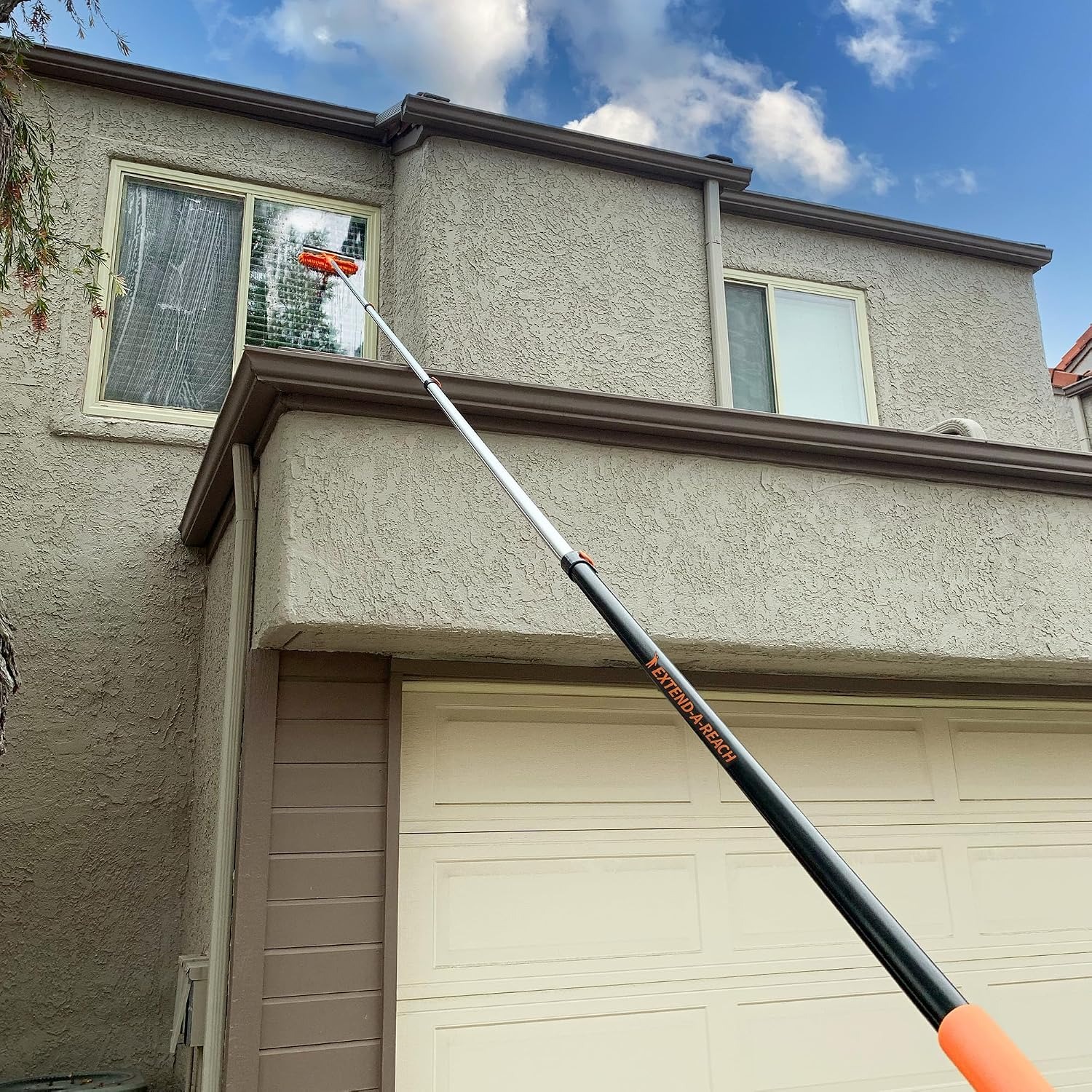
A telescopic extension pole takes the climbing out of the equation. You stand on the ground, hold the tool up to the work, and move your feet instead of moving a ladder. It is not the answer to every job up high, but it covers a surprising share of them.
How a telescoping pole actually works
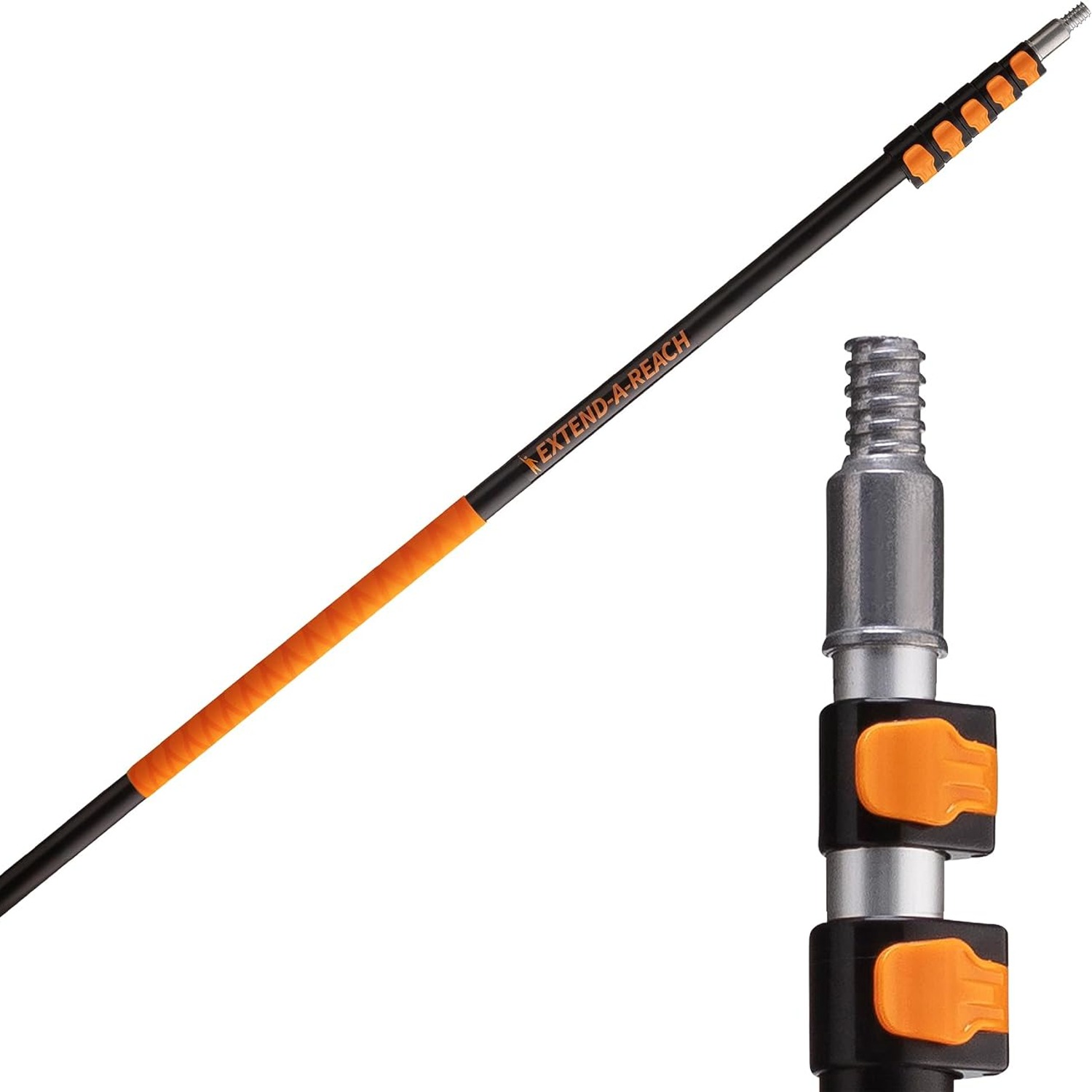
The idea is simple. Several aluminum tubes nest inside each other. Pull them out and the pole gets longer. Push them back and it gets short again. The thing that separates a good pole from a frustrating one is how those sections lock.
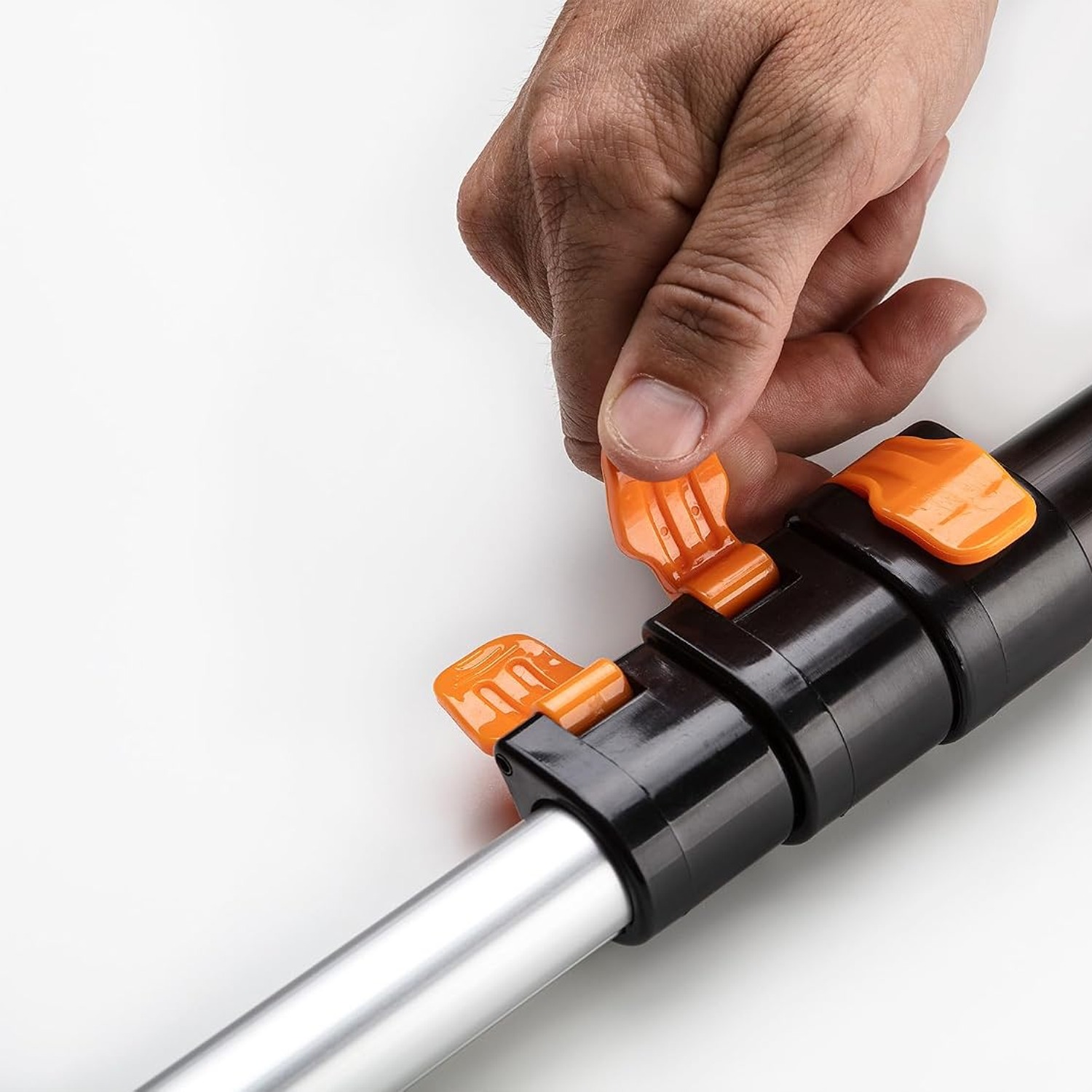
This pole uses quick-release thumb lever clasps. Flick the lever open, slide the tube, flick it shut. It takes a second per section and you can do it with one hand while the other holds the pole. The alternative design, twist locks, needs you to grip and spin each joint, and if you overtighten them they jam, while undertightening lets the pole collapse mid-job. Lever clasps are the friendlier system for anyone adjusting length often.
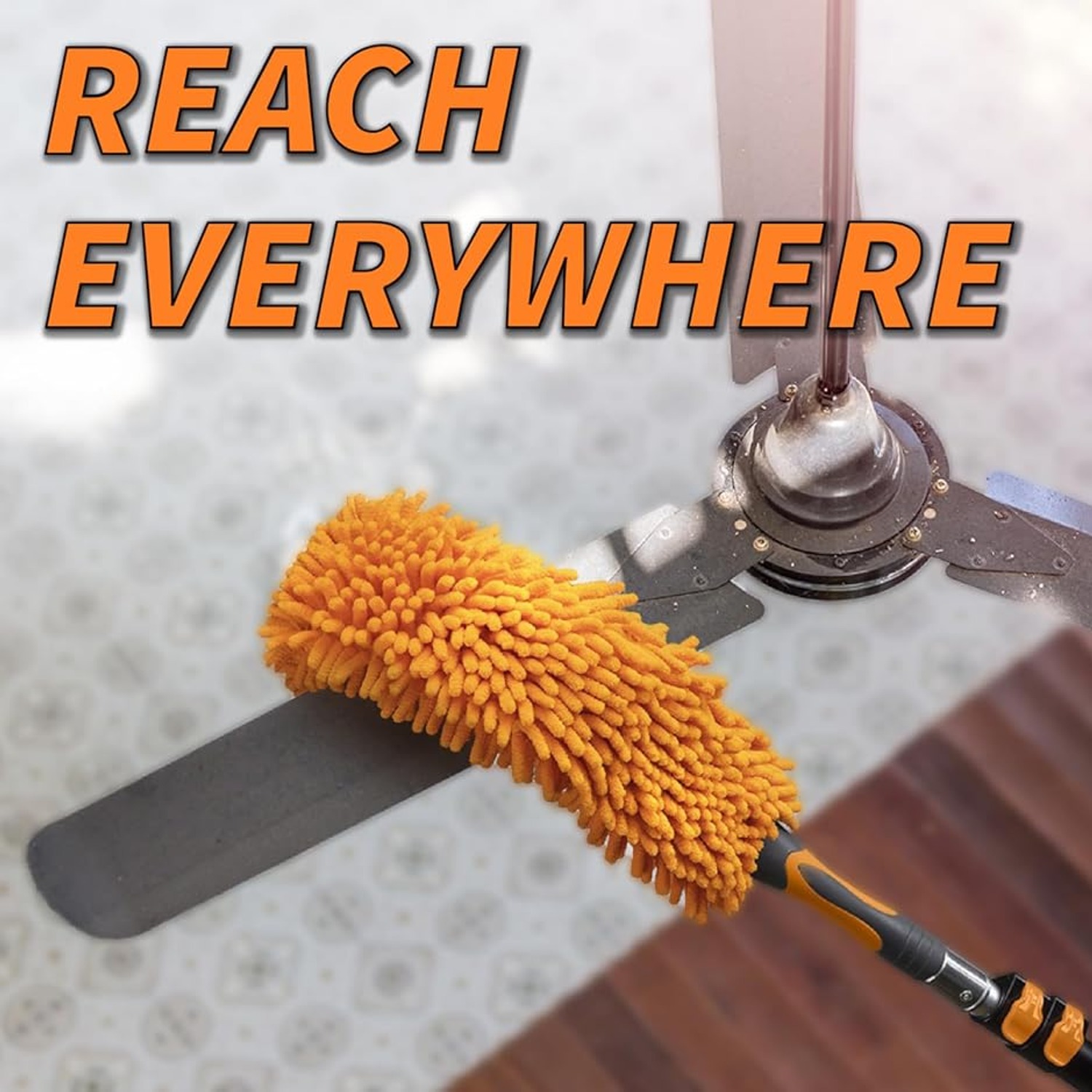
The far end is where your tool goes. The head here is a zinc-aluminum alloy with an ACME thread, which is the usual fitting across paint rollers, squeegees, dusters, gutter scoops, bulb changers and fruit pickers. That standard is the reason a single pole can do so many unrelated jobs. You buy the pole once and swap heads to match the afternoon.
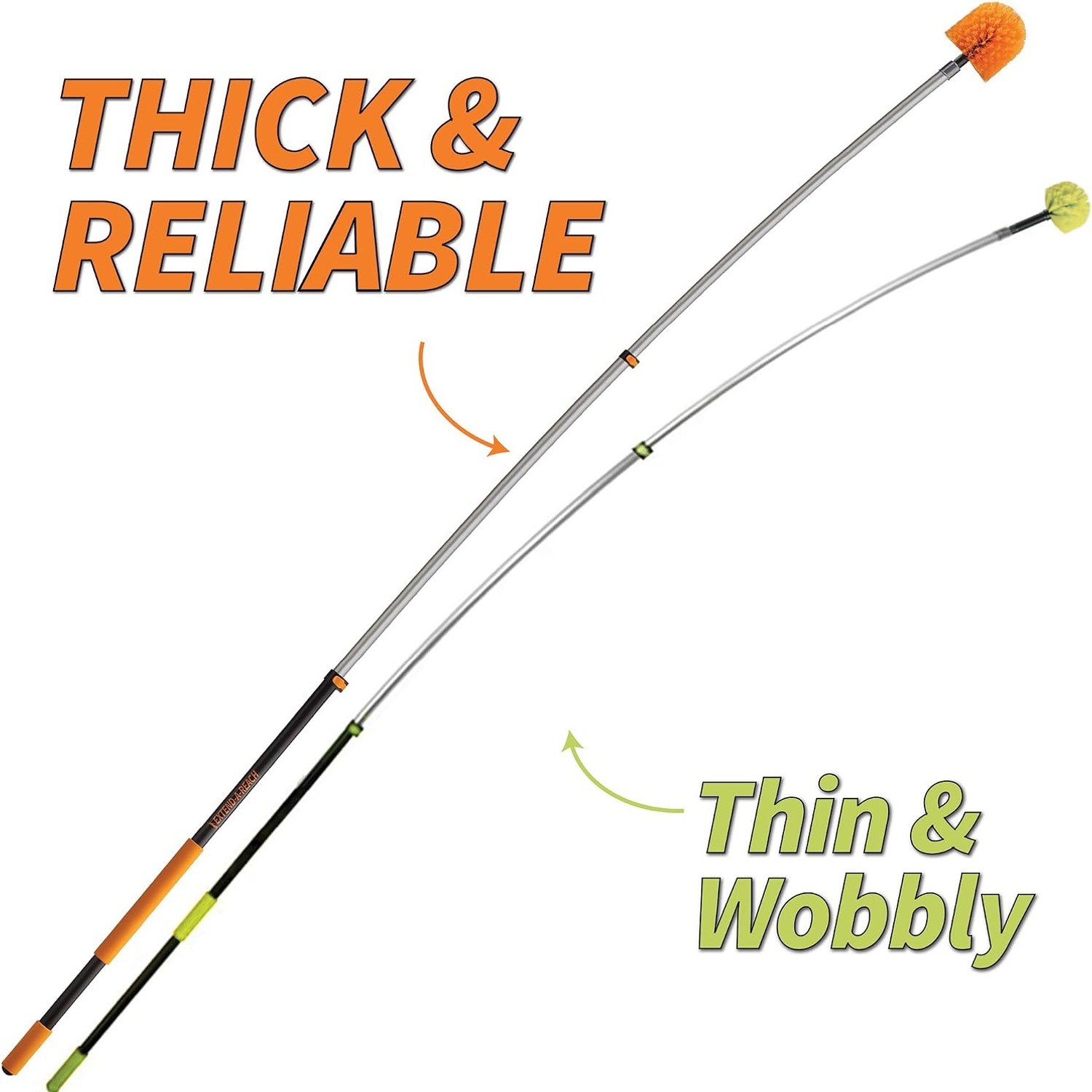
Stiffness is the other half of the equation. Every telescoping pole flexes at full extension, because physics does not care how much you paid. What varies is how much. Thicker aluminum walls flex less, which is why this pole is described as heavy-duty rather than lightweight. The tradeoff is weight, and at 3.8 pounds it lands in reasonable territory for 24 feet of pole.
Who gets the most out of one
Homeowners with single-story or modest two-story places get the clearest benefit. If your gutter line sits around five to seven meters up, a 24 foot pole plus your arms covers it comfortably.
Renters and apartment dwellers often think a pole is overkill, then find it earns its keep indoors. High ceilings, stairwell light fittings, ceiling fans and that strip of window above the front door are all pole jobs.
People who do not like heights, or who have been told to stay off ladders, get the biggest quality-of-life change. The best ladderless gutter cleaning tool is the one that lets you do the job yourself instead of paying someone or leaving it until the gutters overflow.
Painters and renovators use poles constantly, though usually at shorter extensions. Rolling a ceiling from the floor is faster and gives a more even finish than shuffling a stepladder around the room.
The pole is less useful if you need to inspect or repair something up close. Fixing a bracket, resealing a joint or checking flashing still calls for getting up there properly. Think of the pole as the tool for routine maintenance and the ladder as the tool for actual repairs.
Working out how much reach you need
Reach is the one spec you cannot fudge, so measure before you buy. Stand at the base of the wall and measure straight up to the gutter or the window you want to clean. Add a little for the angle, because you will never hold the pole perfectly vertical, and a pole leaning at thirty degrees loses real height.
Then subtract nothing for your arms. Treat whatever you can comfortably hold overhead as a bonus rather than part of the plan. Fully extending a pole and also stretching your arms to the limit is how people lose control of the tip.
A quick rule of thumb: a single-story gutter is usually around 3 to 4 meters, a two-story gutter around 6 to 7 meters. This pole's 24 feet is roughly 7.3 meters of pole, which covers both with room to spare on most houses. Steep blocks, raked ceilings and three-story buildings are a different conversation.
Getting good results on the day
Pick your conditions. Wind is the enemy of long poles, because a 24 foot lever catches it like a sail. A still morning is worth waiting for.
Set your feet on something solid. Even without a ladder, you are holding a long weight overhead, and soft or sloping ground makes balance harder than it needs to be.
Use the shortest extension that reaches. Every extra section adds flex and wobble. If you can do a window at 10 feet instead of 18, do it at 10.
Keep both hands on the pole and move slowly. Fast movements at the base become big swings at the tip, which is how heads get knocked off and windows get tapped harder than intended.
Watch what is overhead before you lift. Aluminum conducts electricity, so overhead lines and service cables are an absolute no-go zone. If the job sits near anything live, stop and get an electrician or a professional cleaner involved.
Work in sections and come back down to move. It is tempting to reach sideways rather than walk four steps, and that sideways load is exactly what tires your arms and costs you control.
Looking after it
Maintenance on a pole like this is close to nothing, but the small habits matter.
Rinse grit off the tubes while they are still extended. If you collapse a dirty pole, that grit gets dragged inside the sections and makes everything stiff. Wipe the tubes down and let them dry before you push them back together.
Store it retracted and under cover. Leaving a pole clamped at full length, outdoors, through a wet season is the fastest way to end up with a section that will not budge. Two hooks on a garage wall solve it.
Check the clasps occasionally. If a section starts slipping under load, the clasp tension usually just needs a small adjustment. Catch it early rather than discovering it halfway up a gutter run.
Give the threaded tip a look now and then too. A head that works loose mid-swing is annoying at best and lands in the garden at worst.
If you live near the coast, rinse after use. Aluminum handles weather well and does not rust like steel, but salt air is hard on everything, and thirty seconds with a hose beats pitted tubes.
The short version
A telescopic extension pole trades climbing for reach. That trade is a good one for anything light and repetitive above head height, which describes most of the maintenance list on a normal house.
This one runs 5 to 24 feet, weighs 3.8 pounds, locks with thumb lever clasps and takes standard twist-on accessories through its zinc-aluminum alloy ACME tip. At 57 inches retracted it stores easily and travels in a car. No heads come in the box, so pick the accessories that match your jobs.
Measure your gutter or ceiling height first. If 24 feet of pole clears it with a bit of margin, this will handle the routine work and keep the ladder in the shed for the jobs that genuinely need it.