
The complete guide
Aluminum Gutter Guards, A Practical Buyer's Guide
The problem nobody notices until it rains hard
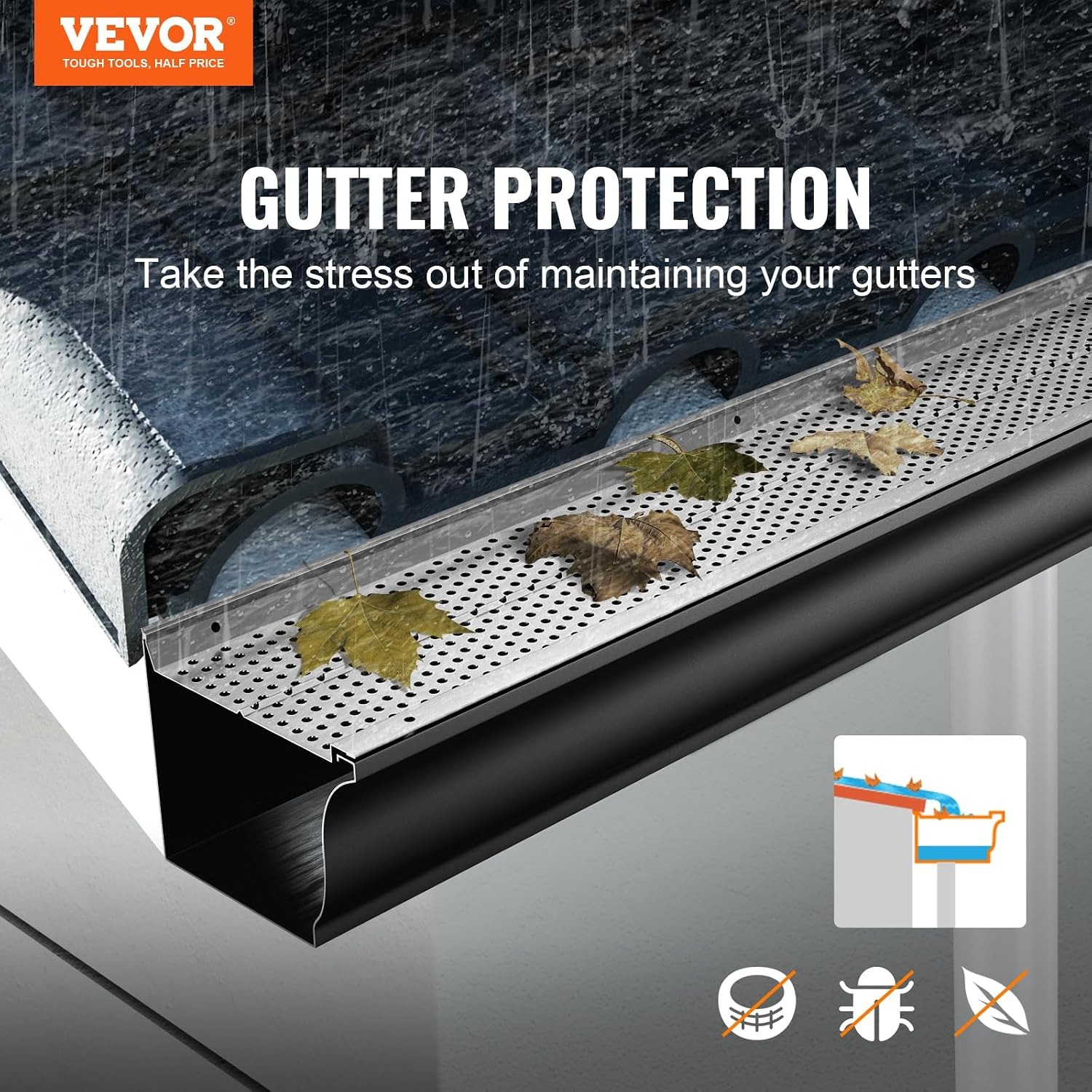
Gutters fail quietly. A handful of leaves lands in the channel in autumn, soaks through, and settles into a mat. More debris lands on top. The mat creeps toward the downspout, finds the outlet, and plugs it. For a few months nothing happens, because light rain still trickles past. Then one heavy storm arrives, the channel fills in minutes, and water pours over the front edge.
That overflow is the expensive part. It runs down the fascia and soaks the timber. It splashes against the wall and finds its way into render cracks. It lands in a concentrated line at the base of the house and saturates the ground where you least want it. Over a few seasons you get rotting fascia boards, stained brickwork and, in bad cases, movement in the footings.
The traditional fix is climbing up twice a year and scooping the gutters out by hand. It works. It is also one of the most common causes of serious home-maintenance injuries, and most people put it off until the gutters are already overflowing.
A gutter guard changes the equation. Instead of removing debris after it collects, you stop it getting in.
How a perforated aluminum panel works
There are several different approaches to gutter protection, and they do not all behave the same way.
Foam inserts sit inside the channel and let water soak through. They work at first, then clog internally and become very hard to clean. Brush inserts are similar, trapping debris in the bristles. Plastic screens are cheap but go brittle under sun exposure and crack within a few years. Fine stainless micro-mesh blocks nearly everything, but can also block water in a downpour if the surface is coated in pollen or roof grit.
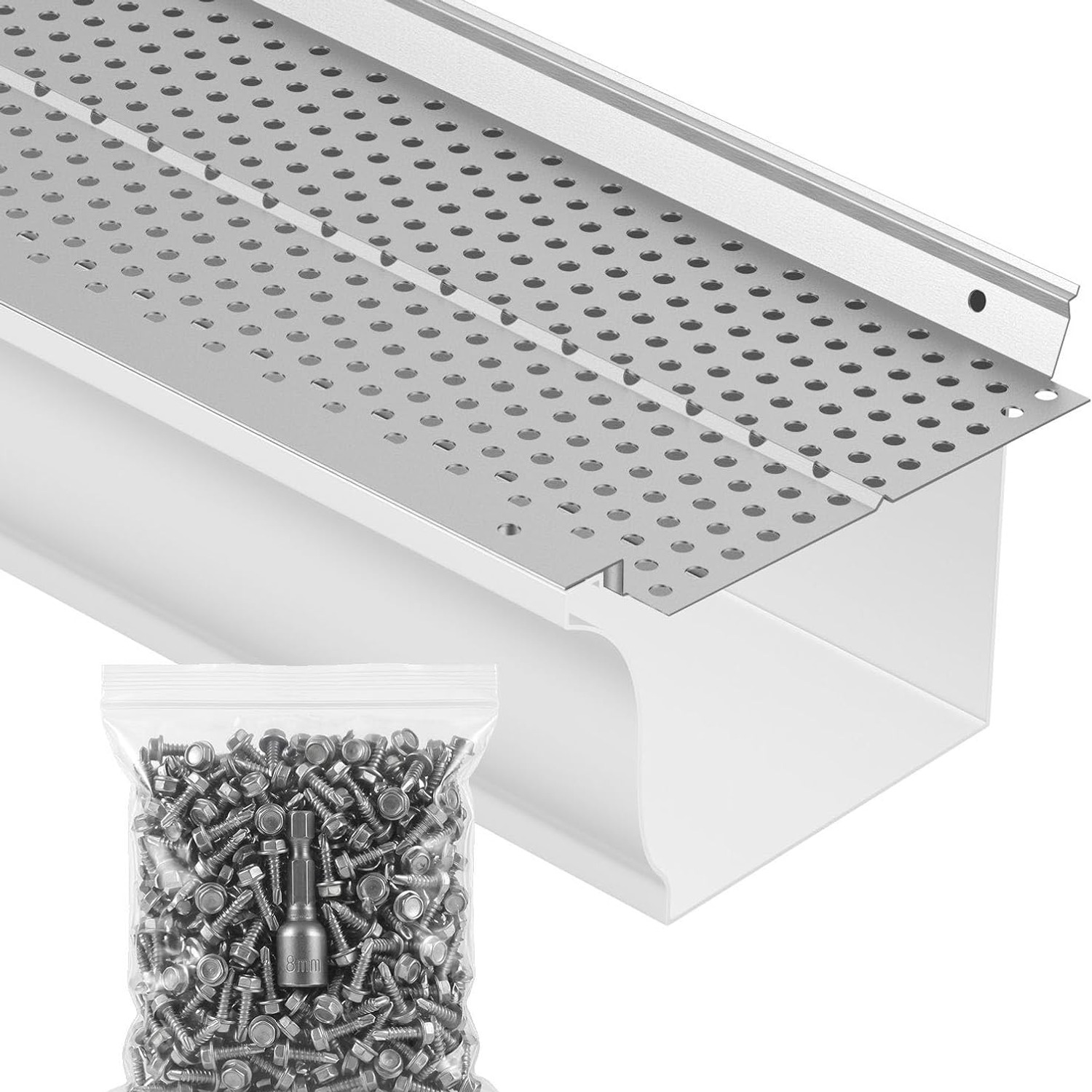
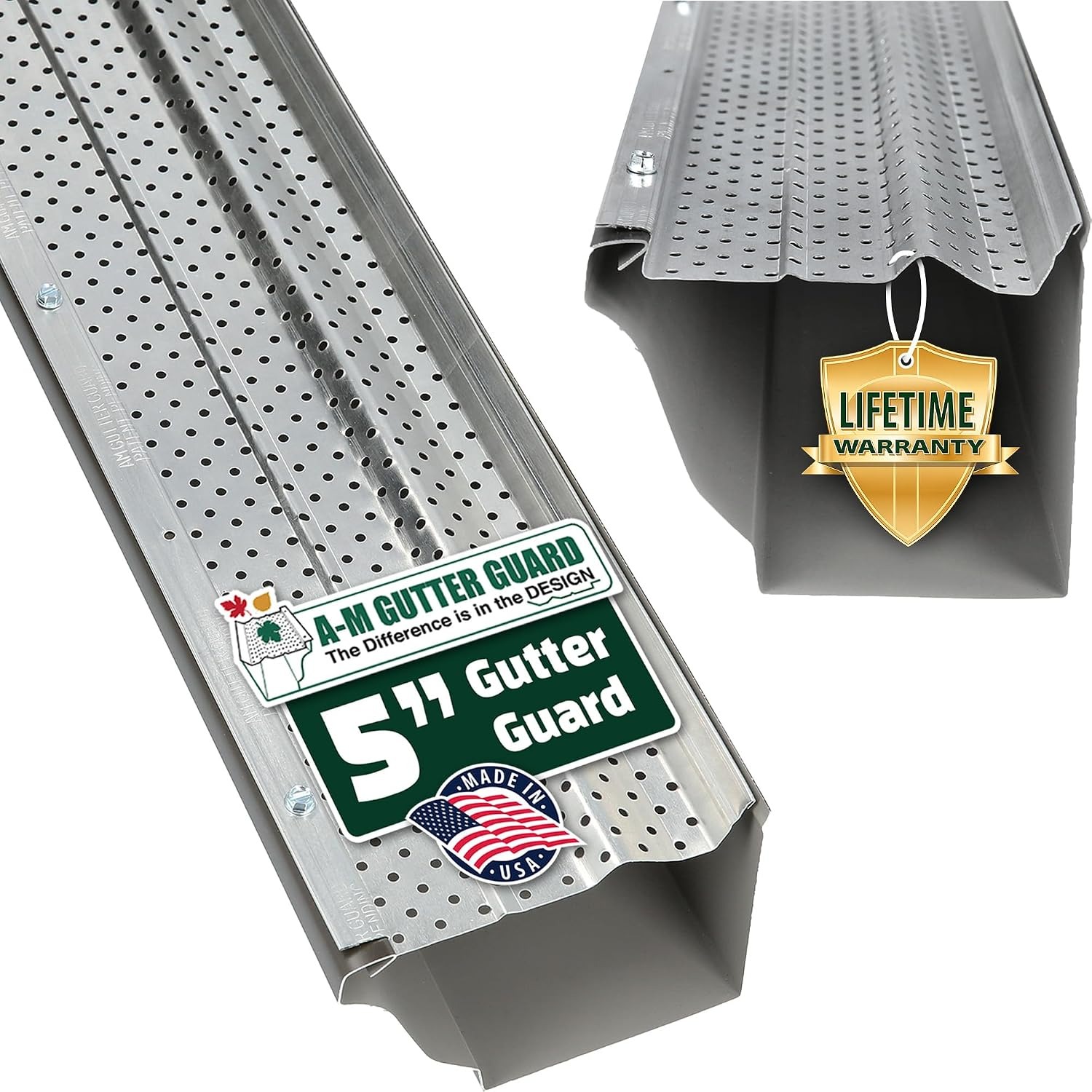
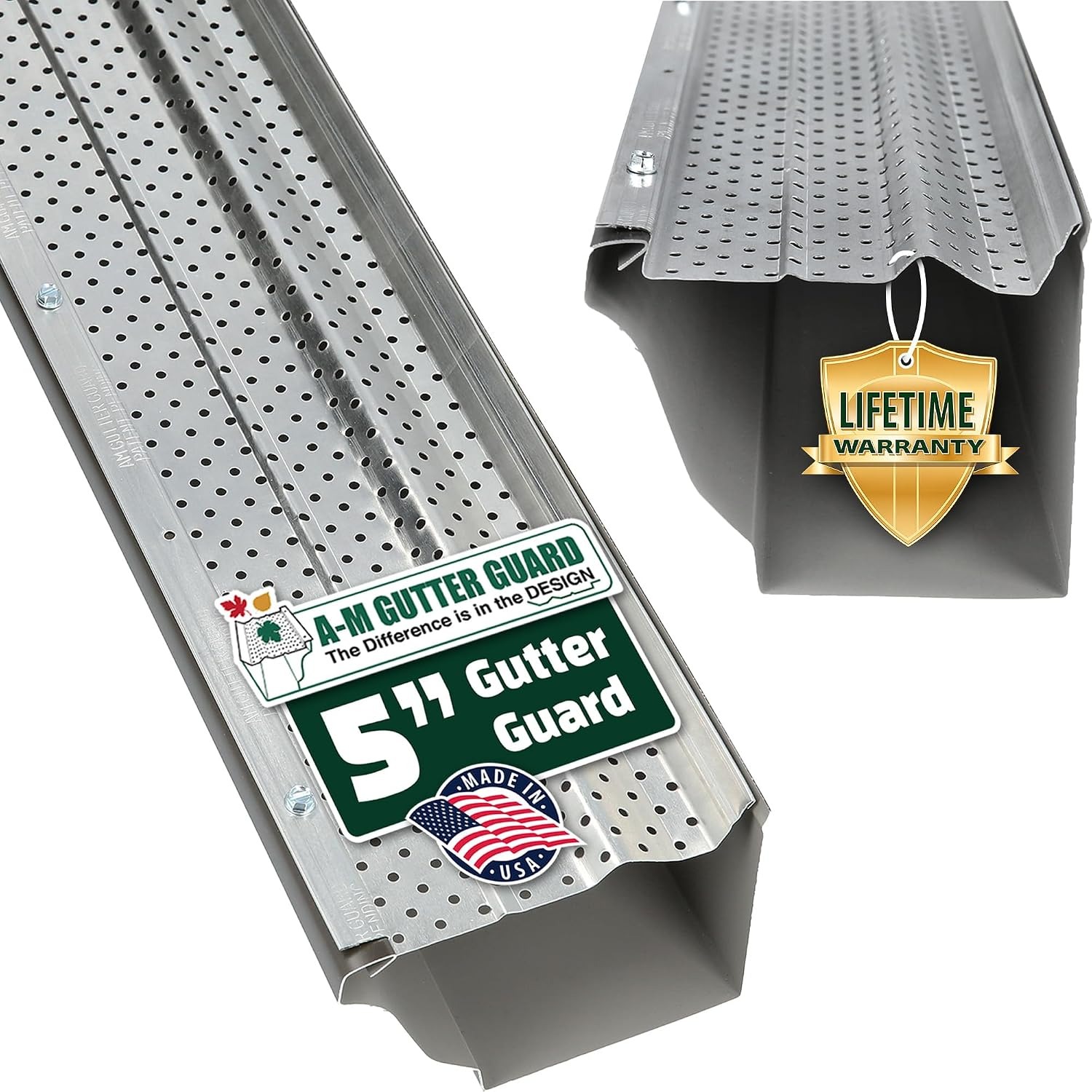
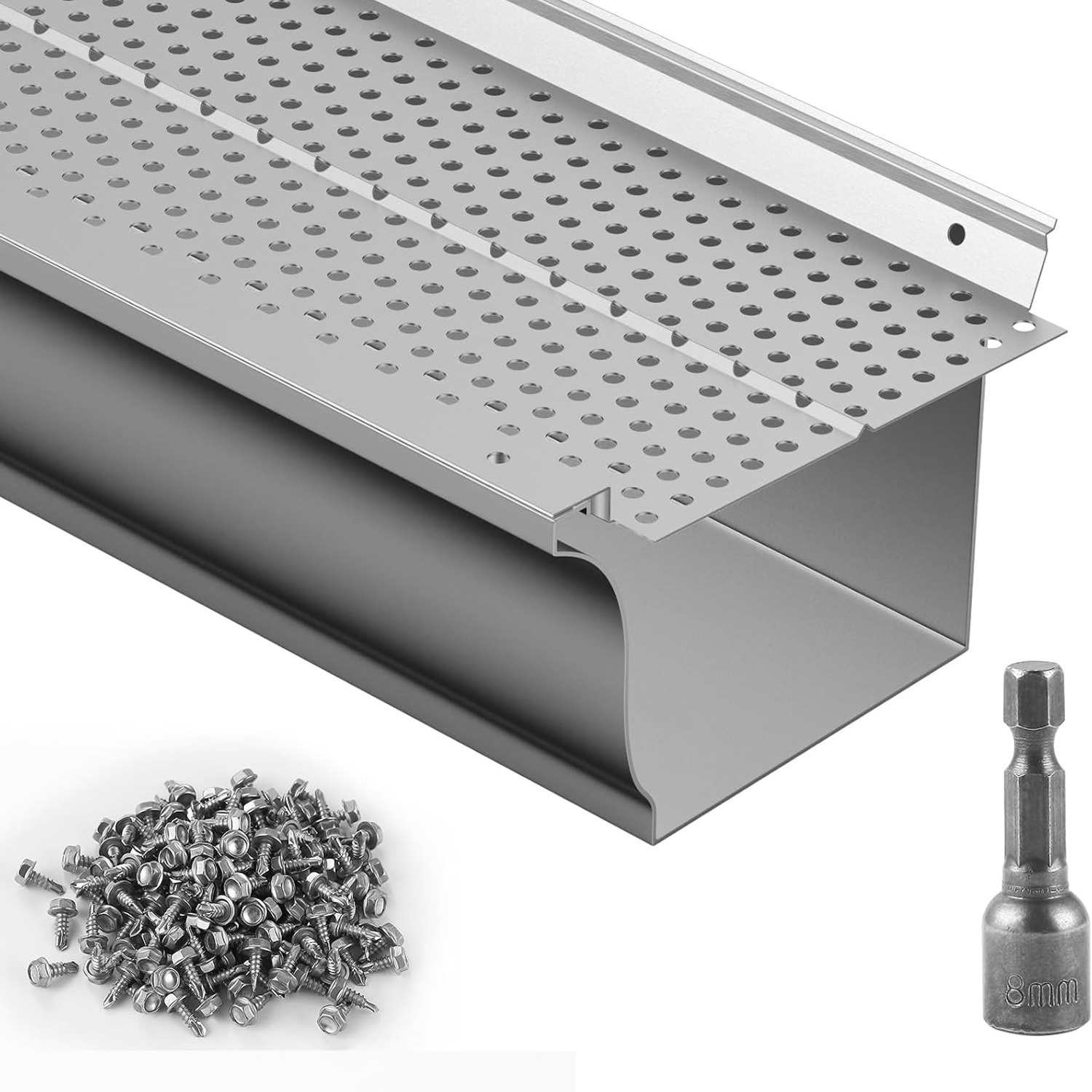
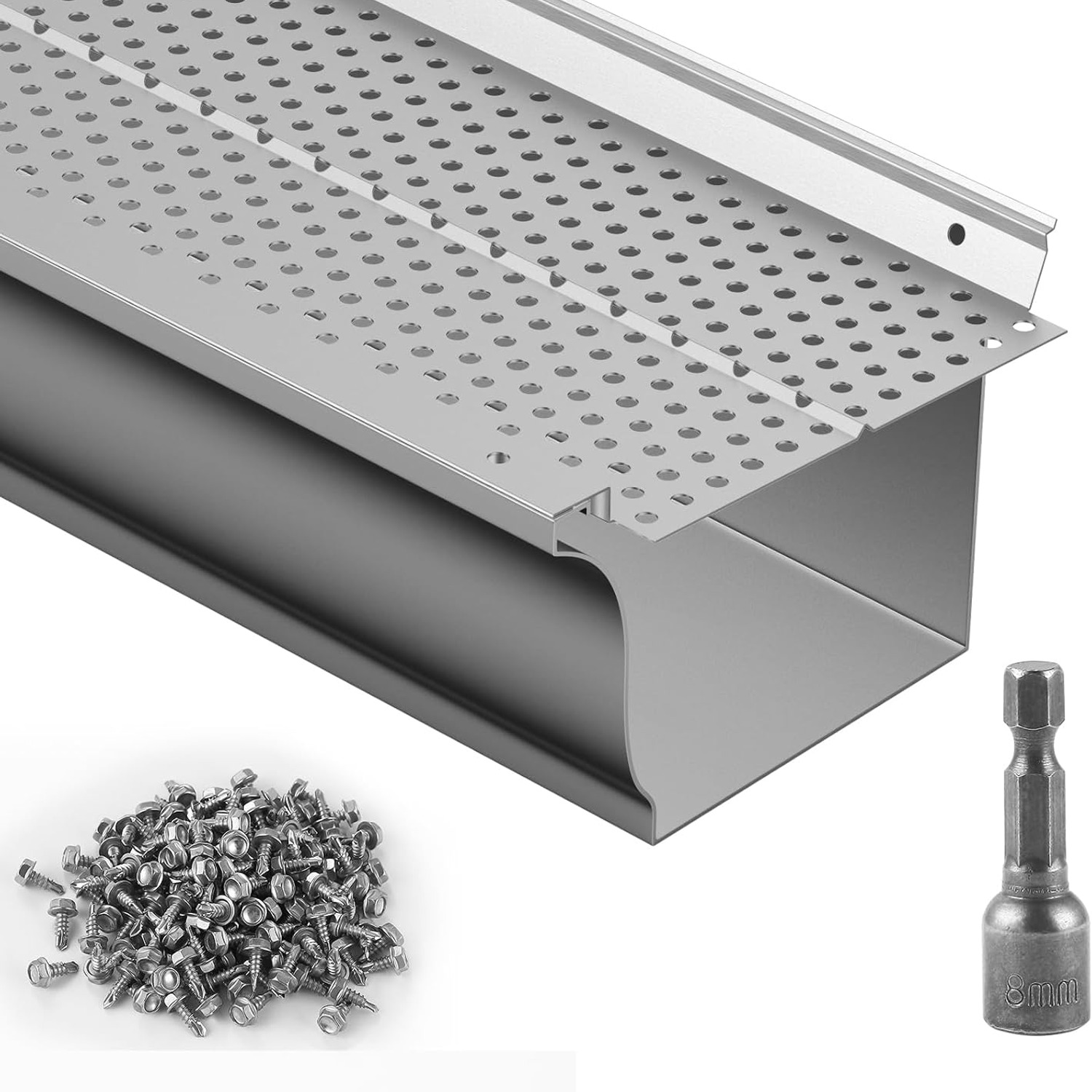
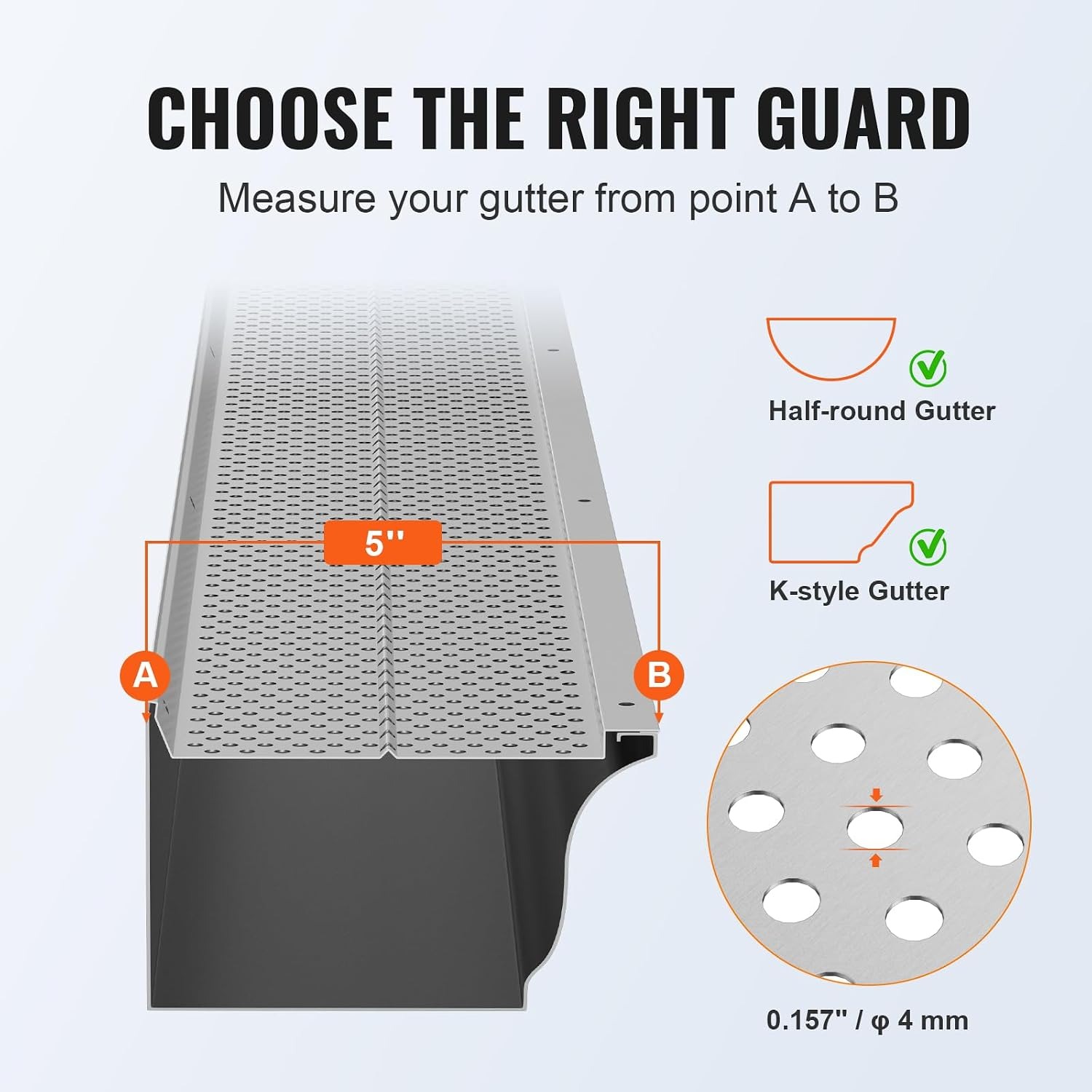
A perforated aluminum panel like this one sits in the middle, and that middle ground is why it is such a common choice. The panel is a solid sheet of aluminum with holes punched through it. On this kit the holes measure 0.157 inches, or 4 mm. Water drops through those holes fast. Leaves, seed pods, twigs and the granules that wash off asphalt shingles sit on the surface, dry out, and get blown or washed off the edge.
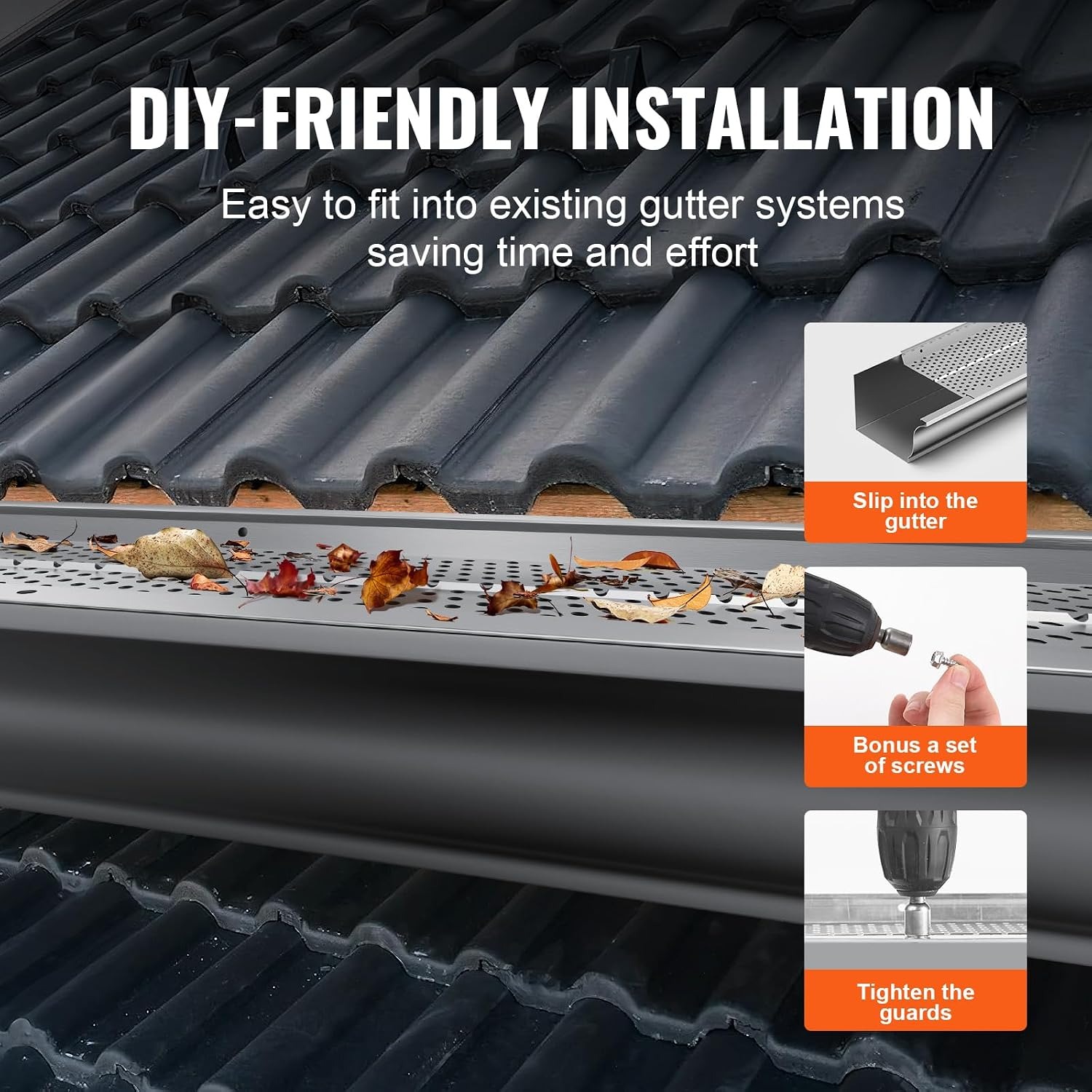
Because the panel is sheet metal rather than mesh stretched over a frame, there is nothing to sag or tear. The two folded edges sit on the front lip and the back of the gutter, and the pre-drilled holes along those folds take the supplied hex tapping screws.
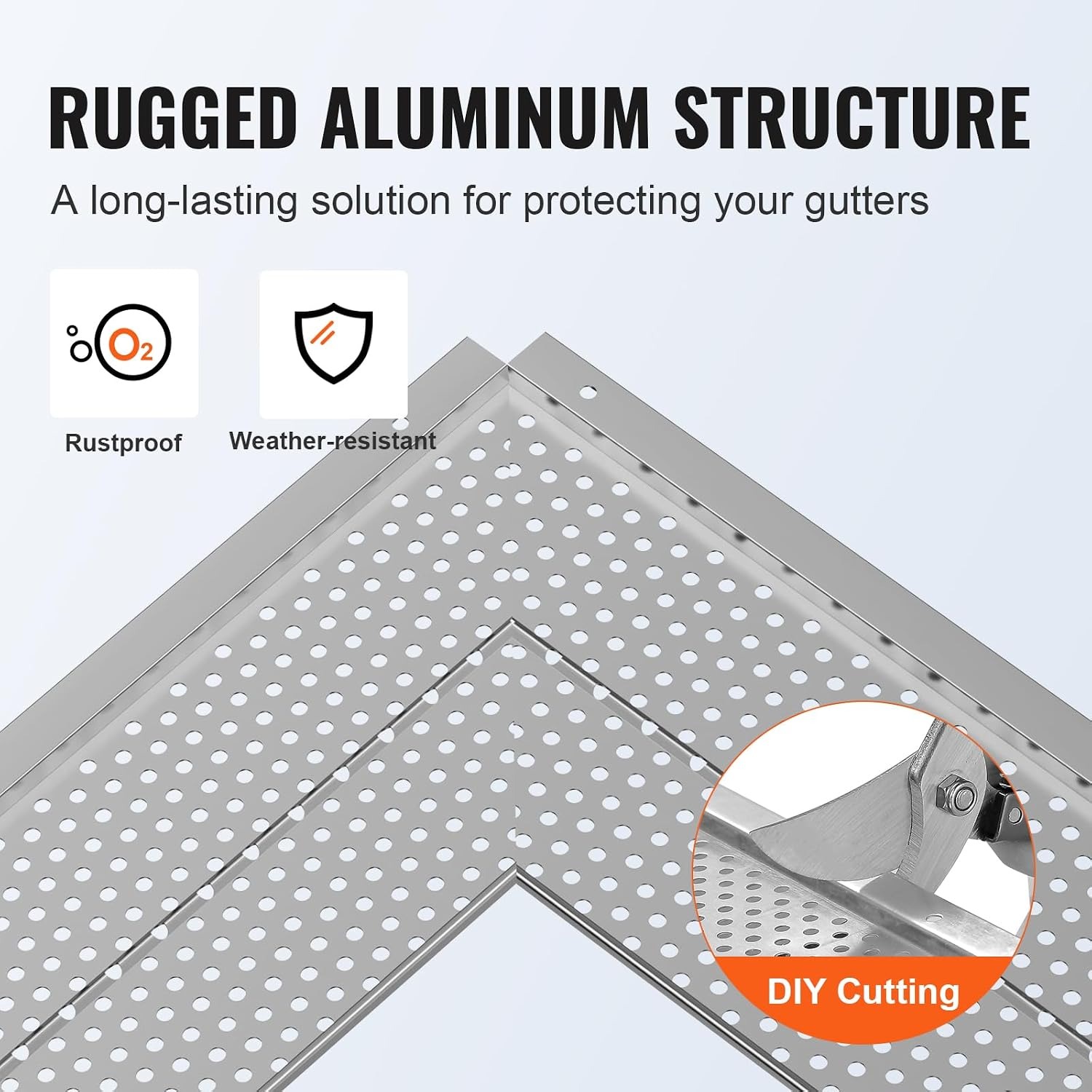
The sheet is 0.02 inches thick, which is 0.5 mm. That is thin enough to cut with hand snips and thick enough to span a 5 inch gutter without bowing in the middle.
Why aluminum and not steel or plastic
Aluminum is the standard material for guttering across most of the world for one reason. It does not rust.
Steel gutter guards are often sold with a paint or powder coat, and they look good in the packaging. The trouble starts the moment you cut one. Every cut edge exposes bare steel, and in a gutter that edge sits in water for weeks at a time. Within a couple of wet seasons you get orange staining running down the fascia, and eventually the guard itself starts to fail.
Plastic avoids rust but has its own problem. Ultraviolet light from constant sun exposure breaks it down. The panel goes chalky, then brittle, then cracks the first time something heavy lands on it or someone leans a ladder against it.
Aluminum sidesteps both issues. It forms its own thin oxide layer and then stops. It stays workable in the cold and does not soften in the heat. It is also light, which matters when you are carrying panels up a ladder.
The trade-off is that aluminum is soft. You cannot stand on it, and a sharp knock will dent it. In practice this rarely matters, because nothing should be putting weight on a gutter guard anyway.
Working out how much you need
This kit gives you 104 feet in 26 panels of 48 inches each. Working out whether that is enough is simple arithmetic, but it is worth doing properly before you order.
Walk the outside of the house with a tape measure and write down the length of each gutter run. Include the short sections over porches and extensions, since those often get forgotten and are usually the ones sitting directly under a tree. Add everything together.
Then divide the total by four, because each panel covers four feet. Round up. Add two spare panels if you have several corners, because mitred cuts waste material.
If your total comes to more than 104 feet, order two kits rather than trying to stretch one. Leaving a run uncovered defeats the purpose, since debris collecting in that stretch will still travel toward the downspout.
Check your gutter width too. These panels are made for standard 5 inch guttering. If yours is 6 inches or a different profile, the fit will not be right. A 5 inch panel can be trimmed narrower but cannot be widened.
Fitting them yourself
The install is a straightforward DIY job, but the order of operations matters.
Clean the gutters first. Properly. Scoop out everything, then flush the channel with a hose and watch the water run to the downspout. If it pools anywhere, the gutter has sagged and needs re-hanging before you cover it. Anything you leave in there is sealed in.
Lay the panels out on the ground and work out your cuts before you climb. Pre-cutting at ground level is faster and much safer than snipping aluminum one-handed at the top of a ladder.
Start at one end of a run and work toward the downspout. Overlap each panel slightly over the one before, with the overlap running in the direction of water flow. Drive the hex tapping screws through the pre-drilled holes in the front and back folds. Snug is enough. Overtightening dimples the sheet.
Trim carefully around the downspout outlet so nothing restricts the opening. That outlet is where every blockage eventually forms, so keep it completely clear.
Ladder safety deserves a mention. Set the ladder on firm level ground, keep three points of contact, and never lean the ladder against the guards themselves. Use a standoff bracket that rests on the roof or fascia. If your gutters are at second-story height and you are not confident, pay someone. The panels take a professional very little time to fit.
Keeping them working
Guards reduce maintenance. They do not remove it.
Once or twice a year, run a hose over the panels and watch the water go through. Sweep off anything matted on top with a soft broom. Check the downspout outlet is still clear, and walk around the house during the next rain shower to see that water is going where it should.
Run your eye along the screws each season as well. Thermal movement loosens fixings over time, and a loose panel can lift in high wind.
In areas with heavy pine cover, expect a few needles to find their way through. That is normal for any guard with openings large enough to pass storm water quickly. A yearly flush handles it.
The short version
If your gutters clog every autumn and you are tired of the ladder, a perforated aluminum guard is the sensible middle option. It costs less than professionally installed systems, it will not rust, it cuts with hand tools, and the screws are in the box.
This kit covers 104 feet across 26 panels, which suits most single-story homes in one purchase. Measure your runs, confirm your gutters are the standard 5 inch width, clean the channel out properly, and give yourself a full day for the install.
Done once, it saves you the same job every year after.