
The complete guide
The Practical Guide To Downspout Leaf Filters
The problem nobody sees until water is where it should not be
Blocked drainage rarely announces itself politely. One day the gutter is fine. The next, water is sheeting over the front edge during a downpour, running down the render, and pooling on a path that used to be dry. Then you notice the damp patch on the wall inside.
Trace it back and the cause is almost always the same. Leaves, seed pods and roof grit get washed into the downspout. The downspout is a narrow pipe. Wet leaves mat together. They catch on a bend, a joint, or the point where the downspout meets an underground drain. Each rain event adds a little more. Nothing fails suddenly. It just slowly stops working.
The hard part is that the blockage usually forms where you cannot see it or reach it. You can clean every gutter on the house and still have a plug sitting three meters down a buried pipe. A downspout leaf filter changes that, because it moves the catch point to somewhere you can open with your hands.
How a downspout filter works
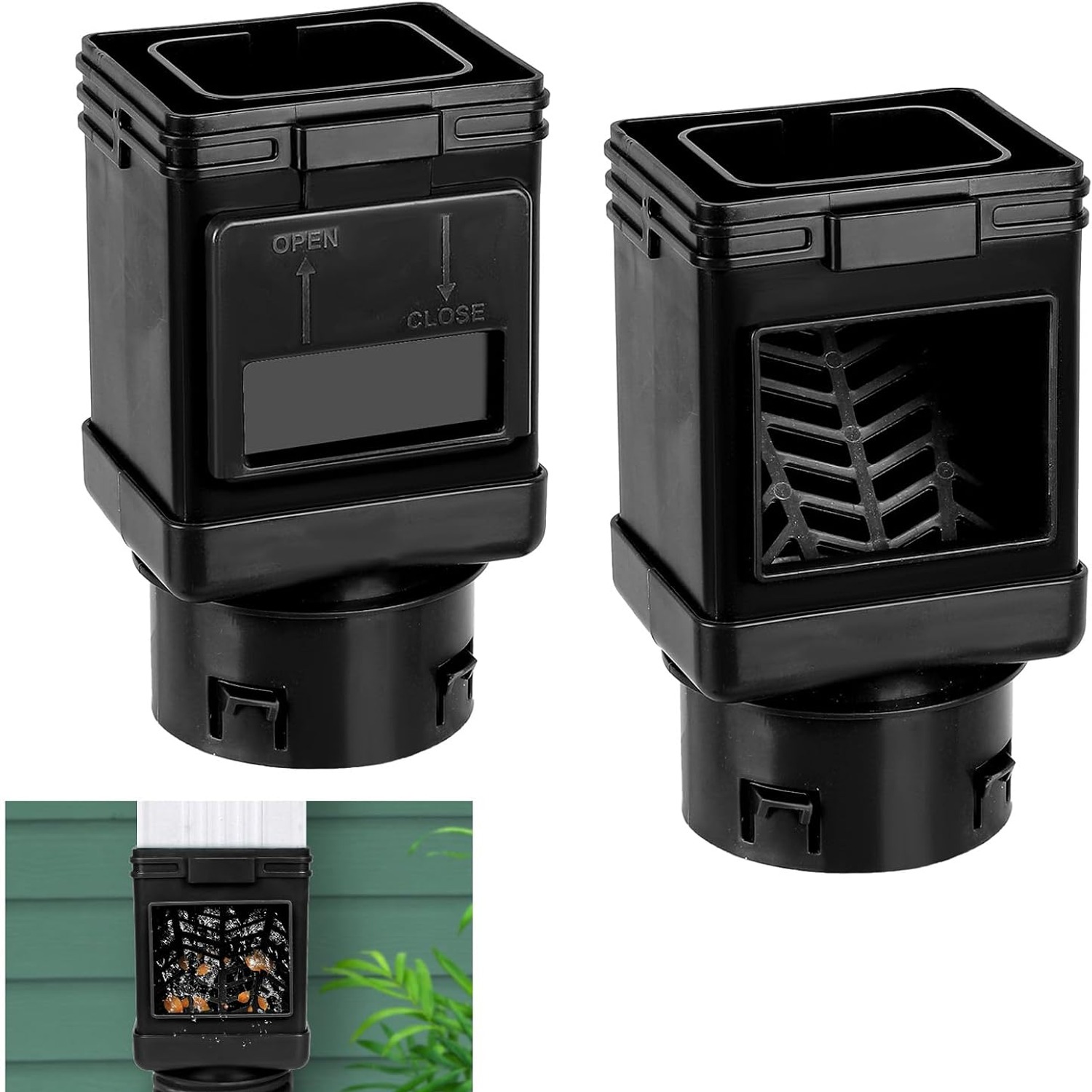
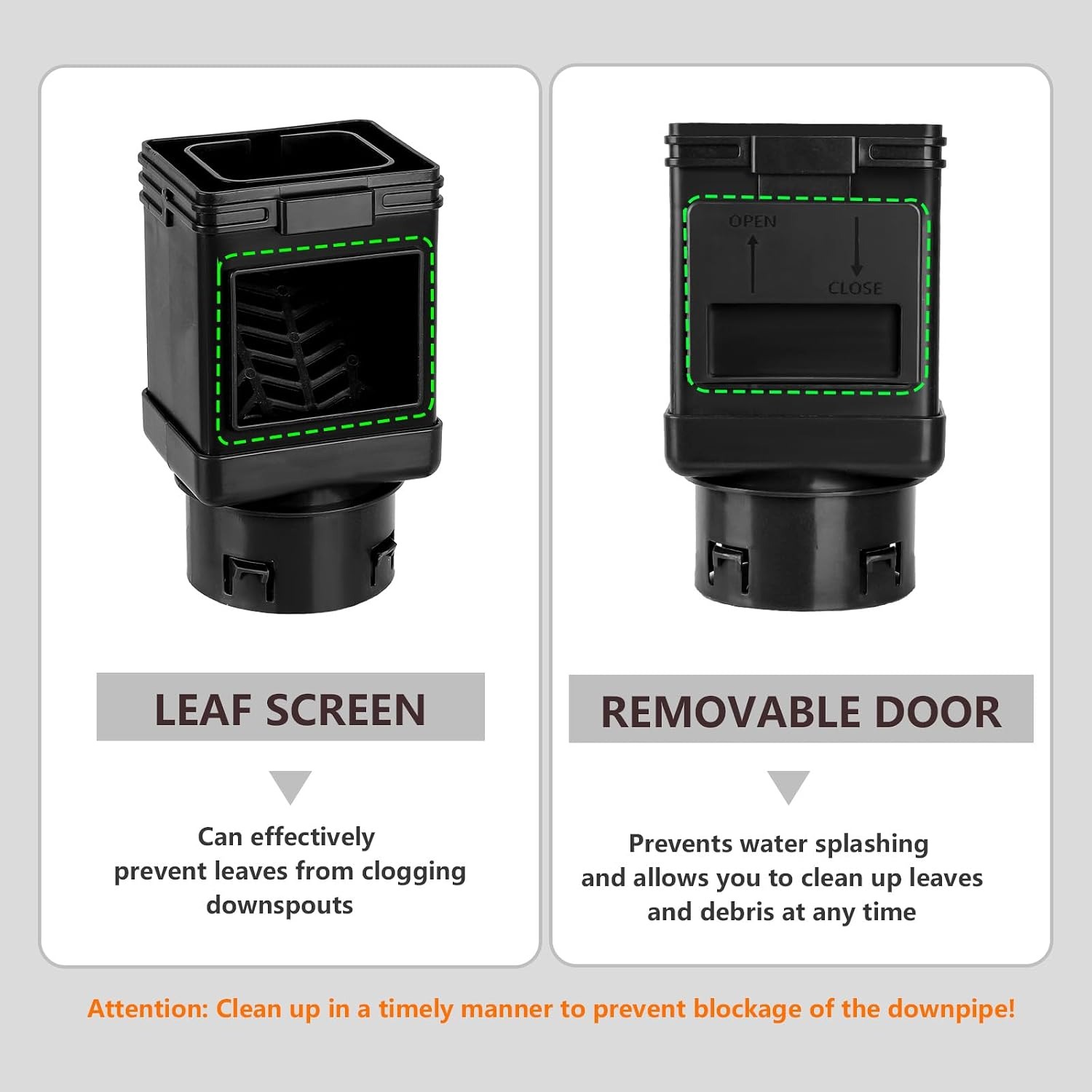
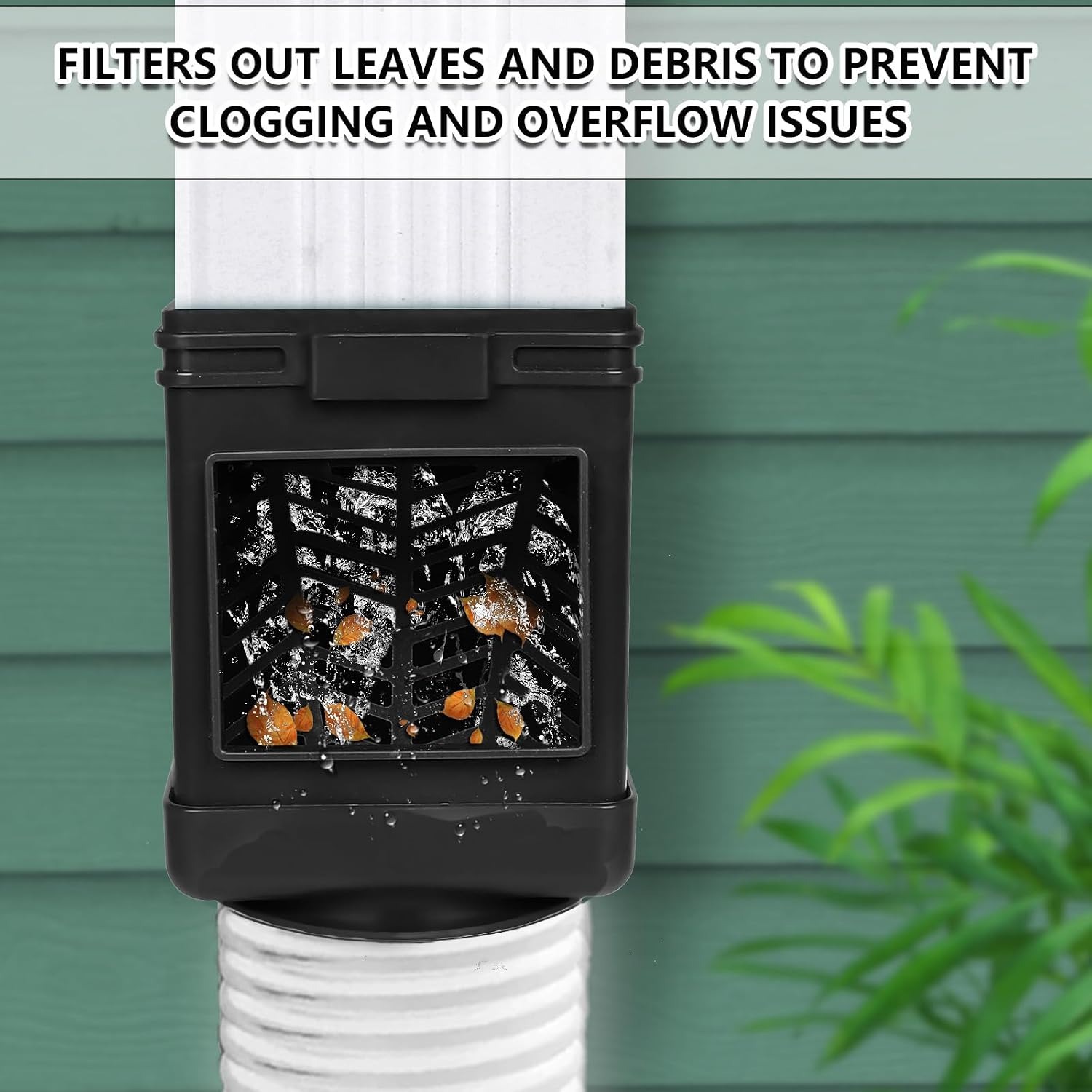
The idea is simple. You put a housing in the downspout line. Rainwater runs through a screen and continues down the pipe. Solid material, which is to say leaves, twigs, bark, seed heads and the moss that washes off a shaded roof, stays on the upstream side of the screen and collects in the housing.
The filter is not trying to purify the water. It is trying to intercept the one thing that causes blockages, which is bulk organic debris. Fine silt will still pass through, and that is fine. Silt does not block a downspout. A fist of soggy oak leaves does.
This set uses a removable lid, which is the detail that decides whether a filter actually gets used. A filter you have to unbolt or dismantle will get ignored by about the second season. A lid you flip off with one hand gets cleared because clearing it is easier than worrying about it. You lift the lid, scoop out the pile, rinse with the hose, and close it.
Who gets the most out of one
If you have trees anywhere near the roofline, this is for you. Deciduous trees in autumn are the obvious case, but pines drop needles year round and they are worse than leaves because they knit together like felt. Gum trees and anything that sheds bark will fill a downspout faster than you expect.
Houses with underground drainage benefit most. When your downspout connects to a buried pipe or a soakaway, a blockage is expensive and disruptive to clear. Catching debris above ground is far cheaper than hiring someone with a drain camera.
Older properties with original cast or narrow downspouts also do well, since those pipes have less tolerance for debris than modern wide ones. And anyone collecting roof water for a barrel or tank will appreciate keeping the coarse material out of the storage.
Rental landlords and anyone managing a building with several downspouts find them useful for a different reason. A visible filter is something a tenant or caretaker can check without going near the gutter line.
Choosing the right filter for your setup
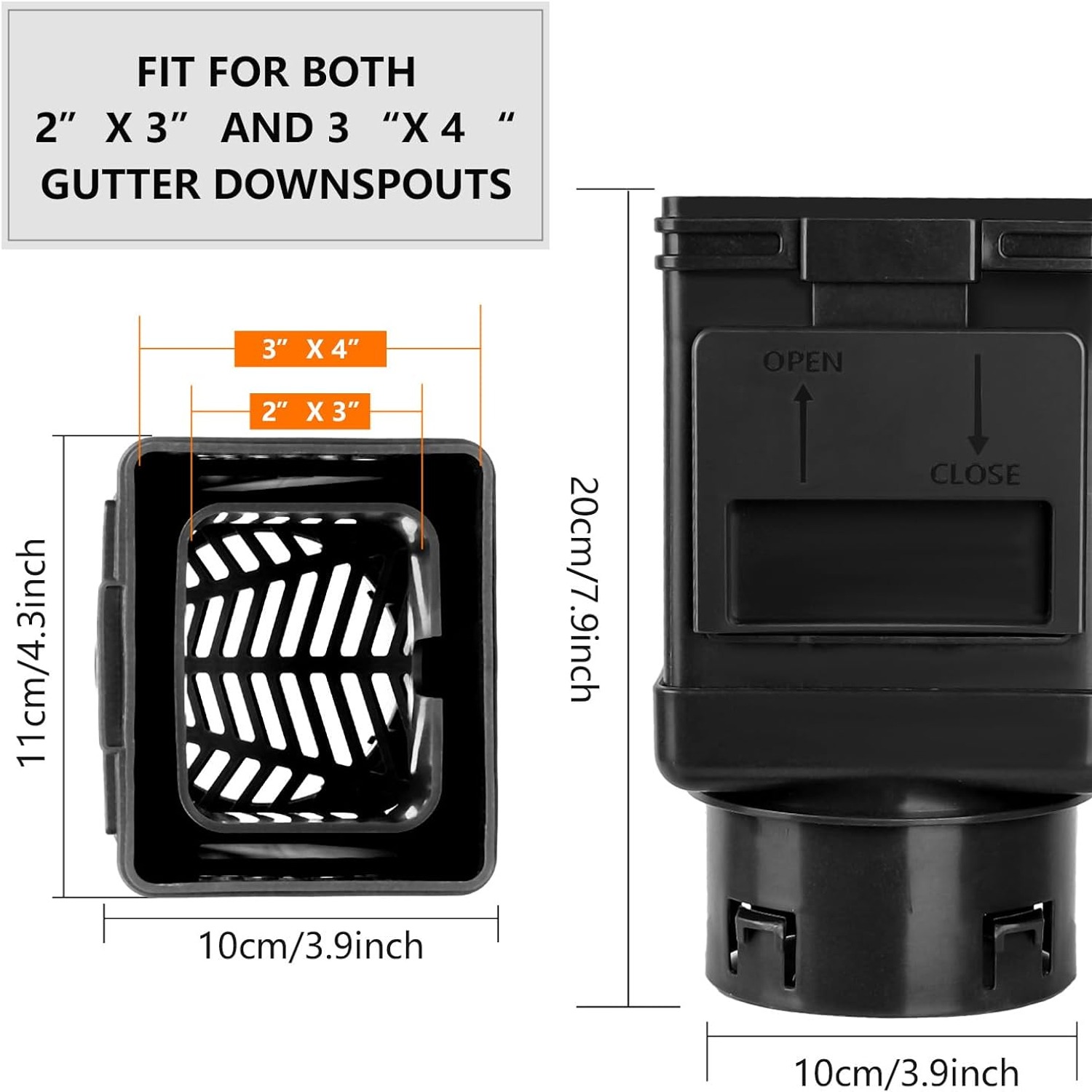
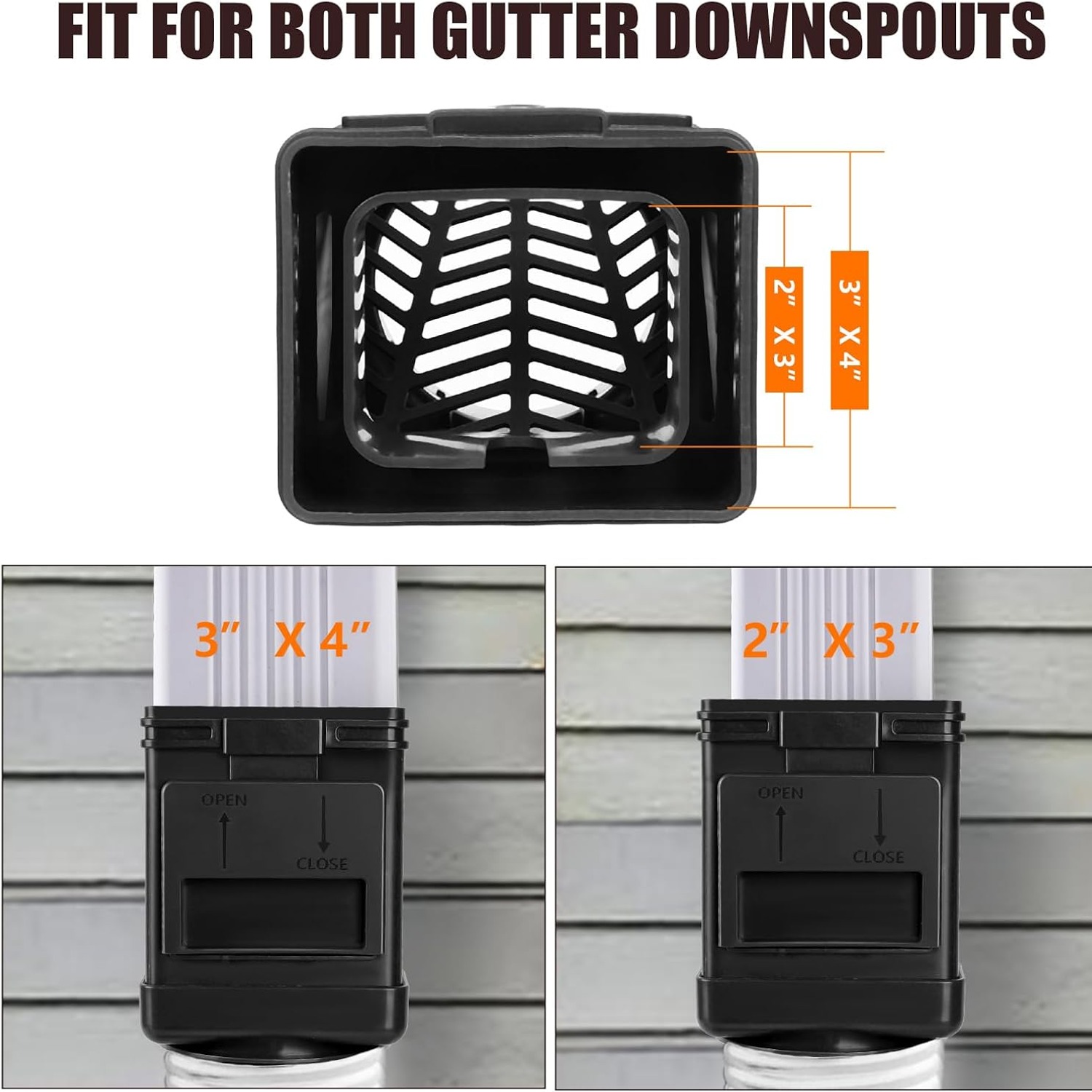
Start with downspout size. This filter covers 3x4 and 2x3 downspouts using the adapters included in the box. Those two profiles are the common residential sizes, but measure before you order rather than guessing from memory. Take the measurement across the outside of the pipe at a straight section, not at a joint.
Next, think about position. The filter needs to sit somewhere you can reach safely with a ladder or, ideally, from the ground on a short downspout. There is no point fitting a maintainable filter at the top of a three story wall where you will never go.
Count your problem downspouts. Most houses have one or two that cause nearly all the grief, and they are usually the ones under the heaviest tree cover or at the low point of a long gutter run. The two pack is sized for exactly that situation. You can always add more later for the quieter sides of the house.
Think about appearance too. The black finish disappears against dark downspouts and shaded walls, which matters more than people expect on a front elevation.
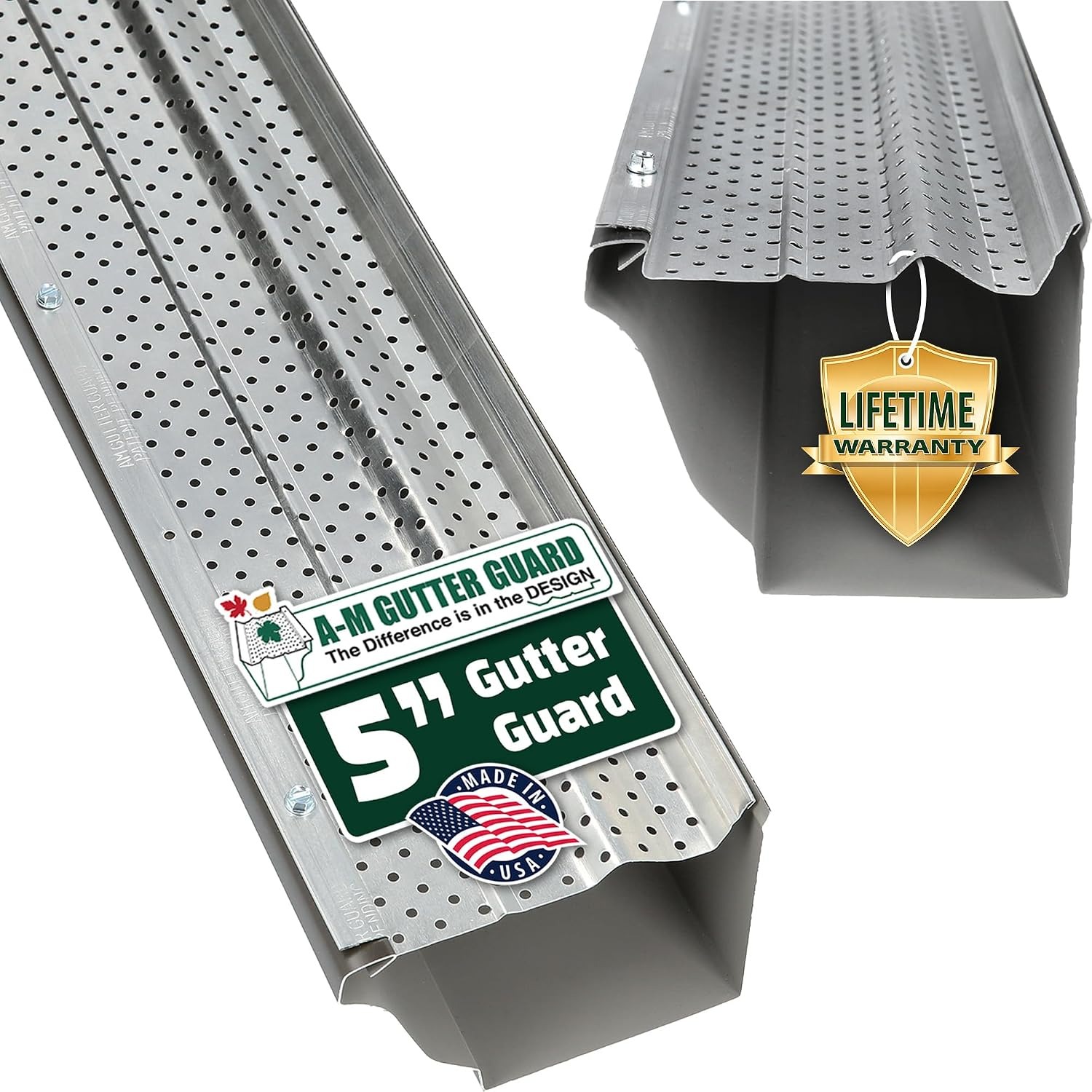
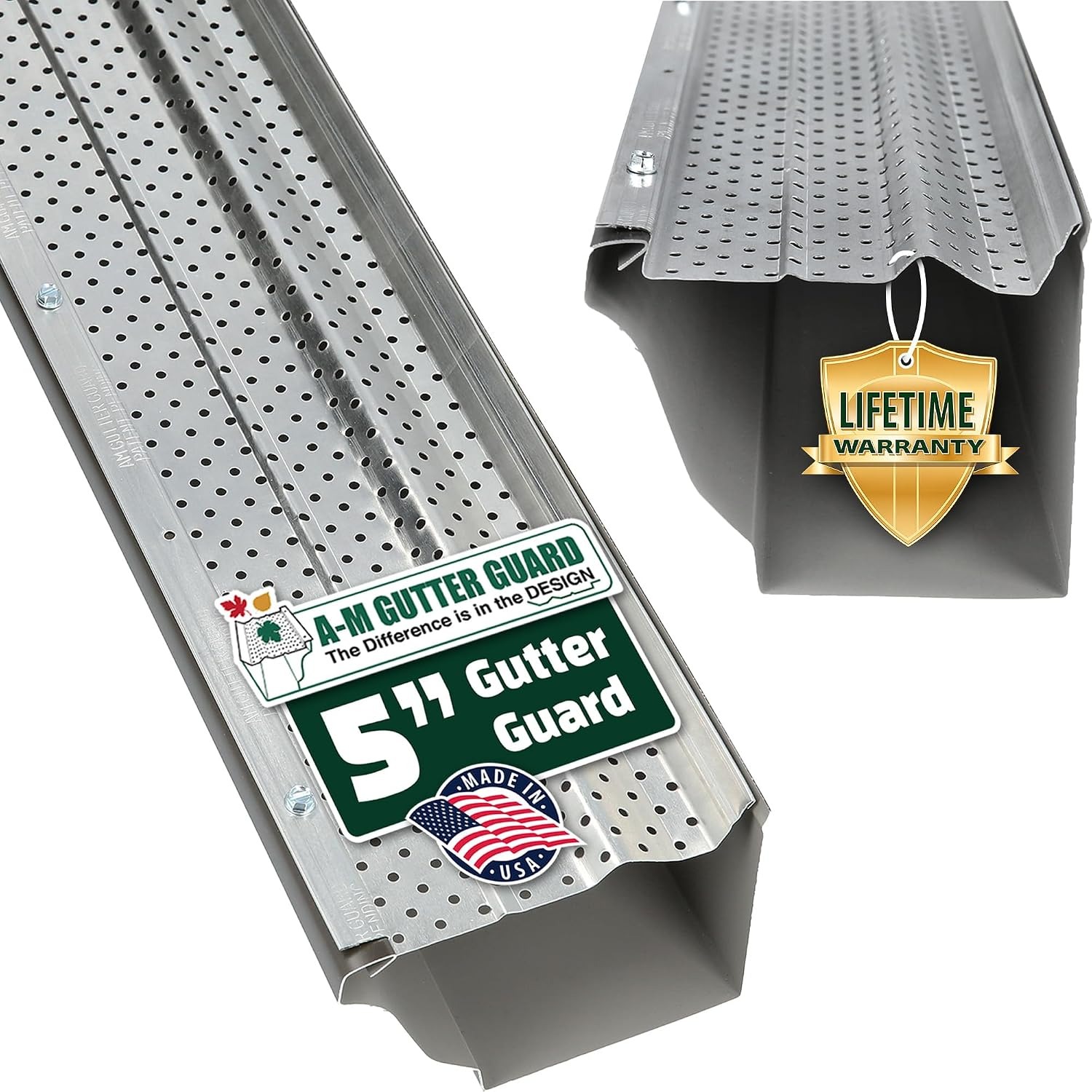
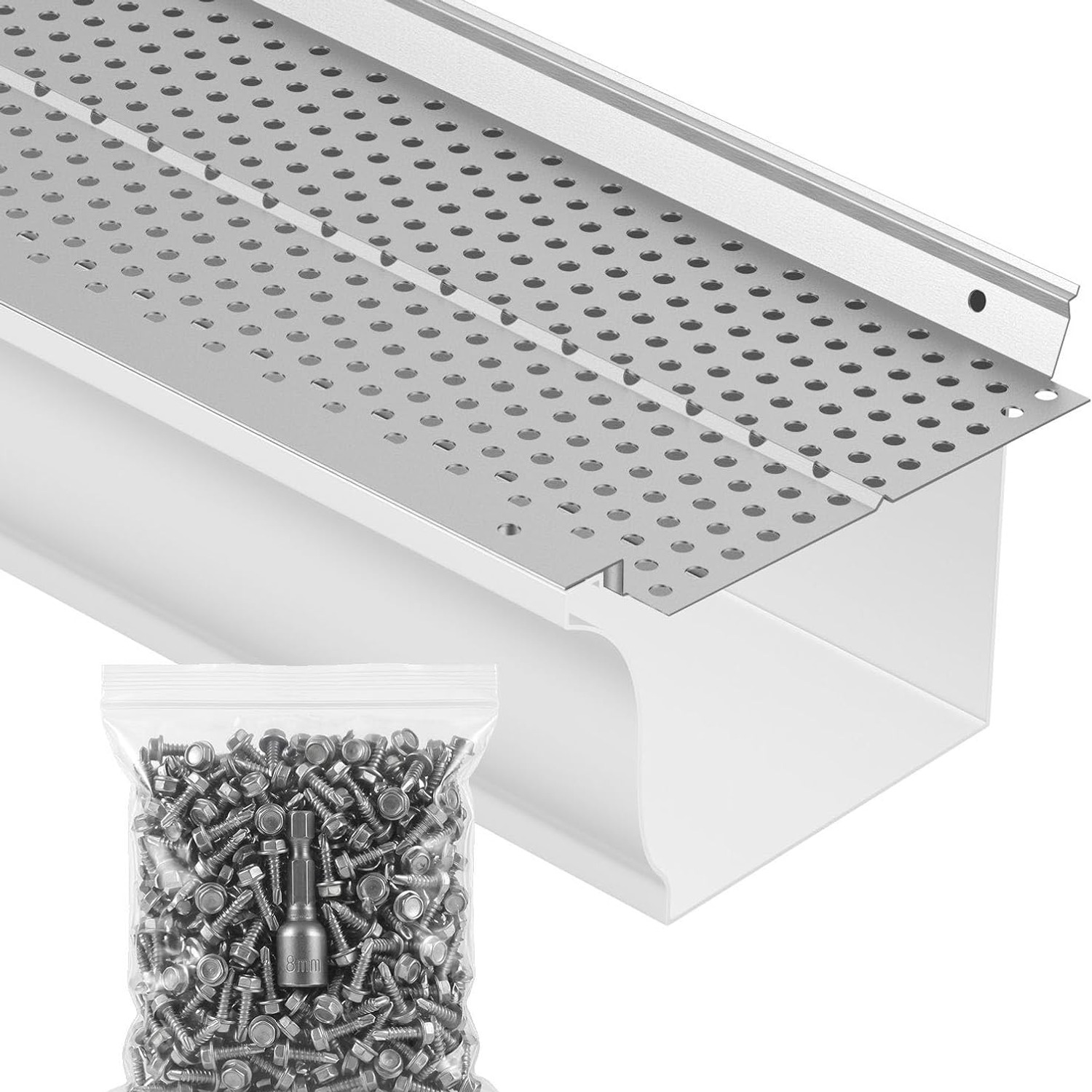
Finally, be realistic about what a filter does and does not replace. A downspout debris catcher is not a gutter guard. If your gutters themselves are filling with leaves, you still need to clear them, or fit guards along the trough. The filter handles what gets past the gutter, which is plenty.
Fitting it without drama
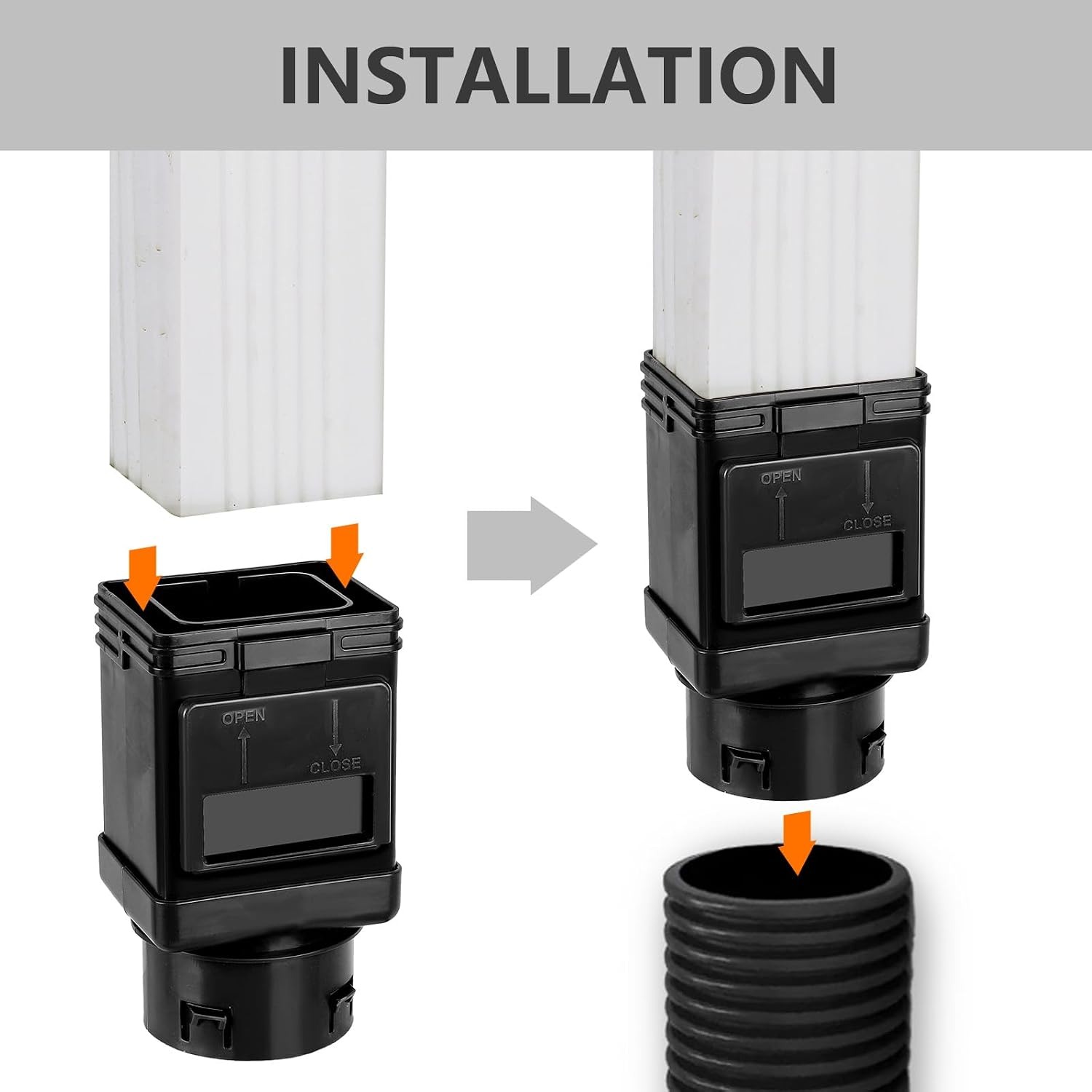
You do not need professional tools. Pick the adapter that matches your downspout, fit it, and seat the filter into the line. The whole job on one downspout is usually a short task.
A few practical points help. Work on a dry day. Set the ladder on firm, level ground and have someone foot it if you can. Clear the gutter and the top of the downspout before you fit anything, so the filter starts clean rather than immediately catching a backlog. And once it is in, run a hose into the gutter and watch the flow. You want to see water moving through steadily, not pooling at the filter.
Check the joint again after the first real storm. Wind and water pressure can shift a fitting that felt fine in dry conditions.
Keeping it working
Maintenance is the whole deal with any filter. The product only performs as well as your habit of emptying it.
Set a rhythm based on your trees. Under heavy leaf fall, check every two or three weeks through autumn. On a clearer site, twice a year is fine, once before the wet season and once after. Pick a trigger you will remember, like clock changes or the first weekend of a season.
The clean-out itself is quick. Lift the lid. Pull out the leaves. Hose the screen until the water runs clear through it. Put the lid back and check it is properly seated. Mild soapy water handles anything greasy. Skip solvents and harsh cleaners on the composite housing, they do nothing useful and can damage the surface.
Before winter, make a point of clearing it. Wet debris left in a housing through a freeze turns into a solid block that will stop flow entirely on the first thaw and refreeze cycle. Five minutes in late autumn saves a lot of annoyance.
If you hear gurgling during rain, that is your cue. A clean filter sounds like a normal downspout. A full one does not.
The short version
Blocked downspouts cause overflowing gutters, damp walls and expensive drain work, and the blockage almost always starts with leaves getting washed into a narrow pipe. This two pack puts a black composite filter with a removable lid into the downspout line so the debris stops where you can reach it.
Adapters for 3x4 and 2x3 downspouts are in the box, so it fits the sizes most homes use. Two units let you treat the two downspouts that cause the most trouble. Fit them, check them on a schedule, empty them with the hose, and the drainage side of your house mostly looks after itself.