


The complete guide
How to Choose a 5 Inch Aluminum Gutter Guard That Actually Works
The problem with gutters nobody warns you about
When people buy a house, nobody sits them down and explains that the single most annoying maintenance job will be a strip of metal eight centimetres wide running along the edge of the roof. But that is how it goes. Gutters are simple, cheap and absolutely critical, and they clog with depressing reliability.
A clogged gutter does not just overflow. It holds water, and water sitting against timber fascia for a few seasons will rot it. It freezes in winter and forces joints apart. It spills down the wall and stains the render. In bad cases it dumps straight into the foundation zone, which is where cheap problems turn into expensive ones.
The usual answer is to climb up twice a year and scoop the mess out by hand. That works, right up until you get older, or busier, or your house grows a second story. A gutter guard is the alternative. It is a screen that lets the rain in and keeps the leaves out, so the channel underneath stays clear.
How a perforated aluminum guard works
There are a few families of gutter protection and they behave very differently.
Foam inserts fill the gutter with a sponge. They are cheap and easy, and they clog from the inside within a couple of years. Plastic clip-in screens are a step up but go brittle in UV and crack. Micro mesh uses very fine stainless cloth, catches almost everything, and can blind over with pollen, shingle grit and wet dust. Solid surface-tension covers rely on water clinging to a curved lip, which works until the rain is heavy enough to overshoot.
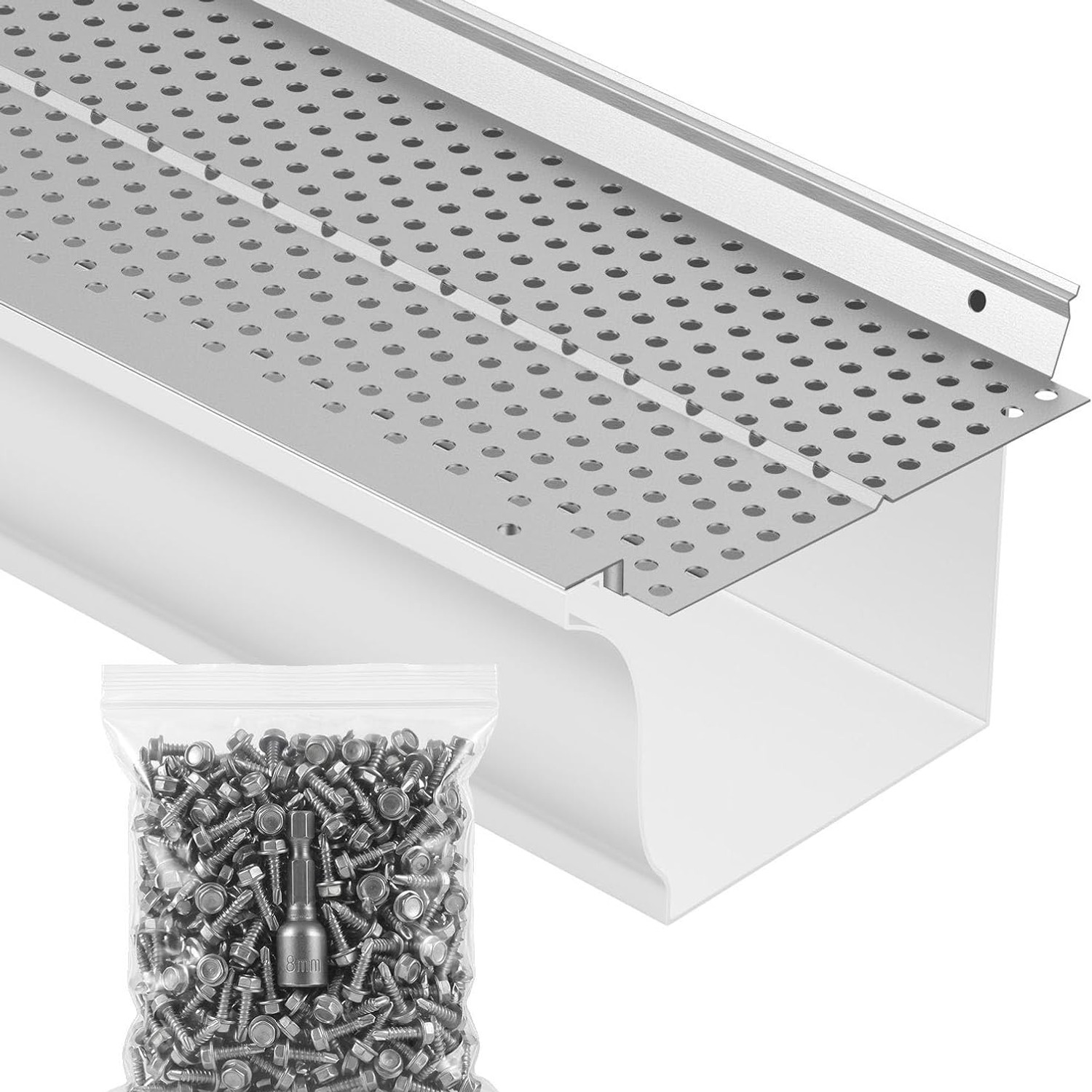
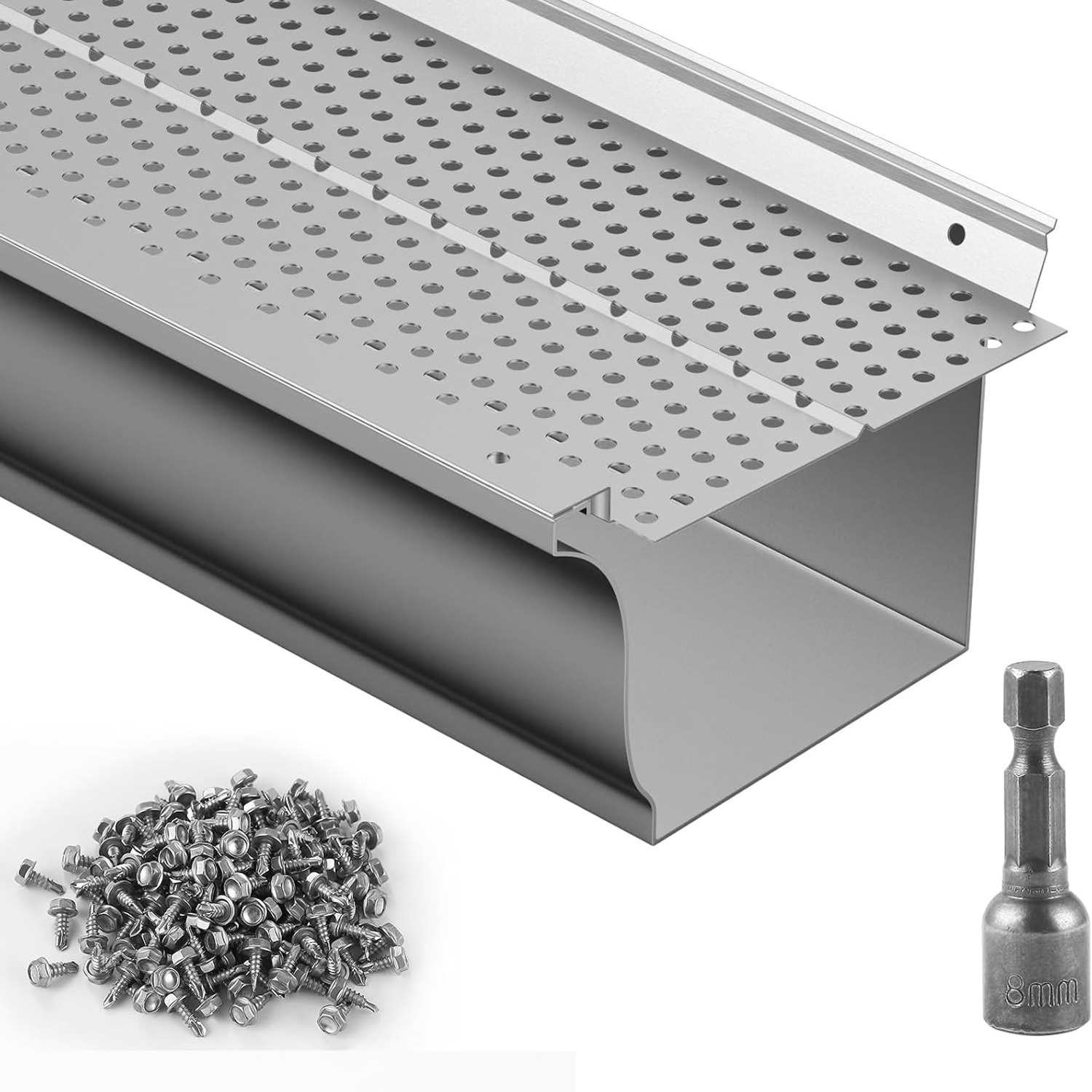
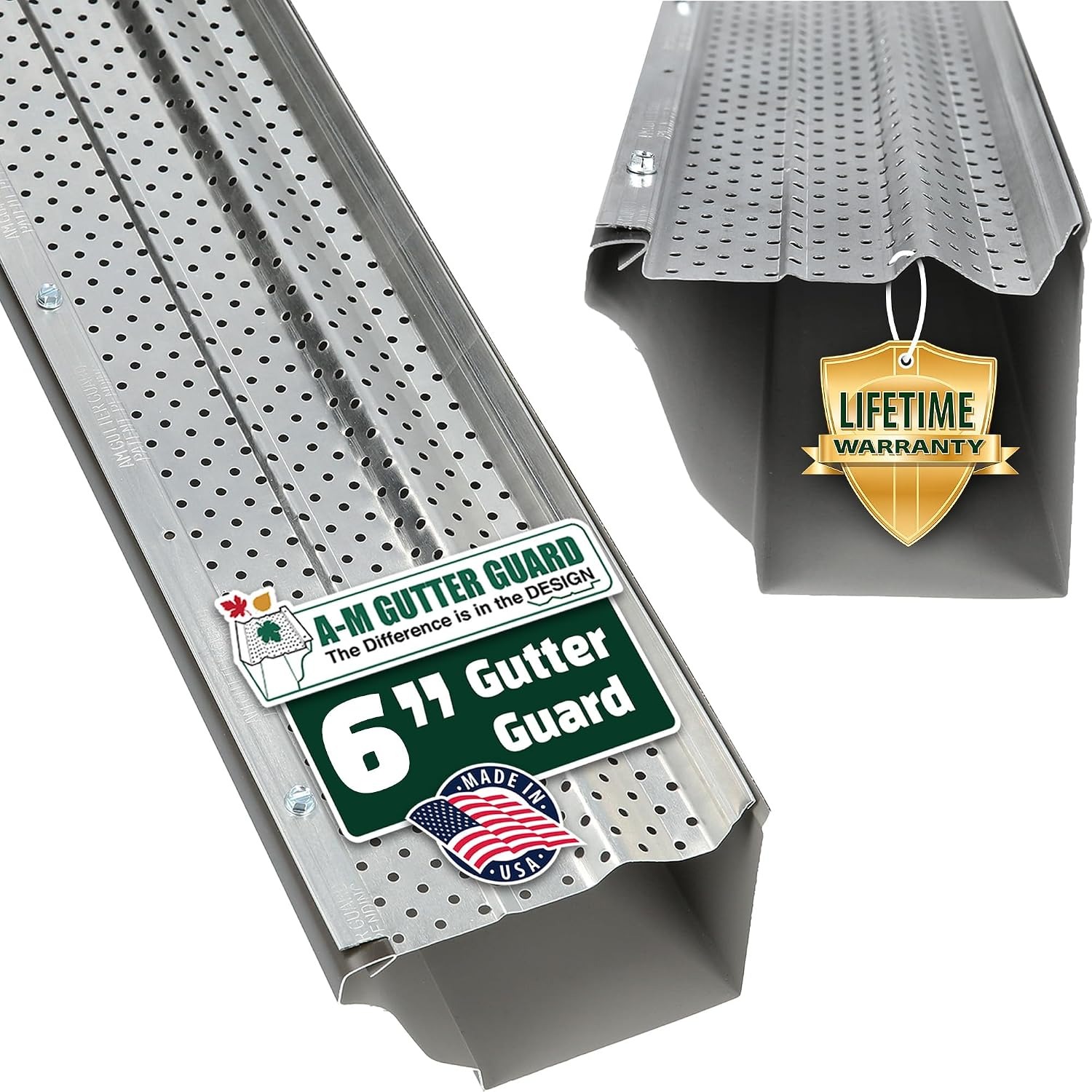
Perforated aluminum sits in the practical middle. It is a rigid metal panel with holes punched through it, laid across the top of the gutter. Debris lands on the surface. Water passes through the holes. That is the whole idea.
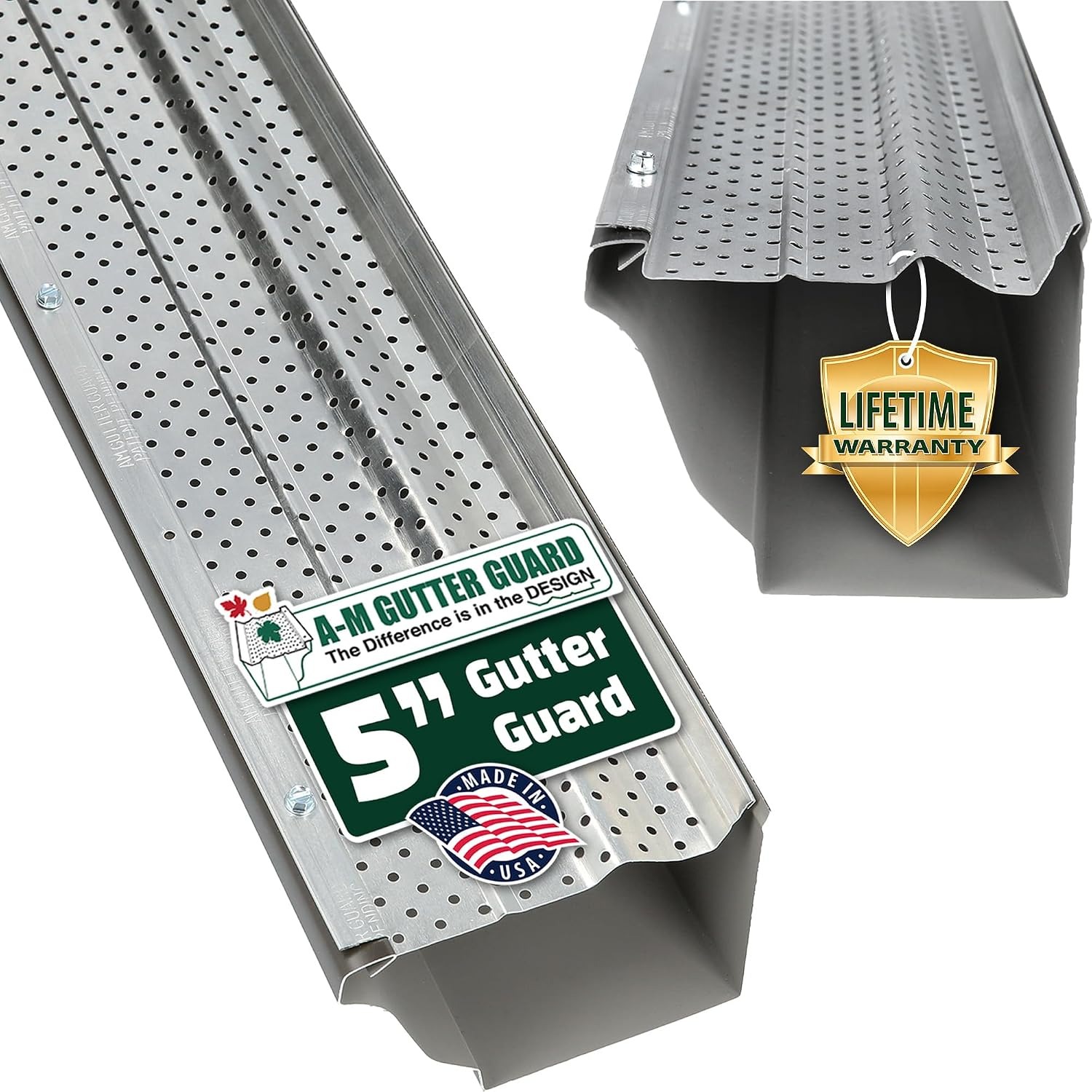
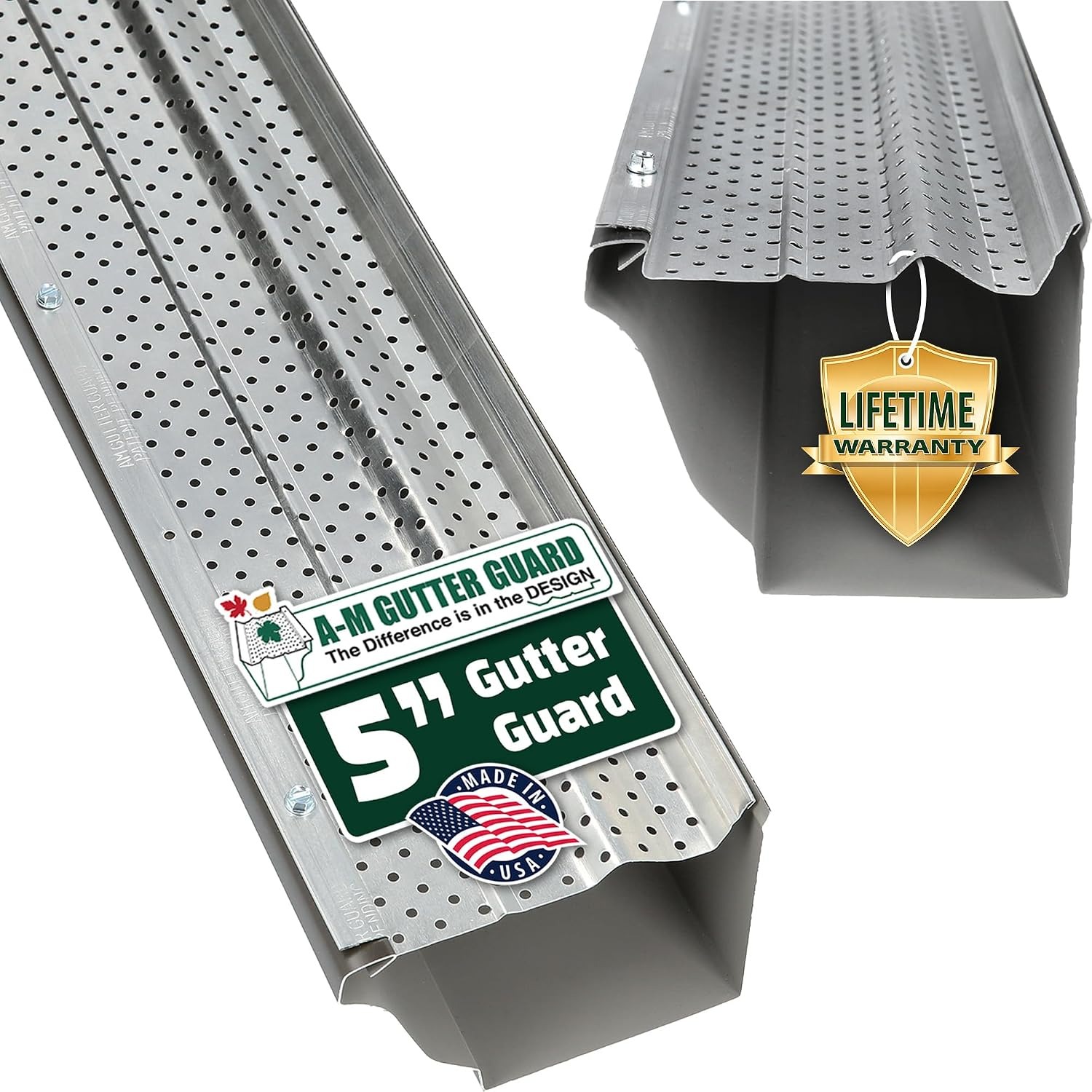
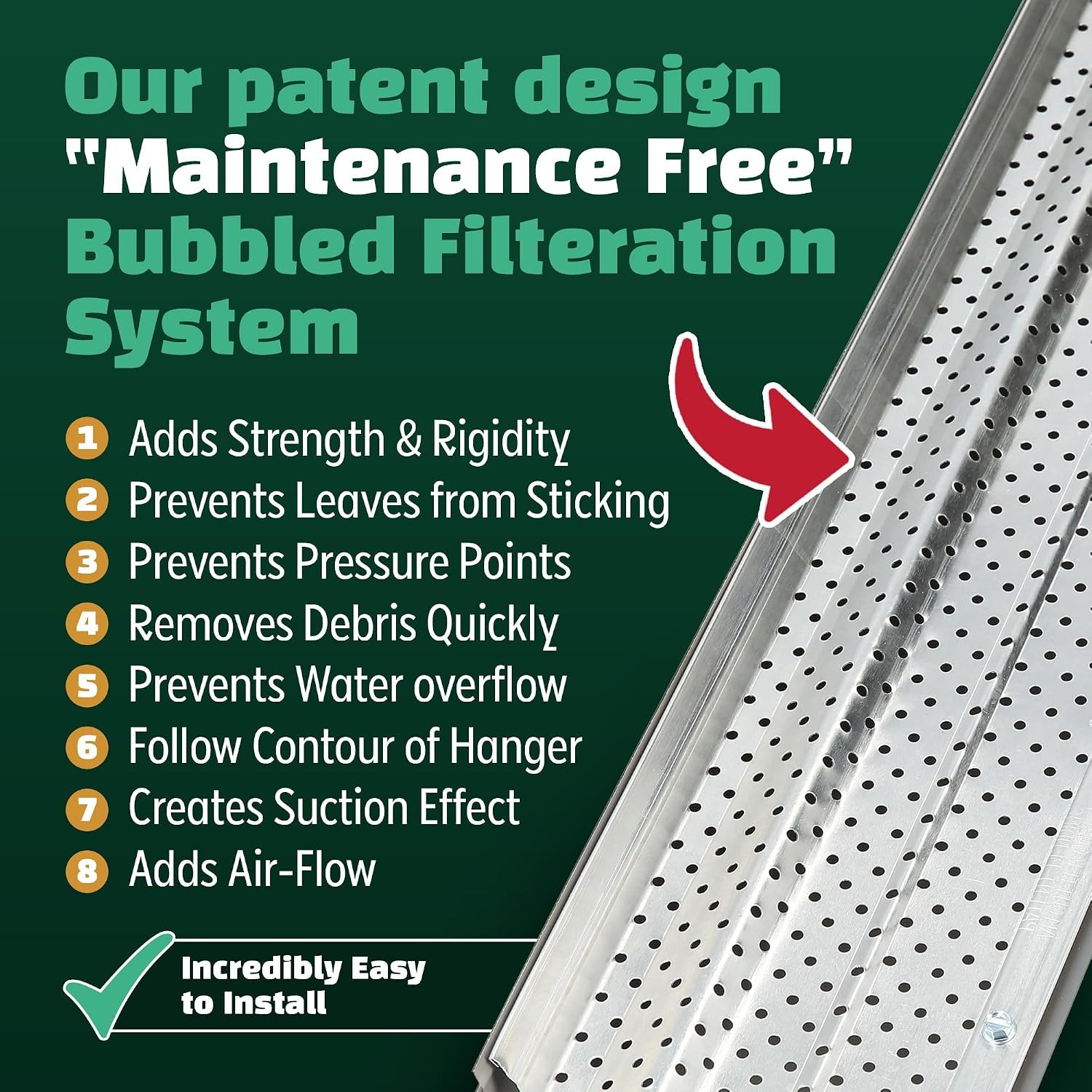
What separates a good one from a poor one is open area and surface shape. This guard has 380 holes per linear foot, which is a lot. More open area means more flow, and flow is what stops water running past the front edge in a downpour. The bubbled filtration pattern adds the second half of the equation. Because the surface is not flat, air moves above and below the panel. Debris dries out instead of matting down, and once it is dry, wind takes it off the roof.
That self-clearing behavior matters more than the hole size. A screen with tiny holes stops more, but if the debris it stops just sits there, you have moved your cleaning job from inside the gutter to on top of it.
Who this suits
Homes with deciduous trees anywhere near the roofline are the obvious case. Maple seeds, oak leaves and the general autumn dump are exactly what a perforated screen handles well.
Pine needles are the hard test. They are thin enough to thread into small openings and they come down year-round. No screen is perfect with needles, but a design that promotes airflow gives you the best shot, because dried needles are light and blow clear. If pine is your main issue, plan on an annual hose-down rather than assuming zero attention.
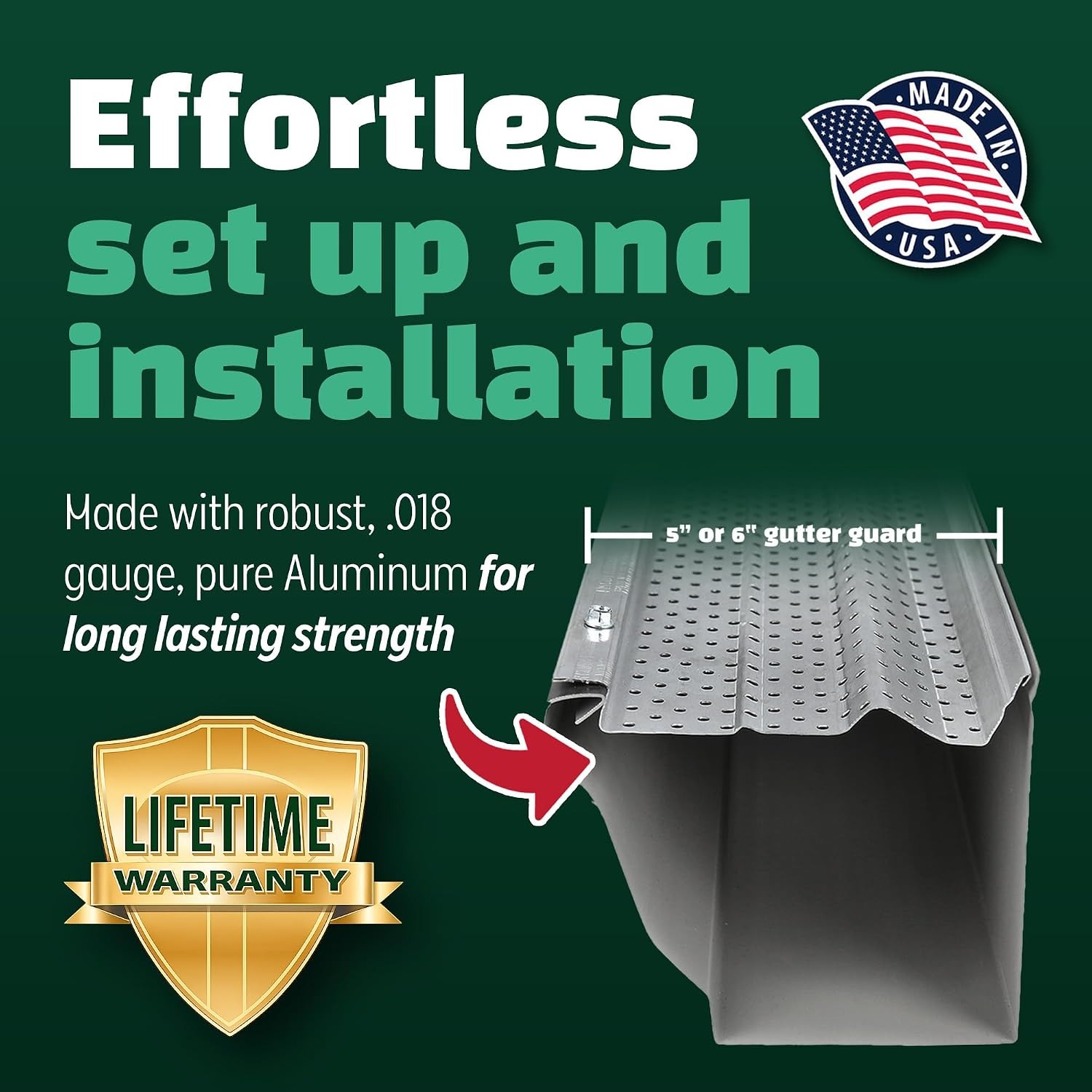
Older homes are a good fit too. A lot of guards assume modern hidden hangers and sulk if your gutters use spike and ferrule fixings. These panels are built for both, which means you are not forced into replacing a perfectly serviceable gutter system just to fit protection.
Anyone wary of roof warranties should also take note. This guard sits on top of the gutter and does not slide under the shingles or attach to them. The manufacturer states it will not void roof warranties, including Fortified Roofs. If your roof is new and under cover, that is worth something.
Working out how much you need
One box covers 50 feet of gutter once installed. The box actually contains 13 panels at 47 inches each, which adds up to more than 50 feet of raw material, because every joint overlaps. That overlap is deliberate. It gives you a smooth continuous surface with no lip for debris to snag on.
To work out your order, walk the perimeter and measure each run of gutter separately. Add them up, divide by 50, and round up. Do not try to shave the number down. Running short halfway along the back of the house on a Sunday afternoon is a specific kind of misery.
If your gutters are 6 inch rather than 5 inch, you need the 6 inch version instead. Measure across the top of the channel from the back wall to the front lip. It takes thirty seconds and it saves a return.
Installing it yourself
This is a reasonable DIY job. The manufacturer designed it for homeowners, using common household tools, and the overlapping panels forgive small errors in a way that fiddlier systems do not.
The order of work is straightforward. Clean the gutters properly first, including flushing the downspouts until water runs clear. Check and tighten any loose hangers while you have access. Then lay the panels in from one end, overlapping each one onto the last so water flows downhill across the joint rather than into it. Trim the final piece with tin snips.
Two practical notes. Wear gloves, because cut aluminum edges are sharp. And treat ladder safety as the actual risk here, not the gutters. A properly footed ladder on firm ground, moved often rather than over-reached from, is the whole job. If you are not confident at height, paying a handyman for a couple of hours is money well spent.
Care over the years
Aluminum is a low-maintenance material. It does not rust, it does not rot and it does not go brittle in sunlight the way plastic does. The .018 gauge used here is described as industrial grade, and A-M Gutter Guard backs it with a lifetime warranty covering rust, rot and self-deterioration.
What the guard needs from you is light. Rinse the top surface with a hose once or twice a year, more often if you are under heavy tree cover. A soft brush handles anything stuck on. Skip the wire brush and keep a pressure washer at a sensible distance, since high pressure at close range can mark the finish.
After a big storm, have a look along the run. Check nothing has lifted at an overlap and that the downspout outlets are still flowing. Five minutes with a pair of binoculars from the ground tells you most of what you need to know.
The short version
A 5 inch aluminum gutter guard is not a glamorous purchase, but it is one of those jobs that pays you back quietly for years. This one gives you 50 feet of coverage in 13 overlapping panels, made from rust-proof .018 gauge aluminum, with 380 holes per linear foot so heavy rain goes where it should.
It fits hidden hangers and older spike and ferrule hangers, works with any roof material and pitch, and never touches your shingles. The bubbled surface helps debris dry out and blow away instead of sitting there. And the lifetime warranty on rust, rot and deterioration means the metal is not the part you will be worrying about.
Measure your gutter width, measure your roofline, order enough boxes, and give yourself a free Saturday. That is the whole project.