

The complete guide
The Honest Buyer's Guide to Micro Mesh Gutter Guards
The job nobody wants to keep doing
Gutter cleaning is a small task with an outsized ability to ruin a weekend. You drag out the ladder, reposition it eight times, scoop handfuls of black sludge into a bucket, and discover halfway along that the downspout is packed solid. Then six weeks later a storm fills everything up again.
The frustrating part is that the gutter itself is doing its job fine. The problem is the open channel on top. It is a perfectly shaped tray for leaves, seed pods, pine needles and the grit that washes off roof shingles. Once a layer of that material sits in there and gets wet, it turns into compost. Water backs up, overflows the front edge, and runs down the fascia or pools against the foundation.
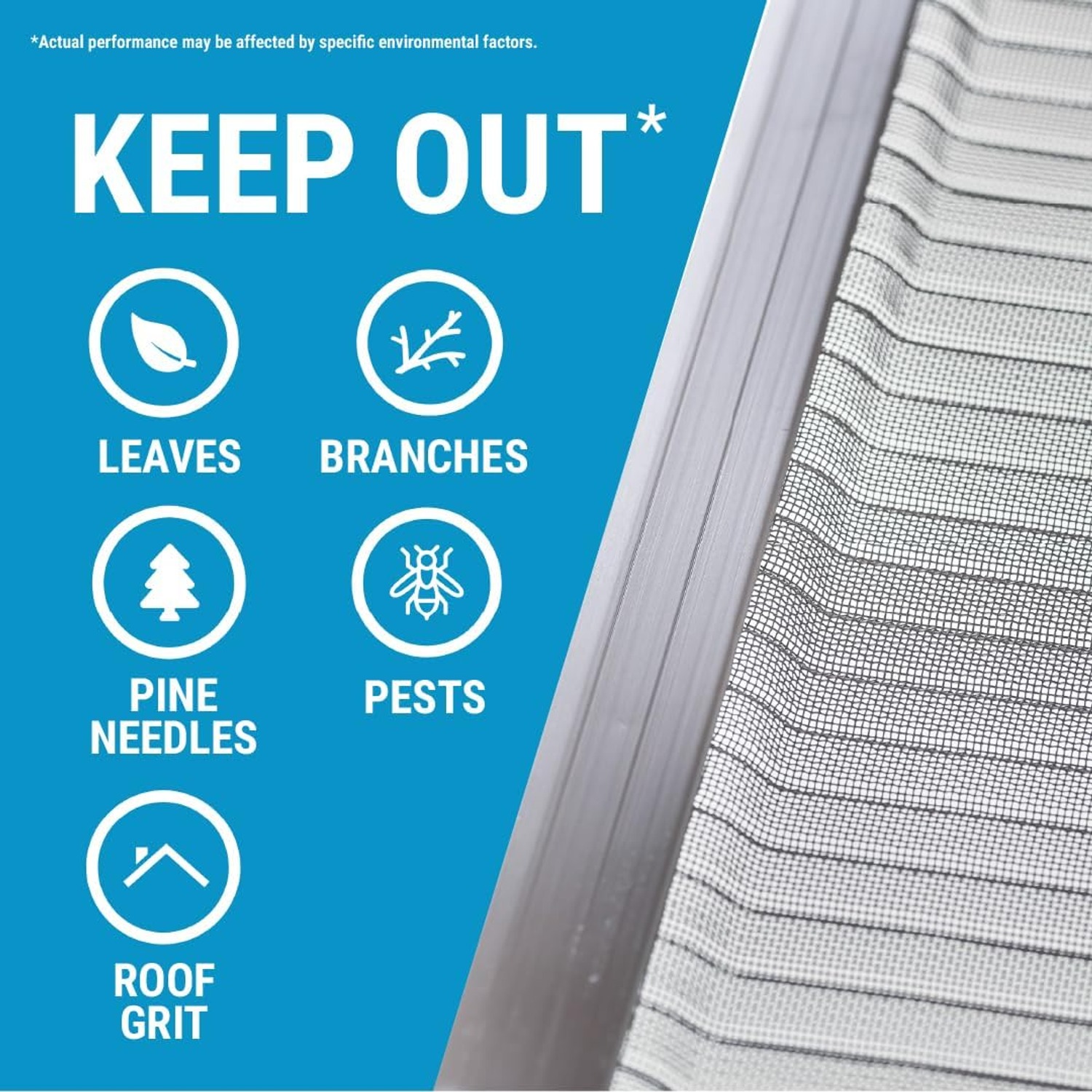
A micro mesh gutter guard fixes the geometry rather than the symptom. Cover the opening with a fine stainless screen and the debris never gets inside in the first place. It sits on top, dries out, and the next gust or shower takes most of it over the edge.
How a micro mesh guard works
The principle is simple. Water molecules are small and happy to pass through a fine mesh under gravity. Leaves, needles, twigs and grit are not. So you put a filter across the gutter mouth with openings big enough for rain and too small for anything else.
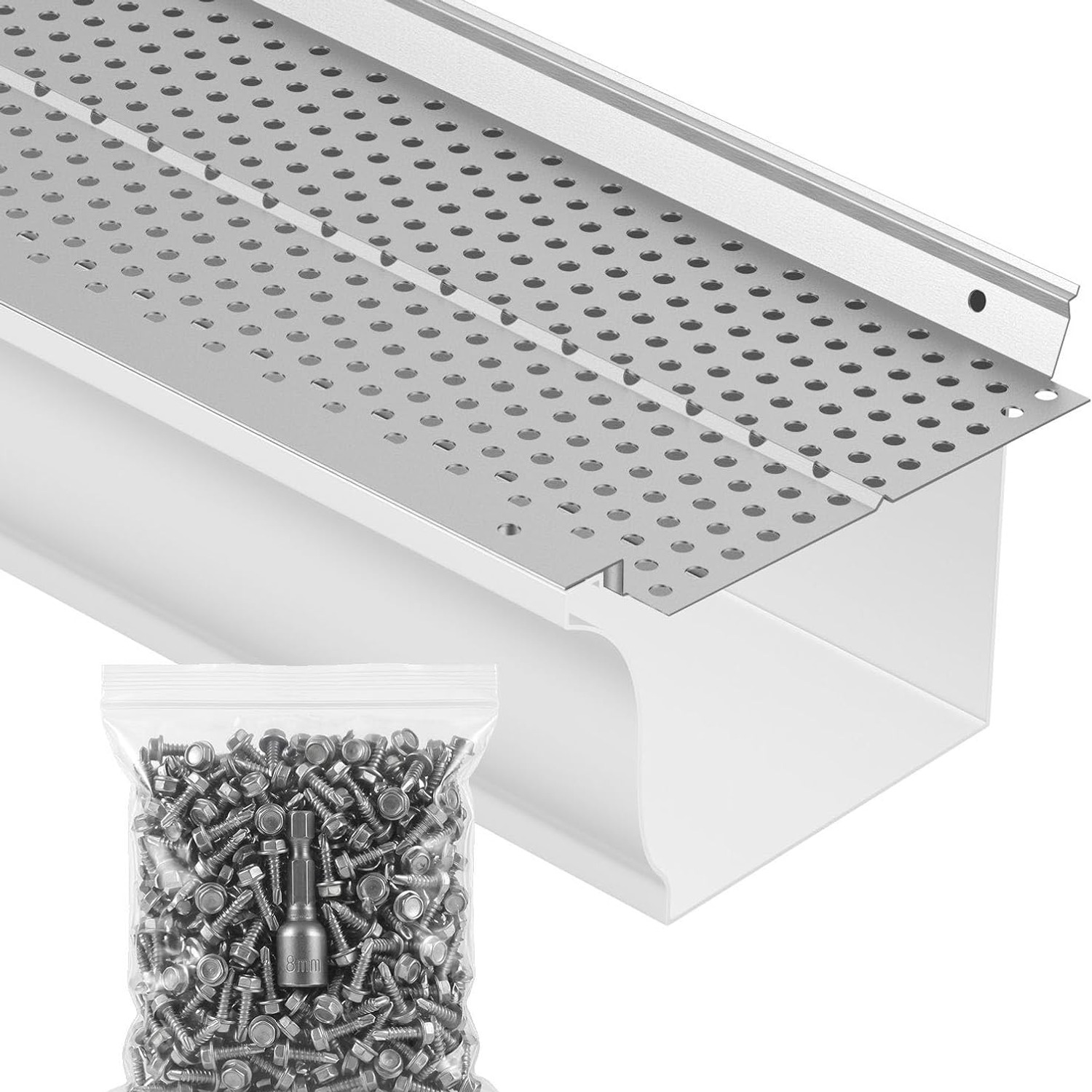
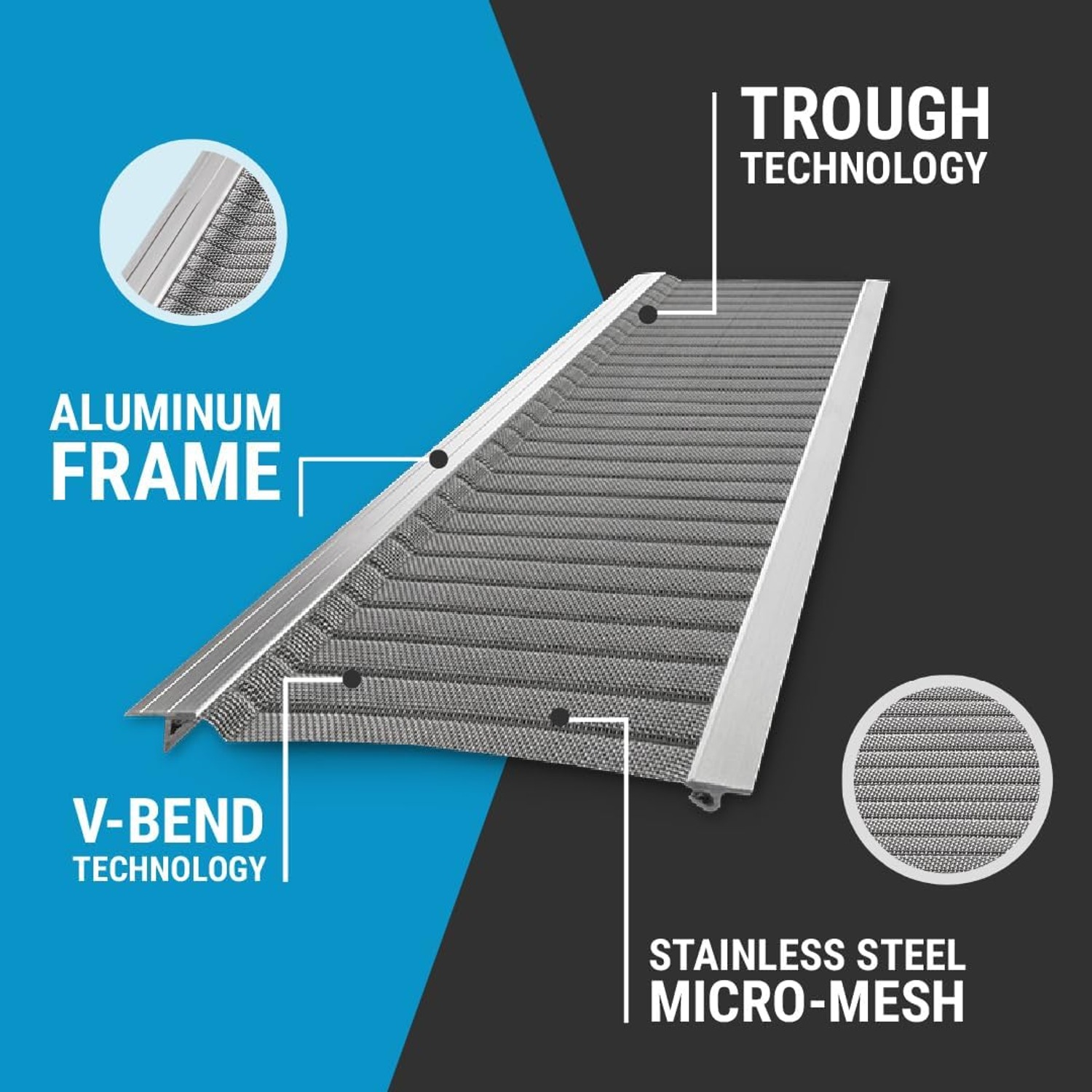
The catch with cheap mesh is that very fine screens can shed water in heavy rain if they are dirty or sitting flat. Surface tension works both ways. That is why the panel shape matters. This kit uses a V-bend running along the length with a trough profile. The bend does three useful things at once. It stiffens the panel so it does not sag in the middle of the span when wet leaves pile on. It gives the water a path toward the gutter rather than straight off the front. And it keeps debris from pressing flat against the mesh, so it stays loose enough to blow away.
The material choice matters just as much. Plastic screens go brittle after a few seasons of UV. Painted or galvanised steel eventually gives up at the cut edges. Stainless steel resists rust and warping, which is why it is the default for anyone buying once rather than buying every four years. The best rust resistant gutter guard is usually the boring, unglamorous stainless one.
Who this kit actually suits
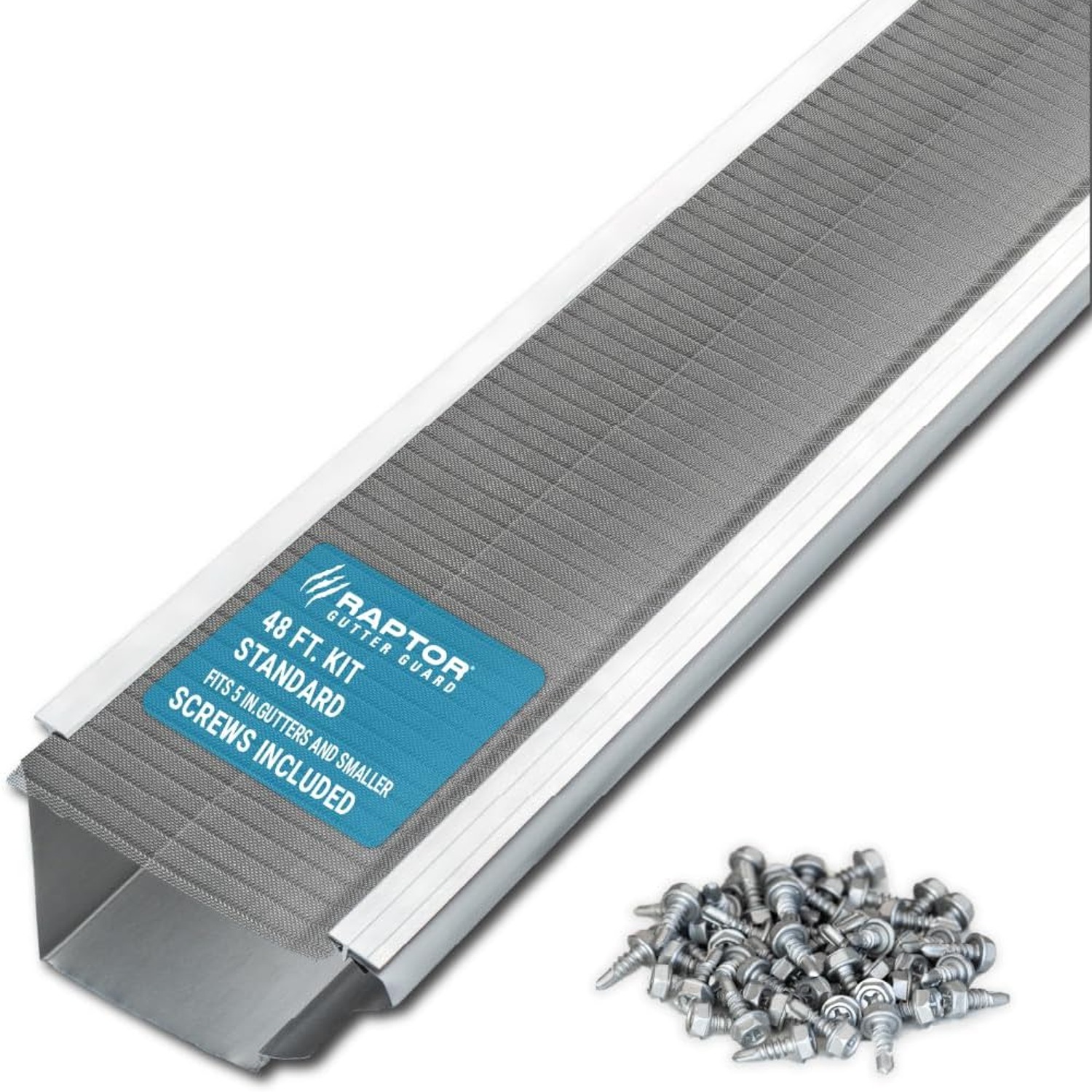
This is a 48 foot kit of twelve panels, each 47.5 inches long and 5.5 inches wide, designed for 5 inch gutters or smaller. That covers a very large slice of standard residential guttering.
It suits you well if you have trees near the house, particularly pines, gums or anything that drops constantly rather than once in autumn. It suits you if you have asphalt shingles, because the grit those roofs shed is exactly the fine material that gets through coarse screens and turns into sludge. It suits you if you collect rainwater, since the product is noted as UL approved for rainwater collection under NSF P151 and NSF 372. And it is relevant if you live somewhere ember protection matters, as the listing notes WUI compliance.
It is less suited to you if your gutters are wider than 5 inches, if your fascia or gutter hangers are already failing (fix those first), or if you genuinely cannot work safely at height. There is no shame in that last one. A roofer can fit a run like this quickly.
Choosing between the options on the market
Walk into any hardware store and you will find four broad types of gutter protection.
Foam inserts are cheap and go in without tools. They also hold moisture, grow things, and need pulling out and replacing. Brush inserts are similar, with debris collecting around the bristles until you remove the whole lot by hand. Both trade a real fix for a delay.
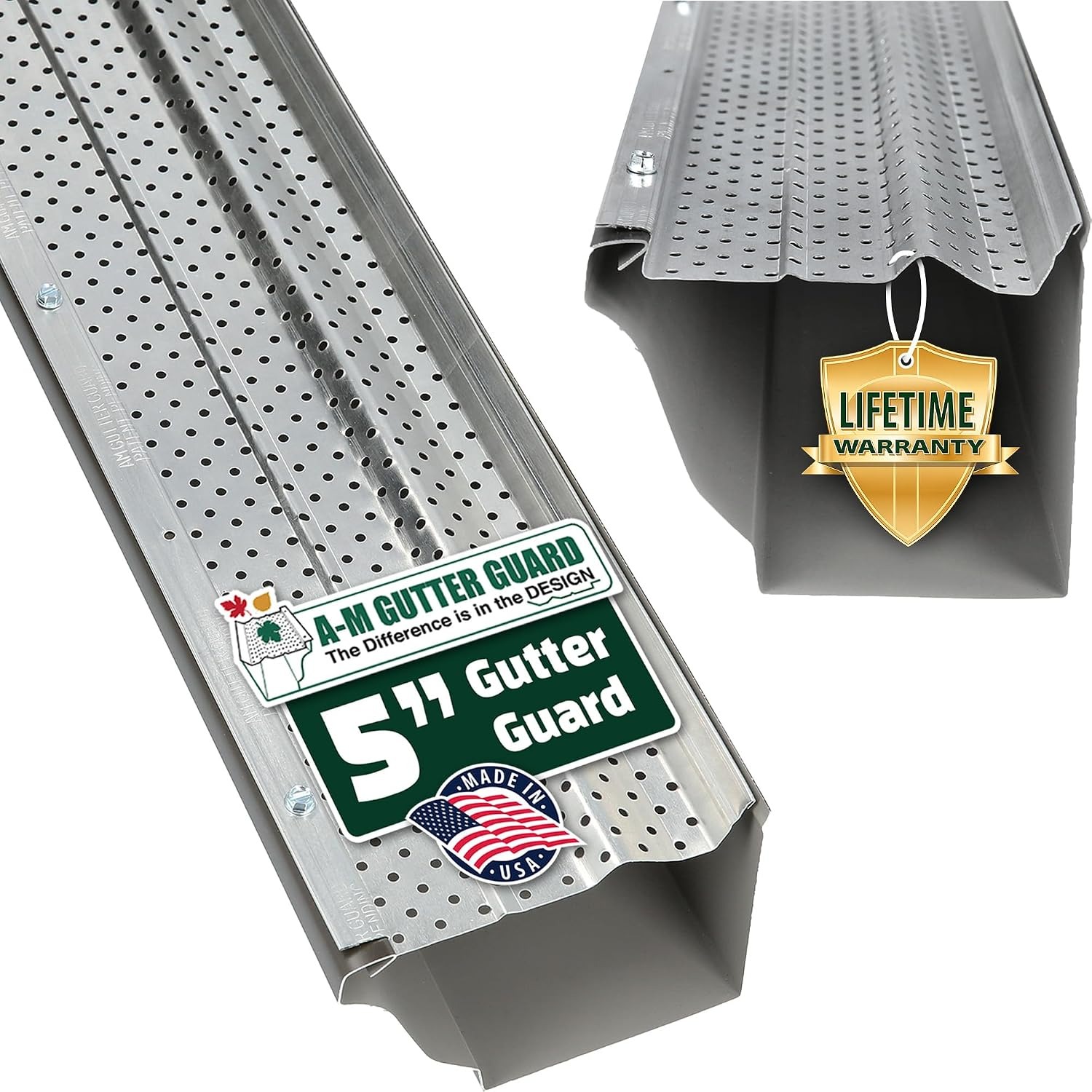
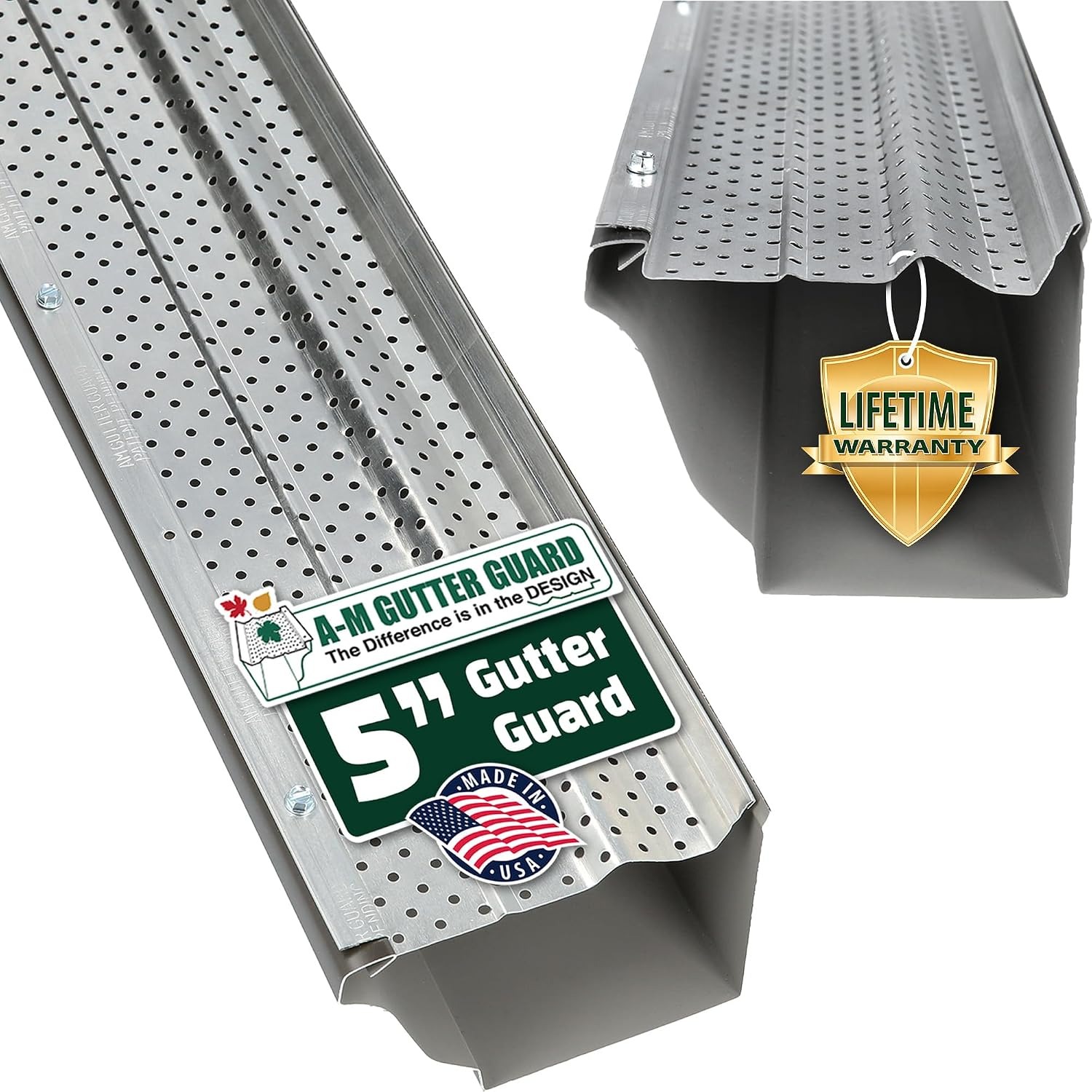
Slotted or perforated screens are a genuine step up and handle big leaves fine. Where they fall down is fine debris. Needles slip through the slots, grit washes straight in, and you are back to sludge. If you have pines, a slotted screen is a disappointment waiting to happen.
Micro mesh is the format that handles both ends of the size range. It is more expensive and it demands a careful install, but it is the one that actually changes the maintenance schedule. When people search for the best DIY gutter guard kit, micro mesh is usually where they land after trying something cheaper first.
Within micro mesh, look at three things. The frame material, which should be stainless or aluminum rather than plastic. The panel profile, since a flat panel with no bend will sag. And the fixing method, because a guard that only clips in will lift in wind.
Fitting it without drama
Set aside an afternoon and work in order.
Start by cleaning the gutters properly. Scoop out the debris, flush the channel with a hose, and watch the water leave through the downspout. If it does not drain, clear the downspout before you go any further. A guard over a blocked system just hides a problem that will show up as an overflow during the next storm.
Check your gutter hangers and fascia while you are up there. Replace anything loose. It is much easier now than after the panels are on.
Dry fit a panel before you drive a single screw. Work out how the rear edge sits against your roof and where the front lip lands. Every roof is slightly different and five minutes of fitting saves an hour of unpicking.
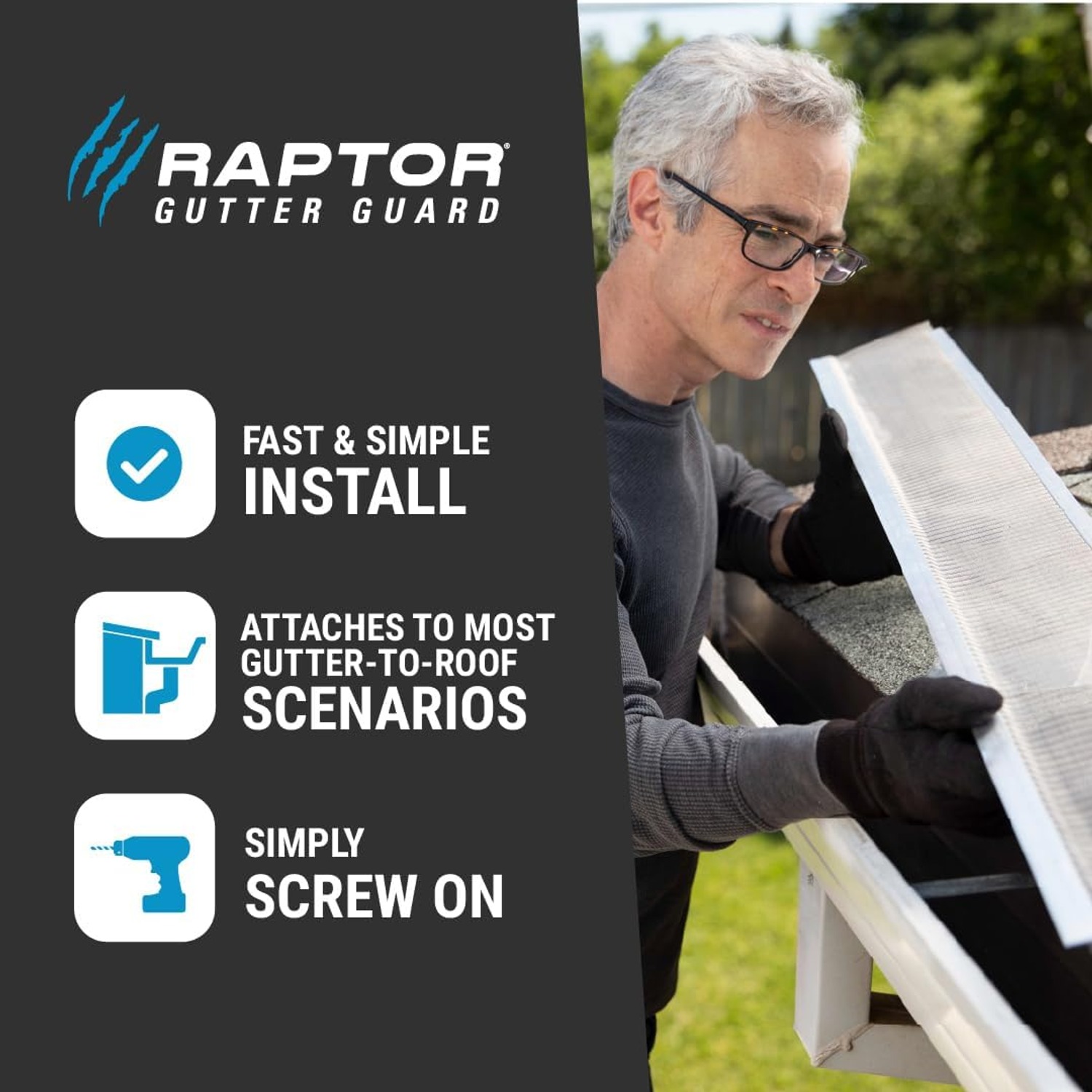
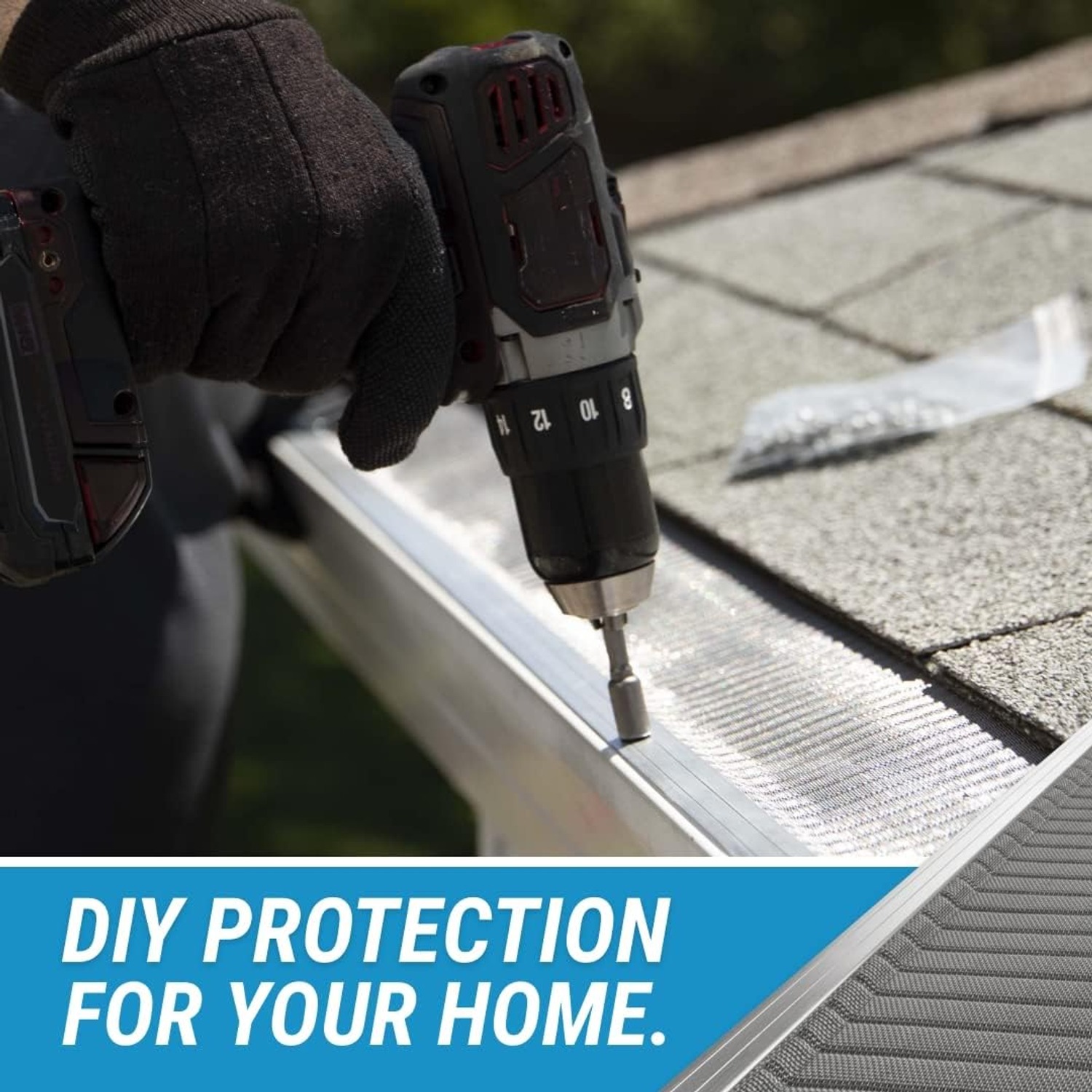
Then work in one direction along the run, fastening with the supplied self-tapping screws and overlapping each panel in the direction the water flows. Trim corners and short runs with tin snips, wearing gloves, and cut on the ground rather than one-handed on a ladder. Cut stainless edges are sharp.
Finally, test it. Run a hose onto the roof above the new panels and watch what the water does. You want it filtering through and leaving via the downspout, not sheeting over the front edge.
Keeping it working
The point of a guard is less maintenance, not zero maintenance. Plan on a look once a year.
Most of the time all you need is a hose from above to wash off pollen film and dust. If you are in a shaded spot where grime builds, a soft nylon brush and plain water will clear it. Avoid pressure washers aimed straight down, which can deform fine mesh, and avoid solvents or abrasive pads.
After a severe storm, glance along the front lip and re-tighten any screws that have worked loose. Clear any larger branch that has landed and got stuck. That is genuinely the whole routine.
One more thing worth knowing. Stainless does not rust, but it can pick up iron particles from carbon steel tools and show orange staining. If that happens, it is surface contamination rather than actual corrosion, and a rinse usually clears it.
The short version
Gutters fail when the channel fills up. A fine stainless mesh across the opening stops that from happening, and a V-bend profile keeps the panel rigid and the water heading the right way.
This kit gives you twelve stainless panels covering a nominal 48 feet of 5 inch gutter, with self-tapping screws and a guide in the box. It installs with a cordless driver, it is noted as WUI compliant and UL approved for rainwater collection under NSF P151 and NSF 372, and it weighs under 5 kg for the whole kit.
Measure your gutter width before you order. If it is 5 inches or under, this is a one-afternoon job that takes a recurring chore off your list. If you are not sure about your measurements, ask us and we will help you work it out.