
The complete guide
How To Choose A Downspout Strainer That Actually Keeps Working
The one spot where gutters go wrong
Gutters rarely fail along their length. They fail at the hole. The outlet where the gutter empties into the downspout is narrow, it sits at the lowest point, and everything the roof sheds eventually travels toward it. A gutter can hold a surprising amount of leaf litter and still work, right up until one clump reaches that hole and folds over it.
After that, the gutter becomes a trough. Water backs up, finds the rear edge, and runs down the fascia or behind it. That is where the expensive damage starts, in the timber you cannot see, in the soffit, sometimes in the wall cavity. The leak you notice inside is usually weeks behind the blockage that caused it.
The frustrating part is that the fix is small. Stop leaves from entering a three inch hole and most of the trouble goes away. That is the entire job of a downspout strainer.
How a strainer works
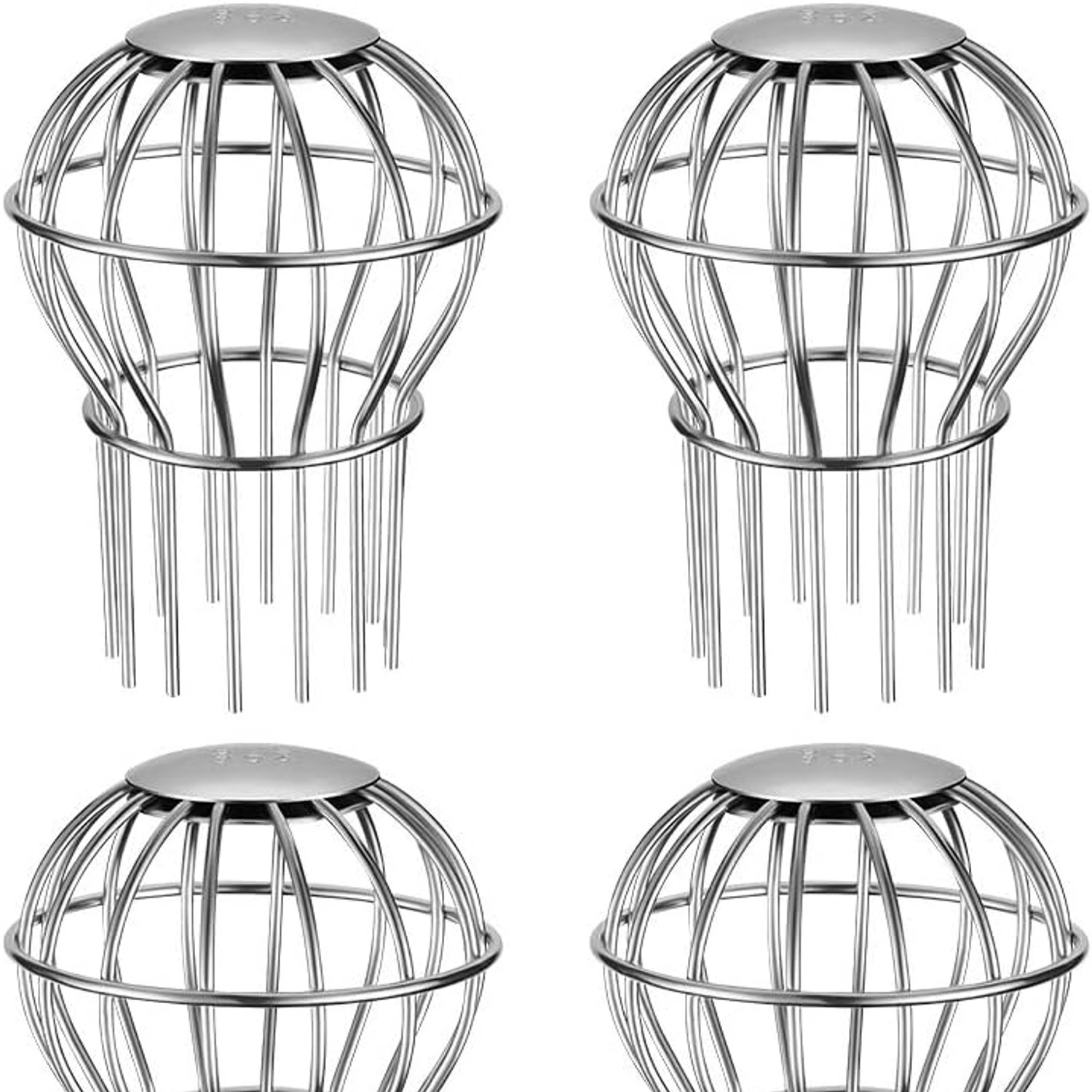
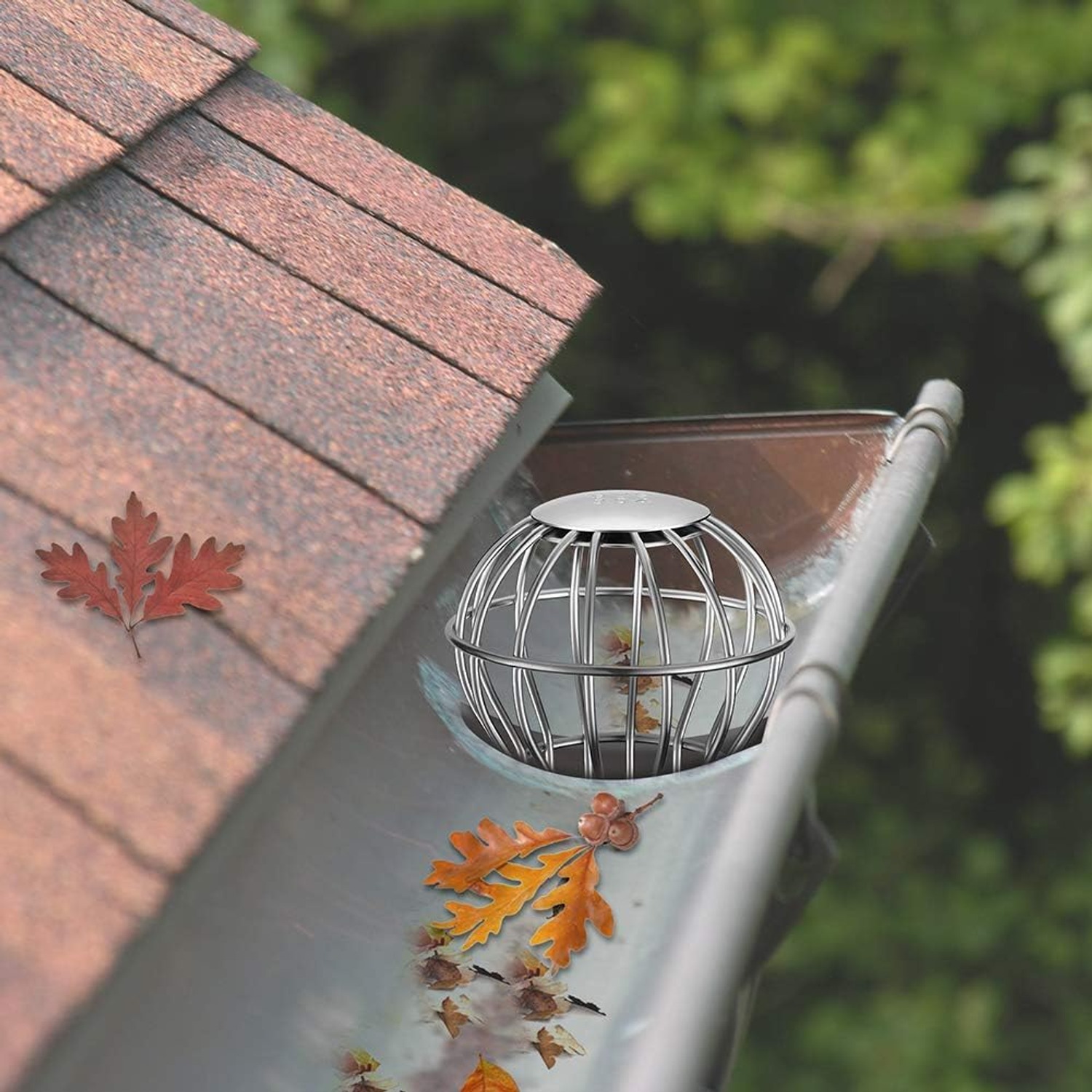
A strainer sits in the outlet with part of its body inside the pipe and part of it standing proud in the gutter channel. Water flows in around and through it. Debris larger than the gaps cannot follow.
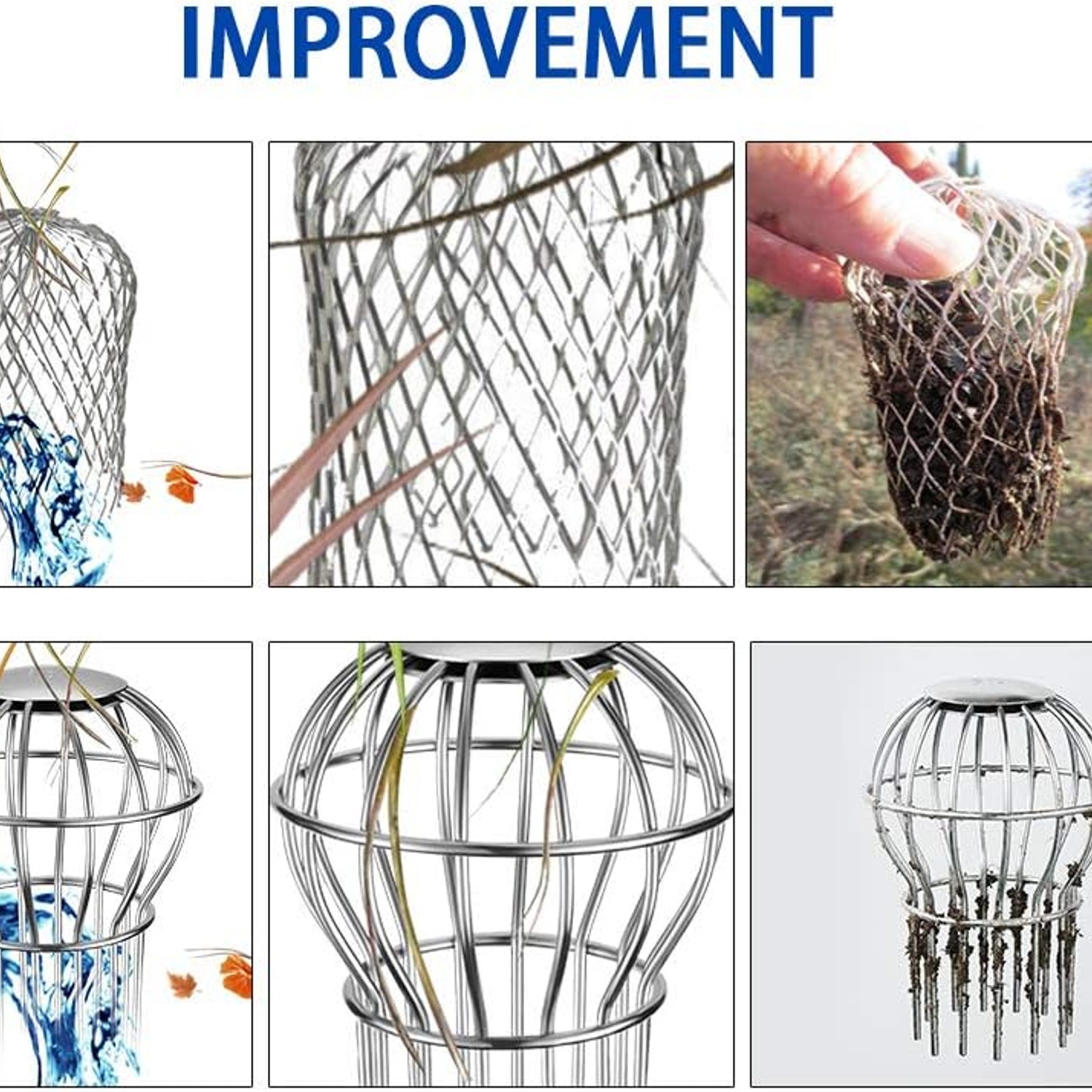
Shape is what separates a good one from a bad one. The common failure of cheap flat screens is simple. A wet leaf is flexible and flat, so it lies down on a flat screen, seals the holes, and traps the next leaf behind it. Within one storm you have a felt mat sitting over the drain.
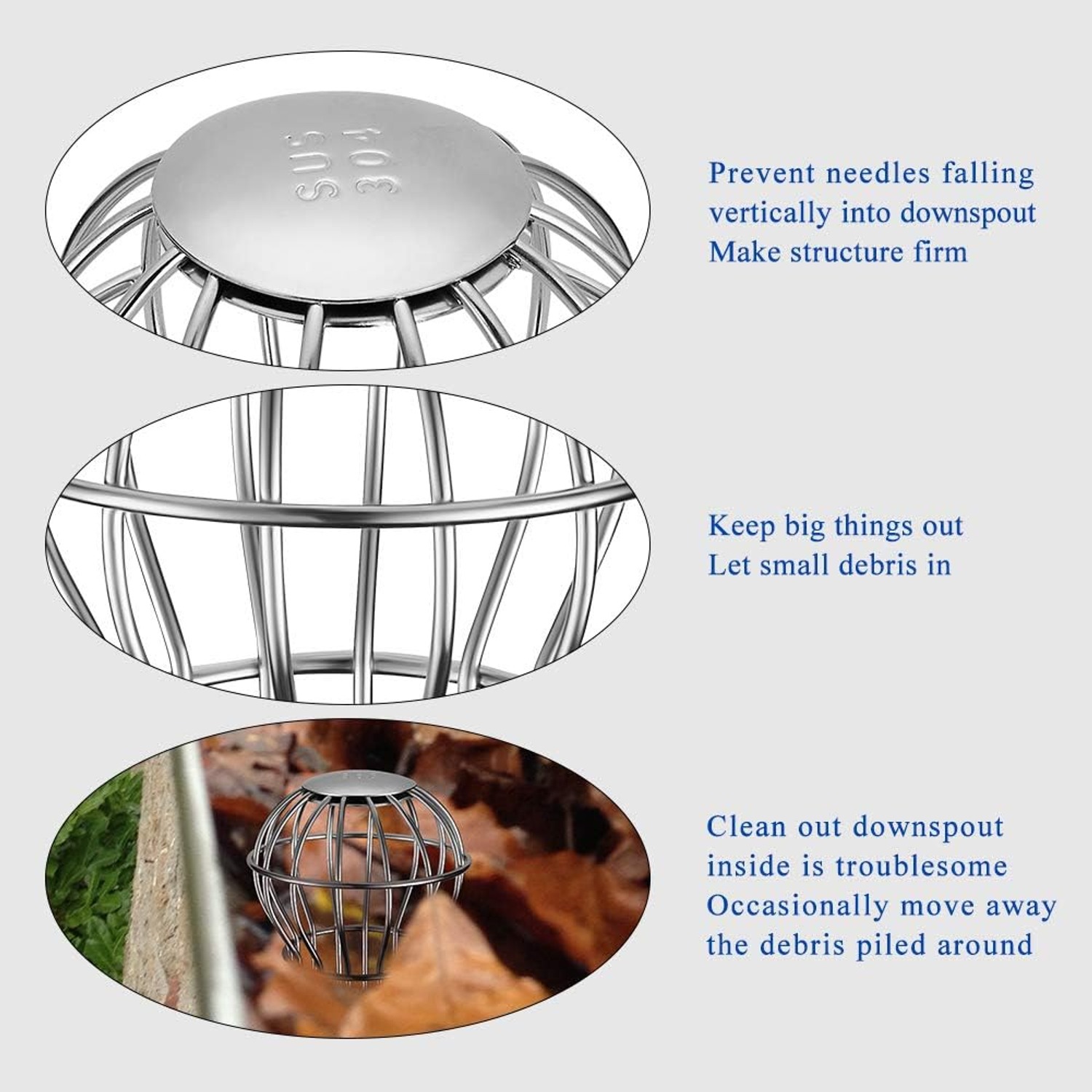
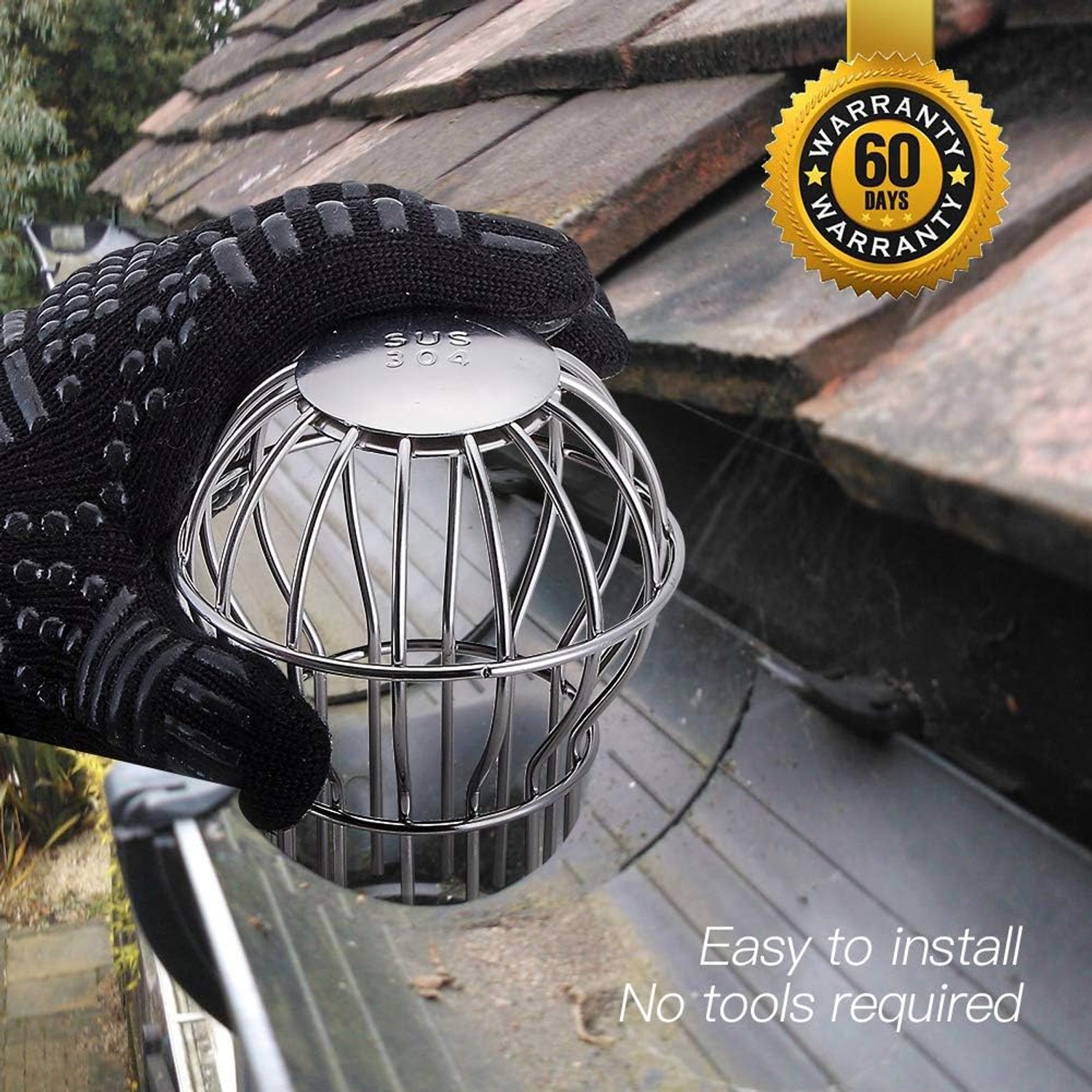
This design uses a spherical shield head and fourteen vertical bars with slots that follow the direction of flow. Leaves land on a curve rather than a plate, so they tend to slide off to one side and sit in the gutter channel instead of sealing the opening. Meanwhile pine needles, roof grit and seed husks slip between the bars and leave the system through the downspout, which is where you want them. Fine material in the pipe does no harm. It is the big wet stuff that blocks things.
That distinction matters when you are comparing options. A guard that stops everything, including grit, becomes a filter that clogs. The best downspout strainer is one that is selective, catching what causes blockages and letting the rest run through.
Material, and why it matters outdoors
A gutter is a hostile place. Full sun in summer, standing water, rotting vegetation, freezing in winter in many regions. Plastic strainers chalk, go brittle and crack, usually in the second or third season. Galvanised steel eventually loses its coating at the cut edges and starts weeping rust down the wall.
These are 304 stainless steel. That grade carries at least 18 percent chromium, and chromium is what forms the thin passive layer that resists corrosion and oxidation. It is the same grade used in sinks and outdoor fittings for exactly that reason. It rinses clean, it keeps its appearance after long use, and it does not stain the paint below it.
Each strainer weighs about 155 grams, which is enough heft to sit solidly in the opening without being heavy enough to be awkward on a ladder. If you want the best stainless steel gutter filter for a house with trees over it, the grade of the steel is the first thing worth checking on any product you compare.
Getting the size right
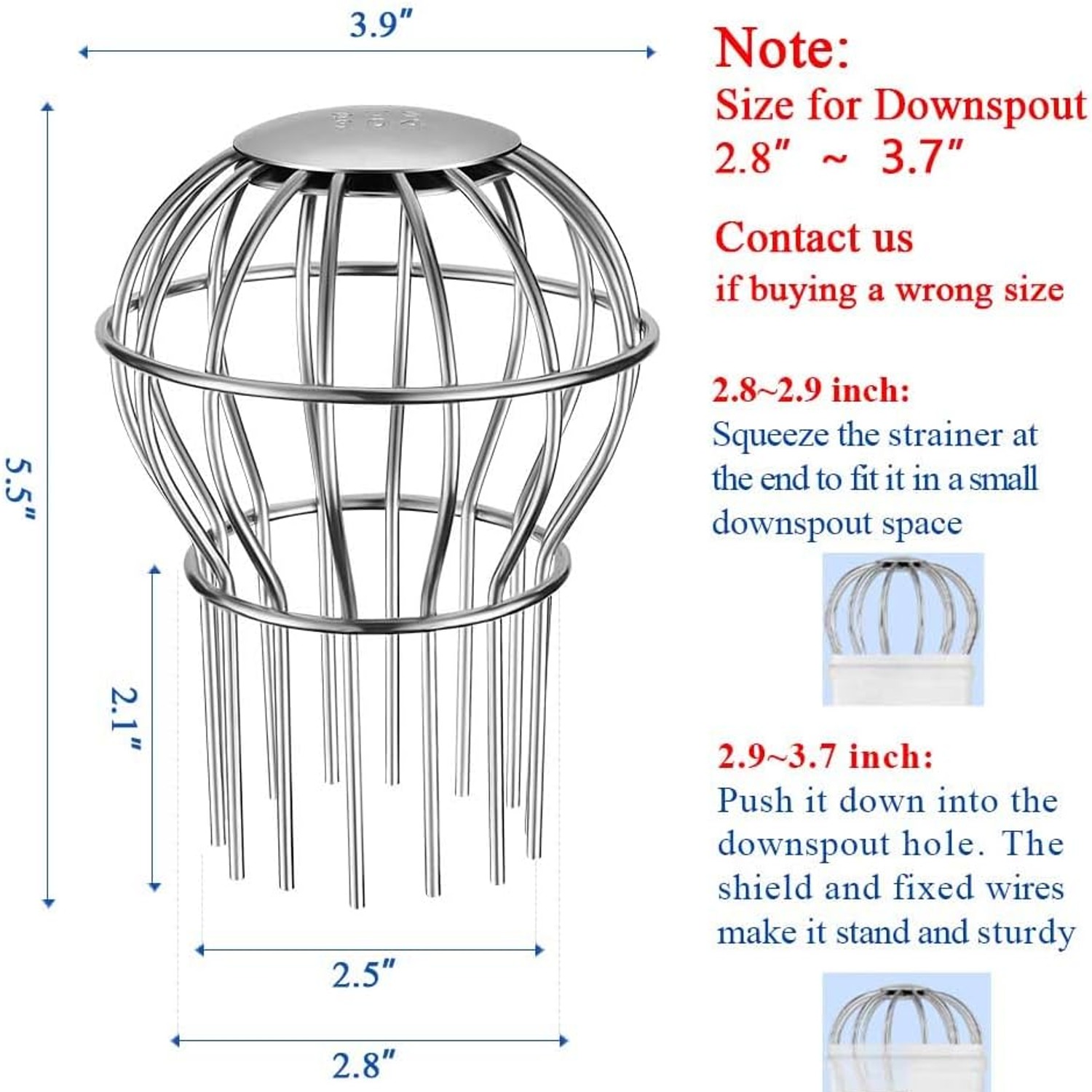
This is the only step where people go wrong, so it is worth being careful. The strainer is a nominal 3 inch unit, and it suits openings from roughly 2.6 to 3.7 inches.
Measure the inside of the downspout opening, not the outside of the pipe and not the width of the gutter. Hold a tape across the hole edge to edge. If your reading lands inside that range, this fits.
If the hole is at the tight end, you can squeeze the base of the strainer slightly, by hand or gently with pliers, until it slips in. A snug fit is good. It stops wind from lifting the strainer and keeps it seated during heavy flow. If your hole is larger than 3.7 inches, this one will drop through, and you need a bigger diameter guard.
Round openings are what this is built for. A square or rectangular outlet leaves corner gaps that debris walks straight through, so look for a shape-matched product instead.
Fitting and living with it
Installation needs no tools. You push each strainer into the opening until it seats, check that it sits roughly level, and move to the next one. Four outlets is around ten minutes of work, most of it spent moving the ladder.
Ladder safety deserves more thought than the strainer does. Set the feet on firm ground, keep the top three rungs free, and have someone hold the base if you are working alone on uneven ground. If your roof is two stories or steeply pitched, this is a reasonable job to hand to someone with the right equipment.
Once fitted, plan on checking two or three times a year. Spring, after autumn leaf drop, and once mid-season if you live under heavy tree cover. A check means looking at the opening, pulling off any debris sitting around the dome, and lifting the strainer out if it looks packed.
This is the honest limitation of every outlet guard, including this one. It does not end gutter maintenance. What it changes is where the maintenance happens. Instead of running a hose blindly down a blocked pipe or taking the downspout apart, you lift off a handful of leaves from the top of the opening and you are done. That is a far better trade than it sounds.
Cleaning and storage
Cleaning is simple. Pull the strainer out, knock the debris off into a bucket or onto the ground, then rinse with a hose. If something has wedged between the bars, a stiff brush shifts it. Push the strainer back in and check it is seated.
In regions with hard freezes, many people lift outlet strainers before deep winter and refit them in spring. Ice forming in the opening can lift or distort anything sitting there, and in winter there is usually less leaf fall anyway. Dry the strainers and keep them in the shed or garage until the weather turns.
Who this suits
If you have deciduous trees, pines or anything that drops seed pods near the roof, an outlet strainer is one of the highest value gutter upgrades you can make for the money. The same goes for anyone who has already had an overflow and knows what wet fascia looks like.
It also pairs well with full-length gutter mesh. Mesh handles the long run of the gutter, the strainer catches whatever gets past it and works its way down to the outlet. The two are not competing products.
It is less useful if your gutters are clear year-round with no overhanging trees, or if your outlets are square. And it will not help with a gutter that is incorrectly pitched. Water sitting in the channel is a slope problem, not a debris problem, and no guard fixes that.
The short version
A downspout strainer solves a small problem that causes big damage. This one is 304 stainless steel, fits round outlets between 2.6 and 3.7 inches, pushes in without tools, and comes four to a pack. The domed head and vertical bars shed leaves instead of trapping them, while needles and grit wash through.
Measure your opening, push them in, and check them a couple of times a year. That is the whole routine. For the cost and the ten minutes it takes, it is a sensible bit of protection for the parts of a house that are expensive to repair.