
The complete guide
The Practical Guide to Aluminum Gutter Guards
The job nobody wants to do twice a year
Gutters only get noticed when they stop working. Water pours over the lip in a storm, a damp mark appears on the brickwork, or a plant starts growing out of the gutter above the front door. By that point the channel is holding a wet mat of leaves, twigs and roof grit, and the only fix is a ladder, a bucket and a slow hour of scooping.
The frustrating part is how predictable it is. If you have mature trees anywhere near the roof, the gutter will fill. Autumn is the big one, but spring blossom, seed pods and the fine grit that washes off an asphalt roof all contribute year round. Cleaning solves it for a season. Covering the gutter solves it for much longer.
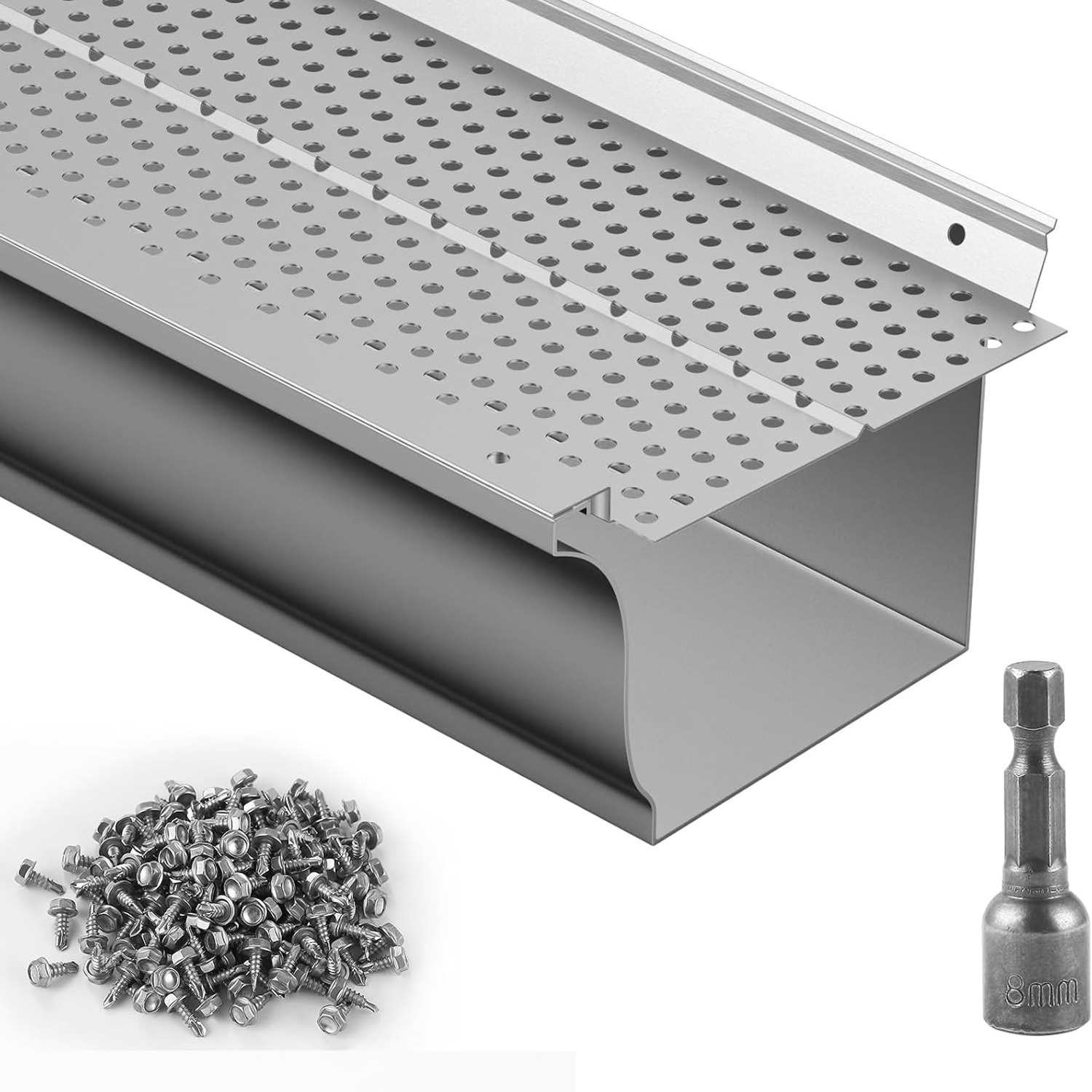
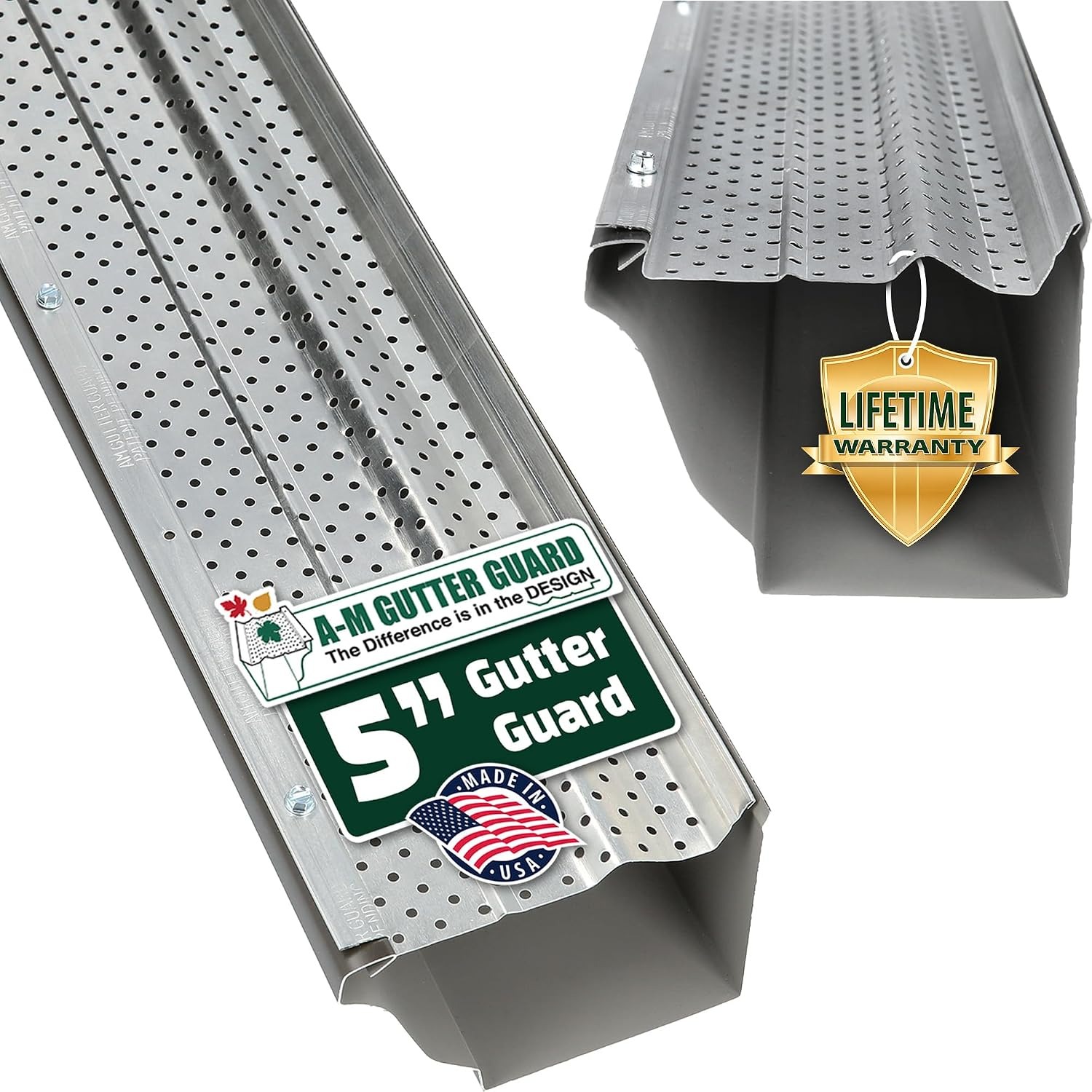
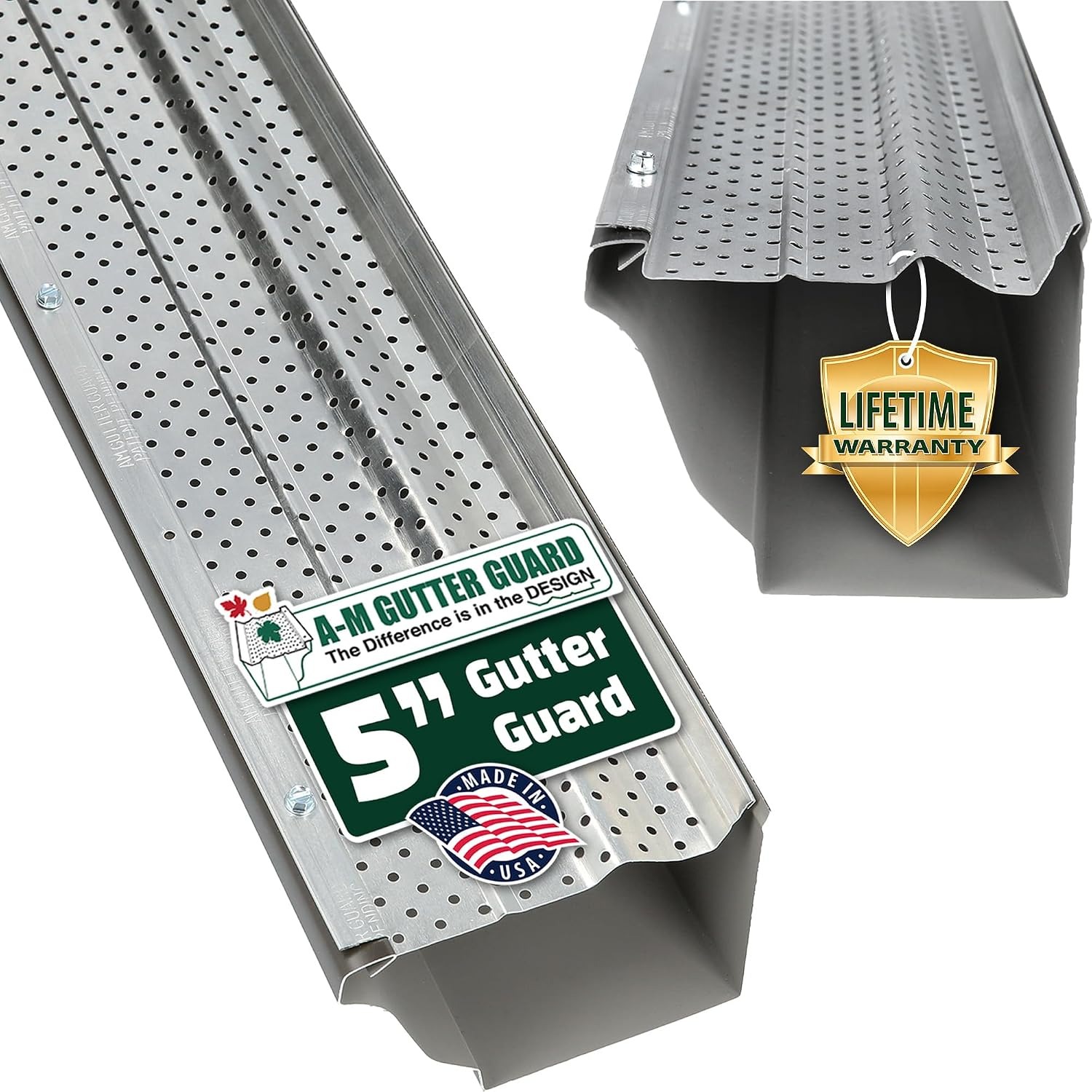
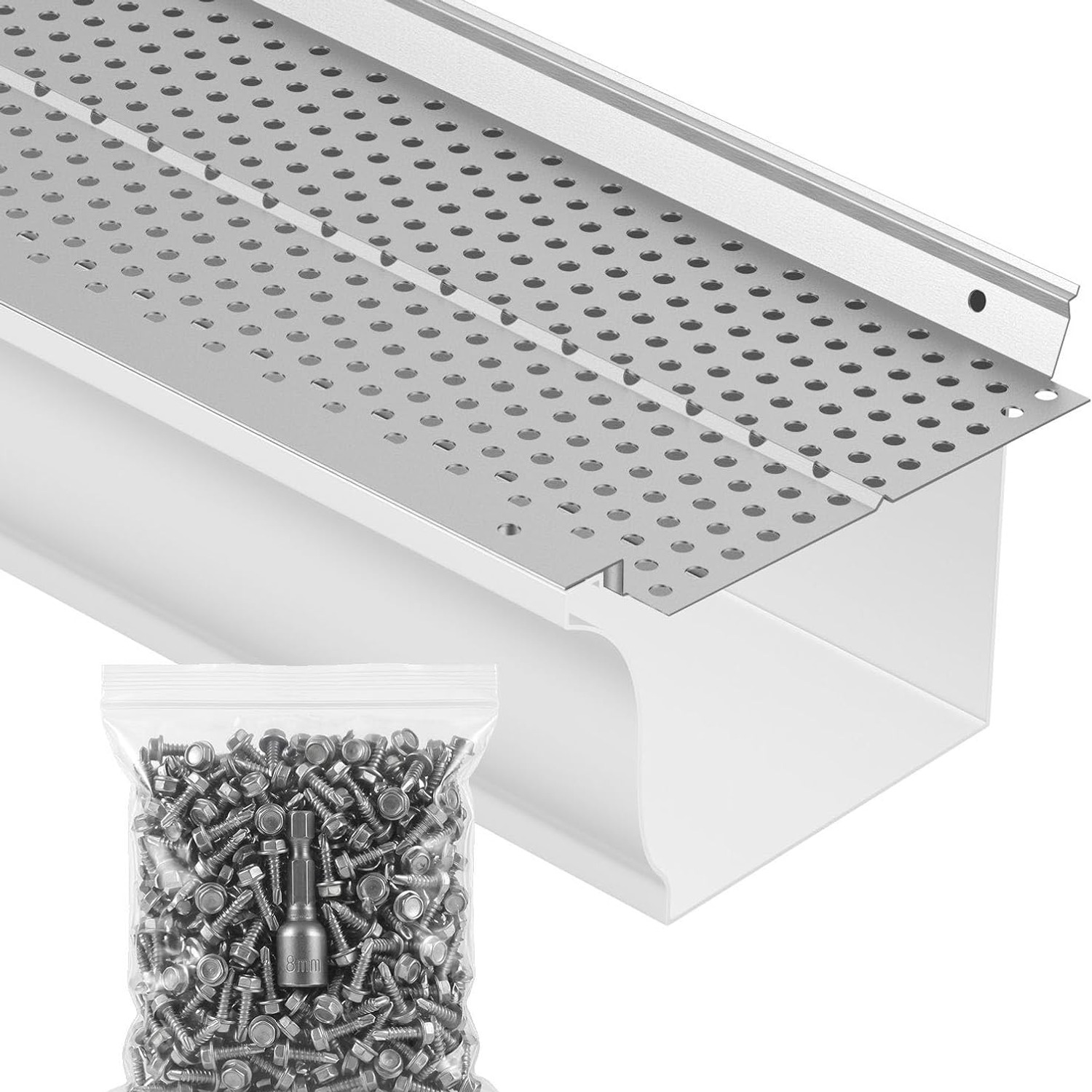
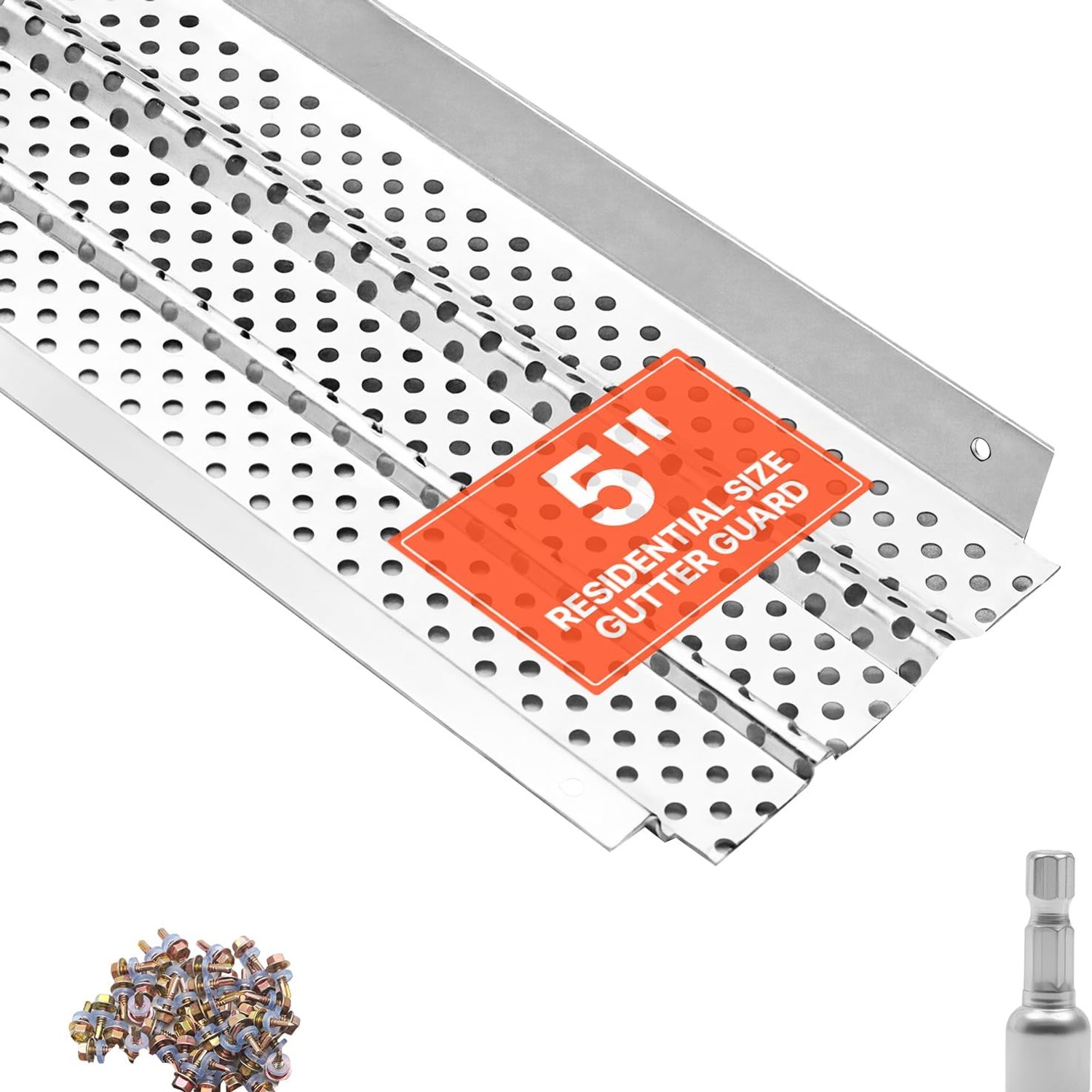
That is what this kit does. Thirteen aluminum panels, each 48 inches long and 5 inches wide, screwed down over a standard 5 inch gutter to give you 52 feet of covered run.
How a perforated gutter guard works
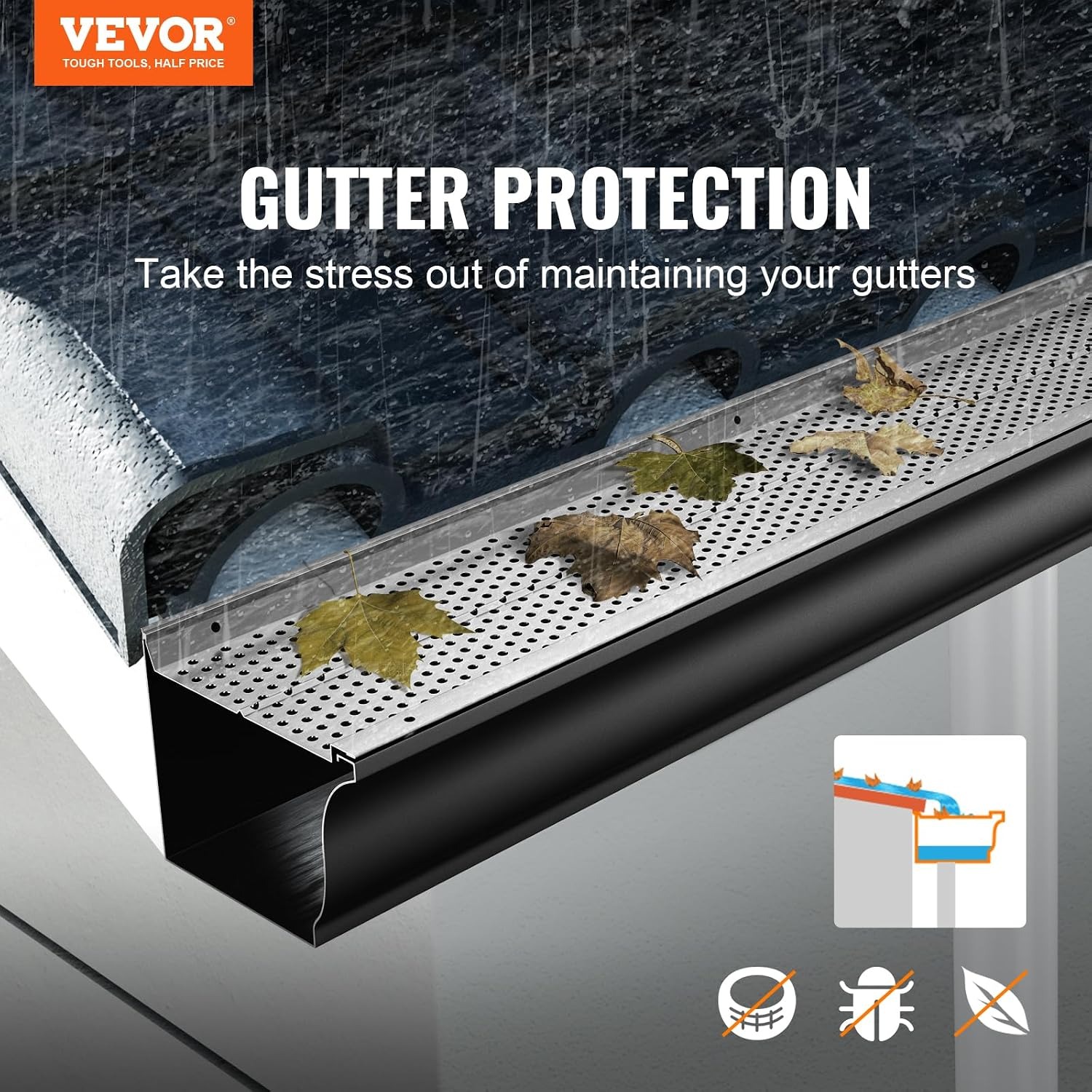
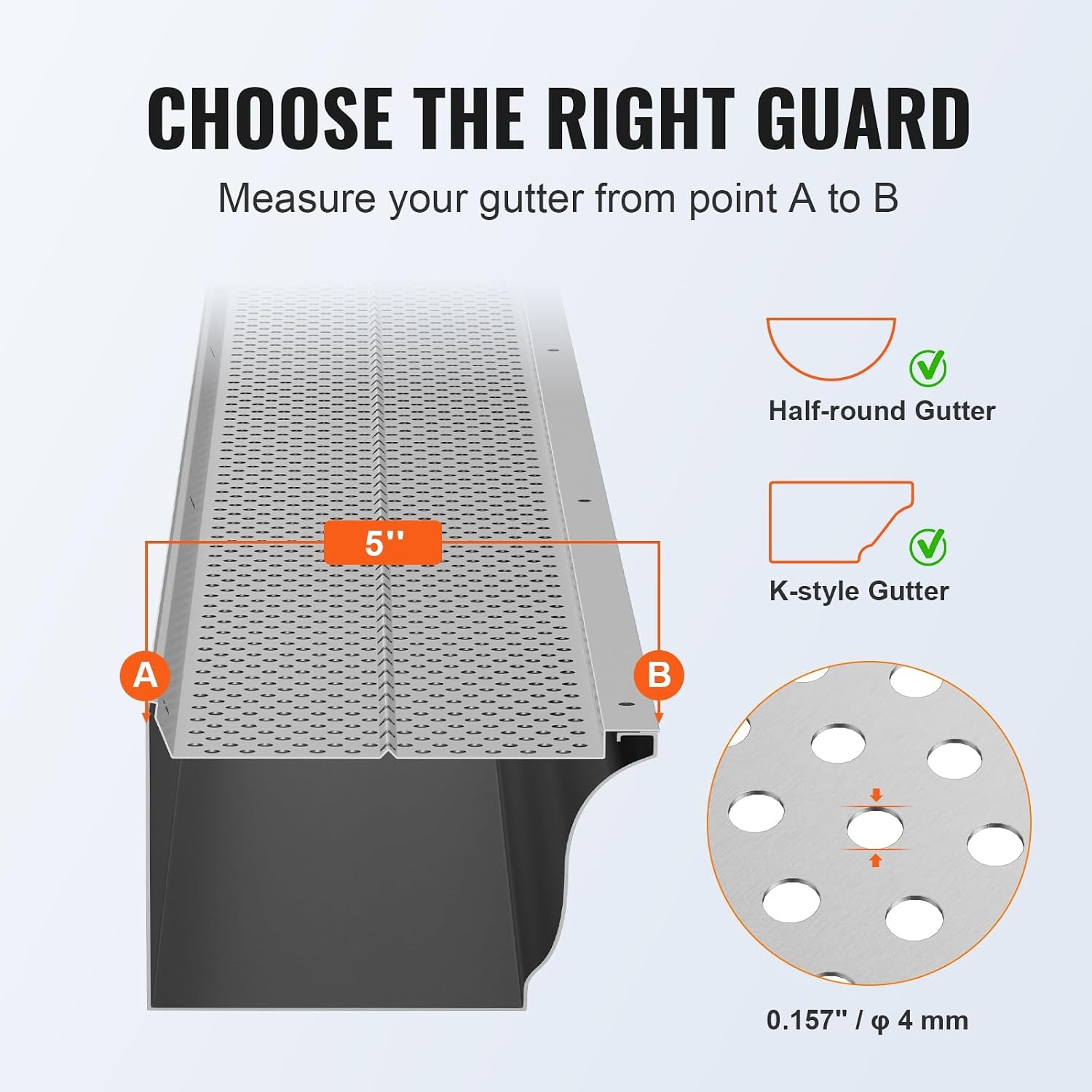
The principle is simple. Rain arriving off the roof needs somewhere to go, and a hole in a flat metal surface is somewhere it goes willingly. Water has a natural pull toward edges and openings, so once it hits the panel it finds a hole and drops into the gutter below. A leaf, by contrast, is wide, flat and dry on arrival. It has no way through a 4 mm opening, so it stays on top.
From there, wind and the next shower push the debris toward the edge of the roof and over. That self-clearing effect is why the surface matters. A flat, shallow panel sheds leaves. A deeply ribbed one gives them places to settle.
Perforated metal has one more advantage over foam inserts and plastic brush strips. It does not soak up water, it does not become a seed bed, and it will not go brittle in UV light the way cheap plastic often does after a few summers. For anyone comparing the best aluminum gutter guard options against foam and brush types, longevity is usually the deciding factor.
Why aluminum
Aluminum is the material of choice for this job for three reasons that all matter at the top of a ladder.
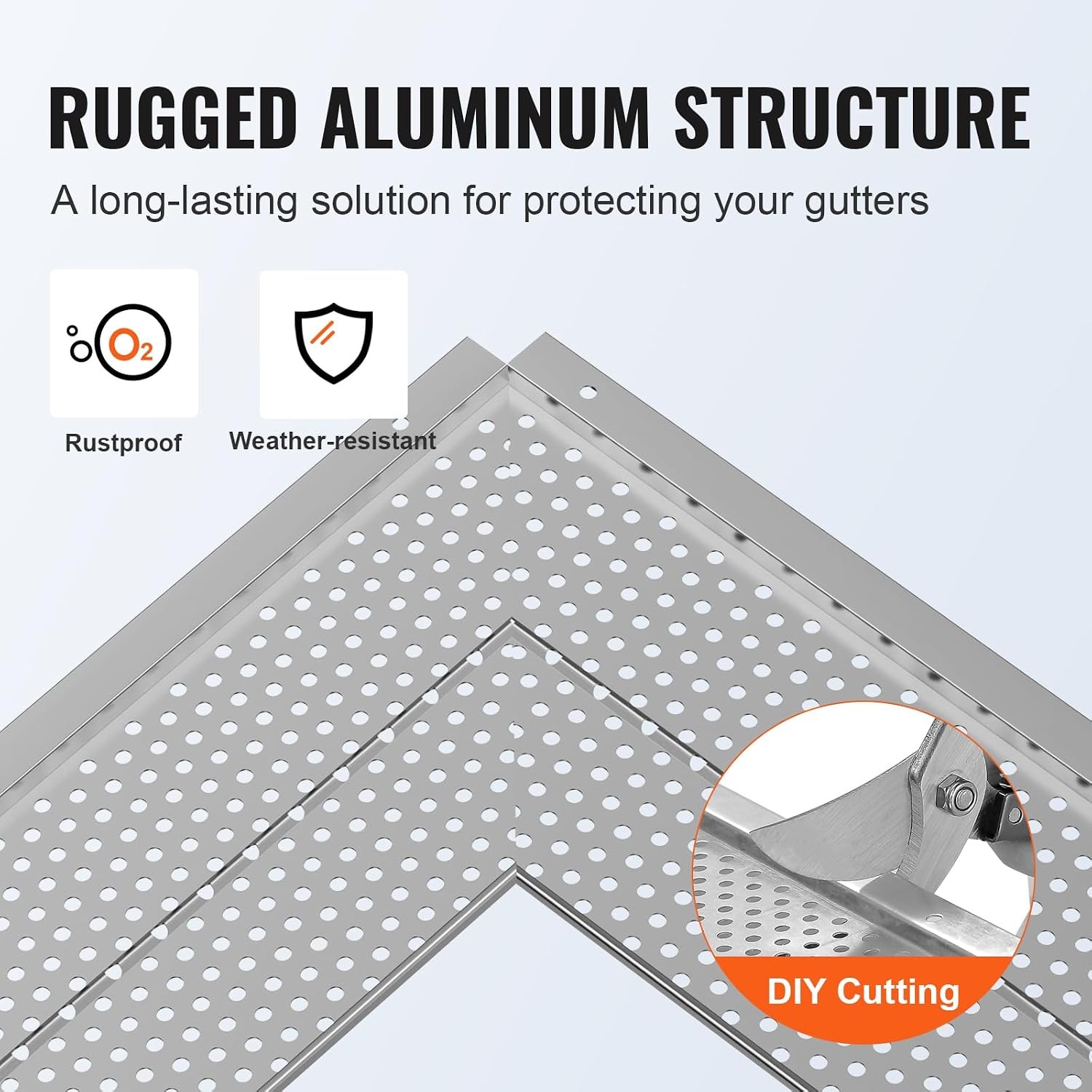
It does not rust. Bare or cheaply coated steel in a wet channel is a short-term solution, and once rust starts it stains the fascia below. Aluminum develops a thin surface oxide and then stops, which is cosmetic rather than structural.
It is light. The whole 13-panel kit weighs 6.82 pounds, so carrying a few panels up a ladder in one hand is realistic. Heavier materials turn a one-person job into a two-person job.
It stays put through temperature swings. Metal expands and contracts, but aluminum in this gauge handles the normal cycle of hot afternoons and frosty mornings without warping out of shape.
Who this suits
This kit is a good match if you have standard 5 inch residential guttering, trees within falling distance of the roof, and reasonable ladder access. It also suits anyone who has simply decided they are done going up there every few months.
It is less suitable if your gutters are 6 inch commercial profile, if they are half-round in an unusual size, or if the existing gutter is already sagging or coming away from the fascia. Fix a loose gutter before covering it, because a cover will not hold up a failing run.
Height is worth a frank thought too. Single-story work with a stable ladder on level ground is a normal weekend job. A three-story terrace with a narrow pavement is not, and paying someone to fit the panels is money well spent.
Measuring and planning the job
Start with two numbers. First, the open width across the top of the gutter, measured from the inside of the front lip to the back edge. If that comes out around 5 inches, you are in the right place. Second, the total length of every run you want to cover, added together.
Divide that total by 4 feet to get your panel count. Then add a panel or two. Corners, downspout outlets and brackets all eat into coverage, and having a spare to cut from is far better than coming up one panel short.
If your run is, say, 38 feet, you will need ten panels and the last one trimmed. Tin snips handle that cut in under a minute. Mark the line with a straight edge, cut, and file or fold over any burr before handling it.
Fitting them properly
Clean first. This sounds obvious but gets skipped. Scoop out the old debris, flush the gutter with a hose, and check the water reaches the downspout. Covering a dirty gutter traps the problem where you cannot reach it.
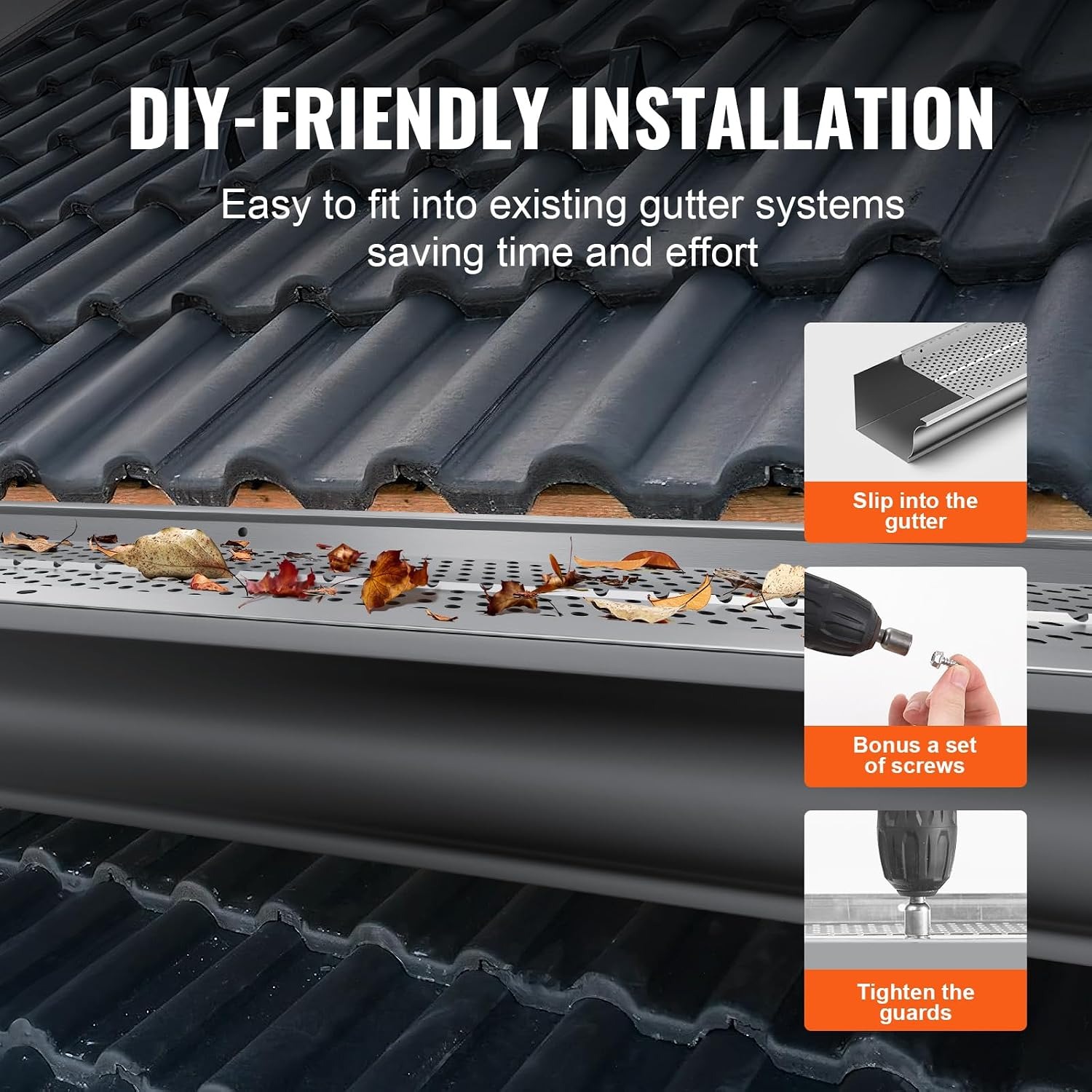
Work in one direction along each run. Place the first panel, line up the pre-drilled folds, and drive the supplied hexagonal tapping screws through into the gutter edge. Snug is right, overtightened is not, because thin aluminum will dimple if you lean on the driver.
Overlap each panel slightly with the one before, in the direction that water flows. Use the supplied plates where panels meet so the join is held flat and there is no raised lip for debris to catch on.
Aim for a slight slope toward the gutter. A panel that tips back toward the roof can let water track behind the gutter and onto the fascia. Checking the line with your eye from a few feet along the run is usually enough.
Around corners and outlets, cut and fit smaller pieces rather than leaving gaps. A gap is an open invitation for the exact debris you are trying to keep out.
Keeping them working
Covered gutters are low maintenance, not no maintenance. Once or twice a year, walk around the house and look up. You are checking for a build-up of leaves sitting on the surface, especially in a valley or where two roof planes meet.
If there is a layer, a soft broom from a ladder clears it in minutes. A garden hose does the rest. Avoid wire brushes, strong solvents and close-range pressure washing, since all three can mark or dent the panels and force grit down through the holes.
Check the screws at the same time. Weather and vibration loosen things slowly, and a two minute pass with a driver keeps everything tight. Before winter in cold areas, that check is worth doing deliberately, because ice loading is harder on a loose panel than a secure one.
The short version
If trees overhang your roof and you own a 5 inch gutter, a perforated aluminum cover is one of the better value jobs you can do on a house. This kit gives you 52 feet of coverage across 13 panels, pre-drilled, with the screws, bushing and plates in the box.
Measure the gutter width and the total run before you order. Clean the gutter out before you fit anything. Cut the end panels to length, keep a gentle slope toward the gutter, and fix each panel snugly without crushing the metal.
Do that, and the payoff is a shorter maintenance list, water that reaches the downspout instead of the wall, and a lot fewer trips up the ladder.